
Revolutionizing Quinoline Synthesis: Metal-Free Electrochemical C5 Halogenation for Commercial Scale-Up
The pharmaceutical and fine chemical industries are constantly seeking more sustainable and efficient pathways to synthesize complex heterocyclic scaffolds, particularly those found in bioactive molecules. Patent CN111592489B introduces a groundbreaking methodology for the selective C5 halogenation of quinoline amides, addressing critical bottlenecks in the synthesis of key pharmaceutical intermediates. Quinoline derivatives are ubiquitous in medicinal chemistry, serving as the core structure for numerous drugs such as hydroxychloroquine and iodoquinol, where halogen substitution often plays a pivotal role in modulating biological activity and metabolic stability. Traditionally, introducing halogens at specific positions on the quinoline ring has been fraught with challenges, including poor regioselectivity and harsh reaction conditions. This new electrochemical protocol offers a transformative solution by leveraging electricity to drive the reaction, thereby eliminating the need for external chemical oxidants and transition metal catalysts. By shifting the paradigm from chemical reagents to electrical energy, this technology not only aligns with the principles of green chemistry but also opens new avenues for cost-effective and scalable manufacturing of high-value intermediates.
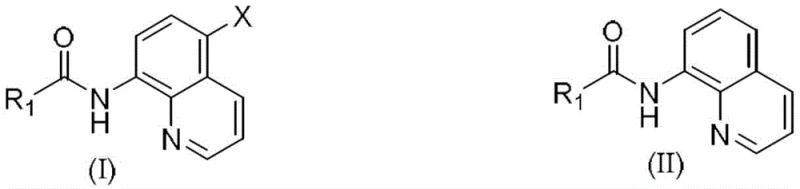
The Limitations of Conventional Methods vs. The Novel Approach
The Limitations of Conventional Methods
Historically, the halogenation of quinoline skeletons has relied heavily on classical electrophilic aromatic substitution or transition-metal-catalyzed C-H activation strategies. Prominent literature, such as reports from the Stahl and Xie groups, describes methods utilizing copper or palladium catalysts combined with stoichiometric oxidants like PhI(OAc)2 or Oxone. While these methods can achieve the desired transformation, they suffer from significant drawbacks that hinder their industrial applicability. The use of precious or toxic metal catalysts necessitates rigorous purification steps to remove trace metal residues, which is a critical requirement for pharmaceutical grade materials. Furthermore, the reliance on strong chemical oxidants generates substantial amounts of hazardous waste, increasing the environmental footprint and disposal costs. These conventional routes often require elevated temperatures or extended reaction times, leading to energy inefficiency and potential safety hazards due to the exothermic nature of some oxidation reactions. The cumulative effect of these factors results in a complex, costly, and environmentally burdensome process that struggles to meet modern sustainability standards.
The Novel Approach
In stark contrast, the method disclosed in patent CN111592489B utilizes an electrochemical cell to facilitate the halogenation process, representing a significant leap forward in synthetic efficiency. By employing a simple undivided cell equipped with a carbon anode and a platinum cathode, the system generates reactive halogen species in situ from inexpensive tetrabutylammonium halide salts, which serve a dual function as both the halogen source and the supporting electrolyte. This approach completely bypasses the need for external oxidants, as the anodic oxidation provides the necessary driving force for the reaction. The conditions are remarkably mild, typically operating at temperatures between 25°C and 80°C with reaction times as short as 5 to 90 minutes. The absence of transition metals simplifies the workup procedure significantly, as there is no need for metal scavenging resins or complex extraction protocols. This streamlined process not only reduces the consumption of raw materials but also minimizes the generation of chemical waste, offering a cleaner and more atom-economical alternative to traditional catalytic systems.
Mechanistic Insights into Electrochemical C-H Functionalization
The core of this innovation lies in the anodic oxidation mechanism, where halide ions (Cl-, Br-, or I-) are oxidized at the carbon anode to generate reactive halogen radicals or cationic species. These electrophilic halogen intermediates then interact with the electron-rich quinoline ring. The remarkable regioselectivity observed at the C5 position is attributed to the directing effect of the amide group attached at the C8 position of the quinoline scaffold. This amide moiety likely coordinates with the electro-generated species or stabilizes the transition state through electronic effects, guiding the substitution exclusively to the C5 site. This level of precision is difficult to achieve with non-directed electrophilic substitution, which often yields mixtures of isomers. The cathodic process typically involves the reduction of protons to hydrogen gas or the reduction of other species present in the medium, balancing the electron flow without introducing interfering byproducts. The use of acetonitrile as the preferred solvent ensures good solubility for both the organic substrate and the ionic electrolyte, facilitating efficient charge transfer throughout the reaction medium.
From an impurity control perspective, this electrochemical method offers distinct advantages by minimizing side reactions associated with strong chemical oxidants. Traditional oxidants can often over-oxidize sensitive functional groups on the substrate, leading to complex impurity profiles that are challenging to separate. In this electrochemical system, the potential can be finely tuned by controlling the current density, allowing for a gentler oxidation that targets only the specific C-H bond activation required. The absence of metal catalysts also removes the risk of metal-induced decomposition or catalysis of unwanted side reactions. Consequently, the crude reaction mixture is generally cleaner, which translates to higher isolated yields and reduced loss of material during purification. This mechanistic elegance ensures that the final product meets stringent purity specifications required for downstream pharmaceutical applications, reducing the burden on quality control laboratories.
How to Synthesize C5-Halogenated Quinoline Amides Efficiently
The synthesis of these valuable intermediates is straightforward and relies on standard electrochemical equipment that can be easily sourced or fabricated. The process begins by charging a reaction vessel with the quinoline amide substrate and the appropriate tetrabutylammonium halide salt in a molar ratio of approximately 1:1.5. Acetonitrile is added as the solvent to create a homogeneous solution capable of conducting electricity. Once the electrodes are immersed, a constant current is applied, initiating the electrochemical cycle. The reaction progress can be monitored via TLC, and upon completion, the solvent is removed under reduced pressure. The resulting residue is then purified using standard silica gel column chromatography to afford the pure C5-halogenated product. For detailed operational parameters and specific optimization data, please refer to the standardized synthesis guide below.
- Prepare the reaction mixture by adding the quinoline amide substrate, a tetrabutylammonium halide salt (acting as both electrolyte and halogen source), and acetonitrile solvent into an undivided cell equipped with carbon and platinum electrodes.
- Apply a constant current of 5-15 mA to the system while maintaining the temperature between 25-80°C, allowing the electrochemical oxidation to proceed for 5 to 90 minutes.
- Upon completion, concentrate the reaction mixture under reduced pressure and purify the resulting C5-halogenated product via silica gel column chromatography.
Commercial Advantages for Procurement and Supply Chain Teams
For procurement managers and supply chain directors, the adoption of this electrochemical technology presents a compelling value proposition centered on cost reduction and operational resilience. The elimination of expensive transition metal catalysts such as palladium and copper directly impacts the bill of materials, removing a significant cost driver from the manufacturing process. Additionally, the removal of stoichiometric oxidants reduces the volume of hazardous waste generated, leading to substantial savings in waste disposal and environmental compliance costs. The simplicity of the reagent profile, relying on commodity chemicals like tetrabutylammonium salts and acetonitrile, ensures a stable and reliable supply chain that is less susceptible to market volatility compared to specialized catalytic reagents.
- Cost Reduction in Manufacturing: The economic benefits of this process are derived primarily from the drastic simplification of the reagent list and the downstream processing workflow. By avoiding the use of precious metal catalysts, manufacturers eliminate the capital tied up in catalyst recovery systems and the operational costs associated with metal removal validation. Furthermore, the mild reaction conditions reduce energy consumption related to heating and cooling, contributing to a lower overall cost of goods sold. The high atom economy of using the halide salt as both electrolyte and reagent maximizes material utilization, ensuring that every gram of input contributes effectively to the final product yield without generating excessive byproduct waste.
- Enhanced Supply Chain Reliability: Sourcing high-purity pharmaceutical intermediates often faces bottlenecks due to the complexity of multi-step syntheses involving sensitive reagents. This electrochemical method mitigates such risks by utilizing robust and widely available starting materials. The independence from specialized metal catalysts means that production is not held hostage by the supply constraints of the precious metals market. Moreover, the shorter reaction times and simplified workup procedures allow for faster batch turnover, enabling suppliers to respond more agilely to fluctuating demand signals from downstream drug manufacturers. This agility is crucial for maintaining continuity of supply in the fast-paced pharmaceutical sector.
- Scalability and Environmental Compliance: Scaling electrochemical processes is increasingly feasible with modern flow chemistry technologies, allowing for seamless transition from laboratory to commercial production. The inherent safety of operating at mild temperatures and without explosive oxidants makes this process ideal for large-scale reactors. From a regulatory standpoint, the "metal-free" label is a significant advantage, simplifying the regulatory filing process for new drug applications by reducing the burden of proving the absence of toxic metal residues. This alignment with green chemistry principles not only satisfies internal sustainability goals but also enhances the marketability of the final API to environmentally conscious partners.
Frequently Asked Questions (FAQ)
The following questions address common technical and commercial inquiries regarding the implementation of this electrochemical halogenation technology. These insights are derived directly from the experimental data and beneficial effects reported in the patent documentation, providing a clear understanding of the process capabilities and limitations for potential adopters.
Q: What are the primary advantages of this electrochemical halogenation method over traditional catalytic approaches?
A: Unlike traditional methods that rely on expensive transition metal catalysts like copper or palladium and stoichiometric amounts of hazardous oxidants, this electrochemical approach utilizes electrons as the primary reagent. This eliminates the need for toxic heavy metals and complex waste treatment associated with metal removal, significantly enhancing the environmental profile and reducing raw material costs.
Q: How does this method ensure high regioselectivity at the C5 position?
A: The high regioselectivity is achieved through the coordination of the amide group on the quinoline skeleton, which directs the electrophilic halogen species generated at the anode specifically to the C5 position. This intrinsic directing effect minimizes the formation of unwanted isomers, simplifying downstream purification and improving overall process efficiency.
Q: Is this electrochemical process suitable for large-scale industrial production?
A: Yes, the process operates under mild conditions (25-80°C) and uses commercially available supporting electrolytes and solvents. The absence of sensitive metal catalysts and the simplicity of the reactor setup make it highly adaptable for scale-up, offering a robust pathway for the commercial manufacturing of complex halogenated intermediates.
Partnering with NINGBO INNO PHARMCHEM: Your Reliable C5-Halogenated Quinoline Amide Supplier
As the global demand for complex heterocyclic intermediates continues to rise, partnering with a technically proficient manufacturer is essential for success. NINGBO INNO PHARMCHEM stands at the forefront of this technological shift, possessing extensive experience scaling diverse pathways from 100 kgs to 100 MT/annual commercial production. Our commitment to excellence is underpinned by stringent purity specifications and rigorous QC labs that ensure every batch meets the highest international standards. We understand the critical nature of supply chain continuity for our clients and have invested heavily in flexible manufacturing capabilities that can adapt to both pilot-scale development and full-scale commercial deployment.
We invite you to collaborate with us to leverage this cutting-edge electrochemical technology for your specific project needs. Our technical team is ready to provide a Customized Cost-Saving Analysis tailored to your target molecule, demonstrating exactly how this metal-free route can optimize your budget. Please contact our technical procurement team today to request specific COA data and route feasibility assessments, and let us help you secure a competitive advantage in the marketplace through superior chemical innovation.