
Advanced Purification Technology for Valsartan: Enhancing Purity and Scalability for Global Supply Chains
The pharmaceutical industry continuously seeks robust methodologies to enhance the quality of Angiotensin II receptor blockers, specifically Valsartan, a critical antihypertensive agent. Patent CN102093302B introduces a transformative purification strategy that addresses longstanding challenges in obtaining high-purity active pharmaceutical ingredients (APIs). This technology leverages a sophisticated combination of acid-base conversion and selective adsorption using macroporous resins to refine crude Valsartan. Unlike traditional methods that rely heavily on repetitive recrystallization, this approach utilizes the unique physicochemical properties of polymeric adsorbents to separate impurities with exceptional precision. The result is a highly purified compound that meets stringent regulatory standards for clinical safety while minimizing toxic side effects associated with residual impurities. For global procurement teams, this represents a significant advancement in securing a reliable valsartan supplier capable of delivering consistent quality.
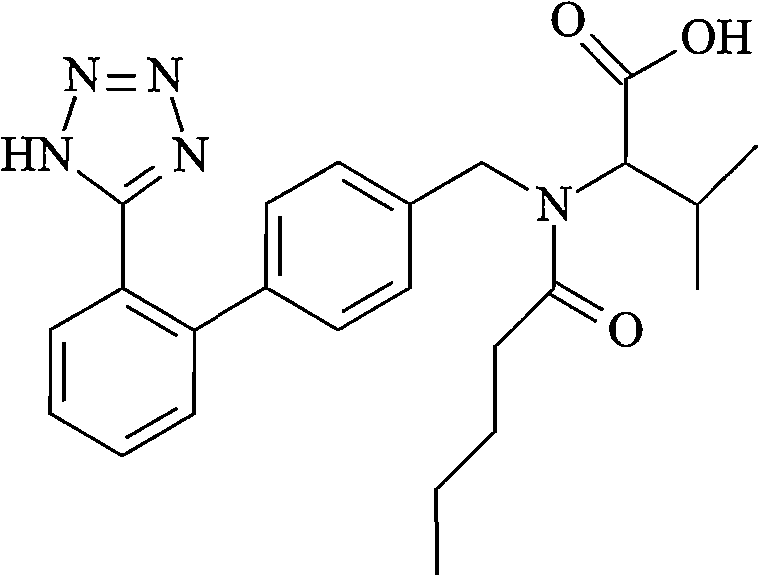
The Limitations of Conventional Methods vs. The Novel Approach
The Limitations of Conventional Methods
Historically, the purification of Valsartan has relied on recrystallization techniques using solvents such as ethyl acetate or isopropyl ether, as documented in various prior art patents. These conventional methods suffer from significant operational drawbacks, primarily stemming from the physical characteristics of the precipitated product. The crystallization process often yields products that are difficult to filter and wash effectively, leading to prolonged centrifugation and drying times. Furthermore, the resulting dried powder tends to form hard, large blocks that are prone to generating static electricity, complicating downstream handling and formulation. From a yield perspective, these methods are inefficient; comparative data indicates that traditional recrystallization may result in yields as low as 64.1%, representing a substantial loss of valuable material. The reliance on large volumes of organic solvents also raises environmental concerns and increases the cost reduction in API manufacturing pressure due to solvent recovery and disposal requirements.
The Novel Approach
The innovative method disclosed in the patent circumvents these physical and chemical bottlenecks by employing macroporous adsorbent resins, such as DA-201, AB-8, or Diaion HP2MG. This technique shifts the purification paradigm from solubility-based crystallization to adsorption-based chromatography, which offers superior selectivity and scalability. By converting the crude Valsartan into a water-soluble salt form prior to adsorption, the process ensures that the target molecule interacts optimally with the resin's porous network while impurities are washed away. The resin's large specific surface area and reticulated structure allow for high-capacity loading and efficient separation without the formation of problematic solid cakes. This approach not only simplifies the operational workflow but also drastically improves the overall yield, with experimental data demonstrating recovery rates exceeding 90%. Consequently, this method provides a viable pathway for the commercial scale-up of complex pharmaceutical intermediates, ensuring a stable supply of high-quality material.
Mechanistic Insights into Macroporous Resin Adsorption and Acid-Base Conversion
The core of this purification technology lies in the precise manipulation of the molecule's ionization state and its interaction with the polymeric matrix. Valsartan contains both a carboxylic acid group and a tetrazole ring, which can be deprotonated under alkaline conditions (pH 7-9) to form a water-soluble salt. In this ionic form, the molecule exhibits specific affinity for the non-polar or weakly polar surfaces of the macroporous resin through Van der Waals forces and hydrogen bonding. The resin acts as a molecular sieve, retaining the Valsartan salt while allowing highly polar or non-adsorbing impurities to pass through during the water wash phase. Subsequent elution with a hydro-alcoholic solution (e.g., 30% isopropanol) disrupts these intermolecular forces, releasing the purified Valsartan salt from the column. This mechanism is far more selective than silica gel chromatography, which often suffers from irreversible adsorption or tailing effects that compromise purity.
Following elution, the process employs a critical acidification step to regenerate the free acid form of Valsartan. By adjusting the pH of the concentrated eluate to an acidic range (pH 1-4), the solubility of the Valsartan decreases dramatically, causing it to precipitate out of the solution as a high-purity solid. This precipitation is distinct from the problematic crystallization of prior art; because the bulk of impurities have already been removed by the resin, the precipitating solid is cleaner and easier to filter. The use of macroporous resin also eliminates the risk of metal contamination often associated with other chromatographic media, thereby enhancing the safety profile of the final API. This dual mechanism of selective adsorption followed by controlled precipitation ensures that the final product achieves an HPLC purity greater than 99.5%, meeting the rigorous demands for high-purity valsartan in modern therapeutics.
How to Synthesize Valsartan Efficiently
The synthesis and subsequent purification of Valsartan using this patented method involve a streamlined sequence of unit operations designed for industrial feasibility. The process begins with the dissolution of crude material in an aqueous medium, avoiding the immediate use of hazardous organic solvents. Following decolorization with activated carbon to remove colored impurities, the solution is subjected to the core chromatographic step. The detailed standardized synthesis steps, including specific flow rates, column dimensions, and elution profiles optimized for maximum recovery, are outlined in the technical guide below.
- Dissolve crude Valsartan in water and adjust pH to 7-9 using alkali to form the soluble salt, followed by decolorization with activated carbon.
- Pass the filtrate through a column packed with macroporous adsorbent resin (e.g., DA-201 or AB-8), wash with water, and elute with 30% alcohol.
- Concentrate the eluate, acidify to pH 1-4 to precipitate pure Valsartan, then filter and vacuum dry to obtain the final high-purity product.
Commercial Advantages for Procurement and Supply Chain Teams
For procurement managers and supply chain directors, the adoption of this macroporous resin-based purification method offers tangible strategic benefits beyond mere technical specifications. The shift away from multi-step recrystallization significantly reduces the dependency on volatile organic compounds, aligning production with increasingly strict environmental regulations and sustainability goals. This transition mitigates the risks associated with solvent supply chain disruptions and reduces the overhead costs related to solvent recovery systems. Furthermore, the robustness of the resin column process ensures a more predictable production schedule, as it eliminates the variability often introduced by unpredictable crystallization kinetics. This reliability is crucial for maintaining continuous supply lines for essential antihypertensive medications.
- Cost Reduction in Manufacturing: The implementation of this technology drives down manufacturing expenses through several qualitative mechanisms. By replacing multiple recrystallization cycles with a single, high-efficiency chromatographic step, the process significantly reduces solvent consumption and energy usage associated with heating and cooling large solvent volumes. Additionally, the regenerable nature of macroporous resins means that the stationary phase can be reused multiple times, unlike silica gel which is often discarded after a single use. This reduction in consumable materials, combined with the higher overall yield of the active ingredient, results in substantial cost savings per kilogram of produced API, enhancing the overall economic viability of the manufacturing process.
- Enhanced Supply Chain Reliability: Supply chain stability is bolstered by the simplicity and scalability of the resin-based method. Traditional crystallization processes are prone to batch-to-batch variability due to sensitive parameters like cooling rates and seeding, which can lead to production delays. In contrast, chromatographic processes are highly controllable and scalable, allowing for consistent output regardless of batch size. The use of widely available and chemically stable macroporous resins ensures that raw material availability is not a bottleneck. This operational consistency allows suppliers to offer shorter lead times and more reliable delivery schedules, which is essential for pharmaceutical companies managing tight inventory controls and Just-In-Time manufacturing strategies.
- Scalability and Environmental Compliance: Scaling this purification method from pilot plant to commercial production is straightforward due to the mechanical stability of the macroporous resin beads. Unlike fragile silica gels that can crush under high pressure in large columns, these polymeric resins maintain their integrity, ensuring long column life and consistent flow dynamics. From an environmental perspective, the process generates less hazardous waste, as the primary effluent is aqueous with low organic content compared to the mother liquors from recrystallization. This facilitates easier wastewater treatment and compliance with environmental discharge standards, reducing the regulatory burden on the manufacturing facility and supporting a greener corporate image.
Frequently Asked Questions (FAQ)
The following questions address common technical and commercial inquiries regarding the purification of Valsartan using macroporous resin technology. These insights are derived directly from the experimental data and comparative analysis presented in the patent literature, providing a clear understanding of the method's advantages over legacy techniques. Understanding these details helps stakeholders evaluate the feasibility of integrating this technology into their existing supply chains.
Q: Why is macroporous resin preferred over silica gel for Valsartan purification?
A: Macroporous resins offer superior physical strength, easier regeneration, and higher adsorption capacity compared to silica gel or alumina. They avoid the formation of hard, static-prone powder blocks common in traditional crystallization, facilitating smoother industrial filtration and drying.
Q: What purity levels can be achieved with this resin-based method?
A: According to patent data, this method consistently achieves HPLC purity greater than 99.5%, significantly outperforming traditional recrystallization methods which often struggle to exceed 99.1% without substantial yield loss.
Q: How does this process impact production costs?
A: The process reduces costs by eliminating the need for large volumes of organic solvents like ethyl acetate used in multiple recrystallizations. Additionally, the regenerable nature of the macroporous resin lowers material consumption compared to single-use chromatographic media.
Partnering with NINGBO INNO PHARMCHEM: Your Reliable Valsartan Supplier
At NINGBO INNO PHARMCHEM, we recognize the critical importance of purity and process efficiency in the production of life-saving antihypertensive agents. As a leading CDMO expert, we possess extensive experience scaling diverse pathways from 100 kgs to 100 MT/annual commercial production, ensuring that technologies like the macroporous resin purification method are implemented with precision. Our facilities are equipped with rigorous QC labs and adhere to stringent purity specifications, guaranteeing that every batch of Valsartan meets the highest international standards. We are committed to leveraging advanced purification techniques to deliver superior quality intermediates and APIs that support the safety and efficacy of final drug formulations.
We invite pharmaceutical partners to collaborate with us to optimize their Valsartan supply chain. Our technical team is prepared to provide a Customized Cost-Saving Analysis tailored to your specific volume requirements, demonstrating how this advanced purification route can enhance your margins. We encourage you to contact our technical procurement team to request specific COA data and route feasibility assessments, ensuring that your project moves forward with the most efficient and reliable manufacturing strategy available in the market today.