
Revolutionizing S-Nicotine Production: Enzymatic Catalysis for Commercial Scale-Up
Revolutionizing S-Nicotine Production: Enzymatic Catalysis for Commercial Scale-Up
The pharmaceutical and agrochemical industries are constantly seeking more efficient, sustainable, and high-purity methods for synthesizing complex chiral molecules, and the production of S-nicotine stands as a prime example of this technological evolution. Patent CN116024284A introduces a groundbreaking method for catalyzing and synthesizing high-purity S-nicotine by utilizing a specifically engineered imine reductase and its mutants. This innovation addresses the critical limitations of traditional extraction and chemical synthesis methods, which often suffer from low purity, environmental hazards, and poor stereoselectivity. By leveraging the power of protein engineering, this technology enables a one-step catalytic conversion of a pyridine ketone precursor directly into the target S-nicotine with exceptional efficiency. For R&D directors and procurement managers, this represents a significant opportunity to optimize manufacturing processes, reduce reliance on scarce natural resources, and achieve superior product specifications that meet the stringent requirements of modern regulatory bodies. The ability to produce high-purity S-nicotine consistently is not just a technical achievement but a strategic commercial advantage in the competitive landscape of fine chemical intermediates.
The Limitations of Conventional Methods vs. The Novel Approach
The Limitations of Conventional Methods
Traditionally, the acquisition of nicotine and its chiral isomers has relied heavily on direct extraction from tobacco plants or through complex multi-step chemical synthesis routes that are fraught with inefficiencies. Direct extraction is inherently limited by the variability of agricultural sources, leading to fluctuations in supply continuity and purity levels that are often unacceptable for high-end pharmaceutical applications. Furthermore, the screening and purification processes required to isolate specific isomers from natural extracts are complicated by the presence of impurities with similar physical and chemical properties, making it difficult to achieve the necessary purity standards without significant yield loss. On the chemical synthesis front, conventional methods often involve the use of hazardous reagents, heavy metal catalysts, and extreme reaction conditions that generate substantial waste and pose safety risks. These traditional approaches frequently result in low conversion rates and poor enantiomeric excess, necessitating costly and time-consuming resolution steps to separate the desired S-enantiomer from the R-enantiomer. For supply chain heads, these inefficiencies translate into higher production costs, longer lead times, and increased regulatory scrutiny, creating a bottleneck for the reliable supply of high-purity API intermediates needed for drug development and manufacturing.
The Novel Approach
In stark contrast to these legacy methods, the novel approach disclosed in the patent utilizes a highly specific imine reductase (IRED) combined with a cofactor regeneration system to achieve a green, efficient, and stereoselective synthesis of S-nicotine. This biocatalytic method operates under mild reaction conditions, typically in aqueous buffer solutions at neutral pH, which significantly reduces the energy consumption and safety hazards associated with high-temperature or high-pressure chemical processes. The core of this innovation lies in the use of mutant imine reductases that have been engineered through site-directed mutagenesis to enhance their catalytic activity, stability, and substrate specificity. Unlike wild-type enzymes that may exhibit unstable activity or low conversion rates, these mutants are designed to maintain high performance even at elevated substrate concentrations, ensuring robust process parameters for industrial production. The integration of a glucose dehydrogenase (GDH) system allows for the continuous regeneration of the necessary NADPH cofactor, eliminating the need for stoichiometric amounts of expensive reducing agents and making the process economically viable for large-scale manufacturing. This shift from chemical to enzymatic catalysis not only improves the environmental profile of the synthesis but also provides a reliable pharmaceutical intermediate supplier pathway that is resilient to raw material volatility.
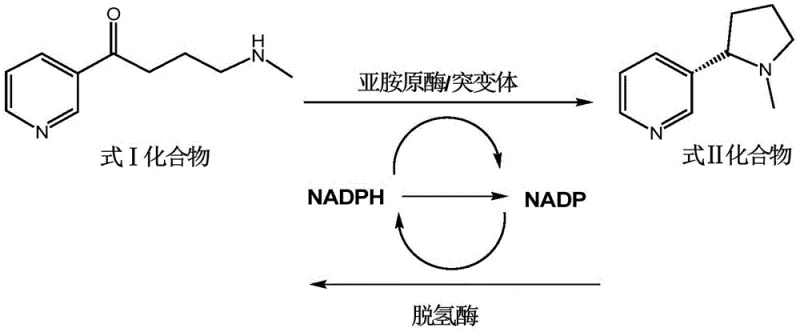
Mechanistic Insights into Imine Reductase-Catalyzed Stereoselective Reduction
The mechanistic foundation of this synthesis relies on the precise stereochemical control exerted by the imine reductase enzyme, which facilitates the asymmetric reduction of the imine bond in the precursor molecule to form the chiral center of S-nicotine. The enzyme functions as an NADPH-dependent oxidoreductase, transferring a hydride ion from the cofactor to the substrate in a highly specific manner that dictates the formation of the S-configuration over the R-configuration. This intrinsic stereoselectivity is a result of the enzyme's active site architecture, which is further optimized in the mutant variants to accommodate the substrate more effectively and stabilize the transition state. The patent details specific amino acid mutations, such as Y218L-L246V in the sequence derived from Bacillus subtilis, which alter the spatial arrangement of the active site to enhance binding affinity and catalytic turnover. For R&D teams, understanding these mechanistic details is crucial for troubleshooting and optimizing reaction conditions, as the interplay between enzyme structure and function directly impacts the final optical purity and yield of the product. The use of engineered mutants ensures that the catalytic cycle proceeds with minimal side reactions, thereby reducing the formation of by-products and simplifying the downstream purification process.
Furthermore, the impurity control mechanism in this biocatalytic system is inherently superior to chemical methods due to the high specificity of the enzyme-substrate interaction. In chemical synthesis, side reactions such as over-reduction or non-specific alkylation can lead to a complex impurity profile that requires extensive chromatographic separation to resolve. In contrast, the imine reductase selectively targets the specific imine functionality in the precursor, leaving other functional groups untouched and minimizing the generation of structural impurities. The patent data indicates that the optical purity of the S-nicotine produced using these mutants consistently exceeds 99% ee, demonstrating the robustness of the enzymatic selectivity. This high level of purity is achieved without the need for chiral resolution steps, which are often the most costly and yield-limiting part of traditional chiral synthesis. For quality control and regulatory compliance, this means a cleaner product profile with fewer unknown impurities, facilitating faster approval processes for new drug applications and ensuring the safety and efficacy of the final pharmaceutical product.
How to Synthesize S-Nicotine Efficiently
The implementation of this synthesis route involves a streamlined biocatalytic process that begins with the preparation of the recombinant enzyme system and concludes with the isolation of the high-purity product. The detailed standardized synthesis steps involve the expression of the mutant imine reductase and glucose dehydrogenase in a suitable host organism, followed by the preparation of the biocatalyst in the form of whole cells or purified enzymes. The reaction is typically conducted in a phosphate buffer system where the substrate, cofactor, and enzymes are mixed under controlled stirring and temperature conditions to maximize conversion. This approach ensures that the process is reproducible and scalable, providing a clear roadmap for technology transfer from the laboratory to the pilot plant and eventually to commercial manufacturing facilities.
- Preparation of the biocatalytic system involving the specific imine reductase mutant (e.g., Y218L-L246V) and a cofactor regeneration enzyme like glucose dehydrogenase.
- Execution of the reduction reaction in a phosphate buffer system at controlled pH and temperature, ensuring optimal substrate concentration for maximum conversion.
- Downstream processing including product isolation and purification to achieve high optical purity (>99% ee) suitable for pharmaceutical applications.
Commercial Advantages for Procurement and Supply Chain Teams
From a commercial perspective, the adoption of this enzymatic synthesis method offers profound advantages for procurement and supply chain teams who are tasked with managing costs and ensuring supply continuity. The primary benefit lies in the significant cost reduction in pharmaceutical intermediate manufacturing achieved by eliminating the need for expensive chiral catalysts and hazardous chemical reagents. The enzymatic process operates in aqueous media, which reduces the consumption of organic solvents and the associated costs of solvent recovery and waste disposal. Additionally, the high conversion rates achieved by the mutant enzymes mean that less raw material is wasted, leading to improved atom economy and lower material costs per kilogram of product. For procurement managers, this translates into a more predictable cost structure and the ability to negotiate better pricing with suppliers who adopt this efficient technology. The reduction in process complexity also lowers the barrier to entry for manufacturing, allowing for a more diversified supply base and reducing the risk of supply chain disruptions caused by single-source dependencies on specialized chemical reagents.
- Cost Reduction in Manufacturing: The elimination of transition metal catalysts and the use of a renewable cofactor regeneration system drastically simplify the production workflow, leading to substantial cost savings. By avoiding the expensive purification steps required to remove heavy metal residues from chemical catalysts, manufacturers can reduce both capital expenditure on equipment and operational expenditure on consumables. The high substrate conversion rate further enhances cost efficiency by maximizing the output from each batch, ensuring that the cost per unit of high-purity S-nicotine is significantly lower than that of traditional extraction or chemical synthesis methods. This economic efficiency is critical for maintaining competitiveness in the global market for fine chemicals and API intermediates.
- Enhanced Supply Chain Reliability: The reliance on biocatalysts derived from widely available microbial sources enhances the reliability of the supply chain by reducing dependence on volatile agricultural markets or specialized chemical suppliers. Enzymes can be produced consistently through fermentation, ensuring a stable and continuous supply of the catalyst regardless of external factors such as crop failures or geopolitical tensions affecting chemical raw materials. This stability is crucial for long-term supply agreements and ensures that pharmaceutical manufacturers can meet their production schedules without interruption. The robustness of the mutant enzymes also means that the process is less sensitive to variations in raw material quality, further stabilizing the supply chain and reducing the risk of batch failures.
- Scalability and Environmental Compliance: The aqueous nature of the reaction and the mild operating conditions make this process highly scalable and compliant with increasingly stringent environmental regulations. Scaling up biocatalytic processes is generally more straightforward than scaling up complex chemical syntheses involving hazardous reagents, as the risks of thermal runaway or toxic exposure are minimized. The reduction in hazardous waste generation aligns with green chemistry principles, making it easier for companies to meet sustainability goals and regulatory requirements. This environmental compliance not only avoids potential fines and penalties but also enhances the corporate image and marketability of the product to environmentally conscious customers and partners.
Frequently Asked Questions (FAQ)
The following questions and answers address common technical and commercial inquiries regarding the implementation of this enzymatic synthesis technology for S-nicotine production. These insights are derived directly from the patent data and are intended to provide clarity on the feasibility and benefits of adopting this novel approach. Understanding these details is essential for stakeholders evaluating the potential integration of this technology into their existing manufacturing portfolios.
Q: How does the mutant imine reductase improve S-nicotine synthesis compared to wild-type enzymes?
A: The mutant imine reductase, specifically engineered through site-directed mutagenesis (e.g., at positions 218 and 246), demonstrates significantly higher enzyme activity and substrate conversion rates compared to wild-type variants. While wild-type enzymes may struggle with stability and conversion efficiency, the mutants maintain high catalytic performance, achieving conversion rates exceeding 96% and optical purity greater than 99%, which is critical for high-value pharmaceutical intermediates.
Q: What are the supply chain advantages of using this enzymatic route for nicotine production?
A: This enzymatic route offers substantial supply chain advantages by eliminating the need for harsh chemical reagents and expensive transition metal catalysts often required in traditional chemical synthesis. The use of renewable biocatalysts and a cofactor regeneration system (using glucose dehydrogenase) simplifies the raw material sourcing and reduces the environmental burden associated with waste disposal. This leads to a more robust and sustainable manufacturing process that is easier to scale from laboratory to commercial production volumes.
Q: Is this synthesis method scalable for industrial manufacturing of API intermediates?
A: Yes, the method is highly scalable for industrial manufacturing. The patent data indicates that the reaction can be performed in standard fermentation and reaction vessels using aqueous buffer systems, which are compatible with existing pharmaceutical manufacturing infrastructure. The high conversion rates and stability of the mutant enzymes reduce the need for complex downstream purification steps, thereby facilitating the commercial scale-up of complex alkaloids and ensuring consistent supply for global markets.
Partnering with NINGBO INNO PHARMCHEM: Your Reliable S-Nicotine Supplier
At NINGBO INNO PHARMCHEM, we recognize the transformative potential of this enzymatic synthesis route for producing high-purity S-nicotine and are well-positioned to support its commercialization. As a leading CDMO expert, we possess extensive experience scaling diverse pathways from 100 kgs to 100 MT/annual commercial production, ensuring that your transition from lab-scale innovation to industrial reality is seamless and efficient. Our state-of-the-art facilities are equipped with rigorous QC labs and advanced fermentation capabilities that allow us to meet stringent purity specifications required by global pharmaceutical standards. We understand the critical importance of consistency and quality in the supply of API intermediates, and our team is dedicated to delivering products that exceed expectations in terms of purity, stability, and performance. By partnering with us, you gain access to a wealth of technical expertise and manufacturing capacity that can accelerate your product development timelines and secure your supply chain.
We invite you to engage with our technical procurement team to discuss how we can tailor this synthesis route to your specific needs and help you achieve your cost and quality objectives. We encourage you to request a Customized Cost-Saving Analysis to understand the specific economic benefits of switching to this enzymatic method for your production lines. Our team is ready to provide specific COA data and route feasibility assessments to demonstrate the viability of this technology for your projects. By collaborating with NINGBO INNO PHARMCHEM, you are choosing a partner committed to innovation, quality, and long-term success in the competitive landscape of fine chemical manufacturing.
Engineering Bottleneck?
Can't scale up this synthesis? Upload your target structure or CAS, and our CDMO team will evaluate the industrial feasibility within 24 hours. Request Evaluation →