
Advanced Palladium-Catalyzed Asymmetric Hydrogenation for High-Purity Chiral Lactam Intermediates
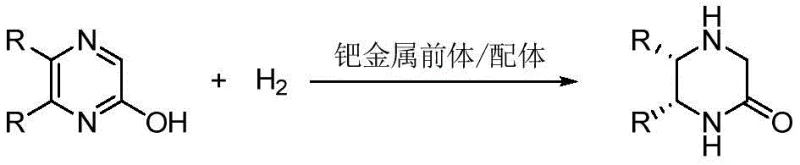
The pharmaceutical industry continuously seeks efficient routes to access chiral heterocyclic scaffolds, which serve as critical building blocks for bioactive molecules. Patent CN110872260B introduces a groundbreaking methodology for the synthesis of chiral lactams, specifically 5,6-disubstituted piperazin-2-ones, via palladium-catalyzed asymmetric hydrogenation of 2-hydroxypyrazine compounds. This technology represents a significant leap forward in atom economy and operational simplicity, addressing the long-standing challenges associated with constructing chiral piperazinone cores. By leveraging a robust palladium catalytic system combined with chiral diphosphine ligands, the invention enables the direct conversion of readily available aromatic substrates into high-value chiral intermediates with exceptional stereocontrol. For R&D directors and procurement specialists alike, this patent outlines a pathway that not only simplifies synthetic sequences but also enhances the overall sustainability of the manufacturing process by reducing waste and avoiding expensive chiral pool starting materials.
The Limitations of Conventional Methods vs. The Novel Approach
The Limitations of Conventional Methods
Traditionally, the construction of chiral piperazinone structures has relied heavily on the use of chiral amino acids as starting materials, necessitating multi-step sequences that include ring-closing reactions and extensive protection-deprotection strategies. These conventional routes are often plagued by high raw material costs, as enantiopure amino acids can be prohibitively expensive for large-scale production. Furthermore, alternative methods involving the asymmetric hydrogenation of pyrazine derivatives have historically faced significant hurdles; for instance, early rhodium-catalyzed systems reported in the literature often suffered from moderate enantioselectivity, with ee values rarely exceeding 78%, and were limited to specific substrate classes like pyrazine-2-carboxylic acid derivatives. Other strategies required cumbersome multi-step activation protocols, such as partial hydrogenation followed by protection and subsequent asymmetric reduction, which drastically increased the operational complexity and reduced the overall throughput of the synthesis.
The Novel Approach
In stark contrast to these legacy methods, the novel approach detailed in the patent utilizes a tautomerization activation strategy that allows for the direct asymmetric hydrogenation of 2-hydroxypyrazine substrates. This method employs a homogeneous palladium catalyst system that is not only cheap and easy to obtain but also exhibits remarkable air stability, simplifying handling requirements in both laboratory and plant settings. The reaction proceeds under relatively mild conditions, typically at temperatures around 80°C and hydrogen pressures of 1000 psi, to deliver chiral piperazinone compounds with yields reaching up to 96% and enantiomeric excess values as high as 90%. This streamlined single-step transformation from simple pyrazine precursors eliminates the need for chiral pool starting materials and significantly shortens the synthetic route, thereby offering a compelling solution for cost reduction in pharmaceutical intermediate manufacturing.
Mechanistic Insights into Pd-Catalyzed Asymmetric Hydrogenation
The core of this technological advancement lies in the sophisticated interplay between the palladium metal precursor and the chiral ligand environment. The catalytic cycle initiates with the formation of an active palladium-hydride species generated from the palladium trifluoroacetate precursor and hydrogen gas in the presence of the chiral diphosphine ligand, such as (R)-TolBINAP or (R)-SynPhos. The 2-hydroxypyrazine substrate undergoes a crucial tautomerization to its lactam form, which then coordinates to the metal center. The chiral pocket created by the bulky binaphthyl backbone of the ligand dictates the facial selectivity of the hydrogen addition, ensuring that the hydride transfer occurs exclusively to one face of the heteroaromatic ring. This precise stereochemical control is further enhanced by the presence of acidic additives like p-toluenesulfonic acid monohydrate, which likely assist in protonating the intermediate species and facilitating the release of the product while regenerating the active catalyst.
From an impurity control perspective, the mechanism offers distinct advantages due to the high diastereoselectivity observed, with d.r. values consistently greater than 20:1. The specific coordination geometry prevents the formation of unwanted cis-isomers or over-reduced byproducts that are common in less selective hydrogenation processes. The use of a homogeneous system ensures uniform catalytic activity throughout the reaction mixture, minimizing localized hot spots that could lead to decomposition or racemization. Moreover, the stability of the palladium complex under the reaction conditions prevents the precipitation of palladium black, a common issue that can lead to catalyst deactivation and metal contamination in the final product, thus ensuring a cleaner crude profile that simplifies downstream purification efforts for high-purity pharmaceutical intermediates.
How to Synthesize Chiral Lactam Efficiently
The synthesis protocol described in the patent provides a robust framework for producing these valuable chiral scaffolds with high reproducibility. The process begins with the in situ generation of the catalyst by mixing the palladium precursor and ligand, followed by the introduction of the substrate and acidic additive in a mixed solvent system of dichloromethane and benzene. This specific solvent combination was optimized to balance substrate solubility and catalyst stability, ensuring maximum conversion rates. The reaction is conducted in a high-pressure vessel under a hydrogen atmosphere, where temperature and pressure are carefully controlled to drive the equilibrium towards the fully saturated chiral lactam. For detailed operational parameters and safety guidelines regarding high-pressure hydrogenation, please refer to the standardized synthesis steps provided below.
- Prepare the catalyst by mixing palladium trifluoroacetate and a chiral diphosphine ligand (such as (R)-TolBINAP) in an organic solvent like acetone, stirring at room temperature, and removing the solvent under reduced pressure.
- Transfer the prepared catalyst into a high-pressure reactor containing the 2-hydroxypyrazine substrate, an additive (e.g., p-toluenesulfonic acid monohydrate), and a solvent mixture of dichloromethane and benzene under nitrogen protection.
- Charge the reactor with hydrogen gas to 1000 psi, heat the mixture to 80°C, and stir for 24 hours to complete the asymmetric hydrogenation, followed by solvent removal and chromatographic purification.
Commercial Advantages for Procurement and Supply Chain Teams
For procurement managers and supply chain heads, the adoption of this palladium-catalyzed route offers transformative benefits regarding cost structure and supply reliability. The shift from precious metals like rhodium or iridium to palladium represents a significant strategic advantage, as palladium is generally more abundant and cost-effective, leading to substantial cost savings in catalyst procurement. Additionally, the air stability of the catalyst system reduces the need for stringent inert atmosphere handling during the catalyst preparation phase, lowering the barrier for entry for contract manufacturing organizations and simplifying the logistics of catalyst storage and transport. The high atom economy of the reaction means that less raw material is wasted, directly contributing to a more sustainable and economically viable production model that aligns with modern green chemistry initiatives.
- Cost Reduction in Manufacturing: The elimination of expensive chiral amino acid starting materials and the reduction of synthetic steps from multi-step sequences to a single hydrogenation event drastically lowers the overall cost of goods sold. By avoiding complex protection group chemistry and utilizing readily available 2-hydroxypyrazine derivatives, manufacturers can achieve significant margin improvements. The high yields reported, often exceeding 90%, minimize the loss of valuable intermediates, ensuring that the input costs are efficiently converted into saleable product without the need for extensive recycling loops or wasteful purification stages.
- Enhanced Supply Chain Reliability: The reliance on commodity chemicals such as benzene, dichloromethane, and commercially available palladium salts ensures a resilient supply chain that is less susceptible to the bottlenecks often associated with specialized chiral reagents. The robustness of the reaction conditions allows for flexible scheduling and batch processing, enabling suppliers to respond quickly to fluctuating market demands. Furthermore, the broad substrate scope demonstrated in the patent implies that a single catalytic platform can be adapted to produce a wide variety of analogues, providing supply chain agility for pipeline development projects without the need for requalifying entirely new synthetic routes.
- Scalability and Environmental Compliance: The reaction conditions are inherently scalable, operating at moderate temperatures and pressures that are well within the capabilities of standard industrial hydrogenation equipment. The use of a homogeneous catalyst that can be effectively removed during workup reduces the environmental burden associated with heavy metal waste disposal. The simplified workflow reduces the total volume of solvents and reagents required per kilogram of product, resulting in a smaller environmental footprint and easier compliance with increasingly stringent regulatory standards regarding waste management and emissions in fine chemical manufacturing.
Frequently Asked Questions (FAQ)
The following questions address common technical and commercial inquiries regarding the implementation of this asymmetric hydrogenation technology. These insights are derived directly from the experimental data and comparative analysis presented in the patent documentation, aiming to clarify the practical implications for process development and commercial production. Understanding these nuances is essential for evaluating the feasibility of integrating this route into existing manufacturing portfolios.
Q: What are the advantages of using palladium catalysts over rhodium for pyrazine hydrogenation?
A: According to patent CN110872260B, palladium catalysts offer superior air stability and lower cost compared to traditional rhodium systems. Furthermore, the developed Pd-system achieves high enantioselectivity (up to 90% ee) directly on 2-hydroxypyrazine substrates without requiring complex pre-activation steps often needed for other metals.
Q: What is the substrate scope for this asymmetric hydrogenation method?
A: The method demonstrates broad substrate tolerance, successfully hydrogenating 5,6-disubstituted-2-hydroxypyrazines where the substituents include various aryl groups such as phenyl, tolyl, methoxyphenyl, and halogenated phenyls, consistently delivering high yields (up to 96%) and excellent diastereoselectivity (>20:1 d.r.).
Q: Is this process suitable for large-scale commercial manufacturing?
A: Yes, the process is designed for scalability. It utilizes mild reaction conditions (80°C, 1000 psi H2) and commercially available reagents. The simple workup procedure involving solvent removal and column chromatography indicates a straightforward path for process optimization and scale-up in industrial settings.
Partnering with NINGBO INNO PHARMCHEM: Your Reliable Chiral Lactam Supplier
At NINGBO INNO PHARMCHEM, we recognize the critical importance of accessing high-quality chiral intermediates for the development of next-generation therapeutics. Our team possesses extensive experience scaling diverse pathways from 100 kgs to 100 MT/annual commercial production, ensuring that the transition from laboratory discovery to industrial reality is seamless and efficient. We are committed to maintaining stringent purity specifications through our rigorous QC labs, guaranteeing that every batch of chiral lactam delivered meets the exacting standards required by global regulatory bodies. Our expertise in palladium catalysis allows us to optimize this specific patent-covered route for maximum efficiency and cost-effectiveness tailored to your specific project needs.
We invite you to collaborate with us to leverage this advanced synthetic technology for your upcoming projects. By engaging with our technical procurement team, you can request a Customized Cost-Saving Analysis that quantifies the potential economic benefits of switching to this catalytic hydrogenation route. We encourage you to reach out today to discuss your specific requirements,索取 specific COA data for our reference standards, and obtain comprehensive route feasibility assessments that will empower your decision-making process and accelerate your time to market.