
Revolutionizing 5-ASA Manufacturing: Advanced Gas-Phase Catalytic Carboxylation for Commercial Scale
Revolutionizing 5-ASA Manufacturing: Advanced Gas-Phase Catalytic Carboxylation for Commercial Scale
The pharmaceutical industry constantly seeks more efficient, sustainable, and cost-effective pathways for producing critical active pharmaceutical ingredients (APIs) and intermediates. A significant technological breakthrough in this domain is detailed in patent CN102126977A, which discloses a novel method for preparing 5-aminosalicylic acid (5-ASA) via gas-phase catalytic carboxylation. This innovation represents a paradigm shift from traditional solid-phase thermochemical reactions to a highly controlled gas-solid catalytic system. By utilizing specific solid catalysts under optimized temperature and pressure conditions, this method achieves exceptional reaction selectivity and yield while drastically reducing processing time. For global procurement and R&D teams, understanding the mechanistic advantages of this patent is crucial for evaluating potential supply chain partners who can leverage such advanced chemistry to deliver high-purity intermediates reliably.
The Limitations of Conventional Methods vs. The Novel Approach
The Limitations of Conventional Methods
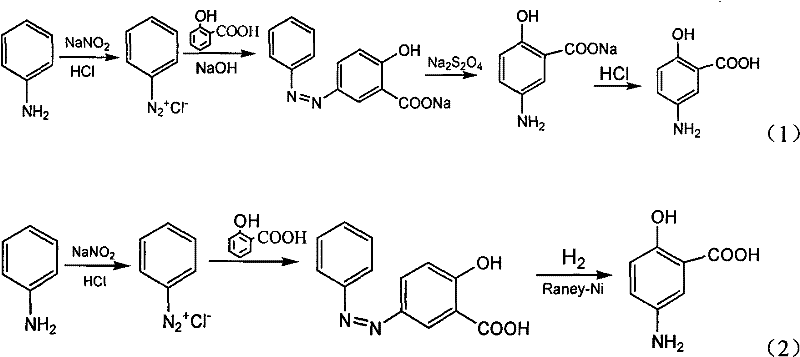
Historically, the synthesis of 5-aminosalicylic acid has relied on several established but flawed methodologies that pose significant challenges for modern manufacturing standards. The traditional aniline synthesis method, for instance, involves the formation of toxic aniline diazonium salts which are then coupled with salicylic acid before undergoing reduction. As illustrated in the reaction schemes below, this multi-step process not only suffers from low overall yields typically not exceeding 50% but also introduces severe safety and environmental hazards due to the toxicity of aniline and azo compounds. Furthermore, the difficulty in completely removing these toxic impurities often necessitates expensive and complex purification steps, driving up the final cost of the API.
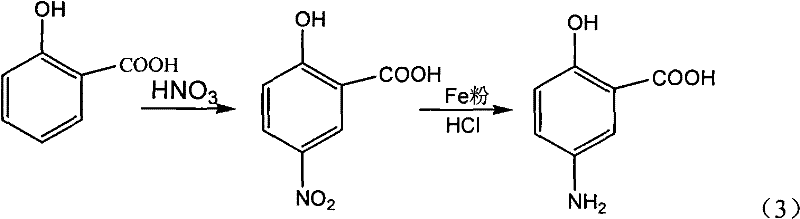
Similarly, the salicylic acid synthesis route, which involves nitration followed by reduction, presents its own set of formidable obstacles. This pathway generates substantial amounts of isomeric by-products during the nitration stage, making the isolation of the desired 5-nitrosalicylic acid difficult and inefficient. The subsequent reduction using iron powder in acidic conditions produces large quantities of iron sludge, creating a heavy burden for waste treatment and environmental compliance. These conventional routes, characterized by long process flows, hazardous reagents, and mediocre yields, are increasingly untenable for manufacturers aiming to meet stringent regulatory requirements and cost targets in the competitive pharmaceutical market.
The Novel Approach
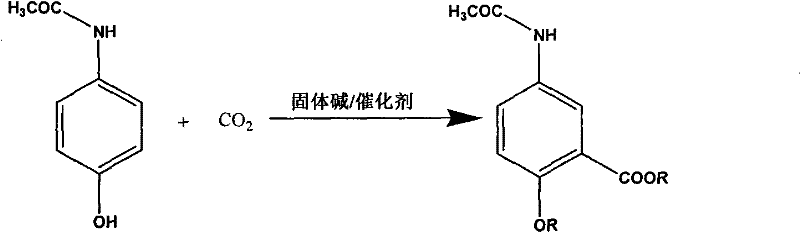
In stark contrast to these legacy methods, the technology described in patent CN102126977A introduces a streamlined gas-phase catalytic carboxylation process that fundamentally alters the reaction landscape. This novel approach utilizes acetaminophen as the starting material, reacting it with carbon dioxide in the presence of a solid base and a specialized solid catalyst. The transition from a purely thermal solid-phase reaction to a catalytic gas-solid system allows for precise control over reaction kinetics, effectively suppressing side reactions such as oxidation and polymerization that plague uncatalyzed methods. The result is a direct, high-yielding transformation that bypasses the need for hazardous nitration or diazonium chemistry, offering a cleaner and more atom-economical pathway to the target molecule.
Mechanistic Insights into Gas-Phase Catalytic Carboxylation
The core of this technological advancement lies in the synergistic interaction between the gaseous carbon dioxide, the solid acetaminophen-base mixture, and the heterogeneous catalyst surface. The patent specifies the use of silicon oxides, aluminum oxides, or silicon-aluminum oxides, such as molecular sieves, which act as Lewis acid-base pairs to activate the CO2 molecule. Under temperatures ranging from 150°C to 220°C and pressures between 0.5 MPa and 5.0 MPa, the catalyst facilitates the electrophilic attack of CO2 onto the electron-rich aromatic ring of the acetaminophen derivative. This catalytic activation lowers the energy barrier for carboxylation, enabling the reaction to proceed rapidly and selectively at the ortho-position relative to the phenolic hydroxyl group, thereby ensuring the formation of the 5-aminosalicylate salt with high regioselectivity.
Furthermore, the gas-solid nature of this reaction system plays a pivotal role in impurity control and product quality. Unlike liquid-phase reactions where solvent interactions can lead to complex by-product profiles, the solvent-free environment minimizes side reactions. The efficient heat transfer inherent in the gas-phase system prevents local hot spots that typically cause thermal degradation or polymerization of the sensitive aminophenol intermediates. Consequently, the crude product obtained from this process contains significantly fewer impurities compared to traditional methods. This high initial purity simplifies the downstream work-up, requiring only dissolution, decolorization, and acidification to achieve a final product purity exceeding 99.9%, which is critical for meeting pharmacopeial standards without extensive recrystallization cycles.
How to Synthesize 5-Aminosalicylic Acid Efficiently
The practical implementation of this synthesis route involves a straightforward yet technically precise sequence of operations designed for reproducibility and scale-up. The process begins with the careful mixing of acetaminophen, a selected alkaline compound such as potassium carbonate or sodium hydroxide, and the solid catalyst in a high-pressure reactor. Carbon dioxide is then introduced to establish the necessary reaction atmosphere, followed by heating to the optimal temperature window to initiate the catalytic carboxylation. Once the reaction is complete, the mixture is cooled, and the resulting 5-aminosalicylate salt is dissolved in water for purification.
- Mix acetaminophen with a solid base (e.g., potassium carbonate) and a solid catalyst (e.g., silicon oxide or molecular sieve) in a high-pressure reactor.
- Introduce carbon dioxide gas and heat the mixture to 150°C-220°C under a pressure of 0.5-5.0 MPa to facilitate catalytic carboxylation.
- Dissolve the resulting crude 5-aminosalicylate salt in water, decolorize, and acidify with mineral acid to precipitate pure 5-aminosalicylic acid.
Commercial Advantages for Procurement and Supply Chain Teams
For procurement managers and supply chain directors, the adoption of this gas-phase catalytic technology translates into tangible strategic benefits that extend beyond simple chemical yield. The elimination of organic solvents and hazardous reagents like concentrated nitric acid and iron powder drastically simplifies the waste management profile of the manufacturing facility. This reduction in hazardous waste generation not only lowers disposal costs but also mitigates regulatory risks associated with environmental compliance, ensuring a more stable and uninterrupted supply of materials. Additionally, the shortened reaction time, reduced from over 12 hours in uncatalyzed processes to merely 1-4 hours, significantly enhances equipment turnover rates, allowing manufacturers to respond more agilely to fluctuating market demands.
- Cost Reduction in Manufacturing: The economic implications of this process are profound, primarily driven by the simplification of the production workflow and the elimination of expensive purification steps. By avoiding the use of toxic aniline and complex reduction agents, the raw material costs are optimized, and the need for specialized containment equipment for hazardous chemicals is reduced. The high selectivity of the catalyst ensures that the majority of the starting material is converted into the desired product, minimizing raw material waste and maximizing the effective output per batch. These factors collectively contribute to a substantially lower cost of goods sold (COGS), providing a competitive pricing advantage in the global marketplace.
- Enhanced Supply Chain Reliability: Supply chain resilience is bolstered by the robustness and simplicity of the catalytic process. The use of readily available and stable starting materials like acetaminophen and carbon dioxide reduces dependency on volatile or hard-to-source specialty chemicals. Moreover, the catalyst itself is recoverable and reusable, adding a layer of sustainability and cost stability to the long-term production strategy. The ability to operate in a sealed circulation system further ensures consistent product quality batch after batch, reducing the risk of supply disruptions caused by failed quality control tests or off-spec production runs.
- Scalability and Environmental Compliance: From a scalability perspective, the gas-solid reaction mechanism is inherently well-suited for continuous or large-batch industrial production. The absence of solvent handling issues removes a major bottleneck often encountered when scaling liquid-phase reactions from the laboratory to the plant. Environmentally, the process aligns perfectly with green chemistry principles by utilizing CO2 as a feedstock and generating minimal waste. This eco-friendly profile is increasingly becoming a prerequisite for partnerships with major multinational pharmaceutical companies that prioritize sustainable sourcing and carbon footprint reduction in their supply chains.
Frequently Asked Questions (FAQ)
The following questions address common technical and commercial inquiries regarding the production of 5-aminosalicylic acid using this advanced catalytic method. These insights are derived directly from the technical specifications and experimental data provided in the patent literature, offering a clear understanding of the process capabilities.
Q: What are the primary advantages of the gas-phase catalytic method over traditional aniline synthesis?
A: The gas-phase catalytic method eliminates the use of toxic aniline and hazardous diazonium intermediates, significantly reducing environmental hazards and purification costs while achieving yields up to 99% compared to less than 50% in traditional routes.
Q: How does the catalyst improve the reaction efficiency in 5-ASA production?
A: Solid catalysts such as silicon oxides and molecular sieves accelerate the carboxylation reaction rate, reducing reaction time from over 12 hours in uncatalyzed solid-phase methods to just 1-4 hours, while preventing local overheating and polymerization.
Q: Is this manufacturing process suitable for large-scale industrial application?
A: Yes, the process operates in a sealed circulation system without organic solvents, generating minimal waste and allowing for continuous industrial production with high safety standards and easy product separation.
Partnering with NINGBO INNO PHARMCHEM: Your Reliable 5-Aminosalicylic Acid Supplier
At NINGBO INNO PHARMCHEM, we recognize the critical importance of adopting cutting-edge synthetic methodologies to ensure the highest standards of quality and efficiency. Our technical team possesses extensive experience scaling diverse pathways from 100 kgs to 100 MT/annual commercial production, ensuring that the theoretical benefits of advanced patents like CN102126977A are fully realized in practical manufacturing settings. We maintain stringent purity specifications and operate rigorous QC labs to guarantee that every batch of 5-aminosalicylic acid meets the exacting requirements of the global pharmaceutical industry, providing our partners with absolute confidence in our supply consistency.
We invite you to collaborate with us to explore how this innovative gas-phase catalytic technology can optimize your specific project requirements. Our technical procurement team is ready to provide a Customized Cost-Saving Analysis tailored to your volume needs, demonstrating exactly how this greener, more efficient route can impact your bottom line. Please contact us today to request specific COA data and comprehensive route feasibility assessments, and let us demonstrate why we are the preferred partner for high-performance pharmaceutical intermediates.