
Advanced Palladium-Catalyzed Synthesis of 2-Trifluoromethyl Quinazolinone Intermediates for Pharmaceutical Manufacturing
The pharmaceutical industry continuously seeks robust and scalable synthetic routes for heterocyclic scaffolds that serve as critical building blocks for active pharmaceutical ingredients (APIs). A significant breakthrough in this domain is detailed in patent CN113045503B, which discloses a highly efficient preparation method for 2-trifluoromethyl substituted quinazolinone compounds. These structures are pivotal in medicinal chemistry, found in numerous bioactive molecules ranging from antifungal agents to anticancer drugs. The introduction of a trifluoromethyl group often enhances metabolic stability and lipophilicity, making these intermediates highly desirable for drug discovery programs. This report analyzes the technical merits of this novel palladium-catalyzed carbonylation strategy, offering valuable insights for R&D directors and procurement specialists looking to optimize their supply chains for high-value nitrogen-containing heterocycles.
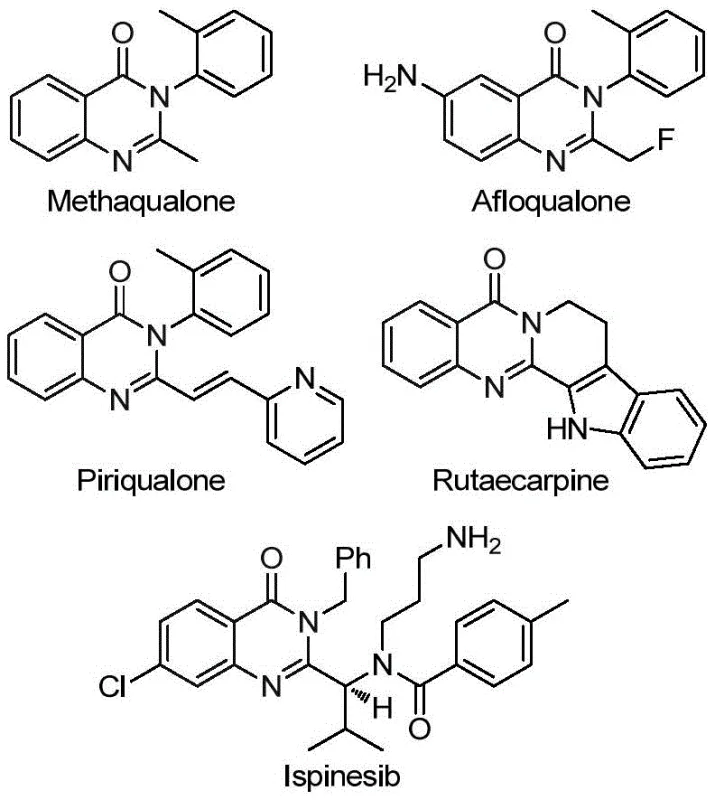
Quinazolinone compounds represent an important class of fused-ring nitrogen-containing six-membered heterocycles widely existing in various natural products and drug molecules. They exhibit a series of biological and pharmaceutical activities, such as antifungal, antibacterial, antiviral, anti-inflammatory, anticonvulsant, and anticancer properties. Many common drugs on the market contain quinazolinone molecular structures, such as methaqualone and afloqualone. However, the synthesis of 2-trifluoromethyl-substituted variants has historically been challenging. Conventional literature methods often rely on the cyclization of anthranilamide with ethyl trifluoroacetate or trifluoroacetic anhydride, or the reaction of isatoic anhydride with trifluoroacetic anhydride. These traditional pathways are generally limited by harsh reaction conditions, the requirement for expensive or pre-activated substrates, low yields, and narrow substrate scopes, which significantly hinder their utility in large-scale industrial applications.
The Limitations of Conventional Methods vs. The Novel Approach
The Limitations of Conventional Methods
Historically, the construction of the quinazolinone core bearing a trifluoromethyl group has relied on methodologies that pose significant safety and economic challenges for process chemists. Common strategies involve the use of unstable trifluoroacetamides or the direct handling of corrosive trifluoroacetic anhydride under vigorous conditions. These reactions often suffer from poor atom economy and generate substantial waste streams, complicating downstream purification. Furthermore, the substrate tolerance in these older methods is frequently narrow, meaning that introducing diverse functional groups on the aromatic ring often leads to decomposition or side reactions. For a reliable pharmaceutical intermediate supplier, relying on such inefficient routes translates to higher production costs and inconsistent batch quality, which are unacceptable for GMP manufacturing environments.
The Novel Approach
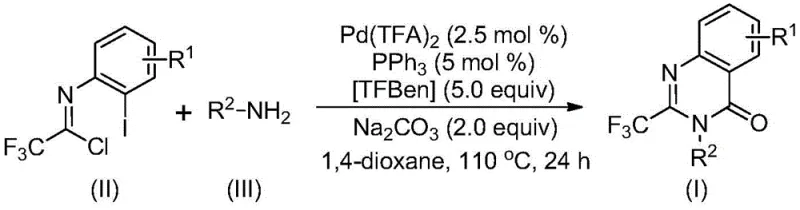
In contrast, the method described in the patent utilizes a transition metal palladium-catalyzed carbonylation cascade reaction, representing a paradigm shift in synthetic efficiency. By employing cheap and readily available trifluoroethylimidoyl chloride and various amines as starting materials, this route bypasses the need for hazardous gaseous carbon monoxide. Instead, it uses TFBen (1,3,5-tricarboxylic acid phenol ester) as a solid, safe carbon monoxide surrogate that releases CO in situ under heating. This innovation not only simplifies the operational setup but also dramatically improves reaction safety profiles. The method demonstrates excellent functional group tolerance, allowing for the synthesis of diverse substituted trifluoromethyl quinazolinone compounds through simple substrate design, thereby widening the practical applicability of this scaffold in drug development.
Mechanistic Insights into Pd-Catalyzed Carbonylation Cascade
The success of this transformation lies in the intricate interplay between the palladium catalyst and the specific reaction components. Mechanistically, the reaction likely initiates with a base-promoted intermolecular carbon-nitrogen bond coupling to form a trifluoroacetamidine derivative intermediate. Subsequently, the palladium catalyst inserts into the carbon-iodine bond of the substrate, forming a reactive divalent palladium intermediate. As the temperature rises to 110°C, the TFBen additive decomposes to release carbon monoxide, which then inserts into the carbon-palladium bond to generate an acyl palladium species. This step is crucial as it builds the carbonyl functionality directly into the ring system without external gas pressure.
Following the CO insertion, the base facilitates the formation of a palladium-nitrogen bond, leading to a seven-membered ring palladium intermediate. The cycle concludes with a reductive elimination step that releases the final 2-trifluoromethyl-substituted quinazolinone compound and regenerates the active palladium catalyst. This mechanistic pathway ensures high selectivity and minimizes the formation of by-products commonly seen in thermal cyclizations. For R&D teams, understanding this cycle is vital for troubleshooting and optimizing reaction parameters, ensuring that impurity profiles remain within stringent specifications required for clinical grade materials.
How to Synthesize 2-Trifluoromethyl Quinazolinone Efficiently
The experimental protocol outlined in the patent provides a clear roadmap for executing this synthesis with high reproducibility. The process involves mixing specific molar ratios of palladium trifluoroacetate, triphenylphosphine, sodium carbonate, TFBen, the imidoyl chloride substrate, and the amine nucleophile in an aprotic solvent like 1,4-dioxane. The reaction is heated to 110°C for a duration of 16 to 30 hours, depending on the specific substrate reactivity. Post-reaction workup is straightforward, involving filtration and silica gel treatment followed by standard column chromatography.
- Combine palladium trifluoroacetate, triphenylphosphine, TFBen, sodium carbonate, trifluoroethylimidoyl chloride, and amine in an organic solvent such as 1,4-dioxane.
- Heat the reaction mixture to 110°C and stir for 16 to 30 hours to allow the carbonylation cascade to proceed.
- Upon completion, filter the mixture, mix with silica gel, and purify via column chromatography to isolate the final quinazolinone compound.
Commercial Advantages for Procurement and Supply Chain Teams
From a commercial perspective, this novel synthetic route offers compelling advantages that directly address the pain points of procurement managers and supply chain heads. The shift towards using stable, commercially available starting materials like trifluoroethylimidoyl chlorides eliminates the dependency on specialized, high-cost reagents that often suffer from long lead times. By replacing hazardous gaseous CO with a solid surrogate, the process reduces the need for specialized high-pressure equipment, thereby lowering capital expenditure requirements for manufacturing facilities. This simplification of the process infrastructure translates into significant cost reduction in pharmaceutical intermediate manufacturing, making the final API more competitive in the global market.
- Cost Reduction in Manufacturing: The utilization of inexpensive amines and imidoyl chlorides, combined with a low loading of palladium catalyst (2.5 mol%), drastically reduces the raw material cost per kilogram of product. Furthermore, the elimination of expensive pre-activation steps and the use of a solid CO source remove the logistical costs associated with handling toxic gases. This streamlined approach ensures that the overall cost of goods sold (COGS) is minimized, allowing for better margin management in high-volume production scenarios without compromising on quality.
- Enhanced Supply Chain Reliability: One of the critical risks in pharmaceutical supply chains is the availability of key starting materials. Since the reagents required for this method, such as triphenylphosphine and sodium carbonate, are commodity chemicals available from multiple global vendors, the risk of supply disruption is significantly mitigated. The robustness of the reaction across a wide range of substrates means that a single manufacturing line can be adapted to produce various derivatives, enhancing flexibility. This adaptability ensures reducing lead time for high-purity pharmaceutical intermediates, allowing clients to respond faster to market demands.
- Scalability and Environmental Compliance: The method has been successfully demonstrated on a gram scale with high yields, indicating strong potential for commercial scale-up of complex pharmaceutical intermediates. The use of 1,4-dioxane as a solvent, while requiring careful recovery, is a well-established industrial solvent with known recycling protocols. Moreover, the high atom economy of the carbonylation cascade reduces the generation of chemical waste compared to traditional multi-step condensations. This aligns with modern green chemistry principles, facilitating easier regulatory approval and environmental compliance for large-scale production facilities.
Frequently Asked Questions (FAQ)
The following questions address common technical inquiries regarding the implementation and scope of this patented technology. These answers are derived directly from the experimental data and beneficial effects reported in the patent documentation, providing clarity for technical teams evaluating this route for adoption. Understanding these nuances is essential for assessing the feasibility of integrating this chemistry into existing production workflows.
Q: What are the advantages of this new synthesis method over traditional routes?
A: Unlike conventional methods that require harsh conditions or unstable reagents like trifluoroacetamides, this novel approach utilizes cheap, readily available trifluoroethylimidoyl chlorides and amines. It operates under milder conditions with higher reaction efficiency and broader substrate compatibility.
Q: Can this method be used to synthesize complex drug molecules like Rutaecarpine?
A: Yes, the patent explicitly demonstrates the successful application of this methodology in the high-yield synthesis of Rutaecarpine, a bioactive natural product, achieving a total yield of 77% over three steps.
Q: What catalyst system is required for this transformation?
A: The reaction employs a palladium catalyst system consisting of palladium trifluoroacetate (2.5 mol%) and triphenylphosphine (5 mol%), utilizing TFBen as a safe carbon monoxide substitute instead of toxic CO gas.
Partnering with NINGBO INNO PHARMCHEM: Your Reliable 2-Trifluoromethyl Quinazolinone Supplier
At NINGBO INNO PHARMCHEM, we recognize the strategic importance of efficient synthetic routes like the one described in CN113045503B for the rapid development of next-generation therapeutics. As a dedicated CDMO partner, we possess extensive experience scaling diverse pathways from 100 kgs to 100 MT/annual commercial production, ensuring that your project transitions smoothly from benchtop discovery to full-scale manufacturing. Our facility is equipped with rigorous QC labs and adheres to stringent purity specifications, guaranteeing that every batch of 2-trifluoromethyl quinazolinone intermediate meets the highest international standards for safety and efficacy.
We invite you to collaborate with us to leverage this advanced technology for your specific drug development needs. Our technical team is ready to provide a Customized Cost-Saving Analysis tailored to your project volume and timeline. Please contact our technical procurement team today to request specific COA data and route feasibility assessments, and let us help you accelerate your path to market with reliable, high-quality chemical solutions.