
Scalable Iron-Catalyzed Oxidation Technology for High-Purity Carboxylic Acids and Pharmaceutical Intermediates
Scalable Iron-Catalyzed Oxidation Technology for High-Purity Carboxylic Acids and Pharmaceutical Intermediates
The landscape of fine chemical manufacturing is undergoing a significant transformation driven by the urgent need for sustainable and cost-effective synthetic methodologies. A pivotal advancement in this domain is detailed in Chinese Patent CN113004108B, which discloses a highly efficient method for preparing carboxylic acids through the aerobic oxidation of alcohols or aldehydes. This technology leverages a robust catalytic system comprising ferric nitrate, TEMPO, and inorganic halides, utilizing molecular oxygen or ambient air as the terminal oxidant. For R&D directors and procurement managers alike, this represents a paradigm shift away from stoichiometric heavy metal oxidants towards a catalytic, green chemistry approach that aligns with modern regulatory standards. The ability to operate under neutral conditions at room temperature not only simplifies process control but also drastically reduces energy consumption, positioning this method as a cornerstone for the next generation of reliable pharmaceutical intermediate supplier strategies.
Furthermore, the versatility of this oxidation protocol extends far beyond simple aliphatic chains, accommodating a wide array of structurally complex substrates including terpenes, steroids, and heterocycles. This broad substrate scope is critical for the synthesis of high-purity OLED material precursors and specialized agrochemical intermediates where functional group integrity is paramount. By replacing expensive and hazardous oxidizing agents with ubiquitous air, the process inherently lowers the barrier to entry for large-scale production. The patent data underscores the method's capability to achieve high atom economy and yield, addressing the dual challenges of economic viability and environmental stewardship that define contemporary chemical engineering. As we delve deeper into the technical specifics, it becomes evident that this innovation offers a tangible pathway for cost reduction in fine chemical manufacturing without compromising on product quality or safety.
The Limitations of Conventional Methods vs. The Novel Approach
The Limitations of Conventional Methods
Historically, the industrial conversion of primary alcohols to carboxylic acids has relied heavily on stoichiometric oxidants such as potassium permanganate, chromium trioxide (Jones reagent), or nitric acid. These traditional pathways are fraught with significant drawbacks that hinder their applicability in modern, regulated environments. The use of hexavalent chromium, for instance, poses severe toxicity risks to personnel and generates vast quantities of hazardous heavy metal waste that require costly and complex disposal procedures. Moreover, these reactions often necessitate harsh conditions, including strong acidic media and elevated temperatures, which can lead to the degradation of sensitive functional groups present in complex drug molecules. The equipment corrosion associated with strong acids further escalates capital expenditure, while the exothermic nature of some oxidations introduces safety hazards that complicate commercial scale-up of complex polymer additives or pharmaceutical intermediates. Consequently, the industry has long sought a cleaner alternative that mitigates these environmental and operational liabilities.
The Novel Approach
The methodology presented in the patent data offers a compelling solution by employing a catalytic cycle driven by earth-abundant iron and the stable nitroxyl radical TEMPO. Unlike traditional methods that consume stoichiometric amounts of oxidant, this system utilizes molecular oxygen or even ambient air, which is not only free and readily available but also generates water as the sole byproduct. This fundamental shift eliminates the generation of heavy metal sludge and significantly simplifies the downstream purification process. The reaction proceeds under neutral conditions at room temperature, preserving the integrity of acid-sensitive moieties such as acetals, silyl ethers, and unsaturated bonds. This mildness is particularly advantageous for the synthesis of delicate active pharmaceutical ingredients where side reactions must be meticulously avoided. By integrating inexpensive inorganic halides like potassium chloride as co-catalysts, the system achieves remarkable efficiency, transforming what was once a hazardous, waste-intensive process into a streamlined, environmentally benign operation suitable for green chemical synthesis.
Mechanistic Insights into Fe/TEMPO-Catalyzed Aerobic Oxidation
Understanding the catalytic cycle is essential for R&D teams aiming to optimize this process for specific substrates. The mechanism involves a synergistic interaction between the iron center and the TEMPO radical. Initially, the ferric species coordinates with TEMPO to form an active oxidizing complex. This complex abstracts a hydrogen atom from the alcohol substrate, facilitating a beta-elimination that releases the corresponding aldehyde and reduces the iron center from Fe(III) to Fe(II). Crucially, the presence of molecular oxygen allows for the rapid re-oxidation of Fe(II) back to Fe(III), closing the catalytic loop and regenerating the active species. Simultaneously, the TEMPO-H formed during the hydrogen abstraction is re-oxidized by the iron species, ensuring the continuous turnover of the nitroxyl radical. This cooperative catalysis ensures that the reaction does not stall at the aldehyde stage, which is often a bottleneck in other oxidation systems.
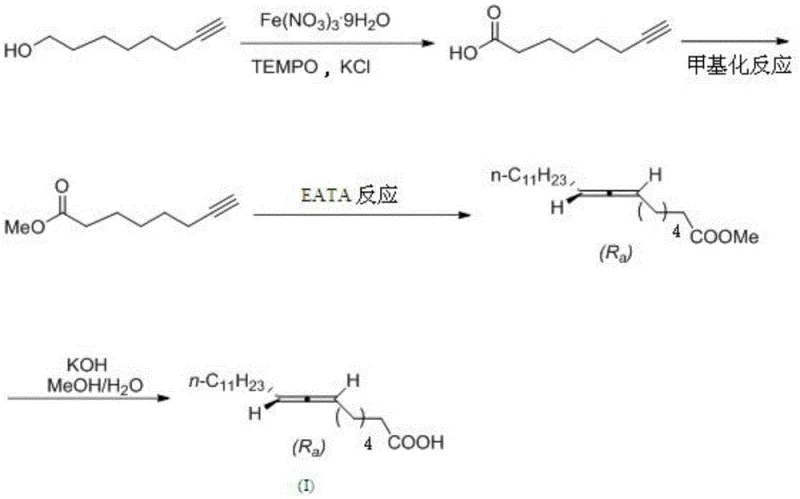
The subsequent oxidation of the aldehyde intermediate to the carboxylic acid proceeds through a hydrate mechanism. Under the influence of the Lewis acidic iron catalyst, water molecules in the system attack the carbonyl carbon of the aldehyde to form a gem-diol intermediate. This hydrate then undergoes a similar oxidative dehydrogenation process mediated by the TEMPO/iron system to yield the final carboxylic acid product. This mechanistic pathway explains the high selectivity observed in the patent examples, where over-oxidation or degradation of the carbon skeleton is minimal. The inclusion of inorganic halides, specifically potassium chloride, appears to enhance the solubility and stability of the catalytic species, further boosting the reaction rate. This detailed understanding of the redox dynamics allows process chemists to fine-tune catalyst loading and oxygen flow rates to maximize throughput while maintaining the stringent purity specifications required for regulatory compliance in the pharmaceutical sector.
How to Synthesize Carboxylic Acids Efficiently
Implementing this oxidation technology in a laboratory or pilot plant setting requires careful attention to catalyst preparation and gas management. The general procedure involves dissolving the iron salt, TEMPO, and halide co-catalyst in a chlorinated solvent such as 1,2-dichloroethane, followed by the addition of the alcohol substrate. The reaction is then subjected to an oxygen or air atmosphere, with stirring continued until conversion is complete as monitored by TLC or HPLC. The simplicity of the workup, often requiring only filtration through silica and solvent removal, makes this method highly attractive for rapid process development. For those seeking to implement this immediately, the detailed standardized synthesis steps are outlined in the guide below.
- Prepare the catalytic system by mixing Fe(NO3)3·9H2O (10 mol%), TEMPO (10-20 mol%), and KCl (10 mol%) in 1,2-dichloroethane (DCE) solvent.
- Add the primary alcohol or aldehyde substrate to the reaction mixture at room temperature under a neutral condition.
- Introduce oxygen or air (via balloon or slow flow) and stir for 12 to 48 hours until TLC indicates complete conversion to the corresponding acid.
Commercial Advantages for Procurement and Supply Chain Teams
For procurement managers and supply chain heads, the adoption of this iron-catalyzed oxidation technology translates into tangible strategic benefits that extend beyond mere chemical yield. The primary advantage lies in the drastic simplification of the raw material supply chain. By replacing expensive, specialized oxidizing agents with commodity chemicals like ferric nitrate and atmospheric air, companies can significantly reduce their exposure to volatile raw material pricing and supply disruptions. The elimination of heavy metal waste streams also alleviates the burden on waste management logistics, reducing the frequency and cost of hazardous waste pickups. Furthermore, the mild reaction conditions mean that existing stainless steel reactors can often be utilized without the need for exotic, corrosion-resistant linings, thereby optimizing capital asset utilization and reducing lead time for high-purity pharmaceutical intermediates.
- Cost Reduction in Manufacturing: The economic impact of switching to this catalytic system is profound, primarily driven by the replacement of stoichiometric oxidants with catalytic amounts of inexpensive iron salts and free air. Traditional oxidants like chromium reagents are not only costly to purchase but also incur substantial hidden costs related to safety handling, storage, and regulatory compliance. By minimizing the E-factor (mass of waste per mass of product), this process lowers the overall cost of goods sold. Additionally, the high atom economy ensures that a greater proportion of the starting material ends up in the final product, reducing raw material consumption. The ability to run reactions at room temperature further contributes to cost savings by eliminating the energy expenses associated with heating or cooling large-scale reactors, resulting in substantial cost savings over the lifecycle of the product.
- Enhanced Supply Chain Reliability: Reliance on specialized oxidants can create single points of failure in the supply chain, especially when geopolitical factors affect the availability of specific minerals or reagents. In contrast, the reagents used in this method—iron nitrate, TEMPO, and potassium chloride—are globally sourced commodity chemicals with robust and diversified supply networks. This diversification enhances supply chain resilience, ensuring continuous production even during market fluctuations. Moreover, the use of air as an oxidant removes the need for transporting and storing bulk quantities of hazardous oxidizing agents, simplifying logistics and reducing insurance premiums. This reliability is crucial for maintaining consistent delivery schedules to downstream customers in the pharmaceutical and agrochemical sectors.
- Scalability and Environmental Compliance: Scaling chemical processes often introduces new safety and environmental challenges, but this technology is inherently designed for expansion. The patent demonstrates successful scale-up using controlled air flow techniques, which mitigate the explosion risks associated with pure oxygen while maintaining reaction efficiency. This approach aligns perfectly with increasingly stringent environmental regulations regarding volatile organic compounds and heavy metal discharge. By generating water as the primary byproduct, the process simplifies wastewater treatment requirements and reduces the carbon footprint of the manufacturing site. This environmental compatibility facilitates smoother regulatory approvals and enhances the corporate sustainability profile, which is increasingly important for securing contracts with major multinational corporations committed to green chemistry principles.
Frequently Asked Questions (FAQ)
The following questions address common technical and operational inquiries regarding the implementation of this aerobic oxidation technology. These insights are derived directly from the experimental data and scope defined in the patent documentation, providing clarity on substrate compatibility, reaction conditions, and scalability potential. Understanding these nuances is vital for process engineers evaluating the feasibility of integrating this method into existing production lines.
Q: What are the advantages of using iron and TEMPO over traditional chromium oxidants?
A: Traditional methods like Jones oxidation use toxic Cr(VI) reagents which generate hazardous heavy metal waste. The iron/TEMPO system uses abundant, non-toxic iron salts and air as the terminal oxidant, producing water as the only byproduct, significantly reducing environmental impact and waste disposal costs.
Q: Can this oxidation method tolerate sensitive functional groups like alkynes or halides?
A: Yes, the patent demonstrates excellent functional group compatibility. Substrates containing terminal alkynes, bromine atoms, ester groups, and even complex steroid skeletons are successfully oxidized to acids without side reactions, making it suitable for complex API intermediate synthesis.
Q: Is this process scalable for industrial production?
A: The technology is designed for scalability. The patent describes successful scale-up using slow air flow techniques to manage oxygen concentration safely, avoiding the risks associated with pure oxygen while maintaining high yields in multi-gram quantities.
Partnering with NINGBO INNO PHARMCHEM: Your Reliable Carboxylic Acids Supplier
The transition to greener, more efficient synthetic routes requires a partner with deep technical expertise and proven manufacturing capabilities. NINGBO INNO PHARMCHEM stands at the forefront of this evolution, offering comprehensive CDMO services tailored to the complexities of modern organic synthesis. Our team possesses extensive experience scaling diverse pathways from 100 kgs to 100 MT/annual commercial production, ensuring that your project moves seamlessly from benchtop discovery to full-scale manufacturing. We maintain stringent purity specifications and operate rigorous QC labs equipped with state-of-the-art analytical instrumentation to guarantee that every batch of carboxylic acid or pharmaceutical intermediate meets the highest global standards. Our commitment to quality assurance means that you can rely on us for consistent, high-performance materials that drive your own product success.
We invite you to explore how our advanced oxidation technologies can optimize your supply chain and reduce your overall manufacturing costs. By leveraging our expertise in iron-catalyzed systems, we can help you navigate the complexities of process development and regulatory compliance. Please contact our technical procurement team to request a Customized Cost-Saving Analysis specific to your target molecules. We are ready to provide specific COA data and route feasibility assessments to demonstrate the tangible value our solutions can bring to your organization. Let us collaborate to build a more sustainable and efficient future for your chemical supply needs.
Engineering Bottleneck?
Can't scale up this synthesis? Upload your target structure or CAS, and our CDMO team will evaluate the industrial feasibility within 24 hours. Request Evaluation →