
Scaling High-Performance Photoelectric Materials for Commercial Organic Solar Cell Manufacturing
The rapid evolution of the renewable energy sector has placed immense pressure on the supply chain for high-performance organic photovoltaic materials. Patent CN103374116A introduces a groundbreaking class of two-dimensional conjugated compounds that bridge the gap between the processability of polymers and the purity of small molecules. These photoelectric materials are specifically engineered to enhance the efficiency of organic solar cells by optimizing light absorption ranges and carrier mobility. As a reliable photoelectric material supplier, understanding the technical nuances of this patent is crucial for R&D teams aiming to next-generation photovoltaic devices. The disclosed compounds feature a benzodithiophene core surrounded by thiophene units, creating a robust conjugated system that facilitates efficient charge transport while maintaining excellent solubility for solution processing.
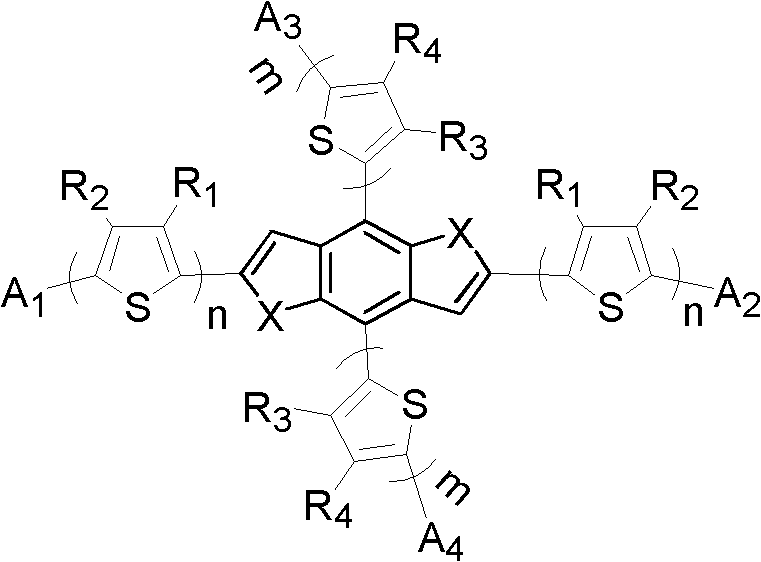
The implementation of these 2D conjugated structures represents a significant leap forward in electronic chemical manufacturing. Unlike traditional polymeric materials which suffer from polydispersity and batch-to-batch variability, these defined molecular structures ensure consistent performance metrics across large-scale production runs. This consistency is vital for the commercial scale-up of complex photoelectric materials, where even minor structural deviations can lead to substantial drops in power conversion efficiency. The patent details a versatile synthetic strategy that allows for the modulation of side chains and end groups, enabling fine-tuning of the material's electronic properties to match specific device architectures.
The Limitations of Conventional Methods vs. The Novel Approach
The Limitations of Conventional Methods
Traditional approaches to organic solar cell active layers have heavily relied on conjugated polymers, which inherently possess a distribution of molecular weights known as polydispersity. This structural heterogeneity complicates the purification process, often requiring extensive and costly gel permeation chromatography to remove low-molecular-weight oligomers that act as traps for charge carriers. Furthermore, the random coil conformation of polymers can lead to inconsistent film morphology, resulting in unpredictable device performance and reduced long-term stability. The reliance on complex polymerization catalysts also introduces the risk of metal contamination, which necessitates additional purification steps that drive up the cost reduction in electronic chemical manufacturing. These factors collectively create a bottleneck for the reliable mass production of high-efficiency organic photovoltaic modules.
The Novel Approach
The novel approach detailed in the patent utilizes a two-dimensional conjugated small molecule architecture that combines the best attributes of both polymers and small molecules. By employing a rigid benzodithiophene core with extended thiophene bridges, the material achieves a planar conformation that promotes strong pi-pi stacking, thereby significantly enhancing carrier mobility. The defined molecular weight eliminates the need for complex fractionation, allowing for simpler purification via standard column chromatography or recrystallization. This structural precision ensures that every molecule contributes effectively to the photovoltaic effect, maximizing the absorption coefficient and open-circuit voltage. The ability to solution-process these materials while retaining the benefits of small-molecule purity offers a compelling pathway for cost reduction in organic solar cell manufacturing without sacrificing performance.
Mechanistic Insights into Stille Coupling and Knoevenagel Condensation
The synthesis of these advanced photoelectric materials relies on a sophisticated sequence of palladium-catalyzed cross-coupling reactions followed by condensation steps. The core construction involves Stille coupling, where organotin reagents react with halogenated aromatic precursors to form the carbon-carbon bonds that define the conjugated backbone. This reaction is highly selective and tolerant of various functional groups, allowing for the precise assembly of the complex 2D structure. The use of palladium tetrakis as a catalyst under inert atmosphere ensures high yields and minimizes side reactions that could disrupt the conjugation pathway. The resulting intermediate possesses aldehyde terminal groups that are primed for the final functionalization step, which is critical for tuning the energy levels of the material.
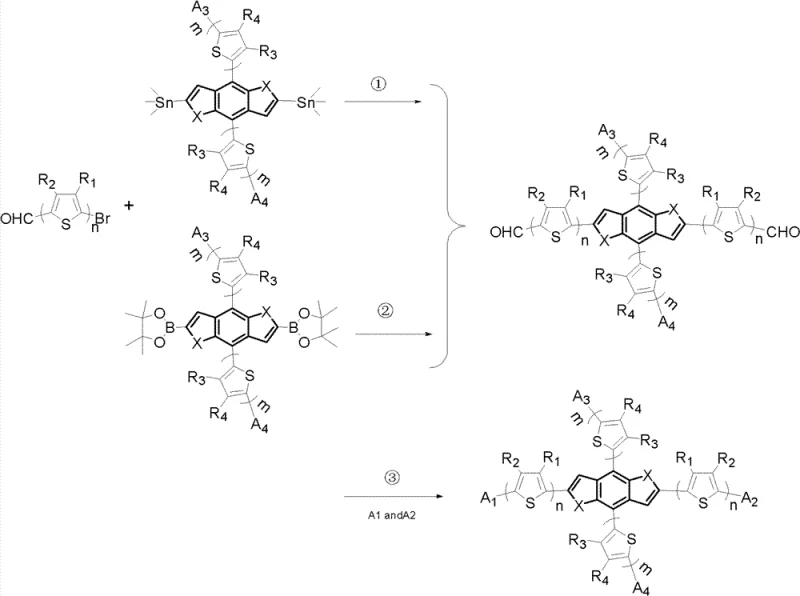
The final stage of the synthesis involves a Knoevenagel condensation reaction, which attaches electron-withdrawing end groups to the dialdehyde-terminated backbone. This step is typically catalyzed by weak acids like ammonium acetate or organic bases like piperidine, proceeding under mild reflux conditions. The condensation extends the conjugation length of the molecule, effectively narrowing the bandgap and red-shifting the absorption spectrum to capture more solar energy. This mechanism also enhances the electron affinity of the material, facilitating better charge separation at the donor-acceptor interface in the solar cell device. The robustness of this reaction pathway ensures that the high-purity organic solar cell intermediate can be produced with minimal impurities, which is essential for achieving long device lifetimes and stable power output.
How to Synthesize Photoelectric Material Efficiently
The synthesis protocol outlined in the patent provides a clear roadmap for producing these high-value intermediates with high fidelity. The process begins with the preparation of the thiophene-based building blocks, followed by the assembly of the benzodithiophene core through iterative coupling steps. The detailed standardized synthesis steps see the guide below ensure that critical parameters such as temperature, catalyst loading, and reaction time are strictly controlled to maximize yield and purity. This level of procedural detail is essential for transferring the technology from the laboratory to the pilot plant, ensuring that the commercial scale-up of complex photoelectric materials proceeds without unexpected technical hurdles.
- Prepare the benzodithiophene core intermediate via Stille coupling using palladium catalysts under inert atmosphere to ensure structural integrity.
- Synthesize the thiophene-based side chains and end-capping groups using bromination and formylation reactions to achieve precise molecular weight control.
- Perform the final Knoevenagel condensation reaction between the dialdehyde-terminated backbone and active methylene compounds using ammonium acetate or piperidine catalysts.
Commercial Advantages for Procurement and Supply Chain Teams
For procurement managers and supply chain heads, the adoption of this synthetic route offers tangible benefits in terms of cost stability and material availability. The use of commercially available starting materials and standard catalysts reduces the dependency on exotic reagents that often suffer from supply volatility. The simplified purification process significantly lowers the operational expenditure associated with downstream processing, as it eliminates the need for specialized chromatography equipment required for polymer fractionation. This efficiency translates directly into a more competitive pricing structure for the final photoelectric material, making it an attractive option for large-scale solar module manufacturing. Furthermore, the defined chemical structure ensures consistent quality, reducing the risk of batch rejection and production delays.
- Cost Reduction in Manufacturing: The elimination of complex polymerization steps and the use of mild condensation conditions significantly lower the energy consumption and catalyst costs associated with production. By avoiding the need for expensive metal scavengers often required to remove residual palladium from polymer chains, the overall cost of goods sold is drastically reduced. The high yields reported in the patent examples indicate a material-efficient process that minimizes waste generation, further contributing to substantial cost savings in the manufacturing lifecycle. This economic efficiency makes the material viable for cost-sensitive applications in the renewable energy sector.
- Enhanced Supply Chain Reliability: The reliance on robust and well-understood chemical transformations such as Stille coupling ensures that the supply chain is resilient to disruptions. The intermediates involved are stable and can be stored for extended periods, allowing for strategic stockpiling to buffer against market fluctuations. The scalability of the synthesis route means that production volumes can be ramped up quickly to meet surging demand without the need for significant capital investment in new reactor types. This flexibility is crucial for reducing lead time for high-purity optoelectronic compounds in a fast-moving industry.
- Scalability and Environmental Compliance: The synthetic pathway is designed with scalability in mind, utilizing solvents and reagents that are manageable in large-scale industrial settings. The reduction in hazardous waste generation due to higher selectivity and yield aligns with increasingly stringent environmental regulations governing chemical manufacturing. The ability to recycle solvents and recover catalysts further enhances the sustainability profile of the process. This compliance not only mitigates regulatory risk but also appeals to end-users who prioritize green chemistry principles in their supply chain sourcing decisions.
Frequently Asked Questions (FAQ)
The following questions address common technical and commercial inquiries regarding the production and application of these photoelectric materials. The answers are derived directly from the technical specifications and experimental data provided in the patent documentation. Understanding these details is essential for stakeholders evaluating the feasibility of integrating these materials into their product lines. The clarity provided here aims to streamline the decision-making process for technical procurement teams.
Q: What are the advantages of 2D conjugated small molecules over polymers in solar cells?
A: 2D conjugated small molecules offer precise molecular weight, controllable structure, and simpler purification processes compared to polymers, leading to better batch consistency and higher carrier mobility in photovoltaic devices.
Q: How does the Knoevenagel condensation improve the synthesis of photoelectric materials?
A: The Knoevenagel condensation allows for mild reaction conditions and high yields when attaching electron-withdrawing end groups, which is critical for tuning the HOMO/LUMO levels for efficient charge transport.
Q: Is this synthesis route scalable for industrial production?
A: Yes, the use of standard coupling reactions like Stille coupling and common catalysts like palladium tetrakis makes the route highly scalable for commercial manufacturing of organic solar cell intermediates.
Partnering with NINGBO INNO PHARMCHEM: Your Reliable Photoelectric Material Supplier
NINGBO INNO PHARMCHEM stands at the forefront of custom synthesis for advanced electronic materials, leveraging deep expertise in the scale-up of complex organic molecules. Our team possesses extensive experience scaling diverse pathways from 100 kgs to 100 MT/annual commercial production, ensuring that your transition from lab-scale discovery to industrial manufacturing is seamless. We adhere to stringent purity specifications and operate rigorous QC labs to guarantee that every batch of photoelectric material meets the exacting standards required for high-performance photovoltaic devices. Our commitment to quality ensures that the carrier mobility and absorption characteristics of the material remain consistent across all production lots.
We invite you to collaborate with us to optimize your supply chain for organic solar cell intermediates. Our technical procurement team is ready to provide a Customized Cost-Saving Analysis tailored to your specific volume requirements and purity needs. Contact us today to request specific COA data and route feasibility assessments that will demonstrate how our manufacturing capabilities can support your product development goals. Let us help you secure a stable and cost-effective supply of critical photoelectric materials for your next-generation energy solutions.
Engineering Bottleneck?
Can't scale up this synthesis? Upload your target structure or CAS, and our CDMO team will evaluate the industrial feasibility within 24 hours. Request Evaluation →