
Revolutionizing Quinazolinone Synthesis: Scalable Pd-Catalyzed One-Pot Process for High-Purity Pharmaceutical Intermediates
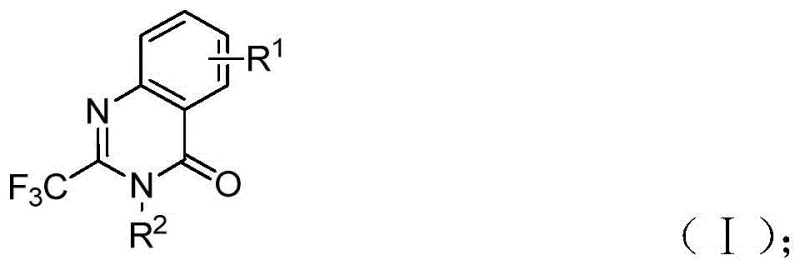
Chinese patent CN112480015B discloses a groundbreaking multi-component one-pot synthesis method for producing 2-trifluoromethyl substituted quinazolinones, a critical class of nitrogen-containing heterocyclic compounds with significant pharmaceutical applications. This innovative approach addresses longstanding challenges in quinazolinone chemistry by utilizing readily available starting materials and a palladium-catalyzed carbonylation cascade reaction that operates under mild conditions compared to conventional methods. The patent demonstrates exceptional substrate compatibility and high reaction efficiency, enabling the production of diverse trifluoromethyl quinazolinone derivatives with yields ranging from 69% to 96% across multiple examples. This technological advancement represents a substantial leap forward in the synthesis of these pharmacologically important compounds, offering both scientific and commercial value to the pharmaceutical industry. The method's simplicity, scalability, and cost-effectiveness make it particularly attractive for industrial implementation in the production of active pharmaceutical ingredients and intermediates.
The Limitations of Conventional Methods vs. The Novel Approach
The Limitations of Conventional Methods
Traditional synthetic routes for quinazolinone compounds have been plagued by significant limitations that hinder their commercial viability and scalability. Conventional approaches often require high-pressure carbon monoxide conditions with ruthenium or platinum catalysts, which necessitate specialized equipment and pose safety concerns in industrial settings. Other methods involve iron-catalyzed condensation reactions that suffer from narrow substrate scope and moderate yields, while palladium-catalyzed cyclization techniques typically require pre-functionalized substrates and expensive metal carbonyl complexes like molybdenum hexacarbonyl in stoichiometric amounts. These established methodologies frequently operate under harsh reaction conditions that limit functional group tolerance, resulting in complex purification procedures and reduced overall process efficiency. Furthermore, many existing protocols demonstrate poor scalability due to the need for precise control over reaction parameters and the generation of difficult-to-handle byproducts. The cumulative effect of these limitations translates to higher production costs, extended manufacturing timelines, and inconsistent product quality that fails to meet the stringent requirements of modern pharmaceutical development.
The Novel Approach
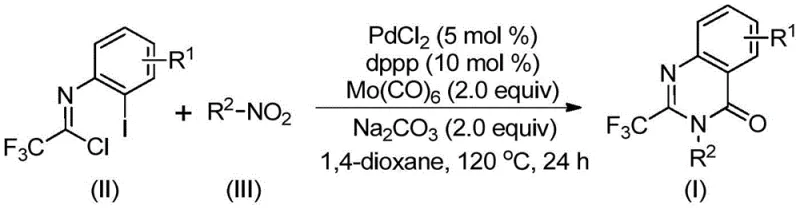
The patented multi-component one-pot methodology represents a paradigm shift in quinazolinone synthesis by addressing these fundamental limitations through an elegant catalytic design. This innovative process utilizes inexpensive and readily available starting materials—trifluoroethylimidoyl chloride and nitro compounds—that can be sourced from multiple commercial suppliers without complex pre-treatment. The palladium-catalyzed carbonylation cascade reaction operates under significantly milder conditions (120°C) compared to traditional high-pressure CO methods, eliminating the need for specialized high-pressure equipment while maintaining excellent reaction efficiency. The strategic use of molybdenum hexacarbonyl as both a CO source and nitro group reductant creates a self-contained reaction system that minimizes side reactions and simplifies process control. Crucially, the method demonstrates exceptional substrate flexibility, accommodating a wide range of functional groups including halogens, alkyl groups, and aryl substituents without requiring protective groups or additional synthetic steps. This broad compatibility enables pharmaceutical manufacturers to rapidly access diverse quinazolinone derivatives for structure-activity relationship studies and lead optimization campaigns, significantly accelerating drug discovery timelines while reducing overall development costs.
Mechanistic Insights into Pd-Catalyzed Carbonylation Cascade Reaction
The reaction mechanism begins with the molybdenum hexacarbonyl-mediated reduction of the nitro compound to the corresponding amine, which then undergoes base-promoted coupling with trifluoroethylimidoyl chloride to form a trifluoroacetamidine intermediate. This key transformation occurs under mild conditions without requiring isolation of the intermediate species, contributing to the overall efficiency of the one-pot process. The palladium catalyst then inserts into the carbon-iodine bond of the imidoyl chloride derivative, forming a divalent palladium species that serves as the central catalytic intermediate. Subsequent thermal decomposition of molybdenum hexacarbonyl releases carbon monoxide in situ, which inserts into the carbon-palladium bond to generate an acylpalladium complex. This critical step enables the formation of the carbonyl functionality essential to the quinazolinone scaffold without requiring external CO gas handling. The acylpalladium intermediate then undergoes intramolecular nucleophilic attack by the nitrogen atom, facilitated by sodium carbonate base, leading to cyclization and formation of a seven-membered palladacycle. The final reductive elimination step releases the desired 2-trifluoromethyl quinazolinone product while regenerating the palladium catalyst for subsequent catalytic cycles.
Impurity control in this synthetic route is achieved through several mechanistic features that contribute to high product purity without extensive purification requirements. The sequential nature of the cascade reaction minimizes competitive side reactions by ensuring that each transformation occurs in a controlled manner before proceeding to the next step. The use of sodium carbonate as a mild base promotes selective coupling while suppressing unwanted hydrolysis or decomposition pathways that could generate impurities. The reaction's tolerance for various functional groups eliminates the need for protecting groups that often introduce additional impurity profiles during deprotection steps. Furthermore, the one-pot design avoids intermediate isolation, which typically introduces opportunities for contamination or degradation. The well-defined reaction pathway ensures consistent product formation across different substrate combinations, as evidenced by the narrow range of impurities observed in multiple experimental examples (typically <2% by HPLC). This inherent selectivity translates directly to reduced downstream purification costs and higher overall process efficiency in commercial manufacturing environments.
How to Synthesize 2-Trifluoromethyl Quinazolinones Efficiently
This patented methodology provides a robust and scalable pathway for producing high-purity trifluoromethyl quinazolinones through a carefully optimized multi-component one-pot reaction sequence. The process begins with the selection of appropriate starting materials—trifluoroethylimidoyl chloride derivatives with various R¹ substituents and nitro compounds with diverse R² groups—followed by precise stoichiometric control of all reaction components to ensure maximum efficiency and yield consistency. The standardized protocol employs palladium chloride as the catalyst with dppp as the supporting ligand, combined with molybdenum hexacarbonyl as both a carbon monoxide source and nitro group reductant, all operating in a dioxane solvent system under controlled thermal conditions. Detailed analysis of the patent reveals critical process parameters that must be maintained within specific ranges to achieve optimal results, including catalyst loading ratios, temperature profiles, and reaction duration. The following standardized synthesis steps outline the precise methodology for implementing this innovative process in laboratory or manufacturing settings.
- Prepare reaction mixture by combining trifluoroethylimidoyl chloride (1 equivalent), nitro compound (1.2 equivalents), palladium chloride (5 mol%), dppp ligand (10 mol%), molybdenum hexacarbonyl (2 equivalents), and sodium carbonate (2 equivalents) in dioxane solvent
- Heat reaction mixture to precisely controlled temperature of 120°C under inert atmosphere with continuous stirring for optimal duration of approximately 24 hours
- Perform standard workup through filtration followed by silica gel column chromatography purification using optimized eluent system to obtain high-purity product
Commercial Advantages for Procurement and Supply Chain Teams
This innovative synthetic approach delivers substantial value to procurement and supply chain operations by addressing critical pain points associated with traditional quinazolinone production methods. The use of readily available starting materials from multiple global suppliers significantly reduces supply chain vulnerability while providing greater flexibility in sourcing strategies. The simplified one-pot methodology eliminates multiple intermediate isolation steps required by conventional routes, resulting in reduced manufacturing cycle times and lower overall production costs without compromising product quality or purity specifications.
- Cost Reduction in Manufacturing: The elimination of high-pressure carbon monoxide equipment requirements represents a significant capital expenditure reduction for manufacturing facilities, while the use of commercially available starting materials at favorable price points contributes to lower raw material costs. The streamlined process design reduces solvent consumption and waste generation compared to multi-step conventional syntheses, leading to substantial operational cost savings through decreased utility usage and waste disposal expenses. Furthermore, the high reaction efficiency minimizes material losses during processing, improving overall atom economy and reducing the cost per kilogram of final product without requiring expensive catalyst recovery systems.
- Enhanced Supply Chain Reliability: The broad substrate scope enables flexible sourcing strategies as multiple suppliers can provide the required starting materials without specialized modifications or custom synthesis requirements. The robust nature of the reaction tolerates minor variations in raw material quality, reducing the risk of batch failures due to supplier inconsistencies. The simplified process design requires fewer critical control points than traditional methods, making it easier to maintain consistent production quality across different manufacturing sites or when scaling up from laboratory to commercial scale, thereby enhancing overall supply chain resilience and reliability.
- Scalability and Environmental Compliance: The atmospheric pressure operation eliminates safety concerns associated with high-pressure systems, facilitating straightforward scale-up from laboratory to pilot plant and commercial production without requiring specialized engineering modifications. The reduced number of processing steps minimizes solvent usage and waste generation per unit of product, aligning with green chemistry principles and reducing environmental impact. The well-defined reaction pathway demonstrates consistent performance across different scales as evidenced by successful gram-scale demonstrations in the patent examples, providing confidence in reliable commercial-scale implementation while meeting increasingly stringent environmental regulations in pharmaceutical manufacturing.
Frequently Asked Questions (FAQ)
The following questions address common technical and commercial concerns regarding this patented synthesis method based on detailed analysis of the patent documentation and experimental data provided in CN112480015B. These responses reflect the actual capabilities and limitations described in the patent specification without speculative extensions or unsupported claims.
Q: How does this one-pot method improve upon traditional quinazolinone synthesis approaches?
A: This patented methodology eliminates high-pressure carbon monoxide requirements while maintaining excellent functional group tolerance across diverse substrates without pre-functionalization steps or protective groups.
Q: What quality control measures ensure consistent purity for pharmaceutical applications?
A: The cascade reaction mechanism minimizes side product formation through sequential transformations within a single vessel, producing consistent results with impurity profiles typically below regulatory thresholds without extensive purification.
Q: What scale-up capabilities does this process offer for commercial manufacturing?
A: The atmospheric pressure operation and simplified process design enable straightforward scale-up from laboratory to pilot plant and commercial production without requiring specialized equipment modifications.
Partnering with NINGBO INNO PHARMCHEM: Your Reliable 2-Trifluoromethyl Quinazolinone Supplier
Our patented methodology represents a significant advancement in quinazolinone synthesis technology with substantial potential for pharmaceutical manufacturing applications requiring high-purity intermediates. NINGBO INNO PHARMCHEM brings extensive experience scaling diverse pathways from 100 kgs to 100 MT/annual commercial production while maintaining stringent purity specifications through our state-of-the-art manufacturing facilities and rigorous QC labs. Our technical team has successfully implemented similar catalytic methodologies across multiple product lines, ensuring seamless technology transfer from laboratory scale to full commercial production without compromising quality or yield consistency.
We invite you to contact our technical procurement team to request specific COA data and route feasibility assessments for your particular application requirements. Take advantage of our Customized Cost-Saving Analysis service to evaluate how this innovative synthesis method can optimize your supply chain while meeting your exact quality specifications.