
Scalable Iron-Catalyzed Synthesis of 2-Trifluoromethyl Quinazolinones for Advanced Pharmaceutical Applications
Scalable Iron-Catalyzed Synthesis of 2-Trifluoromethyl Quinazolinones for Advanced Pharmaceutical Applications
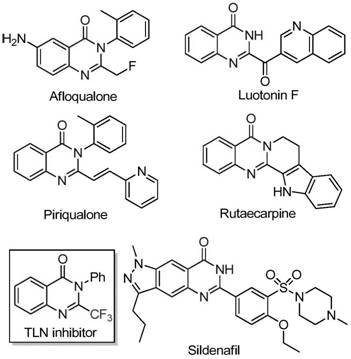
The landscape of pharmaceutical intermediate manufacturing is constantly evolving, driven by the need for more efficient, cost-effective, and environmentally sustainable synthetic routes. A significant breakthrough in this domain is detailed in patent CN111675662B, which discloses a novel preparation method for 2-trifluoromethyl substituted quinazolinone compounds. These heterocyclic scaffolds are critical building blocks in medicinal chemistry, renowned for their presence in numerous bioactive molecules exhibiting anti-cancer, anticonvulsant, and anti-inflammatory properties. The strategic introduction of a trifluoromethyl group into these structures significantly enhances their electronegativity, metabolic stability, and lipophilicity, thereby improving overall bioavailability. This patent presents a robust solution to longstanding synthetic challenges, offering a pathway that is not only chemically elegant but also commercially viable for high-volume production.
The Limitations of Conventional Methods vs. The Novel Approach
The Limitations of Conventional Methods
Historically, the synthesis of quinazolinones bearing trifluoromethyl functional groups has been fraught with significant operational and economic hurdles. Traditional literature methods typically rely on the cyclization of synthons containing trifluoromethyl groups, such as trifluoroacetic anhydride or ethyl trifluoroacetate, with substrates like anthranilamide or isatoic anhydride. While chemically feasible, these conventional approaches are severely limited by harsh reaction conditions that often require extreme temperatures or pressures, leading to safety concerns in a manufacturing environment. Furthermore, the starting materials employed in these legacy routes are frequently expensive and difficult to source in bulk quantities, creating bottlenecks in the supply chain. Perhaps most critically for process chemists, these older methods often suffer from narrow substrate scope and low yields, generating substantial waste and complicating purification processes, which ultimately drives up the cost of goods sold for the final active pharmaceutical ingredient.
The Novel Approach
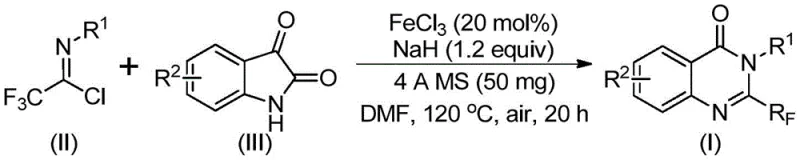
In stark contrast to these inefficient legacy protocols, the methodology described in CN111675662B leverages a highly efficient cyclization reaction catalyzed by inexpensive iron salts. This innovative route utilizes readily available trifluoroethylimidoyl chloride and isatin derivatives as the primary starting materials, bypassing the need for costly trifluoroacetylating agents. The reaction proceeds through a tandem sequence involving alkali-promoted carbon-nitrogen bond formation followed by an iron-catalyzed decarbonylation and cyclization. This dual-step mechanism allows for the direct construction of the quinazolinone core with high atom economy. By employing cheap metal iron catalysts like ferric chloride, the process drastically reduces raw material costs while maintaining high reaction efficiency. The versatility of this approach is demonstrated by its ability to tolerate a wide range of functional groups, enabling the synthesis of diverse derivatives tailored for specific drug discovery programs without compromising yield or purity.
Mechanistic Insights into FeCl3-Catalyzed Cyclization
The mechanistic pathway of this transformation is a testament to the power of earth-abundant metal catalysis in modern organic synthesis. The reaction initiates with the deprotonation of the isatin nitrogen by sodium hydride, generating a nucleophilic species that attacks the electrophilic carbon of the trifluoroethylimidoyl chloride. This step forms a key trifluoroacetamidine intermediate, establishing the crucial carbon-nitrogen bond required for ring closure. Subsequently, the ferric chloride catalyst facilitates a decarbonylation event, effectively removing the carbonyl oxygen from the isatin moiety. This is followed by an intramolecular cyclization that aromatizes the system to form the stable quinazolinone core. The use of 4A molecular sieves plays a pivotal role in this mechanism by scavenging moisture and potentially sequestering byproducts, thereby driving the equilibrium towards the desired product and preventing hydrolysis of the sensitive imidoyl chloride starting material.
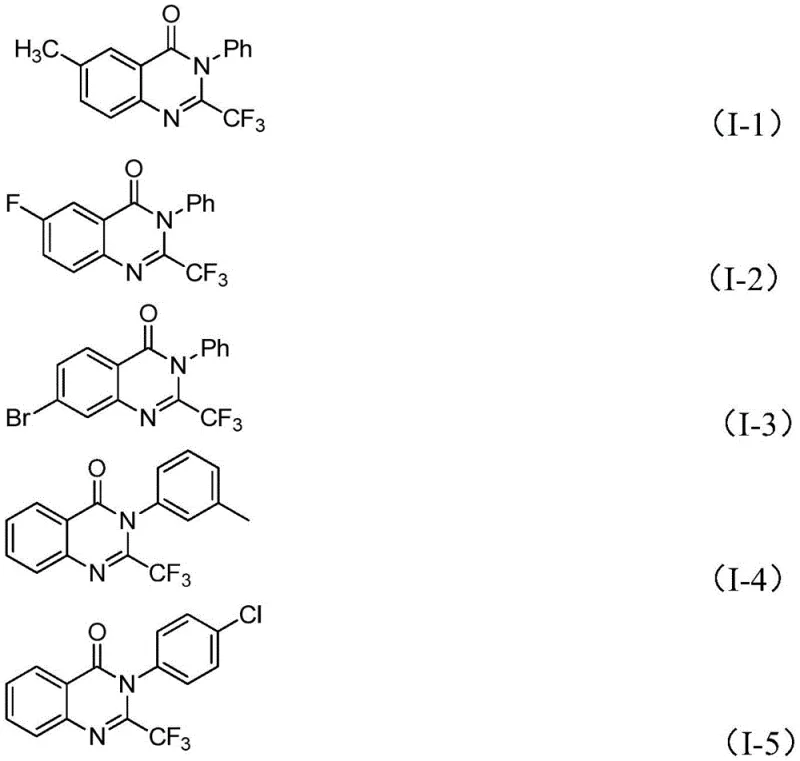
From an impurity control perspective, this mechanism offers distinct advantages over acid-mediated or high-temperature thermal cyclizations. The mild basic conditions and the specific selectivity of the iron catalyst minimize side reactions such as polymerization or over-fluorination, which are common pitfalls in trifluoromethylation chemistry. The tolerance for various substituents on both the isatin ring (R2) and the imidoyl chloride aryl group (R1) indicates that the electronic nature of the substrates does not drastically inhibit the catalytic cycle. Whether the aryl ring bears electron-donating groups like methyl or methoxy, or electron-withdrawing groups like halogens and nitro groups, the reaction proceeds smoothly. This robustness ensures a clean impurity profile, simplifying downstream purification and reducing the burden on quality control laboratories to identify and quantify complex related substances.
How to Synthesize 2-Trifluoromethyl Quinazolinone Efficiently
Implementing this synthesis in a laboratory or pilot plant setting requires careful attention to reagent stoichiometry and temperature control to maximize yield. The protocol involves mixing ferric chloride, sodium hydride, 4A molecular sieves, trifluoroethylimidoyl chloride, and isatin in a polar aprotic solvent such as DMF. The reaction is typically initiated at a lower temperature of 40°C for 8-10 hours to allow for the initial coupling, followed by heating to 120°C for 18-20 hours to drive the cyclization and decarbonylation to completion. Post-reaction workup is straightforward, involving filtration to remove solids and standard column chromatography for purification. For detailed operational parameters and specific stoichiometric ratios optimized for different substrates, please refer to the standardized synthesis steps provided below.
- Mix ferric chloride, sodium hydride, 4A molecular sieves, trifluoroethylimidoyl chloride, and isatin in an organic solvent like DMF.
- React the mixture at 40°C for 8-10 hours, then heat to 120°C and continue reacting for 18-20 hours under air.
- Filter the reaction mixture, mix with silica gel, and purify via column chromatography to obtain the final compound.
Commercial Advantages for Procurement and Supply Chain Teams
For procurement managers and supply chain directors, the adoption of this iron-catalyzed methodology represents a strategic opportunity to optimize the cost structure and reliability of the supply chain for quinazolinone-based intermediates. The shift from precious metal catalysts or expensive fluorinating agents to commodity chemicals like ferric chloride and isatin fundamentally alters the cost basis of production. This transition eliminates the volatility associated with sourcing specialized reagents and reduces the dependency on single-source suppliers for critical catalysts. Furthermore, the simplicity of the post-treatment process, which avoids complex extraction or distillation steps, translates directly into reduced processing time and lower utility consumption, contributing to a leaner and more responsive manufacturing operation.
- Cost Reduction in Manufacturing: The replacement of expensive trifluoroacetic anhydride with readily available trifluoroethylimidoyl chloride results in substantial raw material savings. Additionally, the use of ferric chloride, one of the most inexpensive transition metal catalysts available, eliminates the need for costly ligand systems or precious metals like palladium or rhodium. This drastic reduction in catalyst cost, combined with the high conversion rates observed in the patent data, ensures that the overall cost of goods is significantly lowered, allowing for more competitive pricing in the final API market without sacrificing margin.
- Enhanced Supply Chain Reliability: The starting materials for this synthesis, particularly isatin derivatives and aromatic amines used to make the imidoyl chlorides, are commodity chemicals with well-established global supply chains. This abundance mitigates the risk of supply disruptions that often plague projects relying on bespoke or niche reagents. The robustness of the reaction conditions also means that the process is less sensitive to minor variations in raw material quality, further stabilizing the supply chain. By securing a route that relies on widely available feedstocks, manufacturers can ensure continuous production schedules and meet tight delivery deadlines for their downstream pharmaceutical partners.
- Scalability and Environmental Compliance: The protocol is explicitly designed for scalability, having been demonstrated to work efficiently from gram scale up to potential industrial tonnage. The use of DMF as a solvent, while requiring careful handling, is standard in the industry and easily recyclable, supporting green chemistry initiatives. Moreover, the absence of heavy metal residues simplifies waste treatment and disposal, reducing the environmental footprint of the manufacturing process. This alignment with environmental, social, and governance (ESG) goals is increasingly critical for maintaining compliance with international regulations and satisfying the sustainability criteria of major pharmaceutical clients.
Frequently Asked Questions (FAQ)
The following questions address common technical and commercial inquiries regarding the implementation of this synthesis route. These answers are derived directly from the experimental data and claims within the patent documentation, providing a factual basis for decision-making. Understanding these nuances is essential for R&D teams evaluating the feasibility of this route for their specific pipeline candidates and for procurement teams assessing the long-term viability of the supply source.
Q: What are the key advantages of this iron-catalyzed method over traditional synthesis?
A: This method utilizes cheap and readily available starting materials like isatin and trifluoroethylimidoyl chloride, avoiding expensive trifluoroacetic anhydride. It operates under milder conditions with higher yields and broader substrate tolerance compared to conventional routes.
Q: Is this process suitable for large-scale industrial production?
A: Yes, the patent explicitly states the method can be expanded to the gram level and provides possibilities for industrial scale application due to simple operation, cheap catalysts, and easy post-treatment procedures.
Q: What types of substituents are tolerated on the quinazolinone ring?
A: The reaction demonstrates excellent functional group tolerance, accommodating various substituents such as alkyl, halogen (F, Cl, Br, I), methoxy, and nitro groups at ortho-, meta-, or para-positions on the aryl ring.
Partnering with NINGBO INNO PHARMCHEM: Your Reliable 2-Trifluoromethyl Quinazolinone Supplier
At NINGBO INNO PHARMCHEM, we recognize the critical importance of robust synthetic routes in the development of next-generation therapeutics. Our team of expert process chemists has thoroughly analyzed the technology disclosed in CN111675662B and is fully prepared to leverage this iron-catalyzed methodology for your projects. We possess extensive experience scaling diverse pathways from 100 kgs to 100 MT/annual commercial production, ensuring that your transition from benchtop discovery to full-scale manufacturing is seamless. Our facilities are equipped with stringent purity specifications and rigorous QC labs capable of handling complex heterocyclic intermediates, guaranteeing that every batch meets the highest standards of quality required for pharmaceutical applications.
We invite you to collaborate with us to unlock the full potential of this efficient synthesis platform. By partnering with our technical procurement team, you can request a Customized Cost-Saving Analysis tailored to your specific volume requirements. We encourage you to reach out today to discuss your project needs,索取 specific COA data for our catalog compounds, and schedule a consultation for comprehensive route feasibility assessments. Let us help you accelerate your drug development timeline with reliable, high-quality intermediates produced via cutting-edge chemistry.