
Advanced One-Pot Synthesis of 2-Trifluoromethyl Quinazolinones for Commercial API Production
Introduction to Patent CN112480015B
The pharmaceutical industry continuously seeks robust and scalable synthetic routes for heterocyclic scaffolds that serve as critical building blocks for active pharmaceutical ingredients (APIs). Patent CN112480015B discloses a groundbreaking multi-component one-pot method for synthesizing 2-trifluoromethyl substituted quinazolinones, a class of compounds renowned for their diverse biological activities including antifungal, antiviral, and anticancer properties. This technology represents a significant leap forward in process chemistry by utilizing inexpensive nitro compounds and trifluoroethylimidoyl chloride as starting materials, catalyzed by a transition metal palladium system. The innovation lies in its ability to construct complex quinazolinone cores efficiently without the need for harsh reaction conditions or expensive pre-activated substrates, thereby offering a streamlined pathway for the commercial scale-up of complex pharmaceutical intermediates. By integrating a carbonylation cascade reaction, this method not only simplifies the operational workflow but also enhances the overall atom economy, making it an attractive option for manufacturers aiming to optimize their production lines for high-value drug candidates.
The Limitations of Conventional Methods vs. The Novel Approach
The Limitations of Conventional Methods
Traditionally, the synthesis of quinazolinone derivatives has been plagued by several inherent drawbacks that hinder efficient large-scale production. Conventional methodologies often rely on the use of high-pressure carbon monoxide gas, which necessitates specialized and costly reactor infrastructure to ensure safety and containment, significantly increasing capital expenditure for manufacturing facilities. Furthermore, many existing protocols require the use of expensive ruthenium or platinum catalysts, or involve multi-step sequences where substrates must be pre-activated, such as converting amines to amides prior to cyclization. These additional steps not only extend the production timeline but also generate substantial chemical waste, complicating downstream purification and environmental compliance. The reliance on sensitive reagents and harsh conditions often leads to lower yields and narrow substrate compatibility, limiting the versatility of these methods when applied to the diverse structural requirements of modern drug discovery pipelines.
The Novel Approach
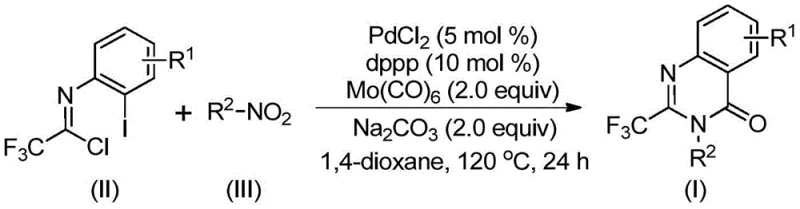
In stark contrast, the novel approach detailed in the patent utilizes a palladium-catalyzed carbonylation cascade that operates under much milder and safer conditions. By employing molybdenum hexacarbonyl (Mo(CO)6) as a solid carbon monoxide surrogate, the process completely eliminates the hazards associated with handling high-pressure CO gas, thereby simplifying the engineering requirements for cost reduction in pharmaceutical intermediate manufacturing. The reaction proceeds in a one-pot fashion, directly coupling readily available nitro compounds with trifluoroethylimidoyl chlorides, which drastically reduces the number of unit operations and solvent usage. This streamlined protocol demonstrates exceptional efficiency, with experimental data showing high conversion rates and excellent yields across a broad range of substrates. The ability to tolerate various functional groups without the need for protective group strategies further underscores the practical superiority of this method for industrial applications.
Mechanistic Insights into Palladium-Catalyzed Carbonylation Cascade
The mechanistic pathway of this transformation is a sophisticated sequence of organometallic steps that ensures high selectivity and minimal byproduct formation. The reaction initiates with the reduction of the nitro compound to the corresponding amine by molybdenum hexacarbonyl, which simultaneously serves as the carbon monoxide source upon thermal decomposition. This in situ generated amine then undergoes a base-promoted intermolecular coupling with the trifluoroethylimidoyl chloride to form a trifluoroacetamidine intermediate. Subsequently, the palladium catalyst inserts into the carbon-iodine bond of the aromatic ring, forming a reactive divalent palladium species. The carbon monoxide released from the molybdenum complex then inserts into the carbon-palladium bond, generating an acyl-palladium intermediate. This crucial step is followed by an intramolecular cyclization facilitated by the base, leading to the formation of a seven-membered palladacycle which finally undergoes reductive elimination to release the desired 2-trifluoromethyl quinazolinone product. This intricate cascade is meticulously balanced to prevent side reactions, ensuring a clean impurity profile.
From an impurity control perspective, the one-pot nature of the reaction minimizes the exposure of reactive intermediates to the external environment, thereby reducing the formation of degradation products often seen in multi-step syntheses. The use of a specific ligand system, 1,3-bis(diphenylphosphino)propane (dppp), stabilizes the palladium center and directs the regioselectivity of the cyclization, effectively suppressing the formation of isomeric byproducts. Furthermore, the mild basic conditions provided by sodium carbonate are sufficient to drive the reaction forward without causing hydrolysis of the sensitive imidoyl chloride or the final quinazolinone product. This high level of chemoselectivity is critical for producing high-purity pharmaceutical intermediates that meet stringent regulatory standards, as it simplifies the downstream purification process and reduces the burden on quality control laboratories to identify and quantify trace impurities.
How to Synthesize 2-Trifluoromethyl Quinazolinones Efficiently
The implementation of this synthesis route requires precise control over reaction parameters to maximize yield and reproducibility. The process involves charging a reaction vessel with the palladium catalyst, ligand, base, carbon monoxide source, and the two primary organic substrates in an aprotic solvent such as 1,4-dioxane. The mixture is then heated to a specific temperature range to activate the catalytic cycle and drive the carbonylation to completion. While the general procedure is straightforward, optimizing the stoichiometry and reaction time is essential for different substrate combinations to ensure full conversion. For detailed operational parameters and specific stoichiometric ratios validated by experimental data, please refer to the standardized synthesis guide below.
- Combine palladium chloride, dppp ligand, sodium carbonate, Mo(CO)6, trifluoroethylimidoyl chloride, and nitro compound in an organic solvent.
- Heat the reaction mixture to 120°C and stir for 16 to 30 hours to allow the carbonylation cascade to proceed.
- Filter the mixture, mix with silica gel, and purify via column chromatography to isolate the target quinazolinone.
Commercial Advantages for Procurement and Supply Chain Teams
For procurement managers and supply chain directors, the adoption of this synthetic methodology offers tangible strategic benefits that extend beyond mere chemical efficiency. The primary advantage lies in the sourcing of raw materials; nitro compounds and trifluoroethylimidoyl chlorides are commodity chemicals that are widely available from multiple global suppliers, mitigating the risk of supply chain disruptions associated with exotic or proprietary reagents. This abundance ensures a stable supply line and provides leverage in price negotiations, contributing to substantial cost savings in the overall bill of materials. Additionally, the elimination of high-pressure gas infrastructure reduces the capital intensity of the manufacturing process, allowing for more flexible production scheduling and lower overhead costs per kilogram of product produced.
- Cost Reduction in Manufacturing: The economic viability of this process is significantly enhanced by the replacement of expensive noble metal catalysts like ruthenium or platinum with a more economical palladium system, coupled with the use of cheap nitroarenes instead of pre-functionalized amines. By consolidating multiple synthetic steps into a single pot, the method drastically reduces solvent consumption, energy usage for heating and cooling between steps, and labor hours required for intermediate isolation. This operational simplification translates directly into a lower cost of goods sold (COGS), enabling competitive pricing for the final API intermediates without compromising on quality or purity specifications required by regulatory bodies.
- Enhanced Supply Chain Reliability: The robustness of the reaction conditions means that the process is less susceptible to variations in raw material quality or minor fluctuations in environmental parameters, leading to consistent batch-to-batch performance. Since the starting materials are common industrial chemicals with established supply chains, the risk of lead time extensions due to raw material shortages is minimized. This reliability allows supply chain planners to maintain leaner inventory levels while still meeting production targets, improving cash flow and working capital efficiency. Furthermore, the scalability of the reaction from gram to kilogram scales has been demonstrated, providing confidence that the supply can be ramped up quickly to meet surging market demand for new drug candidates.
- Scalability and Environmental Compliance: From an environmental, health, and safety (EHS) perspective, the use of a solid CO source rather than pressurized gas significantly lowers the safety risk profile of the manufacturing site, reducing insurance premiums and regulatory compliance burdens. The high atom economy and reduced waste generation align with green chemistry principles, facilitating easier waste disposal and lowering the environmental footprint of the production facility. The process is amenable to continuous flow chemistry adaptations, which could further enhance throughput and safety profiles for commercial scale-up of complex pharmaceutical intermediates, ensuring long-term sustainability and compliance with increasingly strict global environmental regulations.
Frequently Asked Questions (FAQ)
The following questions address common technical and commercial inquiries regarding the implementation of this patented synthesis method. These answers are derived directly from the experimental data and technical specifications outlined in the patent documentation, providing clarity on the feasibility and advantages of the technology for potential partners and licensees. Understanding these details is crucial for evaluating the fit of this technology within your existing manufacturing portfolio.
Q: What are the advantages of using nitro compounds over pre-activated amines?
A: Nitro compounds are significantly cheaper and more readily available than pre-activated amines or acid anhydrides, reducing raw material costs and simplifying the supply chain for large-scale manufacturing.
Q: Does this method require high-pressure carbon monoxide equipment?
A: No, the method utilizes molybdenum hexacarbonyl (Mo(CO)6) as a solid carbon monoxide substitute, eliminating the need for dangerous high-pressure gas infrastructure and enhancing operational safety.
Q: What is the substrate scope for this synthesis?
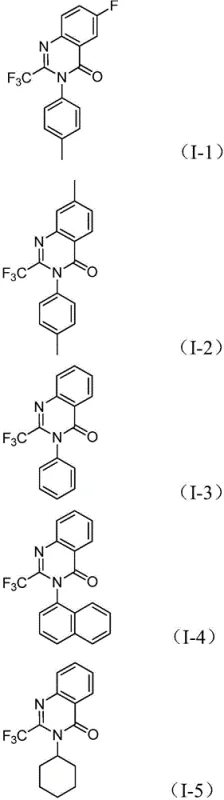
A: The method demonstrates excellent functional group tolerance, accommodating various substituents such as halogens, alkyl groups, and trifluoromethyl groups on both the nitro compound and the imidoyl chloride components.
Partnering with NINGBO INNO PHARMCHEM: Your Reliable 2-Trifluoromethyl Quinazolinone Supplier
At NINGBO INNO PHARMCHEM, we recognize the critical importance of having a dependable partner who can translate innovative laboratory patents into reliable commercial reality. Our team possesses extensive experience scaling diverse pathways from 100 kgs to 100 MT/annual commercial production, ensuring that the transition from pilot plant to full-scale manufacturing is seamless and efficient. We are committed to delivering stringent purity specifications through our rigorous QC labs, which are equipped with state-of-the-art analytical instrumentation to verify the identity and quality of every batch. Our expertise in palladium-catalyzed carbonylation reactions allows us to optimize this specific process for maximum yield and minimal impurity formation, guaranteeing a supply of high-quality intermediates that meet the exacting standards of the global pharmaceutical industry.
We invite you to collaborate with us to leverage this advanced synthetic technology for your drug development projects. By partnering with our technical procurement team, you can request a Customized Cost-Saving Analysis tailored to your specific volume requirements and target timelines. We encourage you to reach out today to obtain specific COA data and route feasibility assessments, allowing you to make informed decisions that will accelerate your time-to-market and enhance your competitive advantage in the marketplace. Let us handle the complexities of chemical manufacturing so you can focus on bringing life-saving therapies to patients worldwide.