
Advanced Primary Amine-Guided Synthesis of 2-Alkynyl Indole Compounds for Commercial Scale
Introduction to Breakthrough Indole Functionalization Technology
The pharmaceutical and fine chemical industries are constantly seeking more efficient and sustainable pathways to construct complex heterocyclic scaffolds, which serve as the backbone for numerous active pharmaceutical ingredients (APIs). A significant advancement in this domain is detailed in patent CN108864164B, which discloses a novel synthesis method for primary amine-guided 2-alkynyl indole compounds. This technology represents a paradigm shift from traditional halogenation-coupling sequences to a direct, catalytic C-H functionalization strategy. By leveraging a simple palladium salt catalyst and utilizing water as the primary reaction medium, this method achieves high atom economy and exceptional regioselectivity. The ability to directly install alkynyl groups at the C2 position of the indole ring, guided by an ortho-amino group on the N-phenyl ring, solves long-standing challenges in indole chemistry regarding site-selectivity. For R&D directors and process chemists, this patent offers a robust platform for generating diverse libraries of functionalized indoles, which are critical intermediates in the development of new therapeutic agents and advanced materials.
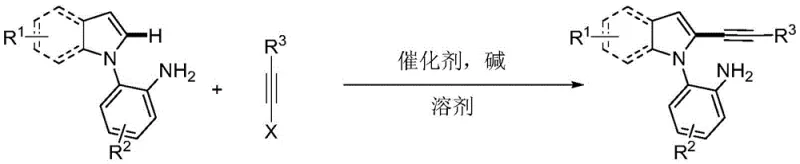
The Limitations of Conventional Methods vs. The Novel Approach
The Limitations of Conventional Methods
Historically, the construction of 2-substituted indoles has been fraught with synthetic difficulties, primarily due to the inherent electronic properties of the indole nucleus. The C3 position of the indole ring possesses a higher electron cloud density compared to the C2 position, making it the kinetically favored site for electrophilic substitution and metallation. Consequently, traditional methods often require pre-functionalization of the indole ring, such as C-H halogenation at the C2 position, which typically involves harsh conditions, multiple synthetic steps, and the generation of stoichiometric amounts of hazardous waste. Furthermore, classical cross-coupling reactions relying on pre-halogenated substrates increase the overall cost of goods and extend the production timeline. The reliance on volatile organic compounds (VOCs) as solvents in these conventional protocols further exacerbates environmental concerns and imposes strict regulatory burdens on manufacturing facilities. These inefficiencies create significant bottlenecks for procurement managers looking to optimize supply chains and reduce the carbon footprint of API manufacturing processes.
The Novel Approach
In stark contrast to these legacy methods, the technology described in patent CN108864164B introduces a streamlined, direct alkynylation strategy that bypasses the need for pre-halogenation. By employing a primary amine group on the N-phenyl ring as a powerful directing group, the reaction achieves precise control over regioselectivity, exclusively targeting the C2 position of the indole. This approach utilizes a palladium-catalyzed cross-coupling reaction between 2-(1H-indol-1-yl)aniline derivatives and alkyne halides. One of the most transformative aspects of this novel approach is the use of water as the reaction solvent. This not only eliminates the need for expensive and toxic organic solvents but also simplifies the post-reaction workup procedure. The reaction proceeds under relatively mild thermal conditions, typically between 80°C and 110°C, ensuring the stability of sensitive functional groups. This green chemistry protocol significantly enhances the safety profile of the operation and aligns perfectly with modern sustainability goals, offering a compelling alternative for the cost reduction in pharmaceutical intermediate manufacturing.
Mechanistic Insights into Pd-Catalyzed C-H Activation
The success of this synthesis relies on a sophisticated catalytic cycle driven by the coordination chemistry of palladium. The mechanism initiates with the coordination of the palladium catalyst to the nitrogen atom of the primary amine directing group on the 2-(1H-indol-1-yl)aniline substrate. This coordination facilitates the activation of the proximal C-H bond at the C2 position of the indole ring, leading to the formation of a stable six-membered palladacycle intermediate. This cyclometallation step is the key determinant of regioselectivity, effectively overriding the natural electronic bias of the indole ring that would otherwise favor C3 functionalization. Once the palladacycle is formed, the alkyne halide undergoes oxidative addition to the palladium center. Subsequent reductive elimination releases the desired 2-alkynyl indole product and regenerates the active palladium catalyst, allowing the cycle to continue. The presence of a base, such as cesium pivalate or potassium acetate, is crucial for neutralizing the acid byproduct generated during the C-H activation step, thereby driving the equilibrium towards product formation. Understanding this mechanistic pathway is vital for R&D teams aiming to further optimize reaction conditions or adapt the protocol for continuous flow processing.
Impurity control is another critical aspect where this mechanism offers distinct advantages. The high specificity of the directing group minimizes the formation of regioisomers, particularly the undesired C3-alkynylated byproducts which are common in non-directed reactions. Additionally, the use of water as a solvent helps to suppress side reactions that might occur in organic media, such as polymerization of the alkyne or decomposition of sensitive intermediates. The robustness of the catalytic system allows for the tolerance of various substituents on both the indole and aniline rings, including electron-withdrawing groups like halogens and cyano groups, as well as electron-donating groups like methyl and methoxy. This broad substrate scope ensures that the impurity profile remains manageable across a wide range of derivatives, simplifying the purification process and enhancing the overall purity of the final API intermediate. For quality control laboratories, this predictability translates to more consistent batch-to-batch results and reduced analytical burden.
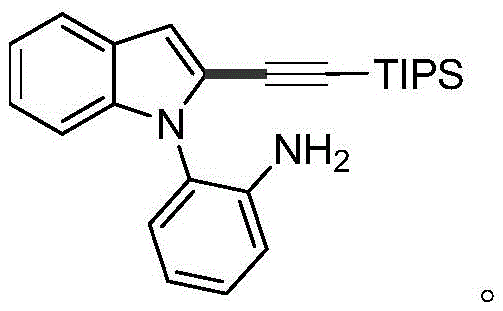
How to Synthesize 2-Alkynyl Indole Compounds Efficiently
Implementing this synthesis route in a laboratory or pilot plant setting requires adherence to specific operational parameters to maximize yield and purity. The process begins with the precise weighing of the 2-(1H-indol-1-yl)aniline substrate and the alkyne halide, typically in a molar ratio ranging from 1:1.6 to 1:3.0 to ensure complete consumption of the limiting reagent. A palladium salt catalyst, such as palladium chloride or palladium acetate, is added in catalytic amounts, usually between 3 to 10 mol%. The reaction mixture is suspended in water or a water-toluene mixture and heated with vigorous stirring. Detailed standardized synthesis steps, including exact temperatures, stirring rates, and workup procedures, are provided in the guide below to ensure reproducibility and safety during scale-up operations.
- Charge the reactor with 2-(1H-indol-1-yl)aniline substrate, alkyne halide, palladium catalyst, base, and water solvent.
- Stir the reaction mixture at elevated temperatures between 80°C and 110°C for 12 to 24 hours to ensure complete conversion.
- Cool the mixture, extract with ethyl acetate, dry over magnesium sulfate, and purify via column chromatography to isolate the pure product.
Commercial Advantages for Procurement and Supply Chain Teams
For procurement managers and supply chain heads, the adoption of this patented synthesis method offers tangible strategic benefits that extend beyond mere technical feasibility. The shift towards a water-based solvent system fundamentally alters the cost structure of the manufacturing process by eliminating the procurement and disposal costs associated with large volumes of organic solvents. Furthermore, the simplicity of the raw materials, which are commercially available and inexpensive, ensures a stable and resilient supply chain less susceptible to market volatility. The operational safety of the process, conducted at moderate temperatures without the need for cryogenic conditions or high-pressure equipment, reduces insurance premiums and facility maintenance costs. These factors collectively contribute to a more competitive pricing model for the final 2-alkynyl indole intermediates, enabling downstream partners to achieve significant cost reduction in API manufacturing without compromising on quality or regulatory compliance.
- Cost Reduction in Manufacturing: The elimination of expensive organic solvents and the use of catalytic amounts of palladium significantly lower the direct material costs. Additionally, the simplified workup procedure, which involves standard extraction and filtration, reduces labor hours and energy consumption associated with solvent recovery and distillation. The high atom economy of the direct C-H activation means less waste is generated per kilogram of product, further reducing waste treatment expenses. By avoiding multi-step pre-functionalization sequences, the overall process mass intensity (PMI) is drastically improved, leading to substantial cost savings throughout the production lifecycle.
- Enhanced Supply Chain Reliability: The starting materials, specifically 2-(1H-indol-1-yl)aniline derivatives and alkyne halides, are synthesized from commodity chemicals like o-iodoaniline and indole, which are produced on a massive global scale. This ensures a consistent and reliable supply of raw materials, mitigating the risk of production delays due to raw material shortages. The robustness of the reaction conditions allows for flexible manufacturing scheduling, as the process is not sensitive to minor fluctuations in temperature or moisture levels that might plague more sensitive organometallic reactions. This reliability is crucial for maintaining continuous production lines and meeting tight delivery deadlines for pharmaceutical clients.
- Scalability and Environmental Compliance: The use of water as a solvent makes this process inherently safer and more environmentally friendly, facilitating easier regulatory approval for new manufacturing sites. The absence of toxic volatile organic compounds simplifies the permitting process and reduces the need for specialized explosion-proof equipment. The reaction demonstrates excellent scalability, having been proven effective from milligram scales in the lab to potential ton-scale production, ensuring that supply can grow in tandem with market demand. The green nature of the chemistry aligns with corporate sustainability goals, enhancing the brand reputation of manufacturers who adopt this technology as responsible stewards of the environment.
Frequently Asked Questions (FAQ)
The following questions address common technical and commercial inquiries regarding the implementation of this primary amine-guided synthesis technology. These answers are derived directly from the experimental data and beneficial effects reported in the patent documentation, providing clarity for technical teams evaluating this route for their specific projects. Understanding these nuances is essential for making informed decisions about process adoption and integration into existing manufacturing portfolios.
Q: What is the key advantage of using water as a solvent in this synthesis?
A: Using water as a solvent significantly reduces environmental impact and waste disposal costs compared to traditional organic solvents, aligning with green chemistry principles while maintaining high reaction efficiency.
Q: How does the primary amine group influence the reaction selectivity?
A: The primary amine acts as a directing group that coordinates with the palladium catalyst to form a stable six-membered ring intermediate, ensuring highly selective alkynylation at the C2 position of the indole ring rather than the more reactive C3 position.
Q: Is this process suitable for large-scale industrial production?
A: Yes, the process utilizes readily available starting materials, mild reaction conditions, and simple workup procedures involving standard extraction and chromatography, making it highly scalable for commercial manufacturing.
Partnering with NINGBO INNO PHARMCHEM: Your Reliable 2-Alkynyl Indole Supplier
At NINGBO INNO PHARMCHEM, we recognize the transformative potential of the synthesis method described in patent CN108864164B for the production of high-value pharmaceutical intermediates. As a leading CDMO partner, we possess extensive experience scaling diverse pathways from 100 kgs to 100 MT/annual commercial production, ensuring that your transition from benchtop discovery to full-scale manufacturing is seamless and efficient. Our state-of-the-art facilities are equipped with rigorous QC labs capable of meeting stringent purity specifications, guaranteeing that every batch of 2-alkynyl indole compounds delivered meets the highest industry standards. We are committed to leveraging our technical expertise to optimize this green chemistry route, delivering cost-effective and sustainable solutions tailored to your specific project needs.
We invite you to collaborate with us to explore the full capabilities of this advanced synthesis technology. Our technical procurement team is ready to provide a Customized Cost-Saving Analysis that quantifies the economic benefits of switching to this water-based protocol for your specific application. Please contact us today to request specific COA data for our catalog of indole derivatives or to discuss route feasibility assessments for your custom synthesis projects. Let us be your partner in driving innovation and efficiency in your supply chain.