
Advanced Pd-Catalyzed Synthesis of Carbonyl-Bridged Biheterocyclic Compounds for Commercial Scale-Up
Advanced Pd-Catalyzed Synthesis of Carbonyl-Bridged Biheterocyclic Compounds for Commercial Scale-Up
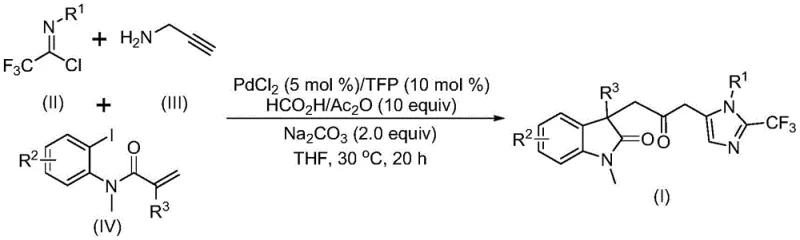
The pharmaceutical and fine chemical industries are constantly seeking robust methodologies to construct complex heterocyclic scaffolds, which serve as the backbone for numerous bioactive molecules. Patent CN115353511A introduces a groundbreaking preparation method for carbonyl-bridged biheterocyclic compounds, specifically targeting the efficient assembly of indolinone and imidazole fused systems. This technology represents a significant leap forward in organic synthesis, addressing the critical need for safer, more efficient, and scalable routes to high-value intermediates. By leveraging a transition metal palladium-catalyzed carbonylation cascade reaction, this invention bypasses traditional limitations associated with harsh conditions and toxic reagents. The process utilizes readily available starting materials such as trifluoroethylimidoyl chloride, propargylamine, and acrylamide derivatives, reacting them in a one-pot fashion at a mild temperature of 30°C. This approach not only streamlines the synthetic workflow but also enhances the safety profile of the manufacturing process, making it an attractive option for reliable pharmaceutical intermediate suppliers aiming to optimize their production pipelines.
The Limitations of Conventional Methods vs. The Novel Approach
The Limitations of Conventional Methods
Historically, the construction of biheterocyclic compounds has relied on several distinct strategies, each carrying inherent drawbacks that hinder large-scale application. Traditional methods often involve the direct coupling of two pre-formed heterocycle substrates, which can be synthetically tedious and require multiple protection-deprotection steps, leading to lower overall atom economy. Alternatively, oxidative cyclization reactions using activated methyl-substituted heterocycles frequently necessitate stoichiometric amounts of oxidants, generating significant waste and complicating downstream purification processes. Furthermore, existing transition metal-catalyzed tandem cyclization reactions, while powerful, often struggle with the efficient incorporation of carbonyl bridges without the use of hazardous carbon monoxide gas cylinders. These conventional pathways typically demand high temperatures, specialized high-pressure equipment, or expensive catalysts that are difficult to recover, resulting in elevated production costs and safety risks that are unacceptable for modern cost reduction in API manufacturing initiatives.
The Novel Approach
In stark contrast, the methodology disclosed in CN115353511A offers a streamlined, multicomponent solution that elegantly overcomes these historical bottlenecks. The core innovation lies in the use of a palladium-catalyzed cascade reaction that simultaneously constructs multiple chemical bonds in a single operational step. By employing a mixture of formic acid and acetic anhydride as an in situ source of carbon monoxide, the process eliminates the need for handling toxic CO gas, thereby drastically improving workplace safety and reducing infrastructure requirements. The reaction proceeds under remarkably mild conditions, specifically at 30°C, which minimizes energy consumption and prevents the decomposition of sensitive functional groups. This novel approach allows for the direct assembly of diversified substituted double heterocyclic compounds containing both trifluoromethyl and carbonyl moieties, providing a versatile platform for medicinal chemists to explore new chemical space without the burden of complex synthetic planning.
Mechanistic Insights into Pd-Catalyzed Carbonylation Cascade
Understanding the mechanistic underpinnings of this transformation is crucial for R&D directors evaluating its feasibility for complex molecule synthesis. The reaction is believed to initiate with the oxidative addition of a zero-valent palladium species into the carbon-iodine bond of the acrylamide substrate. This is followed by an intramolecular Heck reaction, which generates a divalent alkyl-palladium intermediate and establishes the initial cyclic framework. Subsequently, the carbon monoxide released from the formic acid and acetic anhydride mixture inserts into the palladium-carbon bond, forming a key acyl-palladium intermediate. This carbonylation step is pivotal, as it introduces the bridging carbonyl functionality that defines the target scaffold. The presence of the TFP (trifurylphosphine) ligand is essential here, as it stabilizes the palladium center and facilitates the turnover of the catalytic cycle, ensuring high conversion rates even at low catalyst loadings of 5 mol%.
Parallel to the palladium cycle, a base-promoted intermolecular reaction occurs between the trifluoroethylimidoyl chloride and propargylamine. This step forms a trifluoroacetamidine compound, which subsequently undergoes isomerization to become reactive towards the acyl-palladium species. The final stage involves the activation of this trifluoroacetamidine by the acyl-palladium intermediate, triggering an intramolecular cyclization that closes the second heterocyclic ring. This intricate dance of organometallic and organic transformations results in the formation of the final carbonyl-bridged biheterocyclic compound with high regioselectivity. The mechanism highlights the exquisite control over impurity profiles, as the cascade nature of the reaction minimizes the accumulation of partially reacted intermediates, thereby simplifying the purification process and ensuring the delivery of high-purity OLED material or pharmaceutical precursors with minimal downstream processing.
How to Synthesize Carbonyl-Bridged Biheterocyclic Compounds Efficiently
Executing this synthesis requires careful attention to reagent quality and reaction parameters to maximize yield and purity. The protocol is designed to be user-friendly, utilizing common laboratory solvents like tetrahydrofuran (THF) which effectively dissolve all reactants and promote the catalytic cycle. The molar ratios are optimized to ensure complete consumption of the limiting reagent, typically the trifluoroethylimidoyl chloride, while using slight excesses of the amine and acrylamide components to drive the equilibrium forward. The reaction time is flexible, ranging from 12 to 20 hours, allowing operators to balance throughput with conversion completeness based on specific substrate reactivity. Detailed standardized synthesis steps see the guide below.
- Combine palladium chloride catalyst, TFP ligand, sodium carbonate base, and a carbon monoxide surrogate mixture (formic acid/acetic anhydride) in an organic solvent like THF.
- Add the three key substrates: trifluoroethylimidoyl chloride, propargylamine, and the specific acrylamide derivative to the reaction vessel.
- Stir the mixture at a mild temperature of 30°C for 12 to 20 hours, followed by filtration and column chromatography purification to isolate the final product.
Commercial Advantages for Procurement and Supply Chain Teams
For procurement managers and supply chain heads, the economic and logistical implications of this patented technology are profound. The shift towards this multicomponent strategy addresses several critical pain points in the current supply chain for complex heterocyclic intermediates. By consolidating multiple synthetic steps into a single pot, the process inherently reduces the number of unit operations, which translates to lower labor costs, reduced solvent consumption, and decreased waste generation. The elimination of toxic carbon monoxide gas removes the need for specialized high-pressure reactors and extensive safety monitoring systems, significantly lowering the capital expenditure required for facility upgrades. Furthermore, the use of cheap and commercially available starting materials ensures a stable supply chain, mitigating the risks associated with sourcing exotic or custom-synthesized building blocks that often lead to production delays.
- Cost Reduction in Manufacturing: The economic benefits of this process are driven primarily by the simplification of the synthetic route and the use of inexpensive reagents. By avoiding the use of stoichiometric oxidants and toxic gases, the cost of goods sold (COGS) is significantly reduced through lower raw material expenses and simplified waste disposal protocols. The mild reaction conditions of 30°C also contribute to substantial energy savings compared to traditional high-temperature reflux methods. Additionally, the high atom economy of the multicomponent reaction means that a greater proportion of the input mass is converted into the desired product, minimizing material loss and maximizing overall process efficiency without compromising on quality standards.
- Enhanced Supply Chain Reliability: Reliability in the supply of critical intermediates is paramount for maintaining continuous pharmaceutical production. This method utilizes commodity chemicals such as propargylamine and acrylamide, which are widely produced and easily sourced from multiple vendors, reducing dependency on single-source suppliers. The robustness of the reaction conditions, which tolerate a wide range of functional groups including halogens and nitro groups, ensures consistent performance even with slight variations in raw material quality. This resilience translates to fewer batch failures and more predictable lead times, allowing supply chain planners to maintain leaner inventories while confidently meeting downstream production schedules for high-purity pharmaceutical intermediates.
- Scalability and Environmental Compliance: Scaling chemical processes from the bench to the plant floor often introduces unforeseen challenges, but this technology is explicitly designed with scalability in mind. The patent documentation confirms successful expansion to gram-scale reactions, demonstrating that heat transfer and mixing issues are manageable at larger volumes. From an environmental perspective, the avoidance of toxic CO gas and the use of a palladium catalyst that can potentially be recovered align with increasingly stringent global environmental regulations. The simplified post-treatment, involving basic filtration and column chromatography, reduces the volume of hazardous waste generated, facilitating easier compliance with environmental discharge standards and supporting corporate sustainability goals.
Frequently Asked Questions (FAQ)
The following questions address common technical inquiries regarding the implementation and scope of this synthesis method. These answers are derived directly from the experimental data and beneficial effects described in the patent literature, providing clarity on reaction specifics and substrate compatibility. Understanding these details is essential for technical teams evaluating the feasibility of adopting this route for their specific project needs.
Q: What is the primary advantage of using formic acid and acetic anhydride in this synthesis?
A: This combination serves as a safe and effective carbon monoxide surrogate, eliminating the need for handling toxic and hazardous CO gas directly while maintaining high reaction efficiency for the carbonylation step.
Q: Does this method support diverse substrate functionalization for drug discovery?
A: Yes, the protocol demonstrates excellent functional group tolerance, accommodating various substituents such as halogens, alkyl groups, alkoxy, and nitro groups on the aromatic rings, allowing for the creation of diversified libraries.
Q: Is this synthetic route suitable for industrial scale-up?
A: The patent explicitly confirms that the method has been expanded to gram-scale reactions with simple operation and post-treatment, indicating strong potential for large-scale industrial production applications.
Partnering with NINGBO INNO PHARMCHEM: Your Reliable Carbonyl-Bridged Biheterocyclic Compounds Supplier
As the demand for complex heterocyclic scaffolds continues to grow in the pharmaceutical sector, partnering with an experienced CDMO is essential for successful project execution. NINGBO INNO PHARMCHEM possesses extensive experience scaling diverse pathways from 100 kgs to 100 MT/annual commercial production, ensuring that your transition from lab-scale discovery to market-ready supply is seamless. Our state-of-the-art facilities are equipped to handle sensitive palladium-catalyzed reactions with strict adherence to safety and quality protocols. We maintain stringent purity specifications and operate rigorous QC labs to guarantee that every batch of carbonyl-bridged biheterocyclic compounds meets the highest industry standards, providing you with the confidence needed to advance your drug development programs.
We invite you to leverage our technical expertise to optimize your supply chain and reduce manufacturing costs. Contact our technical procurement team today to request a Customized Cost-Saving Analysis tailored to your specific volume requirements. We are ready to provide specific COA data and comprehensive route feasibility assessments to demonstrate how our advanced synthesis capabilities can support your long-term strategic goals. Let us be your partner in delivering high-quality chemical solutions efficiently and reliably.