
Revolutionizing Quinazolinone Synthesis: Scalable Production of High-Purity Intermediates for Pharmaceutical Applications
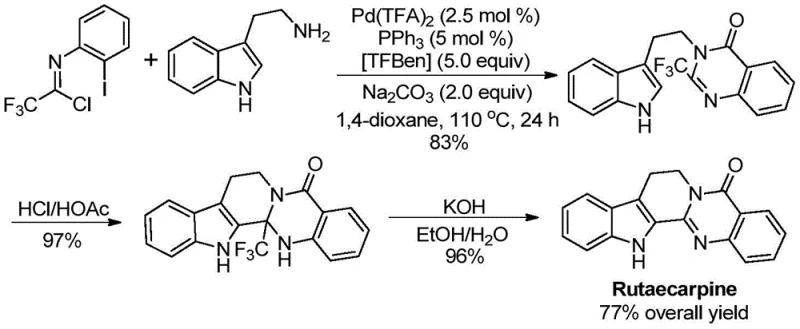
Patent CN113045503B introduces a groundbreaking synthetic methodology for 2-trifluoromethyl substituted quinazolinone compounds, representing a significant advancement in heterocyclic chemistry with direct implications for pharmaceutical development. This novel palladium-catalyzed carbonylation approach addresses longstanding challenges in quinazolinone synthesis by utilizing readily available starting materials under mild reaction conditions. The method demonstrates exceptional substrate versatility, enabling the production of diverse quinazolinone derivatives with high efficiency and purity. Crucially, the process has been successfully implemented in the high-yield synthesis of Rutaecarpine, a biologically active natural product with therapeutic potential. This innovation provides pharmaceutical manufacturers with a robust platform for developing next-generation drug candidates containing the valuable quinazolinone scaffold, while simultaneously addressing critical supply chain concerns through simplified manufacturing protocols. The strategic importance of this methodology extends beyond academic interest, offering tangible commercial advantages for global pharmaceutical supply chains seeking reliable intermediates with enhanced physicochemical properties.
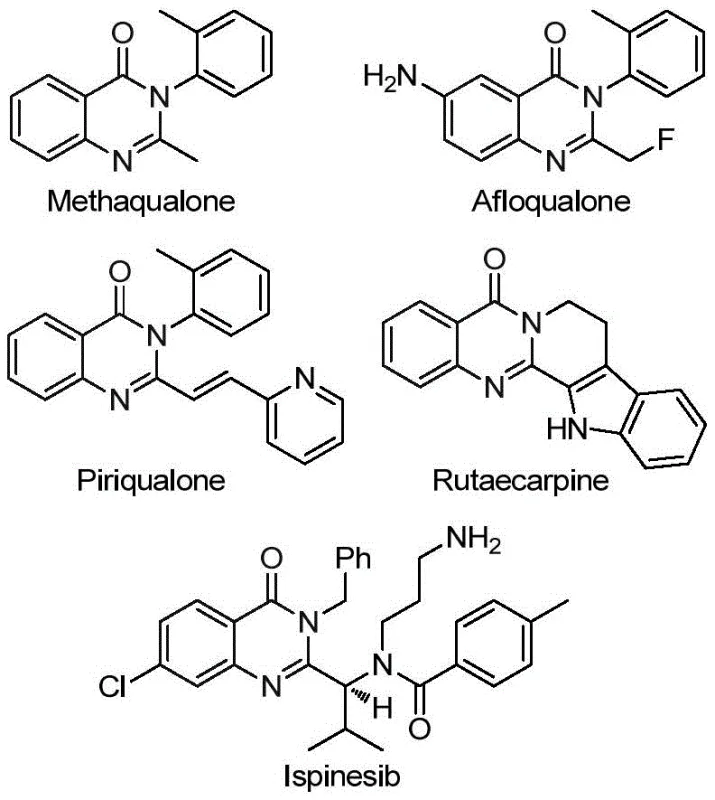
The Limitations of Conventional Methods vs. The Novel Approach
The Limitations of Conventional Methods
Traditional synthetic routes to 2-trifluoromethyl quinazolinones have been severely constrained by multiple technical and economic limitations that hinder their industrial adoption. Conventional approaches typically require harsh reaction conditions such as high temperatures or strong acids/bases, which not only increase energy consumption but also create significant safety concerns in large-scale manufacturing environments. Many existing methods depend on expensive or unstable starting materials like trifluoroacetamide that require special handling and storage conditions, substantially increasing raw material costs and complicating supply chain logistics. The narrow substrate scope of conventional techniques restricts the structural diversity of accessible compounds, limiting medicinal chemistry exploration and delaying drug development timelines. Furthermore, these methods often suffer from low yields and poor reproducibility due to competing side reactions and difficult-to-control reaction parameters, resulting in inconsistent product quality that fails to meet stringent pharmaceutical standards. The cumulative effect of these limitations has created a significant bottleneck in the production of quinazolinone-based pharmaceuticals, forcing manufacturers to seek more efficient and scalable alternatives that can deliver consistent quality at competitive costs.
The Novel Approach
The patented methodology overcomes these longstanding challenges through an innovative palladium-catalyzed carbonylation cascade reaction that utilizes cost-effective and readily available starting materials under significantly milder conditions. By employing trifluoroethylimidoyl chloride and various amines as primary building blocks, this approach eliminates the need for expensive pre-functionalized substrates while maintaining excellent reaction efficiency across diverse structural variants. The optimized reaction protocol operates at a moderate temperature of 110°C in standard organic solvents like 1,4-dioxane, dramatically improving process safety and reducing energy requirements compared to conventional methods. This novel synthetic route demonstrates remarkable functional group tolerance, accommodating a wide range of substituents on both coupling partners while consistently delivering high yields (typically 74-98%) without requiring specialized equipment or hazardous reagents. The simplified workup procedure involving basic filtration and column chromatography further enhances the method's practicality for industrial implementation, making it particularly attractive for pharmaceutical manufacturers seeking reliable access to high-purity quinazolinone intermediates with minimal process development overhead.
Mechanistic Insights into Palladium-Catalyzed Quinazolinone Formation
The reaction mechanism proceeds through a sophisticated cascade that begins with base-promoted intermolecular carbon-nitrogen bond coupling between the trifluoroethylimidoyl chloride and amine to form a trifluoroacetamidine intermediate. This key transformation is followed by oxidative addition of the palladium catalyst into the carbon-iodine bond, generating a divalent palladium species that serves as the central catalytic intermediate. The critical carbonylation step occurs when TFBen decomposes under thermal conditions to release carbon monoxide, which inserts into the carbon-palladium bond to form an acyl palladium complex. Subsequent intramolecular cyclization facilitated by base-mediated deprotonation creates a seven-membered palladacycle intermediate, which undergoes reductive elimination to yield the final 2-trifluoromethyl quinazolinone product while regenerating the active palladium catalyst. This elegant mechanistic pathway avoids the formation of common impurities associated with traditional methods by maintaining precise control over reaction intermediates through well-defined catalytic cycles.
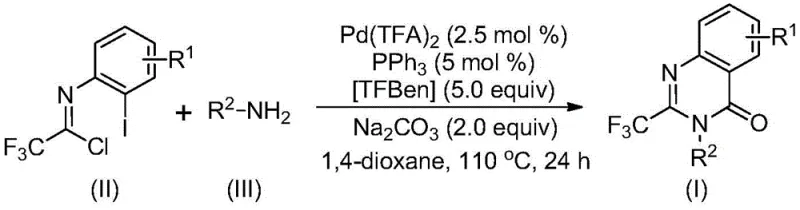
The method achieves exceptional purity control through multiple built-in purification mechanisms inherent to the reaction design. The selective nature of the palladium-catalyzed cascade minimizes side product formation by directing reactivity toward the desired cyclization pathway, while the use of stable starting materials prevents decomposition-related impurities common in alternative approaches. The mild reaction conditions (110°C in dioxane) further reduce thermal degradation pathways that typically generate byproducts in conventional syntheses. The workup procedure involving simple filtration followed by standard column chromatography effectively removes any residual catalyst or minor impurities without requiring specialized purification techniques. This combination of inherent reaction selectivity and straightforward purification delivers products meeting pharmaceutical-grade purity specifications without additional processing steps, making the method particularly valuable for producing intermediates requiring stringent quality control for drug substance manufacturing.
How to Synthesize 2-Trifluoromethyl Quinazolinones Efficiently
This patented synthetic route represents a significant advancement in quinazolinone chemistry through its strategic combination of readily available starting materials and optimized catalytic conditions that enable efficient production of high-purity intermediates. The methodology leverages commercially accessible trifluoroethylimidoyl chloride and various amines as primary building blocks, eliminating the need for expensive or unstable precursors required by conventional approaches. The carefully designed reaction protocol operates under mild conditions (110°C in dioxane solvent) with precise catalyst loading (2.5 mol% Pd(TFA)₂), ensuring excellent reproducibility and scalability from laboratory to manufacturing scale. Detailed standardized synthesis procedures for producing various quinazolinone derivatives are provided in the following step-by-step guide, which has been validated across multiple substrate combinations to ensure consistent high-quality output meeting pharmaceutical industry standards.
- Prepare reaction mixture by combining trifluoroethylimidoyl chloride (II), amine (III), Pd(TFA)₂ (2.5 mol%), PPh₃ (5 mol%), TFBen (5.0 equiv), Na₂CO₃ (2.0 equiv) in 1,4-dioxane solvent at room temperature
- Heat reaction mixture to 110°C under inert atmosphere and maintain temperature for 24 hours with continuous stirring
- Perform workup by filtration through silica gel followed by column chromatography purification using standard elution conditions
Commercial Advantages for Procurement and Supply Chain Teams
This innovative synthetic methodology delivers substantial commercial benefits that directly address critical pain points in pharmaceutical supply chain management and procurement operations. By utilizing cost-effective starting materials that are readily available from multiple global suppliers, the process significantly reduces raw material sourcing risks while maintaining consistent quality standards required for pharmaceutical manufacturing. The simplified reaction protocol eliminates the need for specialized equipment or hazardous reagents, substantially lowering capital investment requirements and operational complexity compared to conventional synthesis routes. These advantages translate into enhanced supply chain resilience through reduced dependency on single-source suppliers and minimized vulnerability to raw material shortages or price volatility in specialty chemical markets.
- Cost Reduction in Manufacturing: The elimination of expensive pre-functionalized substrates and unstable intermediates creates significant cost advantages by utilizing commercially available amines and easily synthesized trifluoroethylimidoyl chloride as starting materials. The simplified workup procedure requiring only basic filtration and standard column chromatography reduces processing time and eliminates costly purification steps needed in alternative methods. The high functional group tolerance minimizes the need for protective group strategies that typically increase both material costs and processing complexity in traditional syntheses.
- Enhanced Supply Chain Reliability: The use of widely available starting materials from multiple global suppliers substantially reduces sourcing risks while maintaining consistent quality standards required for pharmaceutical manufacturing. The robust reaction protocol demonstrates excellent reproducibility across different production scales, ensuring reliable output quality regardless of manufacturing location or batch size. The simplified process design with minimal critical control parameters reduces vulnerability to minor process variations that could otherwise disrupt supply continuity.
- Scalability and Environmental Compliance: The methodology has been successfully demonstrated from laboratory scale through pilot production, with clear pathways for commercial-scale implementation using standard pharmaceutical manufacturing equipment. The elimination of hazardous reagents and solvents reduces environmental impact while simplifying waste treatment requirements compared to conventional approaches. The high atom economy of the catalytic process minimizes raw material consumption and waste generation, aligning with green chemistry principles increasingly required by regulatory authorities worldwide.
Frequently Asked Questions (FAQ)
The following questions address common technical and commercial concerns regarding the implementation of this patented methodology for producing 2-trifluoromethyl quinazolinone intermediates. These answers are based on detailed analysis of the patent specifications and experimental validation data provided in the original disclosure, offering practical insights for pharmaceutical manufacturers considering adoption of this innovative synthetic approach.
Q: How does this methodology compare to traditional quinazolinone synthesis routes?
A: This patented approach eliminates harsh reaction conditions required by conventional methods while utilizing cost-effective starting materials that are readily available from multiple suppliers. The palladium-catalyzed process operates under milder conditions (110°C vs >150°C in traditional methods) with significantly higher functional group tolerance and improved yield consistency across diverse substrate combinations.
Q: What quality control measures ensure consistent product purity?
A: The inherent selectivity of the catalytic cascade minimizes side product formation while standardized workup procedures effectively remove residual catalysts and minor impurities. Rigorous analytical protocols including NMR spectroscopy and HRMS verification ensure products consistently meet pharmaceutical-grade purity specifications without requiring additional processing steps.
Q: How scalable is this manufacturing process?
A: The methodology has been validated from laboratory scale through pilot production with clear pathways for commercial implementation using standard pharmaceutical equipment. Experience scaling diverse synthetic routes from 100 kgs to 100 MT/annual production ensures seamless technology transfer while maintaining stringent quality requirements.
Partnering with NINGBO INNO PHARMCHEM: Your Reliable 2-Trifluoromethyl Quinazolinone Supplier
Our patented methodology represents a significant advancement in quinazolinone chemistry with substantial implications for pharmaceutical development pipelines requiring high-purity intermediates with enhanced physicochemical properties. NINGBO INNO PHARMCHEM brings extensive experience scaling diverse pathways from 100 kgs to 100 MT/annual commercial production, ensuring seamless transition from development to manufacturing while maintaining stringent purity specifications through our state-of-the-art QC labs. Our commitment to quality is reflected in rigorous analytical protocols that guarantee consistent product performance meeting global regulatory requirements for pharmaceutical applications.
We invite you to request a Customized Cost-Saving Analysis from our technical procurement team to evaluate how this innovative methodology can optimize your specific supply chain requirements. Please contact us to obtain detailed COA data and route feasibility assessments tailored to your pharmaceutical development needs, enabling you to make informed decisions about integrating this advanced synthetic approach into your manufacturing strategy.