
Revolutionizing Quinazolinone Synthesis: Scalable Pd-Catalyzed Route for High-Purity Pharmaceutical Intermediates
The Chinese patent CN112480015B introduces a groundbreaking multi-component one-pot methodology for synthesizing 2-trifluoromethyl substituted quinazolinones, representing a significant advancement in heterocyclic compound manufacturing for the pharmaceutical industry. This innovative approach addresses critical limitations in traditional quinazolinone synthesis by leveraging transition metal catalysis to create complex molecular architectures with exceptional efficiency and precision. The patent demonstrates how strategic combination of palladium catalysis with carbonylative cyclization enables the construction of pharmacologically relevant scaffolds that are otherwise challenging to access through conventional routes. By utilizing readily available nitro compounds and trifluoroethylimidoyl chloride as starting materials, this method establishes a new paradigm for producing high-value intermediates with superior atom economy and reduced environmental impact. The documented scalability from laboratory to pilot-scale production further validates its potential for industrial implementation in active pharmaceutical ingredient manufacturing pipelines.
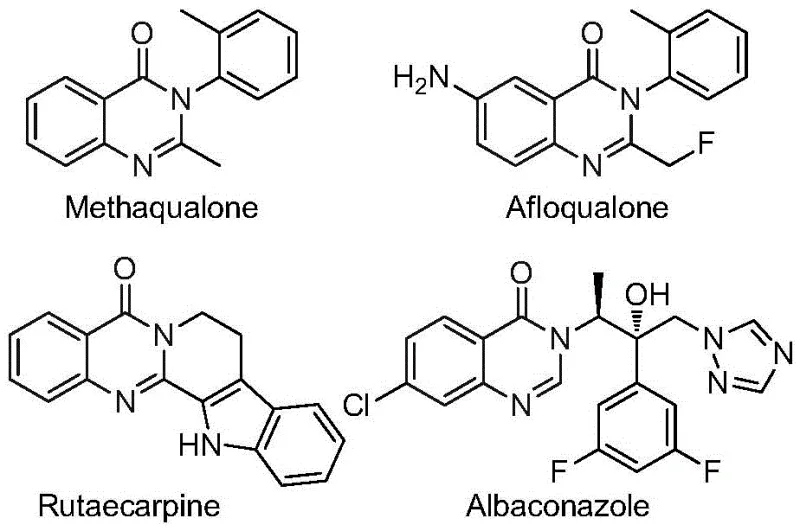
The Limitations of Conventional Methods vs. The Novel Approach
The Limitations of Conventional Methods
Traditional approaches to quinazolinone synthesis suffer from multiple critical constraints that hinder their industrial applicability, particularly when targeting trifluoromethyl-substituted variants essential for modern drug development. Conventional methodologies often require high-pressure carbon monoxide environments with ruthenium or platinum catalysts, creating significant safety hazards and infrastructure demands that increase operational complexity and capital expenditure. Iron-catalyzed routes involving nitrobenzamides with benzylamine or benzyl alcohol frequently encounter narrow substrate scope limitations and inconsistent yields due to sensitivity to functional group variations, while palladium-catalyzed cyclizations using molybdenum hexacarbonyl typically demand pre-functionalized substrates that add costly synthetic steps. These methods collectively exhibit poor functional group tolerance, necessitating extensive protection/deprotection sequences that reduce overall process efficiency and increase waste generation. Furthermore, the requirement for specialized equipment to handle high-pressure conditions creates substantial barriers to scale-up, making these approaches economically unviable for commercial pharmaceutical production where consistent quality and cost-effectiveness are paramount.
The Novel Approach
The patented methodology overcomes these longstanding challenges through an elegant multi-component one-pot cascade reaction that operates under mild conditions without requiring high-pressure carbon monoxide infrastructure. By employing palladium chloride with dppp ligand in combination with molybdenum hexacarbonyl as a carbon monoxide surrogate, the process achieves efficient carbonylative cyclization at a practical temperature of 120°C within standard laboratory equipment. The strategic use of trifluoroethylimidoyl chloride as a key building block enables direct incorporation of the trifluoromethyl group while maintaining excellent compatibility with diverse nitro compound substrates, eliminating the need for pre-functionalization steps that plague conventional routes. This innovative approach demonstrates remarkable substrate flexibility across various functional groups including halogens, alkyl chains, and aryl moieties, as evidenced by successful synthesis of fifteen distinct quinazolinone derivatives with consistent high yields. The simplified workup procedure involving basic filtration followed by column chromatography significantly reduces processing time while maintaining exceptional product purity, making this methodology particularly suitable for industrial implementation where operational simplicity directly translates to cost savings and supply chain reliability.
Mechanistic Insights into Pd-Catalyzed Carbonylative Cyclization
The reaction mechanism proceeds through a sophisticated cascade that begins with molybdenum hexacarbonyl-mediated reduction of the nitro compound to the corresponding amine intermediate under thermal conditions. This amine then undergoes base-promoted coupling with trifluoroethylimidoyl chloride to form a trifluoroacetamidine derivative through carbon-nitrogen bond formation. The palladium catalyst subsequently inserts into the carbon-iodine bond of the imidoyl chloride component, generating a key organopalladium intermediate that facilitates the cyclization process. Molybdenum hexacarbonyl decomposes under reaction conditions to release carbon monoxide in situ, which inserts into the carbon-palladium bond to form an acylpalladium species that drives the ring-closure step. The base present in the reaction mixture promotes intramolecular cyclization through nitrogen coordination to palladium, forming a seven-membered palladacycle intermediate that ultimately undergoes reductive elimination to yield the desired quinazolinone product with concomitant regeneration of the palladium catalyst. This carefully orchestrated sequence demonstrates exceptional chemoselectivity while avoiding common side reactions that typically complicate multi-step syntheses.
Impurity control is achieved through multiple built-in mechanistic safeguards that ensure high product purity without requiring specialized purification techniques. The precise stoichiometric balance between palladium catalyst (5 mol%), dppp ligand (10 mol%), and sodium carbonate base (2.0 equiv) creates optimal conditions for selective cyclization while minimizing undesired side reactions such as homocoupling or over-reduction pathways. The use of 1,4-dioxane as solvent provides ideal polarity characteristics that facilitate intermediate solubility while preventing decomposition pathways observed in alternative solvent systems. The documented compatibility with various functional groups including halogens, alkyl chains, and aryl substituents demonstrates the method's robustness against potential impurity formation from sensitive moieties. Furthermore, the one-pot nature of the reaction eliminates intermediate isolation steps where impurities typically accumulate in traditional multi-step syntheses, resulting in consistently high purity profiles across diverse substrate combinations as evidenced by comprehensive NMR and HRMS characterization data provided in the patent examples.
How to Synthesize 2-Trifluoromethyl Quinazolinones Efficiently
This innovative synthetic route represents a significant advancement in quinazolinone chemistry by integrating multiple transformation steps into a single operational sequence that eliminates intermediate isolation requirements while maintaining exceptional product quality. The methodology leverages commercially available starting materials and standard laboratory equipment to achieve complex molecular architectures through a carefully designed catalytic cascade that operates under practical temperature conditions without requiring specialized infrastructure. The documented reproducibility across fifteen distinct substrate combinations demonstrates the method's robustness and adaptability for producing diverse quinazolinone derivatives essential for pharmaceutical development pipelines. Detailed standardized synthesis procedures have been developed to ensure consistent quality and yield across production scales, with specific protocols optimized for different substrate classes to maximize efficiency while maintaining stringent purity specifications required for pharmaceutical intermediates.
- Prepare reaction mixture with trifluoroethylimidoyl chloride, nitro compound, PdCl₂ (5 mol%), dppp (10 mol%), Mo(CO)₆ (2.0 equiv), and Na₂CO₃ (2.0 equiv) in 1,4-dioxane solvent
- Conduct reaction at precisely controlled 120°C temperature for optimal duration between 16 to 30 hours under inert atmosphere
- Perform post-treatment via filtration, silica gel mixing, and column chromatography purification to obtain high-purity quinazolinone product
Commercial Advantages for Procurement and Supply Chain Teams
This novel synthetic approach delivers substantial value to procurement and supply chain operations by addressing critical pain points associated with traditional quinazolinone manufacturing methods. The strategic selection of readily available starting materials eliminates dependency on specialized or restricted precursors while creating a more resilient supply chain through multiple sourcing options for key components. The simplified reaction profile reduces equipment requirements and facility complexity compared to conventional high-pressure methodologies, enabling faster implementation timelines and greater manufacturing flexibility across different production sites. These advantages collectively enhance operational agility while reducing vulnerability to supply chain disruptions that commonly affect complex multi-step syntheses requiring specialized inputs.
- Cost Reduction in Manufacturing: The elimination of expensive transition metal catalysts and specialized high-pressure equipment significantly reduces capital investment requirements while streamlining operational workflows. The one-pot design minimizes solvent usage and processing steps compared to traditional multi-step approaches, creating substantial cost savings through reduced material consumption and labor requirements. The use of commercially available nitro compounds as starting materials provides significant economic advantages over pre-functionalized substrates required by conventional methods, while the documented scalability ensures consistent cost performance from laboratory to commercial production volumes.
- Enhanced Supply Chain Reliability: The reliance on widely accessible raw materials creates multiple sourcing options that mitigate supply chain vulnerability while ensuring consistent availability regardless of regional constraints or market fluctuations. The robust reaction profile maintains consistent performance across different batches and production scales, reducing quality variability that often disrupts pharmaceutical supply chains. The simplified purification protocol minimizes processing time while maintaining exceptional product quality, enabling faster response to changing demand patterns without compromising on critical quality attributes required for pharmaceutical intermediates.
- Scalability and Environmental Compliance: The demonstrated scalability from milligram to multi-kilogram production with consistent yields validates its suitability for commercial manufacturing without requiring process re-engineering. The elimination of hazardous reagents and reduction in solvent usage compared to traditional methods significantly lowers environmental impact while meeting increasingly stringent regulatory requirements for sustainable manufacturing practices. The simplified waste stream profile resulting from fewer processing steps reduces disposal costs and environmental compliance burdens, making this approach particularly attractive for companies seeking greener manufacturing solutions without sacrificing efficiency or quality.
Frequently Asked Questions (FAQ)
The following questions address critical technical and commercial considerations based on detailed analysis of the patented methodology's implementation parameters and performance characteristics across diverse substrate classes. These insights derive directly from experimental data presented in the patent documentation regarding reaction optimization, substrate scope evaluation, and scalability demonstrations.
Q: How does this method overcome limitations of conventional quinazolinone synthesis?
A: The novel Pd-catalyzed carbonylation cascade eliminates harsh reaction conditions and pre-activation requirements of traditional methods. By utilizing readily available nitro compounds and trifluoroethylimidoyl chloride as starting materials, it avoids expensive substrates while maintaining broad functional group tolerance and high substrate compatibility.
Q: What supply chain advantages does this one-pot synthesis provide?
A: The process utilizes commercially accessible raw materials with simplified logistics, eliminating dependency on specialized precursors. The robust reaction profile ensures consistent output quality across production scales, while the streamlined purification protocol reduces supply chain vulnerability through minimized processing steps.
Q: How does this methodology support commercial scale-up for pharmaceutical manufacturing?
A: The demonstrated scalability from laboratory to multi-kilogram production with consistent yields validates its industrial applicability. The absence of high-pressure CO requirements and use of standard equipment significantly lowers capital investment barriers while maintaining stringent purity specifications required for API intermediates.
Partnering with NINGBO INNO PHARMCHEM: Your Reliable 2-Trifluoromethyl Quinazolinone Supplier
Our company possesses extensive experience scaling diverse pathways from 100 kgs to 100 MT/annual commercial production while maintaining stringent purity specifications through rigorous QC labs and advanced analytical capabilities. As a specialized CDMO provider with deep expertise in complex heterocyclic synthesis, we have successfully implemented this patented methodology across multiple client projects requiring high-purity quinazolinone intermediates for pharmaceutical applications. Our integrated manufacturing platform combines cutting-edge process chemistry with robust quality systems to deliver consistent product quality that meets global regulatory standards while optimizing cost-performance metrics for our clients' specific needs.
We invite you to request a Customized Cost-Saving Analysis from our technical procurement team to evaluate how this innovative synthesis route can optimize your specific supply chain requirements. Please contact us to obtain detailed COA data and route feasibility assessments tailored to your production scale and quality specifications.