
Advanced Synthesis of 3-Trifluoromethyl-1,2,4-Triazoles for Pharmaceutical Applications
The pharmaceutical industry continuously seeks robust and scalable synthetic routes for heterocyclic scaffolds that serve as critical building blocks for bioactive molecules. Patent CN114920707B, published in April 2023, introduces a groundbreaking preparation method for 3-trifluoromethyl substituted 1,2,4-triazole compounds, addressing key challenges in modern organic synthesis. This technology leverages the ubiquitous solvent N,N-dimethylformamide (DMF) not merely as a medium, but as an active carbon source, facilitating a tandem cyclization promoted by molecular iodine. The significance of this chemical motif cannot be overstated, as trifluoromethyl-substituted triazoles are central to the structure of numerous high-value therapeutics, including antiviral agents and enzyme inhibitors. 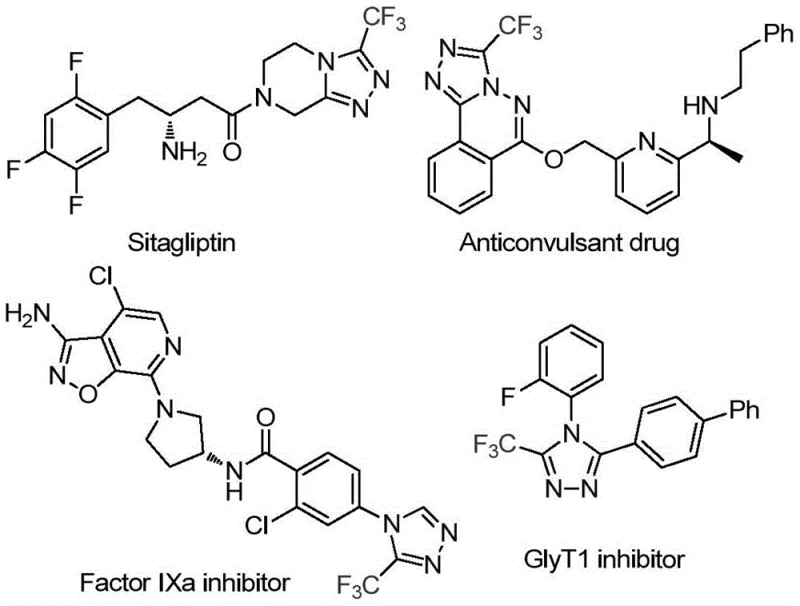 As illustrated in the structural diversity of current medications, the integration of fluorine atoms often enhances metabolic stability and binding affinity, making efficient access to these cores a priority for R&D teams globally.
The Limitations of Conventional Methods vs. The Novel Approach
The Limitations of Conventional Methods
Traditional synthetic pathways for constructing 1,2,4-triazole rings often suffer from significant operational complexities that hinder large-scale manufacturing. Conventional protocols frequently necessitate the use of expensive transition metal catalysts, specialized ligands, or harsh reaction conditions that demand strictly anhydrous and anaerobic environments. These requirements impose a heavy burden on infrastructure, requiring inert gas lines, gloveboxes, and rigorous solvent drying procedures, which drastically increase both capital expenditure and operational time. Furthermore, many existing methods rely on pre-functionalized starting materials that are costly to procure or synthesize, leading to longer linear sequences and reduced overall atom economy. The generation of toxic byproducts and the difficulty in removing trace metal residues from the final API intermediate further complicate the purification process, often resulting in lower yields and inconsistent quality profiles that are unacceptable for GMP production.
The Novel Approach
In stark contrast, the methodology disclosed in CN114920707B offers a paradigm shift by utilizing DMF, a low-cost and widely available industrial solvent, as a dual-purpose reagent. This approach eliminates the need for exotic carbon sources or complex catalytic systems, relying instead on molecular iodine as a mild and effective promoter. The reaction proceeds smoothly under an air atmosphere at moderate temperatures between 110°C and 130°C, removing the necessity for inert gas protection. 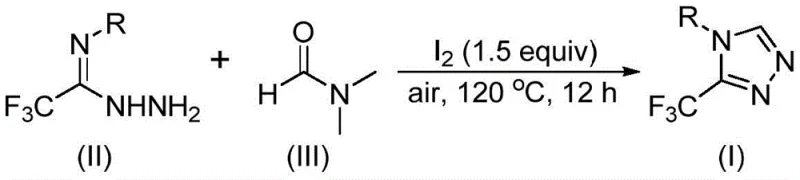 This simplification of reaction conditions translates directly into enhanced process safety and reduced energy consumption. By merging the solvent and reactant roles, the process intensifies the reaction concentration, potentially improving reaction kinetics and throughput. The versatility of this method is evidenced by its compatibility with a wide range of substrates, allowing for the introduction of diverse functional groups such as halogens, alkyls, and electron-withdrawing groups without compromising reaction efficiency.
Mechanistic Insights into Iodine-Promoted Tandem Cyclization
The mechanistic pathway of this transformation is a fascinating example of solvent participation in heterocycle construction. The reaction initiates with the activation of DMF by molecular iodine, which facilitates the cleavage of specific bonds within the solvent molecule. Depending on the specific reaction trajectory, either the formyl group or the N-methyl group of DMF acts as the carbon synthon. When the formyl group participates, it undergoes condensation with the trifluoroethyliminohydrazide to form a hydrazone intermediate, followed by intramolecular cyclization and elimination of dimethylamine. Alternatively, the N-methyl pathway involves the formation of an amine salt, nucleophilic addition, and subsequent oxidative aromatization. This dual-pathway capability ensures high conversion rates even if one pathway is sterically or electronically disfavored by specific substrate substituents. The oxidative aromatization step is crucial for establishing the aromatic stability of the final 1,2,4-triazole ring, driven by the presence of air and iodine.
From an impurity control perspective, this mechanism offers distinct advantages for process chemists. The byproducts generated, such as dimethylamine or iodine salts, are generally volatile or water-soluble, facilitating their removal during the workup phase. The patent describes a straightforward post-treatment involving filtration and silica gel mixing followed by column chromatography, indicating that the crude reaction mixture is relatively clean compared to metal-catalyzed alternatives. The absence of transition metals eliminates the risk of heavy metal contamination, a critical parameter for regulatory compliance in pharmaceutical manufacturing. Furthermore, the use of iodine as a promoter rather than a stoichiometric oxidant minimizes waste generation. The robustness of the catalytic cycle allows for consistent performance across different batches, ensuring that the impurity profile remains stable and predictable, which is essential for validating the commercial viability of the process.
How to Synthesize 3-Trifluoromethyl-1,2,4-Triazole Efficiently
Implementing this synthesis requires careful attention to reagent ratios and thermal parameters to maximize yield and purity. The protocol specifies a molar ratio of trifluoroethyliminohydrazide to iodine of approximately 1:1.5, ensuring sufficient promoter activity without excessive reagent waste. The reaction temperature is maintained between 110°C and 130°C for a duration of 10 to 15 hours, providing ample time for the tandem cyclization to reach completion. Detailed standardized operating procedures for scaling this reaction from gram to kilogram scale are provided in the technical documentation below, ensuring reproducibility across different manufacturing sites.
- Combine trifluoroethyliminohydrazide, molecular iodine (1.5 equivalents), and DMF solvent in a reaction vessel under air atmosphere.
- Heat the reaction mixture to 110-130°C and maintain stirring for 10-15 hours to ensure complete conversion.
- Upon completion, filter the mixture, mix with silica gel, and purify via column chromatography to isolate the target triazole.
Commercial Advantages for Procurement and Supply Chain Teams
For procurement managers and supply chain directors, the adoption of this synthetic route presents a compelling value proposition centered on cost efficiency and supply security. The primary driver of cost reduction lies in the substitution of expensive, specialized reagents with commodity chemicals. DMF is one of the most produced polar aprotic solvents globally, ensuring a stable and low-cost supply chain that is immune to the volatility often seen with niche fine chemicals. By eliminating the need for precious metal catalysts, the process removes a significant line item from the bill of materials and avoids the complex logistics associated with sourcing and recovering rare earth elements. This simplification of the supply chain reduces the risk of production delays caused by raw material shortages.
- Cost Reduction in Manufacturing: The economic benefits of this process are derived from the drastic simplification of the reaction setup and the utilization of low-cost inputs. Since DMF acts as both solvent and reactant, there is no need to purchase separate carbon sources, effectively reducing the number of SKUs required for production. The elimination of inert atmosphere requirements means that standard glass-lined reactors can be used without modification, lowering capital investment barriers. Additionally, the simplified workup procedure reduces labor hours and solvent consumption during purification, leading to substantial operational savings. The overall process efficiency allows for higher throughput per batch, optimizing facility utilization rates and driving down the unit cost of the final intermediate.
- Enhanced Supply Chain Reliability: Supply chain resilience is significantly improved due to the widespread availability of all starting materials. Trifluoroethyliminohydrazide can be synthesized from readily available aromatic amines and hydrazine hydrate, commodities that are produced at massive scales globally. Molecular iodine is also a standard industrial chemical with a mature supply network. This reliance on bulk chemicals rather than custom-synthesized intermediates mitigates the risk of single-source dependency. The robustness of the reaction conditions, which tolerate air and moisture, further ensures that production schedules are not disrupted by minor environmental fluctuations or equipment failures related to gas handling systems, guaranteeing consistent delivery timelines to downstream customers.
- Scalability and Environmental Compliance: Scaling this process from pilot plant to commercial production is straightforward due to the absence of hazardous exotherms typically associated with strong oxidizers or pyrophoric reagents. The reaction operates at moderate temperatures that are easily managed with standard heating systems. From an environmental standpoint, the process aligns with green chemistry principles by reducing the E-factor through solvent participation. The lack of heavy metal waste simplifies effluent treatment and disposal, reducing the environmental compliance burden and associated costs. The ability to run the reaction under air atmosphere also reduces the carbon footprint associated with nitrogen or argon consumption, supporting corporate sustainability goals while maintaining high production volumes.
Frequently Asked Questions (FAQ)
The following questions address common technical inquiries regarding the implementation and optimization of this synthesis method. These answers are derived directly from the experimental data and scope defined in the patent literature, providing a reliable foundation for process development decisions. Understanding these nuances is critical for R&D teams planning to integrate this technology into their existing pipelines.
Q: Does this synthesis require strict anhydrous or anaerobic conditions?
A: No, a significant advantage of this patented method is that it operates effectively under standard air atmosphere without the need for rigorous anhydrous or oxygen-free environments, simplifying operational requirements.
Q: What is the role of DMF in this reaction mechanism?
A: DMF serves a dual function as both the reaction solvent and the carbon source. Both its formyl and N-methyl groups can participate in the cyclization to construct the triazole ring.
Q: Is the substrate scope limited to specific aromatic groups?
A: The method demonstrates broad substrate tolerance, successfully accommodating various substituents including alkyl, alkoxy, alkylthio, halogens, and trifluoromethyl groups on the aromatic ring.
Partnering with NINGBO INNO PHARMCHEM: Your Reliable 3-Trifluoromethyl-1,2,4-Triazole Supplier
At NINGBO INNO PHARMCHEM, we recognize the strategic importance of efficient intermediate synthesis in the global pharmaceutical supply chain. Our team of expert process chemists has extensive experience scaling diverse pathways from 100 kgs to 100 MT/annual commercial production, ensuring that innovative laboratory methods like the one described in CN114920707B are successfully translated into robust manufacturing processes. We maintain stringent purity specifications and operate rigorous QC labs to guarantee that every batch of 3-trifluoromethyl-1,2,4-triazole meets the highest quality standards required for API synthesis. Our commitment to technical excellence ensures that our clients receive materials that facilitate smooth downstream processing and regulatory approval.
We invite potential partners to engage with our technical procurement team to discuss how this advanced synthetic route can optimize your specific project requirements. By requesting a Customized Cost-Saving Analysis, you can gain deeper insights into the economic benefits of switching to this DMF-based methodology. We encourage you to contact us today to obtain specific COA data and route feasibility assessments tailored to your target molecules, ensuring a seamless transition from development to commercial supply.