
Advanced Recrystallization Technology for High-Purity Dienogest Production and Commercial Scale-Up
The pharmaceutical industry constantly seeks robust purification strategies that balance high purity with economic viability, particularly for potent hormonal active pharmaceutical ingredients (APIs). Patent CN112724191B introduces a significant advancement in the refining methodology for Dienogest, a critical progestin used in oral contraceptives and endometriosis treatment. This innovation moves away from labor-intensive chromatographic separations or inefficient single-solvent recrystallizations, proposing instead a optimized binary solvent recrystallization technique. By leveraging a specific mixture of organic solvents and water, this method achieves a remarkable synergy between yield maximization and impurity rejection. The core breakthrough lies in the precise manipulation of solubility parameters through temperature gradients and solvent polarity adjustments, offering a scalable solution for high-purity dienogest manufacturing. As a leading entity in fine chemical synthesis, understanding the nuances of this patent is essential for any reliable dienogest supplier aiming to optimize their production lines.
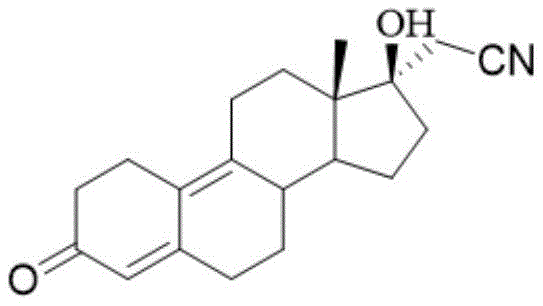
The Limitations of Conventional Methods vs. The Novel Approach
The Limitations of Conventional Methods
Historically, the purification of steroid intermediates like Dienogest has been plagued by inefficiencies inherent in traditional recrystallization protocols. Prior art, such as that disclosed in EP0776904 and CN 102964419A, often relies on single organic solvents like acetone or methanol, which frequently necessitate multiple recrystallization cycles to achieve acceptable purity levels. These repetitive processes inherently degrade the overall process yield, with some documented methods recovering as little as 42% to 56% of the starting material. Furthermore, alternative high-purity routes involving High-Performance Liquid Chromatography (HPLC), while effective at removing impurities, are economically prohibitive for large-scale industrial application due to excessive solvent consumption and low throughput. The reliance on large volumes of organic solvents not only inflates raw material costs but also creates significant environmental burdens regarding waste disposal and solvent recovery, posing challenges for cost reduction in pharmaceutical intermediates manufacturing.
The Novel Approach
The methodology outlined in CN112724191B fundamentally restructures the purification landscape by introducing a controlled binary solvent system, specifically utilizing acetonitrile or isopropanol mixed with water. This approach capitalizes on the differential solubility of Dienogest and its related impurities in a hydro-organic medium. By heating the crude material to temperatures between 70°C and 90°C in a specific volume ratio of organic solvent to water (optimally 10:6 to 10:10), the system ensures complete dissolution followed by a controlled supersaturation upon cooling. This precise thermodynamic control facilitates the selective nucleation of pure Dienogest crystals while leaving impurities in the mother liquor. The result is a streamlined single-step process that boosts yields to over 85% and drives purity above 99%, effectively solving the long-standing trade-off between recovery rate and product quality in steroid processing.
Mechanistic Insights into Binary Solvent Recrystallization
The efficacy of this refining method is rooted in the principles of solution thermodynamics and crystal growth kinetics. In a binary solvent system comprising acetonitrile and water, the addition of water acts as an anti-solvent that modulates the solvation shell around the steroid molecules. At elevated temperatures (approx. 80°C), the entropy of the system favors the dissolution of both the target API and potential impurities. However, as the temperature is gradually lowered to the range of -5°C to 0°C, the solubility product of Dienogest is exceeded, triggering nucleation. The presence of water increases the polarity of the medium, which differentially affects the solubility of the non-polar steroid backbone versus more polar or structurally distinct impurities. This selectivity is crucial; it ensures that the crystal lattice incorporates primarily Dienogest molecules, effectively excluding structurally similar by-products that might co-crystallize in a pure organic solvent environment.
Furthermore, the control of the cooling rate—specifically slowing the temperature drop from reflux to 25°C over 3 to 5 hours—plays a pivotal role in determining crystal habit and size. Rapid cooling often leads to the occlusion of mother liquor and impurities within the crystal matrix, whereas slow, controlled cooling promotes the growth of larger, more perfect crystals with higher internal purity. The optional addition of seed crystals during the cooling phase further directs the polymorphic outcome and accelerates the onset of crystallization, preventing spontaneous, uncontrolled nucleation that could trap impurities. This mechanistic understanding allows process chemists to fine-tune the commercial scale-up of complex hormonal intermediates, ensuring batch-to-batch consistency and minimizing the formation of amorphous solids that are difficult to filter and dry.
How to Synthesize Dienogest Efficiently
Implementing this refining protocol requires strict adherence to solvent ratios and thermal profiles to replicate the high yields and purity reported in the patent data. The process begins with the preparation of the binary solvent mixture, where the volume ratio of acetonitrile to water is critical; experimental data suggests that a ratio of 10:6 offers an optimal balance, requiring only 1050 ml of solvent per 100g of crude material while achieving an 85.50% yield. Deviating significantly from this ratio can lead to either incomplete dissolution or premature precipitation, both of which compromise purity. The following guide outlines the standardized operational parameters derived from the patent examples, serving as a foundational reference for process engineers aiming to integrate this technology into their existing infrastructure.
- Dissolve crude dienogest in a heated mixture of acetonitrile and water (volume ratio 10: 6 to 10:10) at 70-90°C.
- Slowly cool the solution to 25°C over 3-5 hours, then further reduce temperature to -5°C to 0°C for crystallization.
- Filter the crystallized product, wash with cold methanol, and vacuum dry at 50°C to obtain high-purity dienogest.
Commercial Advantages for Procurement and Supply Chain Teams
For procurement managers and supply chain directors, the adoption of this refining technology translates directly into enhanced operational efficiency and risk mitigation. The shift from multi-step purification or chromatography to a single-step recrystallization drastically simplifies the manufacturing workflow. This simplification reduces the dependency on specialized equipment like preparative HPLC columns, which are often bottlenecks in production schedules. By utilizing commodity solvents such as acetonitrile, isopropanol, and water, the process mitigates supply chain risks associated with specialty reagents. The ability to achieve high purity in a single pass means fewer production cycles are needed to meet quality specifications, thereby increasing the overall throughput of the facility without requiring additional capital investment in new reactors or separation units.
- Cost Reduction in Manufacturing: The economic implications of this method are profound, primarily driven by the substantial reduction in solvent consumption and the elimination of yield-lossing steps. Traditional methods often require vast quantities of dichloromethane or ethyl acetate for chromatography, followed by concentration and multiple recrystallizations. In contrast, this binary solvent system demonstrates a drastic decrease in the volume of solvent required per kilogram of product. For instance, optimizing the water content in the acetonitrile mix reduces the total solvent volume needed for dissolution, which directly lowers the energy costs associated with heating, refluxing, and subsequent solvent recovery distillation. Additionally, the increase in yield from typical ranges of 40-60% to over 85% means that less crude starting material is required to produce the same amount of finished API, effectively lowering the raw material cost per unit.
- Enhanced Supply Chain Reliability: Supply continuity is often threatened by complex purification steps that are prone to failure or variability. By simplifying the refining process to a robust crystallization event, the likelihood of batch failures due to column degradation or eluent variability is removed. The solvents employed are globally available bulk chemicals, ensuring that production is not held hostage by the scarcity of niche reagents. This reliability is critical for maintaining consistent inventory levels for downstream formulation partners. Furthermore, the shorter processing time inherent in a single-step crystallization compared to multi-cycle purification allows for faster turnaround times, enabling the supply chain to respond more agilely to market demand fluctuations for hormonal therapies.
- Scalability and Environmental Compliance: From an environmental and regulatory standpoint, this process offers significant advantages regarding waste management and safety. The reduction in total solvent usage inherently decreases the volume of hazardous waste generated, simplifying compliance with increasingly stringent environmental regulations. The use of water as a co-solvent not only improves the safety profile by reducing the flammability load of the solvent mixture but also facilitates easier wastewater treatment compared to pure organic waste streams. The process is inherently scalable; crystallization is a unit operation that translates linearly from laboratory glassware to industrial-sized reactors, ensuring that the high purity and yield observed in pilot studies can be maintained during commercial scale-up of complex pharmaceutical intermediates without the need for re-engineering the purification strategy.
Frequently Asked Questions (FAQ)
The following questions address common technical and commercial inquiries regarding the implementation of this refining technology. These insights are derived directly from the experimental data and comparative analysis provided in the patent documentation, offering clarity on how this method outperforms legacy techniques in terms of both chemical efficiency and operational practicality. Understanding these details is vital for technical teams evaluating the feasibility of adopting this process for their specific production lines.
Q: What is the primary advantage of the acetonitrile-water system over single solvents?
A: The binary solvent system allows for precise control over solubility gradients, significantly increasing yield to over 85% while reducing total impurities to below 0.2%, compared to traditional single-solvent methods which often suffer from low recovery rates.
Q: Can this refining method be scaled for industrial production?
A: Yes, the process utilizes standard crystallization equipment and common solvents like acetonitrile and water, avoiding complex chromatography steps, making it highly suitable for large-scale commercial manufacturing.
Q: How does this method impact the impurity profile of Dienogest?
A: By optimizing the cooling curve and solvent ratio, related substances are drastically reduced from approximately 4.2% in the crude material to as low as 0.14% in the refined product, meeting stringent pharmacopeial standards.
Partnering with NINGBO INNO PHARMCHEM: Your Reliable Dienogest Supplier
At NINGBO INNO PHARMCHEM, we recognize that the transition from patent literature to commercial reality requires deep technical expertise and robust manufacturing capabilities. Our team possesses extensive experience scaling diverse pathways from 100 kgs to 100 MT/annual commercial production, ensuring that the theoretical benefits of advanced refining methods like the one described in CN112724191B are fully realized in practice. We maintain stringent purity specifications and operate rigorous QC labs equipped to validate the low impurity profiles achievable through this binary solvent recrystallization. Our commitment to quality ensures that every batch of Dienogest meets the exacting standards required for global pharmaceutical registration.
We invite potential partners to engage with our technical procurement team to discuss how this optimized refining route can be integrated into your supply chain. By requesting a Customized Cost-Saving Analysis, you can quantify the specific economic benefits relevant to your production volume. We encourage you to contact us to obtain specific COA data from our recent batches and to discuss route feasibility assessments tailored to your project timelines, ensuring a seamless path from development to market.