
Advanced Manufacturing Of Potent Sulfonamide HIV-1 Protease Inhibitors For Global Pharma
Advanced Manufacturing Of Potent Sulfonamide HIV-1 Protease Inhibitors For Global Pharma
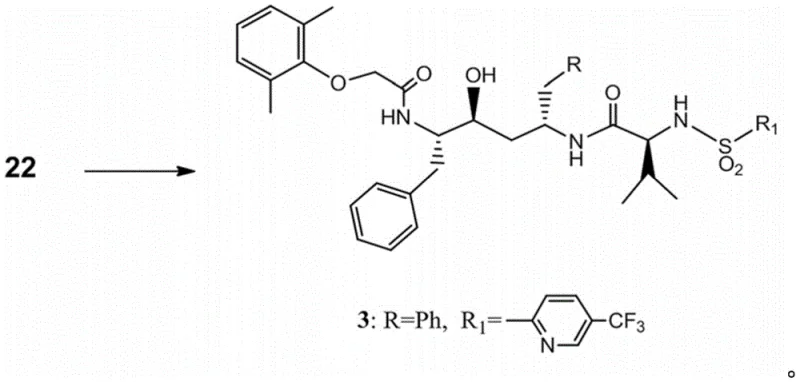
The global pharmaceutical landscape is constantly evolving to combat viral resistance, particularly in the realm of HIV treatment where mutation rates remain a critical challenge. Patent CN107602454B introduces a significant advancement in the design and synthesis of novel sulfonamide compounds that function as potent HIV-1 protease inhibitors. This intellectual property outlines a sophisticated chemical pathway starting from enaminone precursors, utilizing precise reduction techniques and strategic coupling reactions to construct complex molecular architectures. The disclosed compounds, particularly Compound 3, demonstrate exceptional inhibitory activity with Ki values as low as 0.6 nM, positioning them as viable candidates for next-generation antiretroviral therapies. For R&D directors and procurement specialists, understanding the nuances of this synthesis is vital for securing a reliable supply chain of high-purity API intermediates.
The Limitations of Conventional Methods vs. The Novel Approach
The Limitations of Conventional Methods
Traditional synthesis routes for protease inhibitors often rely on harsh reaction conditions that can compromise stereochemical integrity or require expensive high-pressure equipment for hydrogenation steps. Conventional methods frequently struggle with the selective reduction of unsaturated bonds in the presence of multiple functional groups, leading to complex impurity profiles that are difficult to purge. Furthermore, the purification of basic heterocyclic intermediates has historically been a bottleneck, often requiring extensive chromatographic separation or multiple recrystallization cycles that drastically reduce overall yield. These inefficiencies translate directly into higher manufacturing costs and longer lead times, creating vulnerabilities in the supply chain for critical antiviral medications.
The Novel Approach
The methodology presented in this patent offers a transformative solution by employing a mild, low-temperature reduction system using sodium borohydride and methanesulfonic acid. This approach allows for the precise conversion of enaminone starting materials into the desired amino-alcohol scaffolds with high selectivity. Additionally, the use of transfer hydrogenation with ammonium formate and palladium on carbon replaces dangerous high-pressure hydrogen gas protocols, significantly enhancing process safety. The strategic implementation of Boc protection groups facilitates clean intermediate handling, while the final coupling steps utilize efficient activating agents like TBTU to ensure high conversion rates. This streamlined workflow not only improves yield but also simplifies the downstream processing requirements.
Mechanistic Insights into NaBH4-Mediated Reduction and Transfer Hydrogenation
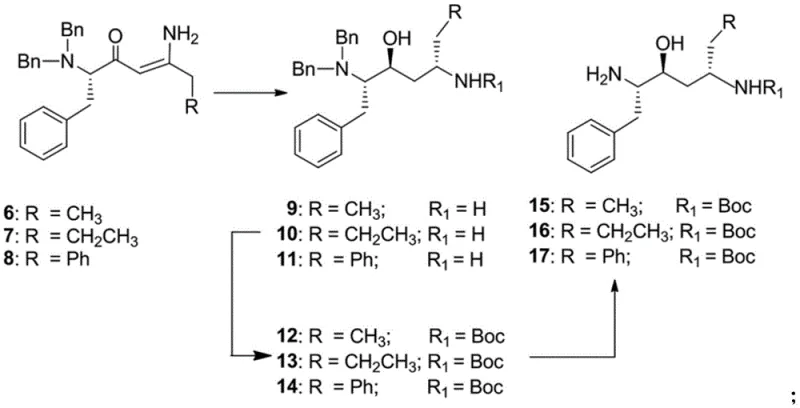
The core of this synthetic strategy lies in the controlled reduction of the enaminone double bond, which is achieved through an in-situ generation of reactive borane species. By mixing sodium borohydride with methanesulfonic acid in ethylene glycol dimethyl ether at temperatures between -4°C and -6°C, the process creates a highly active yet controllable reducing environment. This specific thermal window is critical for preventing over-reduction or side reactions that could degrade the sensitive chiral centers within the molecule. The subsequent quenching and workup procedures are designed to stabilize the resulting amine intermediates, ensuring they are ready for the next protection step without racemization. This level of control is essential for maintaining the biological activity of the final protease inhibitor.
Following the initial reduction and protection, the removal of benzyl protecting groups is executed via a catalytic transfer hydrogenation mechanism. Instead of using gaseous hydrogen, the patent specifies the use of ammonium formate as the hydrogen donor in the presence of a palladium on carbon catalyst. This heterogeneous catalysis allows for the clean cleavage of carbon-nitrogen bonds under reflux conditions in ethanol. The mechanism involves the decomposition of ammonium formate on the catalyst surface to release hydrogen atoms which then reduce the benzyl group to toluene, freeing the amine. This method is particularly advantageous for industrial scale-up as it mitigates explosion risks associated with high-pressure hydrogen reactors and simplifies the engineering controls required for the manufacturing facility.
How to Synthesize Sulfonamide HIV Inhibitors Efficiently
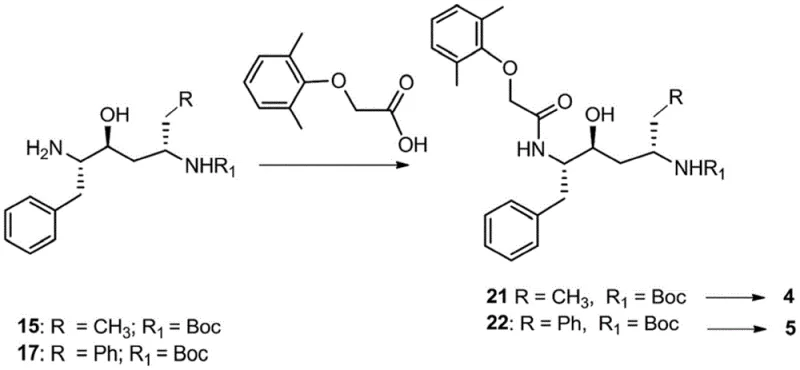
The synthesis of these high-value pharmaceutical intermediates requires strict adherence to the optimized reaction parameters defined in the patent to ensure consistent quality and yield. The process begins with the preparation of the reducing agent mixture, followed by the slow addition of the enaminone substrate to maintain the critical low-temperature profile. Subsequent steps involve standard organic transformations such as Boc protection and catalytic debenzylation, which are well-understood in the industry but benefit here from the specific solvent systems and stoichiometry described. The final assembly of the molecule involves coupling the deprotected amine scaffold with N-arylsulfonyl valine derivatives, a step that demands high purity reagents to avoid difficult-to-remove byproducts. Detailed standardized operating procedures for each transformation are essential for technology transfer.
- Perform low-temperature reduction of enaminone intermediates (Compounds 6-8) using a NaBH4 and methanesulfonic acid system in ethylene glycol dimethyl ether to generate amino-alcohol precursors.
- Protect the amine functionality with Boc anhydride, followed by catalytic debenzylation using Pd/C and ammonium formate to reveal the free hydroxyl-amine scaffold.
- Execute final amide coupling with N-arylsulfonyl valine derivatives using TBTU activation, followed by rigorous purification via silica gel adsorption to remove basic impurities.
Commercial Advantages for Procurement and Supply Chain Teams
For procurement managers and supply chain heads, the adoption of this synthetic route offers substantial strategic benefits regarding cost stability and operational safety. The elimination of high-pressure hydrogenation equipment reduces capital expenditure requirements for manufacturing partners and lowers the barrier for qualifying new suppliers. By utilizing common and commercially available reagents such as sodium borohydride, ammonium formate, and standard coupling agents, the supply chain becomes more resilient to raw material shortages. The robust nature of the reaction conditions means that production can be scaled with greater confidence, reducing the risk of batch failures that often disrupt delivery schedules. This reliability is paramount for maintaining continuous production of life-saving antiretroviral therapies.
- Cost Reduction in Manufacturing: The process significantly lowers operational costs by replacing hazardous high-pressure hydrogenation with safer transfer hydrogenation techniques, which reduces insurance premiums and safety infrastructure investments. The use of efficient coupling reagents and high-yield reduction steps minimizes raw material waste, leading to a more economical consumption of expensive chiral building blocks. Furthermore, the simplified purification protocols reduce the volume of solvents and silica gel required for chromatography, directly impacting the variable costs associated with large-scale production runs.
- Enhanced Supply Chain Reliability: Sourcing is streamlined because the key reagents like Pd/C, Boc anhydride, and TBTU are commodity chemicals available from multiple global vendors, preventing single-source bottlenecks. The mild reaction conditions reduce the wear and tear on reactor vessels and ancillary equipment, leading to less unplanned downtime and more consistent output volumes. This stability allows for better forecasting and inventory management, ensuring that downstream API manufacturers receive their intermediates on time without unexpected delays caused by complex process upsets.
- Scalability and Environmental Compliance: The synthetic route is inherently scalable as it avoids extreme pressures or cryogenic temperatures that are difficult to maintain in large reactors, facilitating a smoother transition from pilot plant to commercial tonnage. The waste streams generated are primarily aqueous and organic solvents that can be managed through standard recovery and treatment protocols, aligning with increasingly stringent environmental regulations. The high selectivity of the reactions reduces the formation of toxic byproducts, simplifying the effluent treatment process and lowering the environmental compliance burden for manufacturing sites.
Frequently Asked Questions (FAQ)
The following questions address common technical and commercial inquiries regarding the production and application of these novel sulfonamide compounds. Understanding these details helps stakeholders evaluate the feasibility of integrating this technology into their existing portfolios. The answers are derived directly from the experimental data and specifications provided in the patent documentation, ensuring accuracy and relevance for technical decision-makers.
Q: What is the primary advantage of the NaBH4/MsOH reduction system described in the patent?
A: The in-situ generation of reducing species using NaBH4 and methanesulfonic acid at controlled low temperatures (-4°C to -6°C) allows for highly selective reduction of the enaminone double bond without affecting other sensitive functional groups, ensuring high stereochemical integrity.
Q: How does the patent address the purification challenges of basic heterocyclic impurities?
A: The process utilizes a specialized silica gel adsorption method specifically tuned to separate the basic nitrogen-containing heterocyclic products from acidic impurities, achieving high purity levels essential for pharmaceutical applications without requiring complex crystallization steps initially.
Q: Why is transfer hydrogenation preferred over high-pressure hydrogenation in this route?
A: Using ammonium formate with Pd/C for transfer hydrogenation eliminates the need for high-pressure hydrogen gas equipment, significantly enhancing operational safety and simplifying the reactor requirements for commercial scale-up while maintaining efficient debenzylation.
Partnering with NINGBO INNO PHARMCHEM: Your Reliable Sulfonamide HIV Inhibitor Supplier
As the demand for effective HIV treatments continues to grow, having a manufacturing partner with deep technical expertise in complex organic synthesis is essential for success. NINGBO INNO PHARMCHEM possesses extensive experience scaling diverse pathways from 100 kgs to 100 MT/annual commercial production, ensuring that your supply needs are met with precision and consistency. Our facilities are equipped with state-of-the-art rigorous QC labs capable of verifying stringent purity specifications, guaranteeing that every batch of sulfonamide intermediate meets the highest pharmaceutical standards. We understand the critical nature of antiviral supply chains and are committed to delivering quality materials that support the development of life-saving medications.
We invite you to engage with our technical team to discuss how we can support your specific project requirements with customized solutions. By requesting a Customized Cost-Saving Analysis, you can gain insights into how our optimized processes can improve your bottom line without compromising quality. We encourage you to contact our technical procurement team today to obtain specific COA data and route feasibility assessments tailored to your development timeline. Let us be your partner in advancing the next generation of HIV therapeutics through superior chemical manufacturing.