
Advanced One-Pot Carbonylation Strategy for High-Purity N-Acyl Indole Pharmaceutical Intermediates
Advanced One-Pot Carbonylation Strategy for High-Purity N-Acyl Indole Pharmaceutical Intermediates
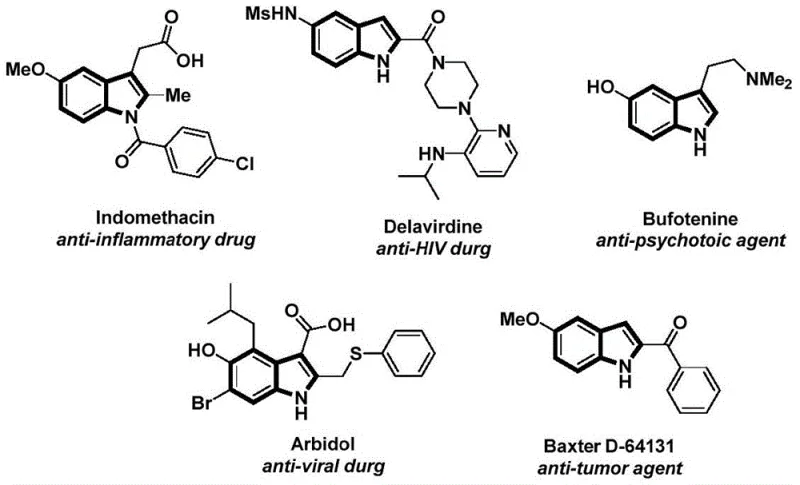
The structural motif of the indole ring serves as a foundational backbone in medicinal chemistry, appearing in a vast array of bioactive molecules ranging from anti-inflammatory agents like Indomethacin to potent anti-tumor compounds. As depicted in the reference structures of known pharmaceuticals, the versatility of the indole scaffold is unmatched, yet the efficient construction of N-substituted variants, particularly N-acyl indoles, remains a persistent challenge in process chemistry. Patent CN112898192B introduces a transformative methodology that addresses these synthetic bottlenecks by utilizing a palladium-catalyzed carbonylation cyclization strategy. This innovation allows for the direct assembly of complex N-acyl indole architectures from readily available 2-alkynyl anilines and aryl iodides, bypassing the need for pre-functionalized precursors.
By leveraging a solid carbon monoxide surrogate, specifically phenyl 1,3,5-tricarboxylate (TFBen), this patented process circumvents the severe safety hazards and logistical complexities associated with handling toxic gaseous carbon monoxide. For R&D directors and process chemists, this represents a paradigm shift towards safer, more scalable laboratory protocols that can be seamlessly translated to pilot and commercial scales. The method operates under relatively mild thermal conditions, typically around 60°C, ensuring energy efficiency while maintaining high reaction fidelity. Furthermore, the broad substrate scope demonstrated in the patent data suggests that this technology is not merely a niche academic curiosity but a robust platform capable of generating diverse libraries of fine chemical intermediates essential for modern drug discovery pipelines.
The Limitations of Conventional Methods vs. The Novel Approach
The Limitations of Conventional Methods
Traditional synthetic routes to N-acyl indoles often rely on multi-step sequences that involve harsh reaction conditions, expensive reagents, or the direct use of hazardous gases. Classical acylation methods frequently require the prior synthesis of the indole nucleus followed by a separate N-acylation step, which can suffer from poor regioselectivity or require aggressive bases that limit functional group tolerance. Moreover, carbonylation reactions utilizing gaseous carbon monoxide necessitate specialized high-pressure autoclaves and rigorous safety protocols to prevent leakage and exposure, creating significant barriers to entry for many manufacturing facilities. These conventional approaches often result in lower overall yields due to material losses during isolation of intermediates and generate substantial waste streams, complicating environmental compliance and increasing the total cost of ownership for the final active pharmaceutical ingredient.
The Novel Approach
In stark contrast, the novel approach detailed in patent CN112898192B streamlines the synthesis into a highly efficient one-pot procedure that integrates carbonylation and cyclization into a single operational sequence. By employing TFBen as a safe, solid source of carbon monoxide, the reaction can be conducted in standard glassware without the need for pressurized gas lines, drastically simplifying the equipment requirements. The use of a palladium catalyst system, specifically tetrakis(triphenylphosphine)palladium, in conjunction with potassium carbonate as a base, facilitates the smooth insertion of the carbonyl group and subsequent ring closure. This methodology not only improves the atom economy of the transformation but also significantly reduces the reaction time compared to stepwise alternatives, enabling rapid access to target molecules. The ability to perform this transformation at a moderate temperature of 60°C further underscores the energy-efficient nature of this green chemistry advancement.
Mechanistic Insights into Palladium-Catalyzed Carbonylation Cyclization
The mechanistic pathway of this transformation is a sophisticated orchestration of organometallic steps initiated by the oxidative addition of the aryl iodide to the palladium(0) catalyst. As illustrated in the general reaction scheme, the palladium center inserts into the carbon-iodine bond of the aryl iodide substrate to generate an aryl-palladium(II) intermediate. This reactive species then undergoes migratory insertion of carbon monoxide, which is released in situ from the decomposition of the TFBen surrogate, forming an acyl-palladium complex. This acyl intermediate is subsequently intercepted by the amino group of the 2-alkynyl aniline, leading to the formation of an amide linkage through a reductive elimination or nucleophilic attack pathway, regenerating the active palladium species for the next catalytic cycle.
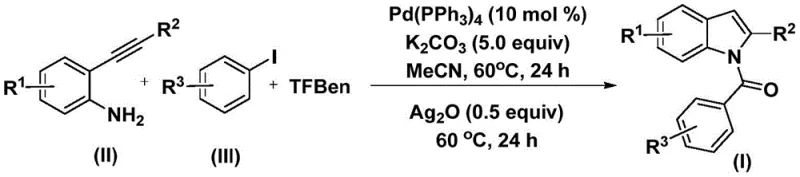
Following the initial amide formation, the reaction proceeds to the critical cyclization stage mediated by the addition of silver oxide. The silver salt likely acts as a soft Lewis acid or an oxidant that activates the alkyne moiety or facilitates the deprotonation necessary for the intramolecular nucleophilic attack of the amide nitrogen onto the alkyne triple bond. This cyclization event constructs the five-membered pyrrole ring of the indole system, finalizing the core structure. The careful control of reaction parameters, such as the stoichiometric ratio of silver oxide (0.5 equivalents) and the extended reaction time of 24 hours for each stage, ensures complete conversion and minimizes the formation of side products. This deep understanding of the catalytic cycle allows process chemists to fine-tune impurity profiles, ensuring that the resulting N-acyl indoles meet the stringent purity specifications required for pharmaceutical applications.
How to Synthesize N-Acyl Indole Compounds Efficiently
The synthesis of these valuable heterocyclic compounds is achieved through a meticulously optimized protocol that balances reagent loading, temperature, and reaction duration to maximize yield and purity. The process begins with the combination of the palladium catalyst, base, solid CO source, and substrates in an organic solvent such as acetonitrile, followed by a two-stage heating regimen. Detailed standardized operating procedures regarding specific molar ratios, work-up techniques, and purification methods are critical for reproducibility and are outlined in the technical guide below.
- Combine palladium catalyst (Pd(PPh3)4), potassium carbonate, solid CO source (TFBen), 2-alkynyl aniline, and aryl iodide in acetonitrile solvent.
- Heat the reaction mixture at 60°C for 24 hours to facilitate the initial carbonylation and amide formation.
- Add silver oxide (Ag2O) to the mixture and continue heating at 60°C for another 24 hours to induce cyclization, followed by filtration and chromatographic purification.
Commercial Advantages for Procurement and Supply Chain Teams
For procurement managers and supply chain leaders, the adoption of this patented synthesis route offers compelling economic and logistical benefits that extend beyond simple yield improvements. The elimination of gaseous carbon monoxide from the supply chain removes a major safety liability and reduces the capital expenditure required for specialized high-pressure reactors and gas monitoring systems. This shift to solid reagents simplifies inventory management and transportation, as TFBen and other reagents are stable, non-volatile solids that can be stored and handled with standard precautions. Consequently, the overall manufacturing footprint is reduced, allowing for more flexible production scheduling and faster response times to market demands for key pharmaceutical intermediates.
- Cost Reduction in Manufacturing: The use of commercially available and inexpensive starting materials, such as aryl iodides and 2-alkynyl anilines, combined with a recyclable palladium catalyst system, drives down the raw material costs significantly. By consolidating multiple synthetic steps into a single pot, the process reduces solvent consumption, labor hours, and waste disposal fees, leading to substantial overall cost savings in the production of high-value indole derivatives. The high reaction efficiency and good substrate compatibility mean that fewer batches are rejected due to quality issues, further optimizing the cost per kilogram of the final product.
- Enhanced Supply Chain Reliability: Relying on solid reagents rather than compressed gases mitigates the risk of supply disruptions caused by transportation regulations or vendor shortages of hazardous materials. The robustness of the reaction conditions, which tolerate a wide range of functional groups including halogens and alkoxy substituents, ensures consistent output even when slight variations in raw material quality occur. This reliability is crucial for maintaining continuous production schedules and meeting the strict delivery timelines expected by downstream pharmaceutical clients who depend on a steady flow of intermediates for their own drug manufacturing processes.
- Scalability and Environmental Compliance: The mild reaction temperatures and the absence of toxic gas emissions make this process inherently safer and more environmentally friendly, aligning with global trends towards green chemistry and sustainable manufacturing. Scaling up from laboratory to commercial production is facilitated by the simplicity of the operation, which does not require complex engineering controls for gas handling. This ease of scale-up ensures that supply can be rapidly increased to meet surging demand without compromising on safety or environmental standards, providing a competitive edge in the global market for fine chemical intermediates.
Frequently Asked Questions (FAQ)
The following questions address common technical inquiries regarding the implementation and optimization of this N-acyl indole synthesis method. These answers are derived directly from the experimental data and mechanistic studies presented in the patent literature to provide clarity for technical teams evaluating this technology for adoption.
Q: What is the advantage of using TFBen over gaseous CO in this synthesis?
A: Using phenyl 1,3,5-tricarboxylate (TFBen) as a solid carbon monoxide surrogate significantly enhances operational safety by eliminating the need for high-pressure gas cylinders and specialized containment equipment, thereby reducing infrastructure costs and regulatory burdens.
Q: What is the role of Silver Oxide (Ag2O) in the reaction mechanism?
A: Silver oxide acts as a crucial promoter in the second stage of the reaction, facilitating the intramolecular cyclization of the intermediate amide to form the final N-acyl indole core structure under mild thermal conditions.
Q: Does this method tolerate diverse functional groups on the substrates?
A: Yes, the protocol demonstrates excellent substrate compatibility, successfully accommodating various substituents such as halogens (F, Cl, Br), alkyl groups (Me, tBu), and alkoxy groups (OMe) on both the aniline and aryl iodide components without significant yield loss.
Partnering with NINGBO INNO PHARMCHEM: Your Reliable N-Acyl Indole Supplier
At NINGBO INNO PHARMCHEM, we recognize the critical role that advanced synthetic methodologies play in accelerating drug development and reducing time-to-market for new therapies. Our team of expert chemists possesses extensive experience scaling diverse pathways from 100 kgs to 100 MT/annual commercial production, ensuring that the transition from bench-scale discovery to industrial manufacturing is seamless and efficient. We are committed to delivering high-purity N-acyl indole intermediates that adhere to stringent purity specifications, supported by our rigorous QC labs and state-of-the-art analytical capabilities.
We invite you to collaborate with us to leverage this cutting-edge technology for your specific project needs. Our technical procurement team is ready to provide a Customized Cost-Saving Analysis tailored to your volume requirements and to discuss how we can optimize your supply chain. Please contact us today to request specific COA data and route feasibility assessments, and let us demonstrate how our expertise can drive value and innovation in your pharmaceutical manufacturing operations.