
Advanced C-H Activation Strategy for Scalable Catechol Derivative Production
The pharmaceutical and agrochemical industries are constantly seeking efficient pathways to access functionalized aromatic scaffolds, particularly catechol derivatives which serve as critical structural motifs in kinase inhibitors and crop protection agents. Patent CN108164397B introduces a groundbreaking methodology for the preparation of these valuable compounds, leveraging a transient directing group strategy that overcomes historical limitations in C-H bond functionalization. This innovation centers on the use of 2-chloro-5-nitropyrimidine as a highly effective, removable directing group that facilitates regioselective ortho-acetoxylation. By integrating this approach into our manufacturing portfolio, we offer a reliable pharma intermediate supplier solution that addresses the persistent challenges of selectivity and harsh reaction conditions associated with traditional phenol functionalization. The technology enables the direct transformation of simple arylphenols into complex ortho-functionalized products with remarkable precision.
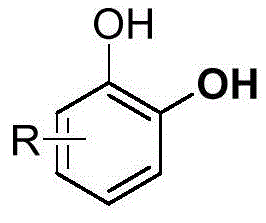
The significance of this patent lies not only in the chemical transformation itself but in the operational simplicity it affords process chemists. Traditional methods for introducing functionality adjacent to a hydroxyl group often suffer from poor regiocontrol or require multi-step protection-deprotection sequences that erode overall yield. In contrast, this novel route utilizes a palladium-catalyzed C-H activation mechanism that is both robust and tolerant of various functional groups. The ability to synthesize these intermediates with high purity and defined substitution patterns makes this technology indispensable for the development of next-generation active pharmaceutical ingredients (APIs) and high-performance agrochemicals. As we analyze the technical specifics, it becomes clear that this represents a substantial leap forward in synthetic efficiency for fine chemical manufacturing.
The Limitations of Conventional Methods vs. The Novel Approach
The Limitations of Conventional Methods
Historically, the functionalization of phenol derivatives at the ortho-position has been plagued by significant synthetic hurdles that impact both cost and safety in a commercial setting. Conventional strategies often rely on the introduction of directing groups that are notoriously difficult to remove once their function is served. Literature precedents frequently describe removal conditions that necessitate the use of highly reactive alkali metals such as sodium or potassium, often under elevated temperatures that pose severe safety risks in a plant environment. These harsh conditions not only increase the hazard profile of the manufacturing process but also limit the scope of substrates that can be tolerated, as sensitive functional groups may decompose under such aggressive treatment. Furthermore, the lack of regioselectivity in direct electrophilic substitution often leads to mixtures of ortho- and para-isomers, requiring energy-intensive and yield-reducing separation processes that are economically undesirable for large-scale production.
The Novel Approach
The methodology disclosed in CN108164397B fundamentally reshapes this landscape by introducing a directing group that is as easy to remove as it is to install. The use of 2-chloro-5-nitropyrimidine allows for the precise direction of the palladium catalyst to the ortho-position, ensuring high regioselectivity without the formation of unwanted isomers. Crucially, the removal of this guiding group is achieved under exceptionally mild conditions using hydrazine hydrate at ambient temperature (25°C), completely eliminating the need for dangerous alkali metals or high-thermal stress. This shift from harsh to mild chemistry translates directly into enhanced process safety and broader substrate compatibility, allowing for the functionalization of complex molecules that would otherwise be inaccessible. The result is a streamlined synthetic route that minimizes waste and maximizes the efficiency of converting raw phenolic starting materials into high-value catechol derivatives.
Mechanistic Insights into Pd-Catalyzed C-H Acetoxylation
The core of this technological advancement is a sophisticated palladium-catalyzed C-H activation cycle that operates with high fidelity. The process initiates with the coordination of the palladium species to the nitrogen atoms of the pyrimidine directing group, which positions the metal center in close proximity to the ortho-C-H bond of the phenol ring. This pre-organization lowers the activation energy required for C-H bond cleavage, facilitating the formation of a stable palladacycle intermediate. Subsequent oxidation by iodobenzene diacetate (PhI(OAc)2) generates a high-valent palladium species capable of reductive elimination, which installs the acetoxy group precisely at the targeted ortho-position. This mechanism ensures that the functionalization occurs exclusively at the desired site, driven by the geometric constraints imposed by the directing group, thereby delivering products with exceptional structural integrity and purity suitable for sensitive downstream applications.
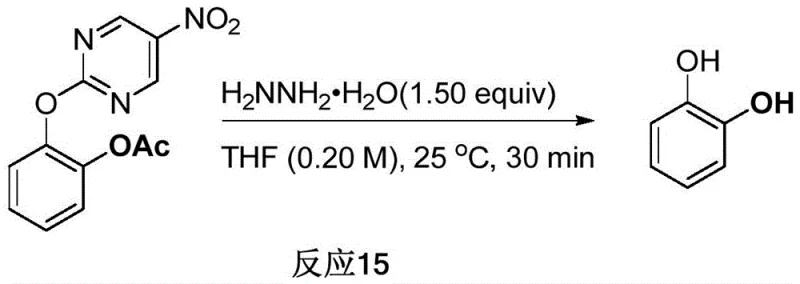
Following the C-H activation step, the recovery of the free hydroxyl group is achieved through a nucleophilic displacement mechanism that is remarkably gentle. The electron-deficient nature of the 5-nitropyrimidine ring makes the C-O bond susceptible to attack by hydrazine, which acts as a soft nucleophile to cleave the ether linkage. This step proceeds rapidly at room temperature in tetrahydrofuran (THF), releasing the final catechol product and the pyrimidine byproduct. The mildness of this deprotection is a critical quality attribute, as it prevents the degradation of the newly formed catechol moiety, which can be prone to oxidation under harsher basic or acidic conditions. By controlling the reaction environment with nitrogen atmosphere and anhydrous solvents during the initial steps, the process minimizes side reactions, ensuring that the impurity profile remains well within the stringent specifications required for pharmaceutical grade intermediates.
How to Synthesize Catechol Derivatives Efficiently
The practical implementation of this synthesis involves a logical sequence of operations designed to maximize yield while maintaining safety standards. The process begins with the generation of the phenoxide ion using sodium hydride in dry THF, followed by coupling with the chloropyrimidine to establish the directing group. Once the intermediate is formed, it undergoes the palladium-catalyzed acetoxylation in a mixture of acetic acid and acetic anhydride. Finally, the directing group is cleaved to reveal the target molecule. This sequence has been optimized to allow for potential telescoping, where intermediate isolation can be minimized to save time and solvent. For detailed operational parameters and safety guidelines regarding reagent handling, please refer to the standardized synthesis protocol provided below.
- Perform etherification of arylphenol with 2-chloro-5-nitropyrimidine using NaH in dry THF under nitrogen to form the pyrimidine intermediate.
- Execute Pd-catalyzed C-H activation using Pd(OAc)2 and PhI(OAc)2 in an AcOH/Ac2O solvent system at 100°C to install the acetoxy group.
- Remove the directing group using hydrazine hydrate in THF at 25°C to recover the free hydroxyl group and yield the final catechol derivative.
Commercial Advantages for Procurement and Supply Chain Teams
From a procurement and supply chain perspective, this patented technology offers compelling advantages that directly address the pain points of cost volatility and supply continuity in the fine chemicals sector. The ability to utilize readily available arylphenols and simple heterocyclic halides as starting materials reduces dependency on exotic or scarce reagents, thereby stabilizing the raw material supply chain. Furthermore, the elimination of hazardous reagents like bulk alkali metals for the deprotection step simplifies waste management protocols and reduces the regulatory burden associated with handling dangerous goods. This streamlined approach not only enhances the safety profile of the manufacturing facility but also contributes to substantial cost savings by reducing the complexity of the operational workflow and minimizing the need for specialized containment equipment.
- Cost Reduction in Manufacturing: The transition to a mild deprotection strategy using hydrazine hydrate eliminates the need for expensive and energy-intensive cooling or heating cycles associated with traditional metal-mediated cleavage. By avoiding the use of stoichiometric amounts of reactive metals, the process reduces raw material costs and simplifies the quenching procedure, which in turn lowers the consumption of water and neutralizing agents. Additionally, the high regioselectivity of the C-H activation step minimizes the formation of isomeric byproducts, significantly reducing the loss of material during purification and improving the overall mass balance of the production campaign.
- Enhanced Supply Chain Reliability: The robustness of this synthetic route against varying substrate electronics means that a single platform technology can be applied to a wide range of substituted phenols, from electron-rich methoxy derivatives to electron-deficient halophenols. This versatility allows for a more agile supply chain capable of responding to diverse customer needs without requiring extensive process re-development for each new analog. The use of common solvents like THF and acetic acid further ensures that solvent availability is not a bottleneck, securing the continuity of supply even during periods of market fluctuation for specialty chemicals.
- Scalability and Environmental Compliance: The patent explicitly demonstrates the feasibility of scaling this reaction to gram-level quantities with consistent results, indicating a clear path towards kilogram and ton-scale production. The one-pot potential of the first two steps reduces the number of unit operations, which decreases solvent usage and waste generation, aligning with green chemistry principles. This reduced environmental footprint simplifies compliance with increasingly strict environmental regulations, making the process more sustainable and future-proof for long-term commercial manufacturing of complex pharmaceutical intermediates.
Frequently Asked Questions (FAQ)
To assist our technical partners in evaluating this technology for their specific applications, we have compiled answers to common inquiries regarding the process capabilities and limitations. These insights are derived directly from the experimental data and technical disclosures within the patent documentation, ensuring accuracy and relevance for process development teams. Understanding these nuances is essential for integrating this methodology into existing production workflows and assessing its fit for specific target molecules.
Q: What are the advantages of the 2-chloro-5-nitropyrimidine directing group?
A: Unlike traditional directing groups that require harsh conditions like active metals (sodium/potassium) and high temperatures for removal, this novel group can be removed under extremely mild conditions using hydrazine hydrate at 25°C, significantly improving safety and operational simplicity.
Q: Is this synthesis method suitable for large-scale production?
A: Yes, the patent demonstrates a one-pot synthesis capability where the first two steps can be combined, and the process has been validated at the gram level with robust yields, indicating strong potential for commercial scale-up without complex isolation procedures between steps.
Q: What is the regioselectivity of this C-H activation method?
A: The method utilizes the pyrimidine moiety to direct the palladium catalyst specifically to the ortho-position of the phenol ring, ensuring high regioselectivity for ortho-functionalization which is critical for synthesizing specific bioactive catechol scaffolds.
Partnering with NINGBO INNO PHARMCHEM: Your Reliable Catechol Derivatives Supplier
At NINGBO INNO PHARMCHEM, we recognize the transformative potential of this Pd-catalyzed C-H activation technology for the synthesis of high-value catechol scaffolds. Our team possesses extensive experience scaling diverse pathways from 100 kgs to 100 MT/annual commercial production, ensuring that the transition from laboratory bench to industrial reactor is seamless and efficient. We are committed to delivering products that meet stringent purity specifications through our rigorous QC labs, utilizing advanced analytical techniques to verify the absence of residual palladium and other critical impurities. Our infrastructure is designed to handle the specific solvent systems and reagent requirements of this process safely and effectively.
We invite you to collaborate with us to leverage this innovative synthetic route for your next project. By partnering with our technical procurement team, you can request a Customized Cost-Saving Analysis tailored to your specific volume requirements. We encourage you to reach out for specific COA data and route feasibility assessments to determine how this advanced methodology can optimize your supply chain and reduce your overall manufacturing costs while ensuring the highest quality standards for your final products.