
Advanced One-Pot Synthesis of 2-Trifluoromethyl Quinazolinones for Commercial Pharmaceutical Production
Advanced One-Pot Synthesis of 2-Trifluoromethyl Quinazolinones for Commercial Pharmaceutical Production
The pharmaceutical and agrochemical industries continuously seek robust synthetic methodologies to access privileged heterocyclic scaffolds efficiently. Among these, quinazolinone derivatives stand out due to their profound biological activities, ranging from antifungal and antiviral properties to potent anticancer effects. The introduction of a trifluoromethyl group into these structures further enhances their metabolic stability, lipophilicity, and bioavailability, making them highly desirable candidates for modern drug development. Patent CN112480015B discloses a groundbreaking multi-component one-pot method for synthesizing 2-trifluoromethyl substituted quinazolinones. This technology represents a significant leap forward in process chemistry, utilizing a palladium-catalyzed carbonylation cascade that transforms cheap nitro compounds and trifluoroethylimidoyl chlorides into high-value intermediates. For R&D directors and procurement managers, this patent offers a pathway to streamline production, reduce reliance on hazardous gases, and access complex molecular architectures with unprecedented ease and efficiency.
The Limitations of Conventional Methods vs. The Novel Approach
The Limitations of Conventional Methods
Historically, the construction of the quinazolinone core has been fraught with synthetic challenges that hinder large-scale commercialization. Traditional routes often rely on the condensation of anthranilic acid derivatives with amines or nitriles, which can suffer from harsh reaction conditions and limited substrate scope. More advanced transition-metal catalyzed methods frequently necessitate the use of high-pressure carbon monoxide gas, posing severe safety risks and requiring expensive, specialized reactor infrastructure that many contract manufacturing organizations lack. Furthermore, existing protocols often demand pre-functionalized starting materials, such as 2-haloanilines or activated benzamides, which are significantly more expensive than simple nitroarenes. These conventional approaches are typically characterized by low atom economy, multiple isolation steps, and poor tolerance for sensitive functional groups, leading to increased waste generation and higher overall production costs that strain supply chain budgets.
The Novel Approach
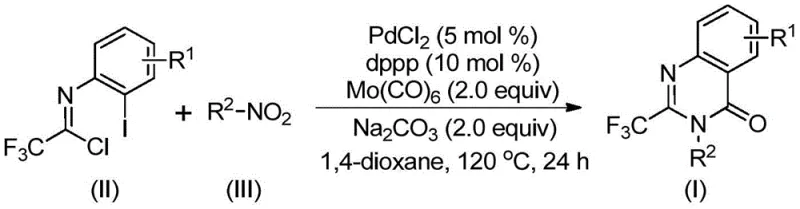
In stark contrast, the methodology described in patent CN112480015B introduces a streamlined, one-pot strategy that elegantly bypasses these historical bottlenecks. By employing molybdenum hexacarbonyl as a solid carbon monoxide surrogate, the process eliminates the need for handling toxic high-pressure CO gas, thereby drastically improving operational safety and reducing capital expenditure on equipment. The reaction leverages inexpensive and widely available nitro compounds as the nitrogen source, which are reduced in situ to amines before participating in the cyclization cascade. This multi-component coupling, catalyzed by a palladium system with a dppp ligand, allows for the direct assembly of the quinazolinone ring from simple precursors. The result is a highly efficient transformation that operates under relatively mild thermal conditions, offering a practical and scalable solution for the synthesis of diverse 2-trifluoromethyl quinazolinone libraries.
Mechanistic Insights into Pd-Catalyzed Carbonylation Cascade
The success of this synthetic route lies in its intricate yet efficient catalytic cycle, which seamlessly integrates reduction, amidation, and carbonylation steps. The mechanism likely initiates with the reduction of the nitro compound to the corresponding amine by molybdenum hexacarbonyl, which simultaneously serves as the source of carbon monoxide upon thermal decomposition. This generated amine then undergoes a base-promoted nucleophilic attack on the trifluoroethylimidoyl chloride, forming a key trifluoroacetamidine intermediate. Subsequently, the palladium catalyst inserts into the carbon-iodine bond of the imidoyl chloride moiety, generating a reactive organopalladium species. The released carbon monoxide then inserts into this carbon-palladium bond to form an acyl-palladium intermediate. Finally, intramolecular cyclization occurs through the formation of a palladium-nitrogen bond, followed by reductive elimination to release the desired 2-trifluoromethyl quinazolinone product and regenerate the active catalyst. This cascade design minimizes intermediate isolation, maximizing throughput and yield.
From an impurity control perspective, this mechanism offers distinct advantages for ensuring high product purity, a critical parameter for pharmaceutical intermediates. The use of a specific ligand system, 1,3-bis(diphenylphosphino)propane (dppp), alongside palladium chloride, helps to stabilize the catalytic species and suppress side reactions such as homocoupling or over-carbonylation. The reaction conditions are optimized to favor the formation of the seven-membered cyclic palladium intermediate, which directs the pathway specifically toward the quinazolinone scaffold rather than alternative linear byproducts. Furthermore, the compatibility of the system with various substituents on the aromatic rings, including halogens and alkyl groups, ensures that the electronic and steric properties of the substrates do not lead to significant degradation or polymerization. This robustness allows for the production of high-purity compounds suitable for downstream biological testing and eventual clinical application without extensive purification burdens.
How to Synthesize 2-Trifluoromethyl Quinazolinones Efficiently
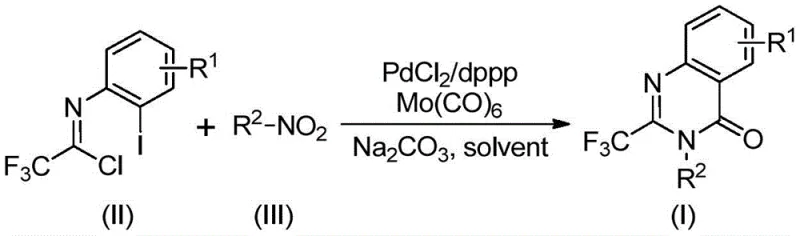
Implementing this synthesis in a laboratory or pilot plant setting requires careful attention to reagent stoichiometry and reaction parameters to achieve optimal yields. The process is designed to be operationally simple, involving the mixing of all components in a single vessel, which reduces labor time and potential material loss during transfers. The choice of solvent is critical, with 1,4-dioxane identified as the preferred medium due to its ability to dissolve all reactants effectively and promote the catalytic cycle at elevated temperatures. The reaction typically proceeds at 120°C for a duration of 16 to 30 hours, providing sufficient time for the slow release of carbon monoxide from the molybdenum source and the subsequent cyclization steps to reach completion. Post-reaction workup is straightforward, involving filtration to remove metal residues and inorganic salts, followed by standard chromatographic purification.
- Combine palladium chloride, dppp ligand, sodium carbonate, Mo(CO)6, trifluoroethylimidoyl chloride, and nitro compound in an organic solvent like 1,4-dioxane.
- Heat the reaction mixture to 120°C and stir for 16 to 30 hours to allow the carbonylation cascade and cyclization to proceed.
- Filter the reaction mixture, mix with silica gel, and purify via column chromatography to isolate the final 2-trifluoromethyl substituted quinazolinone.
Commercial Advantages for Procurement and Supply Chain Teams
For procurement managers and supply chain heads, the adoption of this patented methodology translates into tangible strategic benefits that extend beyond mere chemical yield. The shift from specialized, high-cost starting materials to commodity chemicals like nitro compounds fundamentally alters the cost structure of the manufacturing process. Nitroarenes are produced on a massive industrial scale for various applications, ensuring a stable and competitive supply market that is less susceptible to the volatility often seen with fine chemical intermediates. Additionally, the elimination of high-pressure carbon monoxide gas removes a significant logistical and safety barrier, allowing production to be outsourced to a wider range of contract manufacturers who may not possess specialized high-pressure facilities. This flexibility enhances supply chain resilience and reduces the risk of production delays caused by equipment availability or regulatory compliance issues related to hazardous gas handling.
- Cost Reduction in Manufacturing: The economic impact of this process is driven by the substitution of expensive pre-activated substrates with廉价 nitro compounds and the use of a solid CO source. By avoiding the need for high-pressure reactors, manufacturers can significantly lower capital expenditure (CAPEX) and operational expenditure (OPEX) associated with safety monitoring and maintenance. The one-pot nature of the reaction reduces solvent consumption and waste disposal costs, as there is no need to isolate unstable intermediates. Furthermore, the high efficiency of the palladium catalyst system means that lower catalyst loadings can potentially be used while maintaining high conversion rates, contributing to substantial cost savings in precious metal usage and downstream purification processes.
- Enhanced Supply Chain Reliability: Sourcing reliability is greatly improved because the key raw materials, such as nitrobenzenes and trifluoroethylimidoyl chlorides, are commercially available from multiple global suppliers. This diversification of the supply base mitigates the risk of single-source dependency, which is a common vulnerability in the pharmaceutical supply chain. The robustness of the reaction conditions also means that the process is less sensitive to minor variations in raw material quality, reducing the rate of batch failures and ensuring consistent delivery schedules. For supply chain planners, this predictability allows for more accurate inventory management and shorter lead times for the delivery of critical API intermediates to downstream formulation sites.
- Scalability and Environmental Compliance: Scaling this process from gram to kilogram or ton scale is facilitated by the simplicity of the operational protocol and the absence of hazardous gaseous reagents. The use of a solid CO surrogate simplifies reactor design and makes the process inherently safer for large-scale operations, aligning with increasingly stringent environmental and safety regulations. The reduction in waste generation, achieved through high atom economy and fewer purification steps, supports sustainability goals and reduces the environmental footprint of the manufacturing site. This alignment with green chemistry principles not only ensures regulatory compliance but also enhances the corporate social responsibility profile of the manufacturing partner, making it a more attractive option for environmentally conscious pharmaceutical clients.
Frequently Asked Questions (FAQ)
The following questions address common technical and commercial inquiries regarding the implementation of this synthesis technology. They are derived from the specific experimental data and beneficial effects outlined in the patent documentation, providing clarity on the practical aspects of the method. Understanding these details is crucial for technical teams evaluating the feasibility of integrating this route into their existing production pipelines or for procurement teams assessing the long-term viability of the supply source.
Q: What are the primary advantages of using nitro compounds in this synthesis?
A: Nitro compounds serve as inexpensive and readily available starting materials that replace costly pre-activated anilines. In this patented process, they are reduced in situ to amines, which then participate in the cyclization, significantly lowering raw material costs and simplifying the supply chain logistics for large-scale manufacturing.
Q: How does this method improve safety compared to traditional carbonylation?
A: Traditional methods often require high-pressure carbon monoxide gas, which poses significant safety hazards and requires specialized high-pressure reactor equipment. This method utilizes molybdenum hexacarbonyl as a solid CO surrogate, eliminating the need for handling toxic CO gas and allowing the reaction to proceed under standard atmospheric pressure conditions.
Q: Is this synthesis suitable for producing diverse quinazolinone libraries?
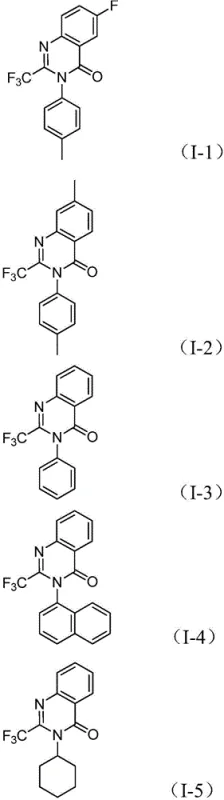
A: Yes, the method demonstrates excellent substrate compatibility. It tolerates various functional groups on both the nitro compound and the imidoyl chloride, including halogens, alkyl groups, and trifluoromethyl groups. This versatility allows medicinal chemists to rapidly generate diverse libraries of 2-trifluoromethyl quinazolinones for drug discovery programs.
Partnering with NINGBO INNO PHARMCHEM: Your Reliable 2-Trifluoromethyl Quinazolinone Supplier
At NINGBO INNO PHARMCHEM, we recognize the transformative potential of advanced synthetic methodologies like the one described in patent CN112480015B for accelerating drug discovery and development. As a leading CDMO partner, we possess extensive experience scaling diverse pathways from 100 kgs to 100 MT/annual commercial production, ensuring that promising laboratory discoveries can be seamlessly translated into reliable commercial supplies. Our state-of-the-art facilities are equipped to handle complex palladium-catalyzed reactions safely and efficiently, adhering to stringent purity specifications required by global regulatory bodies. With our rigorous QC labs and commitment to process optimization, we guarantee the delivery of high-quality 2-trifluoromethyl quinazolinone intermediates that meet the exacting standards of the international pharmaceutical industry.
We invite you to collaborate with us to leverage this cutting-edge technology for your next project. Our technical team is ready to provide a Customized Cost-Saving Analysis tailored to your specific volume requirements and quality targets. We encourage you to contact our technical procurement team today to request specific COA data for our catalog compounds or to discuss route feasibility assessments for your proprietary molecules. By partnering with NINGBO INNO PHARMCHEM, you gain access to a supply chain that is not only cost-effective and reliable but also driven by scientific innovation and a deep understanding of the complexities of modern organic synthesis.