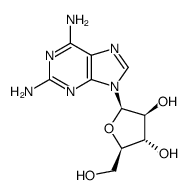
2,6-Diamino-9-(β-D-arabinofuranosyl)purine
- CAS No.34079-68-0
- GradeIndustrial / Pharmaceutical
- Availability● In Stock
High-purity 2,6-Diamino-9-(β-D-arabinofuranosyl)purine (CAS 34079-68-0), a key nucleoside intermediate for advanced pharmaceutical synthesis.
Request Bulk PricingProduct Technical Details
Product Overview
2,6-Diamino-9-(β-D-arabinofuranosyl)purine is a specialized purine nucleoside derivative widely employed as a critical building block in the synthesis of complex pharmaceutical active ingredients. With a molecular formula of C₁₀H₁₄N₆O₄ and a molecular weight of 282.26 g/mol, this compound features a β-D-arabinofuranosyl sugar moiety linked to the 9-position of a 2,6-diaminopurine base, offering unique reactivity and selectivity in medicinal chemistry applications.
Specifications
| Molecular Formula | C₁₀H₁₄N₆O₄ |
|---|---|
| Molecular Weight | 282.256 g/mol |
| Density | 2.25 g/cm³ |
| Boiling Point | 798.5°C |
| Flash Point | 436.7°C |
| Appearance | White or off-white crystalline powder |
| Assay (HPLC) | ≥98.0% |
| Loss on Drying | ≤1.0% |
Industrial Applications
This high-purity nucleoside serves primarily as an intermediate in the development and large-scale manufacturing of antiviral and anticancer therapeutics. Its structural motif enables strategic incorporation into modified oligonucleotides or small-molecule APIs targeting specific enzymatic pathways. Due to its defined stereochemistry and functional group compatibility, it is particularly valued in research programs focused on nucleotide analogs and advanced organic synthesis.
- Ideal for use in multi-step pharmaceutical synthesis requiring stringent quality control
- Compatible with standard glycosylation and protection/deprotection protocols
- Supplied with comprehensive analytical documentation including COA and HPLC chromatograms
Stored in a cool, well-ventilated environment and typically packaged in 25 kg drums (custom packaging available upon request), this intermediate meets global regulatory standards for chemical stability and batch-to-batch consistency.