
Advanced Palladium-Catalyzed Synthesis of N-Acyl Indole Compounds for Commercial Scale-Up
Advanced Palladium-Catalyzed Synthesis of N-Acyl Indole Compounds for Commercial Scale-Up
The pharmaceutical and fine chemical industries continuously seek robust methodologies for constructing privileged scaffolds, among which the indole nucleus stands out as a cornerstone of medicinal chemistry. As detailed in patent CN112898192B, a novel preparation method for N-acyl indole compounds has been developed, offering a streamlined alternative to traditional synthetic routes. This technology leverages a palladium-catalyzed carbonylation cyclization strategy that transforms readily available 2-alkynylanilines and aryl iodides into complex N-acyl indole derivatives with remarkable efficiency. The significance of this advancement cannot be overstated, given that indole derivatives are pervasive in bioactive molecules ranging from anti-inflammatory agents like Indomethacin to anti-HIV drugs such as Delavirdine. By addressing the historical challenges associated with carbonylation reactions, this invention provides a reliable pathway for producing high-purity pharmaceutical intermediates.
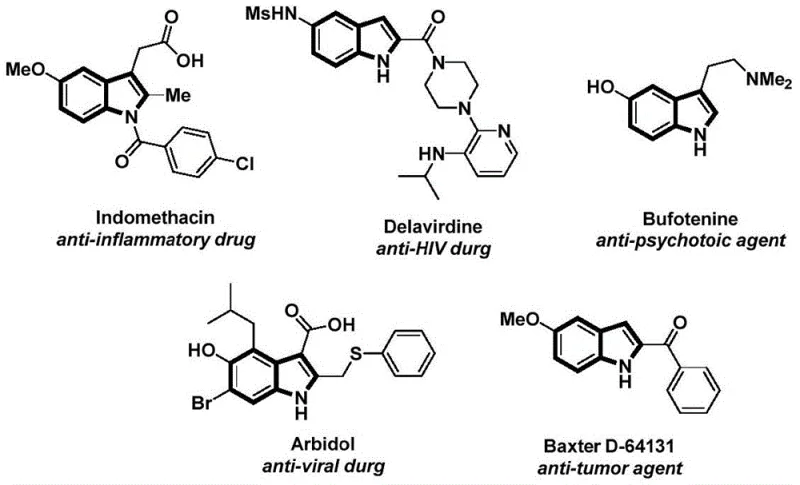
The structural diversity achievable through this method is substantial, allowing for the incorporation of various functional groups such as halogens, alkyls, and alkoxy groups without compromising yield or purity. For R&D directors focused on impurity profiles, the specificity of this catalytic cycle minimizes side reactions often seen in harsher conditions. Furthermore, the operational simplicity—utilizing a solid carbon monoxide surrogate rather than toxic gas—aligns perfectly with modern safety and environmental standards required by top-tier supply chain managers. This report delves deep into the mechanistic advantages, commercial viability, and scalability of this process, positioning it as a key technology for cost reduction in API manufacturing.
The Limitations of Conventional Methods vs. The Novel Approach
The Limitations of Conventional Methods
Historically, the synthesis of N-acyl indoles via carbonylation has been fraught with significant logistical and safety hurdles that hinder large-scale adoption. Traditional protocols frequently rely on the direct use of carbon monoxide gas, which necessitates specialized high-pressure equipment and rigorous safety protocols due to the extreme toxicity and flammability of CO. These requirements not only inflate capital expenditure for reactor setups but also introduce substantial operational risks that can disrupt production schedules. Moreover, conventional methods often suffer from poor atom economy and limited substrate tolerance, where sensitive functional groups on the starting materials may degrade under the forcing conditions required to drive the reaction to completion. The multi-step nature of older synthetic routes further exacerbates these issues, leading to cumulative yield losses and increased waste generation, which are critical pain points for procurement managers aiming to optimize cost structures.
The Novel Approach
In stark contrast, the methodology disclosed in CN112898192B revolutionizes the landscape by employing a solid carbon monoxide surrogate, specifically 1,3,5-tricarboxylic acid phenol ester (TFBen), which releases CO in situ under mild thermal conditions. This innovation effectively decouples the synthesis from the need for high-pressure gas infrastructure, allowing the reaction to proceed in standard laboratory glassware or standard industrial reactors at atmospheric pressure. The process operates at a moderate temperature of 60°C, which is significantly lower than many traditional thermal cyclizations, thereby preserving the integrity of thermally labile functional groups. By integrating the carbonylation and cyclization steps into a efficient one-pot sequence, this approach drastically reduces solvent consumption and processing time. For a reliable pharmaceutical intermediate supplier, this translates to a more agile production capability that can respond rapidly to market demands while maintaining stringent quality controls.
Mechanistic Insights into Palladium-Catalyzed Carbonylation Cyclization
The elegance of this synthesis lies in its well-defined catalytic cycle, which ensures high conversion rates and reproducible outcomes essential for commercial scale-up of complex pharmaceutical intermediates. The reaction initiates with the oxidative addition of the palladium(0) catalyst into the carbon-iodine bond of the aryl iodide substrate, generating a reactive aryl-palladium intermediate. Subsequently, the carbon monoxide released from the decomposition of TFBen inserts into this palladium-carbon bond to form an acyl-palladium species. This acyl intermediate then undergoes nucleophilic attack or insertion by the alkyne moiety of the 2-alkynylaniline, setting the stage for ring closure. The presence of potassium carbonate acts as a base to facilitate deprotonation steps, ensuring the smooth progression of the catalytic turnover. Understanding this mechanism is vital for process chemists, as it highlights the critical role of ligand choice and base strength in maximizing the efficiency of the transformation.
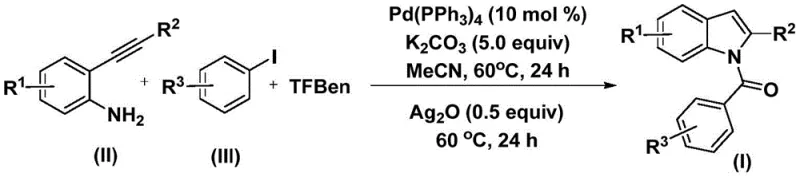
A distinctive feature of this protocol is the secondary oxidation step involving silver oxide (Ag2O), which is introduced after the initial 24-hour reaction period. This addition is crucial for driving the final cyclization and aromatization of the indole core, effectively scavenging halides and promoting the reductive elimination that releases the final N-acyl indole product. The dual-stage heating profile, maintaining 60°C for a total of 48 hours, allows for precise control over the reaction kinetics, preventing the formation of polymeric byproducts that often plague alkyne chemistry. The broad substrate scope demonstrated in the patent, accommodating electron-rich and electron-deficient aryl iodides as well as substituted alkynes, underscores the robustness of this mechanistic pathway. For technical teams, this means that a single standardized protocol can be adapted for a wide library of analogues, streamlining the development of new drug candidates.
How to Synthesize N-Acyl Indole Compounds Efficiently
Implementing this synthesis requires careful attention to reagent stoichiometry and addition sequences to ensure optimal yields and purity profiles suitable for downstream applications. The standardized procedure involves charging a reactor with the palladium catalyst, typically tetrakis(triphenylphosphine)palladium at a loading of 10 mol%, along with potassium carbonate as the base and the solid CO source TFBen. The substrates, 2-alkynylaniline and aryl iodide, are dissolved in acetonitrile, which has been identified as the superior solvent for solubilizing all components while supporting the catalytic activity. The detailed标准化 synthesis steps see the guide below for exact parameters regarding temperature ramps and workup procedures that guarantee consistent batch-to-batch quality.
- Combine palladium catalyst (Pd(PPh3)4), potassium carbonate, carbon monoxide substitute (TFBen), 2-alkynylaniline, and aryl iodide in an organic solvent such as acetonitrile.
- Heat the reaction mixture at 60°C for 24 hours to facilitate the initial carbonylation and coupling steps.
- Add silver oxide (Ag2O) to the mixture and continue heating at 60°C for another 24 hours to promote cyclization, followed by filtration and purification.
Commercial Advantages for Procurement and Supply Chain Teams
From a strategic sourcing perspective, this technology offers compelling advantages that directly address the core concerns of procurement managers and supply chain heads regarding cost, reliability, and scalability. The shift from gaseous carbon monoxide to a solid surrogate eliminates the need for expensive high-pressure autoclaves and the associated regulatory compliance costs for handling toxic gases. This simplification of infrastructure significantly lowers the barrier to entry for manufacturing, allowing for more flexible production scheduling and reduced downtime. Furthermore, the starting materials, including various aryl iodides and 2-alkynylanilines, are commercially available from multiple global vendors, mitigating the risk of single-source supply disruptions. The ability to run the reaction at atmospheric pressure and moderate temperatures also translates to lower energy consumption per kilogram of product, contributing to a greener and more cost-effective manufacturing footprint.
- Cost Reduction in Manufacturing: The elimination of high-pressure equipment and the use of inexpensive, shelf-stable reagents like TFBen drastically reduce both capital and operational expenditures. By avoiding the complexities of gas handling, facilities can allocate resources to other critical areas of production, while the high atom economy of the one-pot process minimizes raw material waste. The simplified workup procedure, involving basic filtration and chromatography, reduces solvent usage and labor hours compared to multi-step traditional syntheses. These factors combine to create a highly competitive cost structure for producing high-value indole intermediates.
- Enhanced Supply Chain Reliability: The reliance on widely available commodity chemicals ensures a stable supply chain that is resilient to market fluctuations. Since the reaction does not require specialized gas deliveries, production can continue uninterrupted even during logistics disruptions affecting hazardous material transport. The robustness of the catalyst system and the tolerance for various functional groups mean that raw material specifications can be slightly relaxed without impacting final product quality, providing greater flexibility in vendor selection. This reliability is paramount for maintaining continuous supply to downstream API manufacturers.
- Scalability and Environmental Compliance: The mild reaction conditions (60°C) and atmospheric pressure make this process inherently safer and easier to scale from kilogram to tonne quantities without significant engineering redesigns. The reduced hazard profile aligns with increasingly strict environmental, health, and safety (EHS) regulations, minimizing the permitting burden for new production lines. Additionally, the efficient conversion rates and minimized byproduct formation lead to less chemical waste requiring treatment, supporting corporate sustainability goals and reducing disposal costs.
Frequently Asked Questions (FAQ)
The following questions address common technical inquiries regarding the implementation and optimization of this N-acyl indole synthesis method. These answers are derived directly from the experimental data and embodiments provided in the patent documentation, ensuring accuracy for process development teams. Understanding these nuances is essential for successfully transferring this technology from the laboratory bench to pilot plant operations.
Q: What is the carbon monoxide source in this synthesis?
A: The process utilizes 1,3,5-tricarboxylic acid phenol ester (TFBen) as a solid carbon monoxide surrogate, eliminating the need for hazardous high-pressure CO gas cylinders.
Q: What are the optimal reaction conditions?
A: The reaction proceeds efficiently in acetonitrile at a mild temperature of 60°C, utilizing Pd(PPh3)4 as the catalyst and requiring a total reaction time of approximately 48 hours.
Q: Does this method tolerate diverse functional groups?
A: Yes, the protocol demonstrates excellent substrate compatibility, successfully accommodating substituents such as halogens (F, Cl, Br), alkyl groups (Me, tBu), and alkoxy groups (OMe) on the aromatic rings.
Partnering with NINGBO INNO PHARMCHEM: Your Reliable N-Acyl Indole Supplier
At NINGBO INNO PHARMCHEM, we recognize the transformative potential of advanced catalytic methodologies like the one described in CN112898192B for accelerating drug discovery and development. As a premier CDMO partner, we possess extensive experience scaling diverse pathways from 100 kgs to 100 MT/annual commercial production, ensuring that your transition from clinical trials to market launch is seamless. Our state-of-the-art facilities are equipped to handle sensitive palladium-catalyzed reactions with stringent purity specifications, supported by rigorous QC labs that utilize advanced analytical techniques to verify identity and assay. We are committed to delivering high-purity pharmaceutical intermediates that meet the exacting standards of the global pharmaceutical industry.
We invite you to leverage our technical expertise to optimize your supply chain for N-acyl indole derivatives. Contact our technical procurement team today to request a Customized Cost-Saving Analysis tailored to your specific project needs. We are prepared to provide specific COA data and route feasibility assessments to demonstrate how our manufacturing capabilities can enhance your project's economic viability and timeline. Let us be your partner in turning innovative chemistry into commercial success.