
Advanced One-Pot Synthesis of 2-Trifluoromethyl Quinazolinones for Pharmaceutical Applications
Advanced One-Pot Synthesis of 2-Trifluoromethyl Quinazolinones for Pharmaceutical Applications
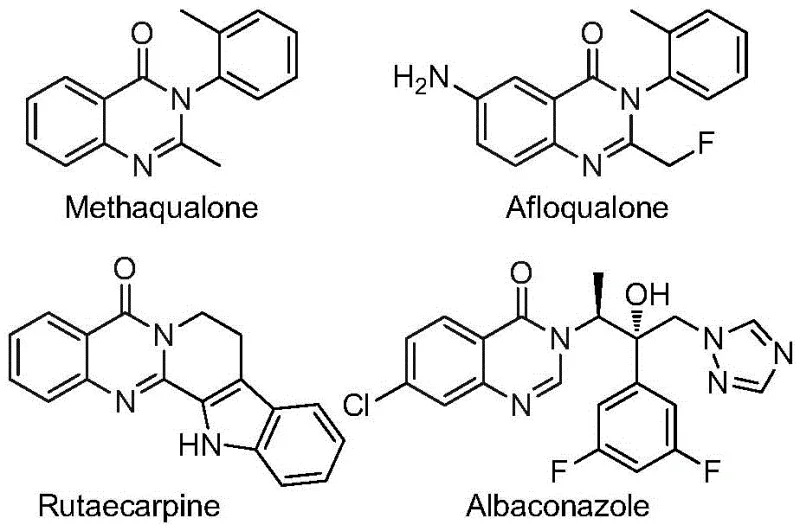
The pharmaceutical industry continuously seeks robust and efficient synthetic routes for privileged scaffolds that exhibit potent biological activity. Patent CN112480015B, published in early 2023, introduces a groundbreaking multi-component one-pot method for the synthesis of 2-trifluoromethyl substituted quinazolinones, a class of compounds renowned for their diverse pharmacological profiles including antifungal, antiviral, and anticancer properties. This innovation addresses critical bottlenecks in the manufacturing of complex heterocyclic intermediates by leveraging a palladium-catalyzed carbonylation cascade that operates under remarkably accessible conditions. For R&D directors and procurement specialists alike, this technology represents a significant leap forward in process chemistry, offering a pathway to high-purity intermediates without the logistical nightmares associated with high-pressure gas handling or exotic reagents.
The strategic incorporation of the trifluoromethyl group into the quinazolinone core is not merely a structural modification but a deliberate enhancement of the molecule's drug-like properties. As highlighted in medicinal chemistry literature, the presence of fluorine atoms can drastically improve metabolic stability, lipophilicity, and bioavailability, making these derivatives highly desirable candidates for next-generation therapeutics. The method described in CN112480015B utilizes inexpensive nitro compounds and trifluoroethylimidoyl chlorides as primary building blocks, effectively bypassing the need for pre-functionalized amines or acid chlorides that often drive up the cost of goods sold (COGS) in traditional synthetic routes. By streamlining the synthesis into a single operational step, this patent provides a compelling solution for reliable pharmaceutical intermediate supplier networks aiming to optimize their production pipelines.
The Limitations of Conventional Methods vs. The Novel Approach
The Limitations of Conventional Methods
Historically, the construction of the quinazolinone ring system has been fraught with synthetic challenges that hinder efficient commercial scale-up of complex pharmaceutical intermediates. Traditional methodologies often rely on the cyclization of anthranilic acid derivatives or the condensation of o-aminobenzamides, which frequently require harsh reaction conditions, stoichiometric amounts of coupling reagents, or the use of toxic solvents. More critically, many established protocols for introducing carbonyl functionality necessitate the use of high-pressure carbon monoxide gas, posing severe safety risks and requiring specialized, capital-intensive reactor infrastructure that is not universally available in standard pilot plants. Furthermore, alternative transition-metal catalyzed approaches using ruthenium or platinum often suffer from narrow substrate scope, poor functional group tolerance, and the necessity for expensive, pre-activated starting materials that significantly inflate the overall production costs.
The Novel Approach
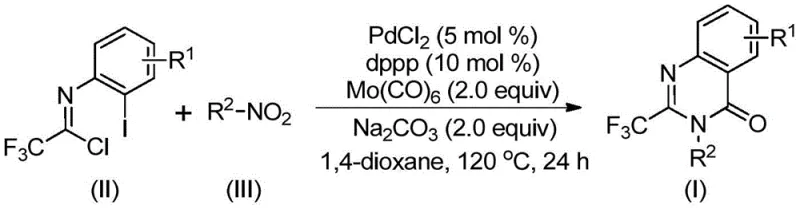
In stark contrast to these legacy methods, the technology disclosed in CN112480015B employs a sophisticated yet operationally simple palladium-catalyzed cascade reaction that proceeds in a single pot. This novel approach utilizes molybdenum hexacarbonyl [Mo(CO)6] as a solid, easy-to-handle surrogate for carbon monoxide gas, thereby eliminating the safety hazards and equipment costs associated with high-pressure gas cylinders. The reaction seamlessly integrates the reduction of the nitro group, the formation of the carbon-nitrogen bond, and the subsequent carbonylative cyclization into one continuous process. As demonstrated in the patent examples, this method exhibits exceptional substrate compatibility, tolerating a wide array of electron-donating and electron-withdrawing groups on both the aromatic ring and the nitrogen substituent, which is crucial for the rapid generation of diverse chemical libraries during drug discovery phases.
Mechanistic Insights into Palladium-Catalyzed Carbonylation Cascade
The mechanistic elegance of this transformation lies in its dual-function catalytic system which orchestrates multiple bond-forming events with high precision. The process is initiated by the reduction of the nitro compound to the corresponding amine species, mediated by the thermal decomposition of Mo(CO)6 which releases carbon monoxide in situ. This freshly generated amine then undergoes a base-promoted nucleophilic attack on the trifluoroethylimidoyl chloride, forming a transient trifluoroacetamidine intermediate. Concurrently, the palladium catalyst, activated by the dppp ligand, inserts into the carbon-iodine bond of the imidoyl chloride moiety to generate a reactive organopalladium(II) species. This step is critical as it sets the stage for the subsequent migratory insertion of the carbon monoxide molecule into the carbon-palladium bond, creating an acyl-palladium intermediate that is poised for cyclization.
Following the carbonyl insertion, the intramolecular coordination of the nitrogen atom to the palladium center facilitates the formation of a seven-membered palladacycle, which subsequently undergoes reductive elimination to release the final 2-trifluoromethyl substituted quinazolinone product while regenerating the active Pd(0) catalyst. This intricate dance of elementary steps ensures that the reaction proceeds with high atom economy and minimal waste generation. From a quality control perspective, the use of well-defined catalyst loading (5 mol % PdCl2 and 10 mol % dppp) and standardized bases like sodium carbonate allows for predictable impurity profiles, making the downstream purification via standard silica gel chromatography highly efficient. The ability to control the reaction trajectory through precise modulation of temperature (120 °C) and time (16-30 hours) ensures consistent batch-to-batch reproducibility, a key metric for any reliable pharmaceutical intermediate supplier.
How to Synthesize 2-Trifluoromethyl Quinazolinones Efficiently
The practical implementation of this synthesis route is designed for ease of execution in both laboratory and pilot-scale environments. The protocol requires the combination of palladium chloride, the dppp ligand, molybdenum hexacarbonyl, sodium carbonate, the specific trifluoroethylimidoyl chloride, and the chosen nitro compound in an anhydrous organic solvent such as 1,4-dioxane. The mixture is then heated to 120 °C for a period ranging from 16 to 30 hours, depending on the electronic nature of the substrates. Upon completion, the reaction mixture is cooled, filtered to remove inorganic salts and metal residues, and the filtrate is concentrated. The resulting crude material is typically purified by flash column chromatography to afford the target quinazolinone derivatives in high purity, often exceeding 90% isolated yield as evidenced by the patent data.
- Combine palladium chloride (5 mol %), dppp ligand (10 mol %), molybdenum hexacarbonyl (2.0 equiv), sodium carbonate (2.0 equiv), trifluoroethylimidoyl chloride, and the nitro compound substrate in 1,4-dioxane solvent.
- Heat the reaction mixture to 120 °C and maintain stirring for a duration of 16 to 30 hours to ensure complete conversion of the starting materials.
- Upon completion, filter the mixture, mix with silica gel, and purify the crude product via column chromatography to isolate the high-purity 2-trifluoromethyl quinazolinone derivative.
Commercial Advantages for Procurement and Supply Chain Teams
For procurement managers and supply chain heads, the adoption of this synthetic methodology offers tangible strategic benefits that extend beyond mere chemical curiosity. The primary advantage lies in the drastic simplification of the raw material supply chain; nitro compounds and imidoyl chlorides are commodity chemicals that are widely available from multiple global vendors, reducing the risk of supply disruption compared to bespoke, custom-synthesized precursors. Furthermore, the elimination of high-pressure carbon monoxide gas removes a significant regulatory and safety burden from the manufacturing facility, potentially lowering insurance premiums and compliance costs associated with hazardous gas storage and handling. This shift towards safer, solid-state reagents like Mo(CO)6 aligns perfectly with modern environmental, health, and safety (EHS) standards, facilitating smoother regulatory approvals for new manufacturing sites.
- Cost Reduction in Manufacturing: The economic viability of this process is underpinned by the use of earth-abundant palladium catalysts at low loading levels and the avoidance of expensive noble metals like ruthenium or platinum. By consolidating multiple synthetic steps into a single one-pot operation, the method significantly reduces solvent consumption, energy usage for heating and cooling cycles between steps, and labor hours required for intermediate isolation. This streamlined workflow translates directly into a lower cost per kilogram of the final API intermediate, providing a competitive edge in price-sensitive markets without compromising on the quality or purity of the output.
- Enhanced Supply Chain Reliability: The robustness of the reaction conditions, which tolerate a broad spectrum of functional groups including halogens, alkyls, and trifluoromethyl groups, ensures that the synthesis is not fragile or prone to failure due to minor variations in raw material quality. This resilience is crucial for maintaining continuous production schedules and meeting tight delivery deadlines for downstream pharmaceutical clients. Additionally, the scalability of the process from milligram to gram scales, as demonstrated in the patent examples, suggests a clear path to multi-kilogram and ton-scale production, assuring partners of long-term supply continuity for commercial drug programs.
- Scalability and Environmental Compliance: From an environmental standpoint, the use of 1,4-dioxane as a solvent, while requiring careful management, is a well-understood industrial solvent with established recovery and recycling protocols. The high atom efficiency of the carbonylation reaction means that fewer by-products are generated, simplifying waste treatment processes and reducing the overall environmental footprint of the manufacturing operation. The ability to produce high-purity products with minimal purification steps further reduces the volume of silica gel and eluents required for chromatography, contributing to a greener and more sustainable chemical manufacturing process that aligns with global sustainability goals.
Frequently Asked Questions (FAQ)
The following questions address common technical and commercial inquiries regarding the implementation of this novel synthesis technology. These insights are derived directly from the experimental data and specifications outlined in patent CN112480015B, providing a transparent view of the method's capabilities and limitations for potential partners and stakeholders evaluating this technology for integration into their own R&D or production workflows.
Q: What are the key advantages of this one-pot synthesis method over traditional routes?
A: This method eliminates the need for high-pressure carbon monoxide gas and expensive pre-activated substrates. It utilizes cheap nitro compounds and trifluoroethylimidoyl chloride, achieving high yields (up to 96%) under relatively mild thermal conditions (120 °C) with excellent functional group tolerance.
Q: What catalyst system is employed for this transformation?
A: The reaction utilizes a palladium catalytic system consisting of PdCl2 (5 mol %) and the bidentate phosphine ligand 1,3-bis(diphenylphosphino)propane (dppp, 10 mol %), with Mo(CO)6 serving as both the reducing agent for the nitro group and the solid carbon monoxide source.
Q: Is this process suitable for large-scale industrial production?
A: Yes, the patent explicitly states that the method is operationally simple, uses readily available raw materials, and has been successfully expanded to the gram level, indicating strong potential for commercial scale-up in industrial pharmaceutical manufacturing settings.
Partnering with NINGBO INNO PHARMCHEM: Your Reliable 2-Trifluoromethyl Quinazolinone Supplier
At NINGBO INNO PHARMCHEM, we recognize the transformative potential of advanced synthetic methodologies like the one described in CN112480015B for accelerating drug development timelines. As a premier CDMO partner, we possess extensive experience scaling diverse pathways from 100 kgs to 100 MT/annual commercial production, ensuring that our clients receive consistent, high-quality intermediates regardless of the project phase. Our state-of-the-art facilities are equipped with rigorous QC labs capable of verifying stringent purity specifications, including detailed impurity profiling and residual metal analysis, which are critical for meeting the exacting standards of the global pharmaceutical industry.
We invite you to collaborate with us to leverage this cutting-edge chemistry for your next project. Our technical team is ready to provide a Customized Cost-Saving Analysis tailored to your specific molecule, demonstrating how this efficient one-pot route can optimize your budget. Please contact our technical procurement team today to request specific COA data for our catalog compounds or to discuss route feasibility assessments for your proprietary targets, and let us help you bring your innovative therapies to market faster and more economically.