
Advanced Catalytic Route for 3-Trifluoromethyl-1,2,4-Triazole Intermediates Enhancing Commercial Scalability
Advanced Catalytic Route for 3-Trifluoromethyl-1,2,4-Triazole Intermediates Enhancing Commercial Scalability
The integration of trifluoromethyl groups into heterocyclic frameworks represents a cornerstone strategy in modern medicinal chemistry, profoundly influencing the physicochemical properties of drug candidates. As illustrated by prominent pharmaceutical agents such as Sitagliptin, the 1,2,4-triazole scaffold is ubiquitous in bioactive molecules, offering enhanced metabolic stability and lipophilicity when substituted with fluorine atoms. Recognizing the critical demand for efficient access to these motifs, recent intellectual property developments, specifically patent CN113307778A, have unveiled a robust preparation method for 3-trifluoromethyl substituted 1,2,4-triazole compounds. This technological breakthrough addresses long-standing synthetic challenges by employing a dual-metal catalytic system that operates under remarkably mild conditions, thereby facilitating the rapid assembly of complex nitrogen-containing heterocycles essential for next-generation therapeutic development.
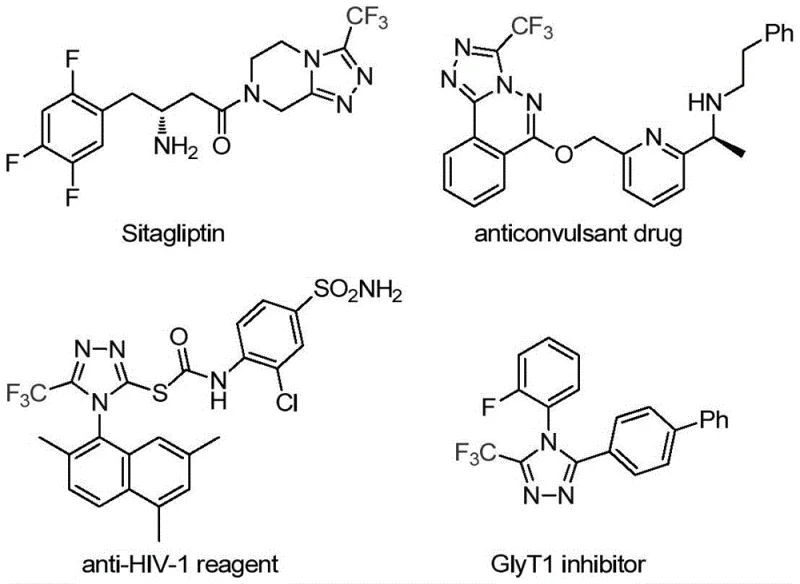
For research and development directors overseeing pipeline optimization, the ability to access diverse triazole derivatives with high purity and structural fidelity is paramount. The disclosed methodology not only streamlines the construction of the triazole core but also ensures compatibility with a wide array of functional groups, minimizing the need for extensive protecting group strategies. By leveraging this advanced synthetic protocol, pharmaceutical manufacturers can accelerate lead optimization cycles and reduce the time-to-market for novel active pharmaceutical ingredients (APIs) that rely on this privileged structural motif.
The Limitations of Conventional Methods vs. The Novel Approach
The Limitations of Conventional Methods
Historically, the synthesis of trifluoromethyl-substituted 1,2,4-triazoles has been fraught with significant operational hazards and efficiency bottlenecks that hinder large-scale manufacturing. Traditional literature methods predominantly rely on the cyclization of trifluoroacetyl hydrazine with amidine compounds or the hydrazinolysis of trifluoromethyl-substituted 1,2,4-oxazolinones, processes that often require harsh reaction conditions and generate substantial chemical waste. Furthermore, alternative copper-catalyzed multi-component reactions utilizing diazonium salts and trifluorodiazoethane introduce severe safety risks due to the explosive nature of diazo species, necessitating specialized equipment and rigorous safety protocols that inflate production costs. These conventional routes frequently suffer from limited substrate scope, poor atom economy, and difficult purification profiles, making them ill-suited for the cost-sensitive and safety-conscious environment of modern commercial API manufacturing.
The Novel Approach
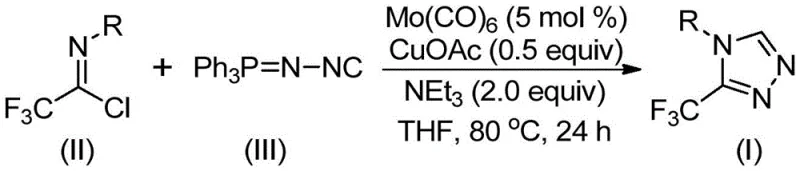
In stark contrast to these legacy techniques, the innovative process detailed in the patent utilizes a synergistic molybdenum and copper co-catalytic system to drive a [3+2] cycloaddition between trifluoroethylimidoyl chloride and functionalized isonitriles. This novel approach eliminates the need for unstable diazonium intermediates and operates at moderate temperatures ranging from 70°C to 90°C, significantly reducing energy consumption and thermal stress on sensitive functional groups. The reaction proceeds with high efficiency in common organic solvents like tetrahydrofuran (THF), utilizing readily available starting materials that simplify procurement logistics and lower raw material costs. By avoiding hazardous reagents and enabling a straightforward workup procedure involving simple filtration and chromatography, this method offers a safer, greener, and more economically viable pathway for producing high-value triazole intermediates.
Mechanistic Insights into Mo/Cu Co-catalyzed Cycloaddition
From a mechanistic perspective, the success of this transformation hinges on the unique interplay between molybdenum hexacarbonyl and cuprous acetate, which orchestrate the activation of the isonitrile and the subsequent ring closure. The proposed mechanism suggests that molybdenum hexacarbonyl initially coordinates with the functionalized isonitrile to form a reactive metal-isocyanide complex, effectively lowering the energy barrier for nucleophilic attack. Concurrently, the copper species promotes the [3+2] cycloaddition of this activated isonitrile species onto the trifluoroethylimidoyl chloride, facilitating the formation of the five-membered triazole ring intermediate with high regioselectivity. This dual-catalyst strategy ensures that the reaction proceeds smoothly without the accumulation of toxic byproducts, maintaining a clean reaction profile that is critical for meeting stringent pharmaceutical quality standards.
Furthermore, the final step of the catalytic cycle involves the elimination of triphenylphosphine oxide under the influence of water present in the system, driving the equilibrium towards the desired 3-trifluoromethyl-substituted 1,2,4-triazole product. This elegant design minimizes the formation of persistent impurities that are often difficult to remove in traditional hydrazine-based syntheses, thereby simplifying downstream purification processes. For process chemists, understanding this mechanism allows for fine-tuning of catalyst loading and stoichiometry to maximize yield while minimizing metal residue, ensuring that the final API intermediate meets rigorous specifications for heavy metal content. The robustness of this catalytic system across various electronic environments on the aryl ring further underscores its versatility for synthesizing diverse analog libraries.
How to Synthesize 3-Trifluoromethyl-1,2,4-Triazole Compounds Efficiently
The practical implementation of this synthesis route is designed for ease of execution in standard laboratory and pilot plant settings, requiring no exotic equipment beyond typical Schlenk line techniques for inert atmosphere handling. To achieve optimal results, practitioners should adhere to the specific molar ratios identified in the patent, particularly maintaining an excess of the functionalized isonitrile relative to the trifluoroethylimidoyl chloride to drive the reaction to completion. The detailed standardized synthesis steps, including precise reagent addition sequences and workup protocols, are outlined in the comprehensive guide below to ensure reproducibility and safety during scale-up operations.
- Combine molybdenum hexacarbonyl (5 mol %), cuprous acetate (0.5 equiv), triethylamine (2.0 equiv), and molecular sieves in an organic solvent such as THF.
- Add trifluoroethylimidoyl chloride and functionalized isonitrile (Ph3P=N-NC) to the reaction mixture under inert atmosphere.
- Heat the reaction mixture to 80°C for 24 hours, then filter and purify via column chromatography to isolate the target triazole product.
Commercial Advantages for Procurement and Supply Chain Teams
For procurement managers and supply chain leaders, the adoption of this novel synthetic methodology presents a compelling opportunity to optimize sourcing strategies and mitigate supply risks associated with complex heterocyclic building blocks. The reliance on commercially available and inexpensive catalysts such as cuprous acetate and molybdenum hexacarbonyl, rather than precious metals like palladium or rhodium, fundamentally alters the cost structure of production, leading to substantial cost savings in raw material expenditure. Additionally, the use of stable, non-hazardous starting materials reduces the regulatory burden and insurance costs associated with storing and transporting dangerous chemicals, further enhancing the overall economic attractiveness of this supply chain solution.
- Cost Reduction in Manufacturing: The elimination of expensive and hazardous reagents like diazonium salts directly translates to lower operational expenditures and reduced waste disposal costs. By utilizing a catalytic system based on abundant base metals, manufacturers can avoid the volatility of precious metal markets, ensuring more predictable pricing for long-term supply contracts. The simplified post-processing workflow, which avoids complex extraction or crystallization steps often required to remove hydrazine residues, further contributes to reduced labor and utility costs per kilogram of produced intermediate.
- Enhanced Supply Chain Reliability: The starting materials, including trifluoroethylimidoyl chloride and functionalized isonitriles, are derived from widely available commodity chemicals, minimizing the risk of supply disruptions caused by niche precursor shortages. The robustness of the reaction conditions allows for flexible manufacturing scheduling, as the process is less sensitive to minor fluctuations in temperature or moisture compared to highly sensitive organometallic couplings. This reliability ensures consistent delivery timelines for downstream API synthesis, supporting just-in-time manufacturing models and reducing the need for excessive safety stock inventory.
- Scalability and Environmental Compliance: The demonstrated scalability of this method to gram-level reactions indicates a clear path towards ton-scale commercial production without significant re-engineering of the process. The use of THF as a primary solvent aligns with established solvent recovery infrastructure in most chemical plants, facilitating efficient recycling and minimizing environmental impact. Furthermore, the absence of heavy metal contaminants typically associated with traditional cross-coupling reactions simplifies the validation process for regulatory filings, accelerating the approval timeline for new drug applications.
Frequently Asked Questions (FAQ)
The following questions address common technical and commercial inquiries regarding the implementation of this trifluoromethyl triazole synthesis technology, providing clarity for stakeholders evaluating its integration into their manufacturing portfolios. These insights are derived directly from the experimental data and beneficial effects reported in the underlying patent documentation, ensuring accuracy and relevance for decision-making purposes.
Q: What are the key advantages of this Mo/Cu co-catalyzed method over traditional triazole synthesis?
A: This method utilizes mild reaction conditions (70-90°C) and avoids hazardous diazonium salts or harsh hydrazinolysis steps, significantly improving operational safety and substrate tolerance.
Q: Can this synthesis route be scaled for industrial production of API intermediates?
A: Yes, the patent explicitly demonstrates scalability to gram-level reactions with simple post-processing involving filtration and column chromatography, indicating strong potential for commercial scale-up.
Q: What types of substituents are tolerated on the aryl ring of the starting material?
A: The method exhibits broad substrate scope, successfully accommodating electron-donating groups like methyl and methoxy, as well as electron-withdrawing groups such as fluoro, chloro, and nitro substituents.
Partnering with NINGBO INNO PHARMCHEM: Your Reliable 3-Trifluoromethyl-1,2,4-Triazole Supplier
At NINGBO INNO PHARMCHEM, we recognize the strategic importance of high-quality heterocyclic intermediates in the development of life-saving medications, and we are uniquely positioned to support your project needs with our advanced manufacturing capabilities. Our team possesses extensive experience scaling diverse pathways from 100 kgs to 100 MT/annual commercial production, ensuring that the transition from laboratory discovery to industrial reality is seamless and efficient. We maintain stringent purity specifications through our rigorous QC labs, guaranteeing that every batch of 3-trifluoromethyl-1,2,4-triazole intermediate meets the exacting standards required by global regulatory authorities.
We invite you to collaborate with us to leverage this cutting-edge synthetic technology for your next drug development program. Please contact our technical procurement team to request a Customized Cost-Saving Analysis tailored to your specific volume requirements. We are ready to provide specific COA data and route feasibility assessments to demonstrate how our optimized processes can enhance your supply chain resilience and drive down overall manufacturing costs.