
Advanced Purification of Telmisartan via Neutral Alumina Chromatography for Commercial API Production
The pharmaceutical industry continuously seeks robust methodologies to enhance the purity and safety of critical antihypertensive agents, and the technology disclosed in patent CN102093297B represents a significant leap forward in the processing of Telmisartan. This specific intellectual property details a novel preparation and purification method that addresses the longstanding challenges associated with the crystallization and refinement of this complex angiotensin II receptor antagonist. Traditional manufacturing routes often struggle with the removal of trace impurities and colored by-products, which can compromise the safety profile of the final medication. The disclosed innovation utilizes a sophisticated combination of acid-base conversion, activated carbon adsorption, and, most critically, preparative chromatography using neutral aluminum oxide columns. This approach not only streamlines the production workflow but also ensures the attainment of high-purity Telmisartan compounds that meet rigorous global regulatory standards for clinical administration.
By leveraging this advanced purification strategy, manufacturers can overcome the limitations of prior art methods that frequently resulted in products with undesirable physical properties, such as needle-like crystals that are difficult to filter and dry. The patent emphasizes the importance of specific operational parameters, including precise pH control during the salt formation stage and the optimization of mobile phase ratios in the chromatographic step. These technical refinements allow for the effective separation of the target molecule from structurally similar impurities and residual solvents. For R&D directors and process chemists, understanding the nuances of this neutral alumina-based separation is key to replicating the high yields and exceptional purity profiles reported in the experimental data. This technology stands as a testament to the power of tailored chromatographic conditions in solving complex purification bottlenecks in API synthesis.
The Limitations of Conventional Methods vs. The Novel Approach
The Limitations of Conventional Methods
Historically, the industrial synthesis of Telmisartan has been plagued by inefficient purification protocols that rely heavily on the hydrolysis of tert-butyl, methyl, or ethyl esters. These conventional pathways often necessitate the use of high-boiling solvents, which are notoriously difficult to remove completely, leading to unacceptable levels of solvent residues in the final active pharmaceutical ingredient. Furthermore, traditional recrystallization techniques frequently fail to adequately remove colored impurities and related substances, resulting in a product that may require multiple, time-consuming recrystallization cycles to approach acceptable quality standards. The physical form of the product obtained through these older methods is often problematic; for instance, the formation of minute, needle-like crystals creates severe difficulties in filtration and washing operations, subsequently extending drying times and increasing energy consumption. In many cases, the drying process itself induces the formation of hard aggregates that are difficult to mill, generating static-charged powders that pose handling risks and complicate downstream formulation. Additionally, methods involving macroporous resins or ion exchange columns have shown deficiencies, including the leaching of pore-forming agents or the introduction of sodium ions, which constitute secondary pollution and fail to deliver the desired improvement in gas purity.
The Novel Approach
In stark contrast to these cumbersome legacy processes, the method described in CN102093297B introduces a streamlined purification sequence centered around the use of neutral alumina preparative chromatography. This innovative approach bypasses the need for complex ester hydrolysis steps and eliminates the reliance on high-boiling solvents that trap residues within the crystal lattice. By implementing a controlled acid-base conversion followed by targeted activated carbon adsorption, the process effectively removes the bulk of colored impurities before the material even enters the chromatographic column. The core of this novelty lies in the selection of neutral aluminum oxide as the stationary phase, which demonstrates a superior capacity for adsorbing specific impurities without irreversibly binding the Telmisartan molecule, a common pitfall observed with other adsorbents. Experimental data from the patent indicates that this method can achieve yields exceeding 95% with purity levels greater than 99.5%, a substantial improvement over the roughly 89% yield and 99.1% purity typical of comparative salt-recrystallization methods. This shift in methodology not only enhances the chemical quality of the API but also improves its physical characteristics, yielding a product that is easier to handle, filter, and dry, thereby facilitating smoother industrial scale-up.
Mechanistic Insights into Neutral Alumina Chromatographic Separation
The success of this purification strategy hinges on the unique surface chemistry of neutral alumina compared to traditional silica gel or macroporous resins. Silica gel, being slightly acidic, can sometimes interact unfavorably with basic nitrogen-containing heterocycles found in Telmisartan, potentially leading to tailing peaks or irreversible adsorption that drags down overall recovery. Neutral alumina, however, provides a more compatible environment that allows for sharp elution profiles and efficient separation of the target compound from closely related by-products. The mechanism involves a delicate balance of adsorption forces where the stationary phase retains polar impurities and colored pigments more strongly than the Telmisartan molecule itself. The patent specifies the use of a mobile phase comprising ethanol and acetonitrile in specific volume ratios, such as 1:2 or 1:3, which optimizes the polarity to ensure the drug elutes within a distinct fraction while impurities remain retained or elute at different rates. This precise control over the chromatographic environment is what enables the isolation of Telmisartan with purity specifications exceeding 99.5%, effectively stripping away the trace contaminants that persist through standard crystallization.
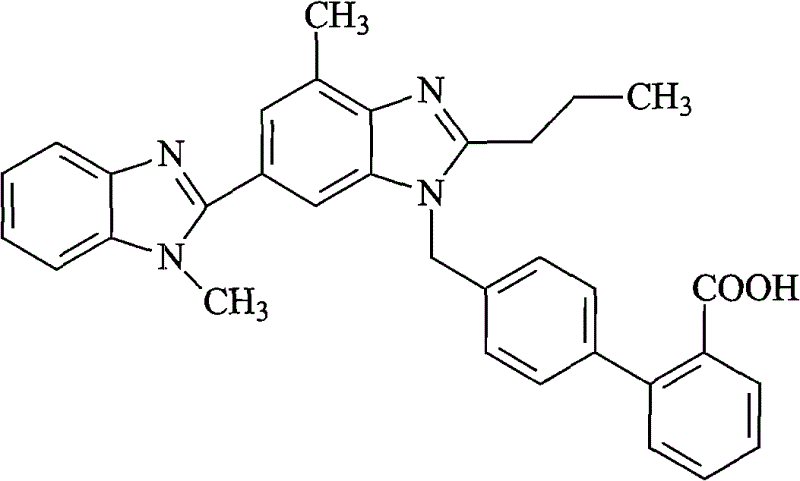
Furthermore, the integration of activated carbon adsorption prior to chromatography serves as a critical pre-purification mechanism that protects the column and enhances overall efficiency. The patent highlights that the amount of activated carbon must be carefully optimized, typically between 0.2% and 0.8% of the total solution volume, to maximize pigment removal without causing significant loss of the active drug through non-specific adsorption. This step is vital because removing the bulk of high-molecular-weight colored impurities early prevents the rapid fouling of the expensive alumina column, thereby extending its operational life and maintaining consistent separation performance over multiple batches. The subsequent precipitation step, driven by adjusting the pH to the isoelectric range of the drug, ensures that the material loaded onto the column is in a solid, concentrated form, which improves the resolution of the chromatographic run. By understanding these mechanistic details, process engineers can fine-tune parameters such as flow velocity (1.7-5.5 ml/min) and column temperature (20-40°C) to replicate the high-efficiency separation demonstrated in the patent examples, ensuring a robust and reproducible manufacturing process.
How to Synthesize Telmisartan Efficiently
Implementing this purification protocol requires strict adherence to the optimized parameters regarding pH control, adsorbent loading, and mobile phase composition to ensure the highest possible yield and purity. The process begins with the dispersion of crude Telmisartan in water, followed by a carefully monitored addition of alkali to reach a pH of 7.5 to 9.5, converting the drug into a soluble salt form amenable to filtration. Following the removal of insoluble particulates and the adsorption of pigments using activated carbon, the solution is acidified to precipitate the drug, which is then subjected to the critical neutral alumina chromatography step. The detailed standardized synthesis steps, including specific solvent ratios and column dimensions required for industrial replication, are outlined in the guide below.
- Disperse crude Telmisartan in water and adjust pH to 7.5-9.5 using alkali, followed by activated carbon adsorption at 40-50°C to remove pigments.
- Acidify the filtrate to pH 4-6 to precipitate Telmisartan, then filter and wash the deposition to obtain the intermediate solid.
- Perform preparative chromatography using a neutral alumina column with an ethanol-acetonitrile mobile phase to isolate high-purity Telmisartan.
Commercial Advantages for Procurement and Supply Chain Teams
For procurement managers and supply chain heads, the adoption of this neutral alumina-based purification method offers compelling economic and logistical advantages over traditional synthesis routes. The elimination of complex esterification and hydrolysis steps significantly simplifies the manufacturing workflow, reducing the number of unit operations and the associated labor and utility costs. By avoiding the use of high-boiling solvents that require extensive energy for removal, the process inherently lowers the thermal load on production facilities, contributing to substantial cost savings in energy consumption. Furthermore, the high yield reported in the patent examples implies a more efficient utilization of starting materials, meaning less raw material is wasted as mother liquor or degraded by-products, directly impacting the cost of goods sold. The robustness of the purification method also reduces the risk of batch failures due to off-spec purity, ensuring a more reliable and continuous supply of the API for downstream formulation teams.
- Cost Reduction in Manufacturing: The streamlined nature of this process eliminates the need for expensive transition metal catalysts or complex resin regeneration systems often required in alternative purification strategies. By utilizing neutral alumina, which is relatively inexpensive and does not require complex activation or regeneration protocols compared to ion exchange resins, the operational expenditure is significantly lowered. The high recovery rate of the active ingredient means that the effective cost per kilogram of pure Telmisartan is reduced, as less crude material is needed to produce the same amount of finished API. Additionally, the reduction in solvent usage and the avoidance of high-energy drying steps for difficult-to-filter crystals contribute to a leaner, more cost-effective production model that enhances overall profit margins.
- Enhanced Supply Chain Reliability: The simplicity and robustness of the chromatographic method translate directly into shorter cycle times and improved on-time delivery performance for customers. Unlike multi-step recrystallization processes that are sensitive to minor fluctuations in temperature or cooling rates, this chromatographic approach offers a more controlled and predictable separation environment. This predictability reduces the likelihood of production delays caused by out-of-specification batches that require re-processing or disposal. Consequently, suppliers adopting this technology can offer more stable lead times and maintain higher inventory levels of ready-to-ship material, providing a critical buffer against market volatility and ensuring continuity of supply for pharmaceutical manufacturers relying on this key antihypertensive ingredient.
- Scalability and Environmental Compliance: From an environmental and regulatory standpoint, this method offers significant benefits by minimizing the generation of hazardous waste and solvent emissions. The use of ethanol and acetonitrile, which are well-understood and manageable solvents, combined with the absence of heavy metal catalysts, simplifies the waste treatment process and ensures compliance with increasingly stringent environmental regulations. The scalability of preparative chromatography is well-established in the fine chemical industry, allowing for a seamless transition from pilot-scale validation to multi-ton commercial production without the need for fundamental process redesign. This ease of scale-up ensures that the supply chain can rapidly respond to surges in demand for Telmisartan, supporting the growing global market for cardiovascular medications without compromising on quality or sustainability goals.
Frequently Asked Questions (FAQ)
The following questions address common technical and commercial inquiries regarding the implementation of this novel Telmisartan purification technology. These answers are derived directly from the experimental data and technical specifications provided in the patent documentation, offering clarity on the operational benefits and quality outcomes of the neutral alumina chromatographic method. Understanding these details is essential for technical teams evaluating the feasibility of integrating this process into their existing manufacturing infrastructure.
Q: Why is neutral alumina preferred over silica gel for Telmisartan purification?
A: Neutral alumina effectively adsorbs impurities and pigments without irreversibly binding the active pharmaceutical ingredient, whereas silica gel often leads to lower recovery rates and potential degradation due to acidity.
Q: What purity levels can be achieved with this chromatographic method?
A: The patented process consistently achieves Telmisartan purity greater than 99.5%, significantly surpassing the 99.1% typically obtained via traditional recrystallization methods.
Q: Does this method reduce solvent residues in the final API?
A: Yes, by avoiding high-boiling solvents often used in traditional ester hydrolysis methods and utilizing efficient vacuum drying after chromatography, solvent residuals are minimized to meet strict pharmacopoeia standards.
Partnering with NINGBO INNO PHARMCHEM: Your Reliable Telmisartan Supplier
At NINGBO INNO PHARMCHEM, we recognize the critical importance of high-purity intermediates and APIs in the development of safe and effective cardiovascular therapies. Our team of expert process chemists has extensively analyzed the technological breakthroughs presented in CN102093297B and possesses the capability to implement this advanced neutral alumina chromatography method at an industrial scale. We bring extensive experience scaling diverse pathways from 100 kgs to 100 MT/annual commercial production, ensuring that the high yields and purity specifications demonstrated in the lab are faithfully reproduced in our manufacturing facilities. Our rigorous QC labs and stringent purity specifications guarantee that every batch of Telmisartan we supply meets the exacting standards required by global regulatory bodies, providing our partners with a secure and high-quality source of this vital antihypertensive agent.
We invite pharmaceutical companies and contract manufacturers to collaborate with us to optimize their supply chains and reduce their overall cost of goods. By leveraging our expertise in this specific purification technology, we can help you overcome the bottlenecks associated with traditional Telmisartan synthesis. Please contact our technical procurement team to request a Customized Cost-Saving Analysis tailored to your specific volume requirements. We are ready to provide specific COA data and route feasibility assessments to demonstrate how our advanced manufacturing capabilities can support your product development and commercial launch timelines.
Engineering Bottleneck?
Can't scale up this synthesis? Upload your target structure or CAS, and our CDMO team will evaluate the industrial feasibility within 24 hours. Request Evaluation →