
Advanced 1,3,4-Oxadiazole Neuraminidase Inhibitors: Technical Breakthroughs and Commercial Scalability
Advanced 1,3,4-Oxadiazole Neuraminidase Inhibitors: Technical Breakthroughs and Commercial Scalability
Introduction to Novel Anti-Influenza Scaffolds
The global pharmaceutical industry continuously seeks robust solutions to combat evolving viral threats, particularly influenza strains that demonstrate resistance to existing treatments. Patent CN113461631A introduces a significant advancement in this domain by disclosing a series of 1,3,4-oxadiazole derivatives designed as potent neuraminidase inhibitors. This intellectual property highlights a novel chemical scaffold that addresses the limitations of current market leaders like Oseltamivir, offering a fresh approach to antiviral drug development. The core innovation lies in the strategic modification of the oxadiazole ring system, which enhances binding affinity to the neuraminidase active site while maintaining a synthetic route that is amenable to industrial production. For R&D directors and procurement specialists, this represents a valuable opportunity to diversify pipelines with high-efficacy candidates that possess a clear path to commercialization. The structural novelty ensures freedom to operate in specific jurisdictions, while the biological data suggests a competitive edge in potency.
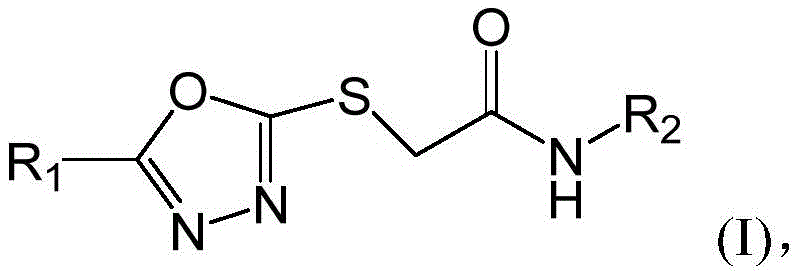
Furthermore, the versatility of this chemical platform allows for extensive structure-activity relationship (SAR) exploration, enabling medicinal chemists to fine-tune pharmacokinetic properties without compromising inhibitory strength. The patent details a comprehensive library of compounds where various substituents on the phenyl rings modulate electronic and steric properties, directly influencing biological performance. This flexibility is crucial for optimizing drug-like characteristics such as solubility and metabolic stability, which are often bottlenecks in late-stage development. By leveraging this technology, pharmaceutical companies can accelerate their discovery timelines and reduce the risk associated with clinical failure. The integration of such advanced intermediates into early discovery programs provides a strategic advantage in the race against viral mutations, ensuring a steady pipeline of next-generation therapeutics.
The Limitations of Conventional Methods vs. The Novel Approach
The Limitations of Conventional Methods
Traditional synthesis routes for neuraminidase inhibitors, particularly those mimicking the sialic acid transition state like Oseltamivir, often suffer from excessive complexity and reliance on chiral pool starting materials. These conventional methods typically involve multi-step sequences with low overall yields, requiring stringent control over stereochemistry that drives up manufacturing costs significantly. The dependence on scarce natural products or expensive chiral catalysts creates supply chain vulnerabilities, making it difficult to secure consistent quality and quantity for large-scale production. Additionally, the use of hazardous reagents and the generation of substantial chemical waste pose environmental compliance challenges that modern green chemistry initiatives aim to eliminate. For procurement managers, these factors translate into volatile pricing and extended lead times, which can jeopardize project timelines and budget forecasts. The economic burden of purifying complex mixtures further erodes profit margins, making these legacy processes less attractive for generic or next-generation drug manufacturing.
The Novel Approach
In stark contrast, the methodology described in the patent utilizes a convergent synthetic strategy that simplifies the construction of the pharmacophore through efficient bond-forming reactions. The novel approach leverages readily available aromatic amines and hydrazides, bypassing the need for complex chiral induction steps in the early stages of synthesis. This streamlining of the chemical pathway not only reduces the number of unit operations but also minimizes the consumption of solvents and energy, aligning with sustainable manufacturing principles. The robustness of the reaction conditions allows for broader operational windows, reducing the risk of batch failures and ensuring consistent product quality across different production scales. For supply chain heads, this translates to a more reliable sourcing model where raw material availability is not a bottleneck. The ability to produce high-purity intermediates with fewer purification steps directly contributes to cost reduction in pharmaceutical intermediate manufacturing, enhancing the overall economic viability of the drug candidate.
Mechanistic Insights into 1,3,4-Oxadiazole Formation and Activity
The biological efficacy of these compounds is rooted in the unique electronic properties of the 1,3,4-oxadiazole ring, which acts as a bioisostere for amide bonds while offering improved metabolic stability. The nitrogen and oxygen atoms within the heterocycle participate in key hydrogen bonding interactions with conserved residues in the neuraminidase active site, effectively blocking the enzyme's ability to cleave sialic acid residues. This mechanism prevents the release of progeny virions from infected host cells, thereby halting the spread of infection within the respiratory tract. The substituents attached to the oxadiazole core, particularly the halogenated phenyl groups, enhance lipophilicity and facilitate penetration into cellular membranes, improving bioavailability. Understanding these mechanistic details is vital for R&D teams aiming to optimize lead compounds, as minor modifications to the R1 and R2 groups can drastically alter binding kinetics. The patent data indicates that specific configurations yield IC50 values in the nanomolar range, demonstrating a profound impact on viral replication.
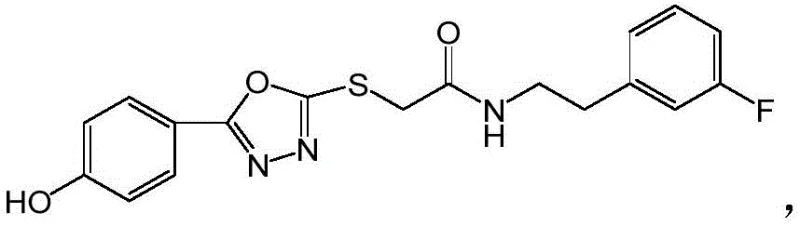
Moreover, the synthetic pathway facilitates the introduction of diverse functional groups that can be exploited to overcome drug resistance mechanisms. By systematically varying the electronic nature of the aryl rings, chemists can modulate the electron density of the oxadiazole system, fine-tuning its interaction with the enzyme's catalytic pocket. This rational design approach is supported by the structural data provided in the patent, which correlates specific substitution patterns with inhibitory potency. For example, the presence of electron-withdrawing groups like fluorine or chlorine at specific positions enhances the electrophilicity of the adjacent carbonyl, potentially strengthening interactions with nucleophilic residues in the target protein. Such deep mechanistic understanding empowers research teams to prioritize the most promising analogs for preclinical development, reducing attrition rates. The combination of potent activity and tunable chemistry makes this scaffold a highly attractive candidate for advancing through the drug development pipeline.
How to Synthesize 1,3,4-Oxadiazole Neuraminidase Inhibitors Efficiently
The synthesis of these high-value pharmaceutical intermediates follows a logical three-step sequence that balances efficiency with purity, making it suitable for both laboratory scale-up and commercial production. The process begins with the acylation of substituted anilines, followed by the cyclization of hydrazides, and concludes with a nucleophilic substitution to link the fragments. Each step has been optimized to maximize yield while minimizing the formation of by-products, ensuring that the final product meets stringent quality specifications required for clinical applications. The use of common organic solvents and inorganic bases simplifies the workup procedures, allowing for straightforward isolation of intermediates. This operational simplicity is a key factor in reducing manufacturing costs and improving throughput, which is critical for meeting market demand. Detailed standard operating procedures for each transformation are essential for maintaining consistency and regulatory compliance throughout the production lifecycle.
- Acylation of substituted aniline with chloroacetyl chloride using triethylamine in dichloromethane to form Intermediate II.
- Cyclization of benzoyl hydrazide with carbon disulfide and potassium hydroxide in ethanol to generate Intermediate III.
- Coupling of Intermediate II and Intermediate III using anhydrous potassium carbonate and potassium iodide in acetone to yield the final inhibitor.
Commercial Advantages for Procurement and Supply Chain Teams
From a commercial perspective, the adoption of this synthetic route offers substantial benefits for procurement and supply chain management teams seeking to optimize their vendor networks. The elimination of precious metal catalysts and exotic reagents means that the production process is less susceptible to geopolitical supply disruptions and price volatility associated with rare materials. This stability allows for more accurate long-term forecasting and contract negotiation, securing a steady flow of materials for downstream manufacturing. Furthermore, the high atom economy of the reactions reduces the volume of waste generated, lowering disposal costs and environmental fees associated with chemical production. These efficiencies contribute to a leaner supply chain model that can respond more agilely to changes in market demand. For organizations focused on cost reduction in anti-influenza drug manufacturing, this technology provides a clear pathway to improving margin profiles without sacrificing quality.
- Cost Reduction in Manufacturing: The synthetic route relies on commodity chemicals such as aniline, chloroacetyl chloride, and potassium carbonate, which are produced in massive volumes globally and priced competitively. By avoiding the use of expensive chiral auxiliaries or transition metal catalysts that require complex removal steps, the overall cost of goods sold is significantly lowered. The simplified purification process, which primarily involves crystallization and filtration rather than preparative chromatography, further reduces solvent consumption and processing time. These factors combine to create a highly cost-effective manufacturing process that enhances the economic feasibility of bringing new antiviral therapies to market. The qualitative reduction in processing complexity directly translates to lower operational expenditures and improved profitability for licensees.
- Enhanced Supply Chain Reliability: The raw materials required for this synthesis are widely available from multiple qualified suppliers across different geographic regions, mitigating the risk of single-source dependency. This diversity in sourcing options ensures that production schedules can be maintained even if one supplier faces logistical challenges or capacity constraints. The robustness of the chemical reactions also means that the process is tolerant to minor variations in raw material quality, reducing the rate of batch rejections. For supply chain heads, this reliability is paramount in ensuring continuous availability of critical intermediates for drug formulation. The ability to scale production rapidly without encountering material shortages provides a strategic buffer against unexpected surges in demand during flu seasons.
- Scalability and Environmental Compliance: The process is designed with scalability in mind, utilizing reaction conditions that can be safely transferred from glassware to large-scale stainless steel reactors. The absence of highly hazardous reagents or extreme pressure requirements simplifies the engineering controls needed for commercial scale-up of complex pharmaceutical intermediates. Additionally, the reduced waste profile aligns with increasingly strict environmental regulations, minimizing the regulatory burden associated with waste disposal and emissions. This compliance advantage accelerates the approval process for manufacturing sites and reduces the risk of operational shutdowns due to environmental violations. The sustainable nature of the process also enhances the corporate social responsibility profile of the manufacturing organization, appealing to eco-conscious stakeholders.
Frequently Asked Questions (FAQ)
The following questions address common technical and commercial inquiries regarding the production and application of these 1,3,4-oxadiazole derivatives. These answers are derived directly from the technical disclosures within the patent documentation to ensure accuracy and relevance for industry professionals. Understanding these details helps stakeholders make informed decisions about integrating this technology into their development portfolios. The information covers aspects ranging from biological potency to manufacturing feasibility, providing a holistic view of the opportunity.
Q: What is the inhibitory activity of the novel 1,3,4-oxadiazole compounds compared to Oseltamivir?
A: According to patent CN113461631A, specific compounds within this series demonstrated IC50 values as low as 0.027 μM, which is significantly lower than the positive control Oseltamivir acid (0.082 μM), indicating superior neuraminidase inhibitory potency.
Q: Are the raw materials for this synthesis readily available for commercial scale-up?
A: Yes, the synthesis utilizes common industrial reagents such as aniline derivatives, chloroacetyl chloride, carbon disulfide, and potassium carbonate. These materials are globally sourced and do not rely on scarce precious metal catalysts, ensuring robust supply chain continuity.
Q: Does the process require complex purification methods that hinder scalability?
A: The process employs standard workup procedures including aqueous washing, filtration, and recrystallization. While column chromatography is mentioned for laboratory purification, the simplicity of the reaction chemistry suggests that crystallization-based purification can be optimized for large-scale manufacturing.
Partnering with NINGBO INNO PHARMCHEM: Your Reliable 1,3,4-Oxadiazole Derivatives Supplier
At NINGBO INNO PHARMCHEM, we recognize the critical importance of translating innovative patent technologies into commercially viable realities for our global partners. Our team of expert chemists possesses extensive experience scaling diverse pathways from 100 kgs to 100 MT/annual commercial production, ensuring that your project transitions smoothly from the bench to the plant. We are committed to delivering high-purity 1,3,4-oxadiazole derivatives that meet stringent purity specifications, supported by our rigorous QC labs equipped with state-of-the-art analytical instrumentation. Our dedication to quality assurance guarantees that every batch conforms to the highest industry standards, minimizing risks in your downstream processing. By partnering with us, you gain access to a reliable supply chain that prioritizes consistency, speed, and technical excellence.
We invite you to collaborate with us to explore the full potential of this novel antiviral scaffold for your specific therapeutic needs. Our technical procurement team is ready to provide a Customized Cost-Saving Analysis tailored to your volume requirements and timeline constraints. We encourage you to contact us to request specific COA data and route feasibility assessments that will demonstrate our capability to support your project goals. Let us help you accelerate your development timeline and secure a competitive advantage in the antiviral market through our specialized manufacturing expertise.
Engineering Bottleneck?
Can't scale up this synthesis? Upload your target structure or CAS, and our CDMO team will evaluate the industrial feasibility within 24 hours. Request Evaluation →