
Advanced Asymmetric Catalysis for Remdesivir: A Breakthrough in API Intermediate Manufacturing
The global pharmaceutical landscape has been profoundly impacted by the urgent demand for effective antiviral therapeutics, placing Remdesivir at the forefront of medicinal chemistry research. Patent CN113754694B introduces a transformative approach to the synthesis of this critical active pharmaceutical ingredient (API) by leveraging asymmetric catalysis of unprotected nucleosides. This technology represents a significant departure from traditional multi-step synthetic routes, offering a streamlined pathway that directly couples unprotected nucleosides with chlorophosphoramidates. By utilizing a specialized library of chiral bicyclic imidazole catalysts, the process achieves high stereoselectivity and yield in a single operational step. For R&D directors and process chemists, this innovation addresses the critical bottleneck of complex purification and low overall throughput associated with legacy methods. The ability to bypass protection and deprotection sequences not only accelerates the timeline from bench to pilot plant but also aligns with green chemistry principles by reducing solvent consumption and waste generation. As a reliable API intermediate supplier, understanding these mechanistic advancements is crucial for securing a robust supply chain capable of meeting fluctuating market demands with high-purity pharmaceutical intermediates.
The Limitations of Conventional Methods vs. The Novel Approach
The Limitations of Conventional Methods
Historically, the synthesis of Remdesivir and similar nucleoside analogues has been plagued by inefficient multi-step protocols that rely heavily on the use of protecting groups. Conventional literature, including early reports in Nature and Journal of Medicinal Chemistry, describes routes where the unprotected nucleoside must first be converted into a protected derivative to prevent side reactions during phosphorylation. This necessitates additional synthetic steps for both the installation and subsequent removal of these protecting groups, which inherently lowers the overall yield and increases the cost of goods sold (COGS). Furthermore, existing achiral methods often result in racemic mixtures, requiring difficult and costly chiral resolution steps to isolate the biologically active enantiomer. Some prior art methods report yields as low as 25% for analogous reactions, highlighting the substantial material loss inherent in these older technologies. The accumulation of impurities from multiple reaction stages also complicates downstream purification, posing challenges for meeting the stringent purity specifications required for clinical-grade APIs. These inefficiencies create significant bottlenecks for procurement managers seeking cost reduction in pharmaceutical manufacturing, as the cumulative cost of reagents, solvents, and labor for protection-deprotection cycles becomes prohibitive at scale.
The Novel Approach
In stark contrast, the methodology disclosed in patent CN113754694B revolutionizes the synthesis by enabling a direct, one-step asymmetric coupling of unprotected nucleosides. This novel approach eliminates the need for any protecting group manipulation, thereby collapsing a multi-step sequence into a single, highly efficient transformation. The core of this innovation lies in the use of chiral bicyclic imidazole catalysts, which effectively control the stereochemistry of the phosphoramidation reaction without the steric bulk of traditional protecting groups. Experimental data from the patent indicates that this method can achieve yields of up to 63% with a diastereomeric ratio (dr) reaching 2.2:1, a marked improvement over the racemic or low-yield outcomes of previous techniques. By operating under mild conditions and utilizing a diverse range of solvents including ionic liquids, the process offers exceptional flexibility for process optimization. This streamlined workflow significantly enhances the commercial scale-up of complex pharmaceutical intermediates, allowing manufacturers to reduce lead times and improve supply chain reliability. The direct nature of the reaction minimizes waste generation and simplifies the isolation of the final product, providing a clear pathway for substantial cost savings and environmental compliance.
Mechanistic Insights into Chiral Bicyclic Imidazole Catalysis
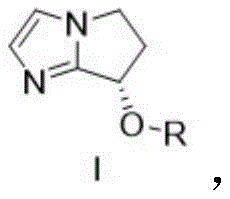
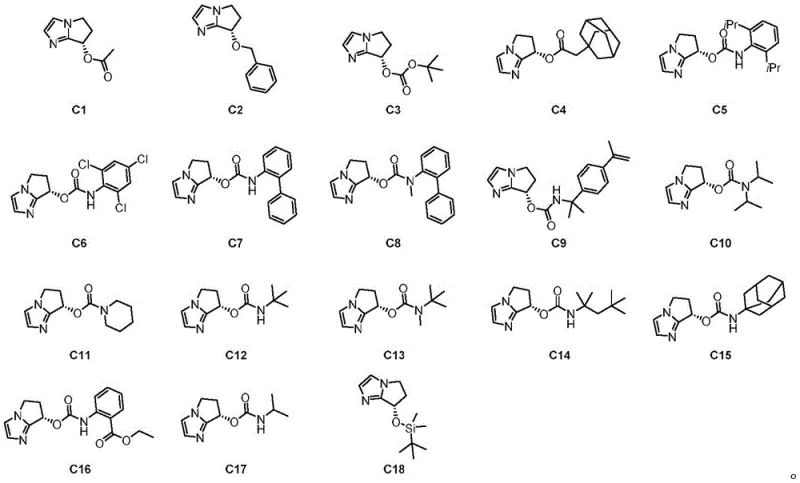
The success of this asymmetric synthesis hinges on the unique structural properties of the chiral bicyclic imidazole catalysts, specifically the library designated as C1 through C18. These catalysts function by creating a chiral environment around the reaction center, facilitating the nucleophilic attack of the unprotected nucleoside on the chlorophosphoramidate with high stereocontrol. The bicyclic framework provides rigidity that locks the catalyst into a specific conformation, ensuring consistent interaction with the substrates. Mechanistically, the catalyst likely activates the phosphorus center or stabilizes the transition state through hydrogen bonding or Lewis base interactions, depending on the specific substituents on the imidazole ring. The patent highlights that catalysts such as C4, featuring an adamantyl group, and C15, with an adamantyl isocyanate moiety, exhibit superior performance. This suggests that bulky, lipophilic substituents play a critical role in shielding one face of the reacting species, thereby enforcing the formation of the desired diastereomer. Understanding these structure-activity relationships is vital for R&D teams aiming to further optimize reaction parameters or adapt the chemistry to related nucleoside analogues. The ability to tune the catalyst structure allows for precise control over the impurity profile, ensuring that the final API meets rigorous quality standards without extensive chromatographic purification.
Impurity control in this system is intrinsically linked to the high diastereoselectivity provided by the chiral catalyst. In traditional non-catalytic or achiral methods, the formation of unwanted diastereomers and regioisomers is a major concern, often leading to complex mixtures that are difficult to separate. However, the asymmetric catalysis described here preferentially drives the reaction towards the target configuration, significantly suppressing the formation of undesired isomers. The patent data shows dr values consistently favoring the product, with optimal conditions yielding ratios up to 2.2:1. This selectivity reduces the burden on downstream purification processes, as the crude reaction mixture contains a higher proportion of the desired API intermediate. Furthermore, the use of unprotected nucleosides eliminates impurities associated with incomplete protection or deprotection steps, such as partially protected intermediates or degradation products from harsh deprotection conditions. The reaction conditions, typically ranging from 25°C to 80°C, are mild enough to prevent thermal degradation of the sensitive nucleoside scaffold. This combination of high selectivity and mild conditions ensures a clean reaction profile, which is essential for maintaining the integrity of the supply chain and ensuring the safety and efficacy of the final therapeutic product.
How to Synthesize Remdesivir Efficiently
Implementing this advanced synthesis route requires careful attention to reaction parameters to maximize yield and stereoselectivity. The process begins with the preparation of a reaction mixture containing the unprotected nucleoside and the selected chiral catalyst in an appropriate solvent system. Molecular sieves are often employed to maintain anhydrous conditions, which is critical for the stability of the chlorophosphoramidate reagent. The addition of the base and phosphoramidate must be controlled to manage exotherms and ensure uniform mixing. Detailed standard operating procedures for scaling this reaction from gram to kilogram quantities are essential for successful technology transfer. The following guide outlines the generalized steps derived from the patent examples to assist process engineers in replicating this high-efficiency protocol.
- Dissolve unprotected nucleoside and chiral imidazole catalyst (e.g., C4) in a suitable solvent such as an ionic liquid or dichloromethane under inert gas.
- Add chlorophosphoramidate and an organic base like 2,6-lutidine dropwise to the reaction mixture while maintaining the temperature between 25°C and 80°C.
- Stir the reaction for 6 to 24 hours, monitor by TLC, then quench with water, extract, and purify via column chromatography to obtain Remdesivir.
Commercial Advantages for Procurement and Supply Chain Teams
For procurement managers and supply chain heads, the adoption of this asymmetric catalysis technology offers compelling strategic advantages that extend beyond mere technical feasibility. The most significant benefit is the drastic simplification of the manufacturing workflow, which directly translates to reduced operational costs and enhanced supply security. By eliminating the protection and deprotection steps, manufacturers can significantly reduce the consumption of expensive reagents and solvents, leading to a leaner and more cost-effective production process. This reduction in material usage also aligns with sustainability goals, minimizing the environmental footprint of API manufacturing. Furthermore, the shortened synthetic route reduces the overall production cycle time, allowing for faster response to market demands and improved inventory turnover. The robustness of the reaction conditions, which tolerate a variety of solvents including ionic liquids and common organics, provides flexibility in sourcing raw materials and mitigates the risk of supply disruptions. These factors collectively contribute to a more resilient supply chain capable of delivering high-purity pharmaceutical intermediates consistently.
- Cost Reduction in Manufacturing: The elimination of protecting group chemistry removes entire stages of the synthesis, thereby saving on reagent costs, labor, and equipment time. Without the need for separate protection and deprotection reactors, capital expenditure can be optimized, and the overall cost per kilogram of the API intermediate is significantly lowered. The higher yield of 63% compared to historical lows of 25% means less starting material is wasted, further driving down the variable costs associated with production. Additionally, the simplified purification requirements reduce the load on chromatography columns and solvent recovery systems, resulting in substantial operational savings.
- Enhanced Supply Chain Reliability: The use of readily available unprotected nucleosides as starting materials simplifies the upstream supply chain, reducing dependency on specialized protected intermediates that may have limited suppliers. The mild reaction conditions and tolerance for various solvent systems allow for greater flexibility in manufacturing locations, enabling regional production hubs to be established closer to key markets. This decentralization capability enhances supply continuity and reduces the logistical risks associated with long-distance transportation of hazardous chemicals. Moreover, the high selectivity of the process ensures consistent product quality, reducing the likelihood of batch failures that could disrupt supply schedules.
- Scalability and Environmental Compliance: The process is designed with scalability in mind, utilizing conditions that are easily transferable from laboratory to industrial scale. The avoidance of harsh reagents and extreme temperatures simplifies safety management and reduces the complexity of waste treatment systems. By generating less chemical waste and consuming fewer resources, this method supports compliance with increasingly stringent environmental regulations. The ability to use ionic liquids, which can be recycled, further enhances the green credentials of the process, making it an attractive option for companies committed to sustainable manufacturing practices.
Frequently Asked Questions (FAQ)
The following questions address common inquiries regarding the technical and commercial implications of this patented synthesis method. These answers are derived directly from the experimental data and technical disclosures within patent CN113754694B, providing clarity for stakeholders evaluating the technology for potential integration into their manufacturing portfolios. Understanding these details is key to making informed decisions about process adoption and supplier partnerships.
Q: What is the primary advantage of this new Remdesivir synthesis method?
A: The primary advantage is the elimination of protecting group steps. Unlike conventional methods that require multiple steps for protection and deprotection, this patent describes a direct one-step asymmetric catalysis using unprotected nucleosides, significantly simplifying the process and improving overall efficiency.
Q: Which chiral catalysts provide the best results for this reaction?
A: According to the experimental data in patent CN113754694B, catalysts C4 and C15 demonstrate superior performance. Specifically, catalyst C4 achieved a yield of 63% with a diastereomeric ratio (dr) of 2.2:1, representing the highest efficiency among the tested library of C1-C18 catalysts.
Q: Is this asymmetric catalysis method suitable for large-scale production?
A: Yes, the method is highly suitable for scale-up. It operates under mild reaction conditions (preferably 25°C to 80°C) and utilizes readily available solvents including ionic liquids and common organic solvents. The simplified workflow reduces operational complexity, making it viable for commercial scale-up of complex pharmaceutical intermediates.
Partnering with NINGBO INNO PHARMCHEM: Your Reliable Remdesivir Supplier
At NINGBO INNO PHARMCHEM, we recognize the critical importance of efficient and scalable synthesis routes for vital antiviral medications like Remdesivir. Our team of expert chemists has thoroughly analyzed the breakthroughs presented in patent CN113754694B and is fully equipped to leverage this asymmetric catalysis technology for commercial production. We possess extensive experience scaling diverse pathways from 100 kgs to 100 MT/annual commercial production, ensuring that our clients receive a consistent and reliable supply of high-quality intermediates. Our state-of-the-art facilities are designed to handle complex catalytic reactions with precision, adhering to stringent purity specifications and rigorous QC labs to guarantee product integrity. By partnering with us, you gain access to a supply chain that is not only robust but also optimized for cost and speed.
We invite you to engage with our technical procurement team to discuss how this advanced synthesis method can benefit your specific project requirements. We are prepared to provide a Customized Cost-Saving Analysis that demonstrates the economic advantages of switching to this streamlined process. Please contact us to request specific COA data and route feasibility assessments tailored to your volume needs. Let us help you secure a competitive edge in the pharmaceutical market through innovative chemistry and dependable supply chain solutions.