
Advanced Manufacturing of Fipronil Intermediates: Overcoming Corrosion and Safety Barriers
The global demand for high-efficacy phenylpyrazole insecticides continues to drive innovation in intermediate manufacturing, particularly for flagship compounds like Fipronil. Patent CN1163488C presents a transformative technical roadmap that addresses critical bottlenecks in the synthesis of 5-amino-1-aryl-3-cyano-4-trifluoromethylsulfinylpyrazole derivatives. This intellectual property outlines a robust, three-stage methodology that fundamentally alters the economic and safety profile of producing these vital agrochemical intermediates. By integrating corrosion-inhibited oxidation protocols with a reversed-addition trifluoromethylation strategy, the disclosed technology offers a viable pathway for reliable agrochemical intermediate supplier networks seeking to modernize their production capabilities. The significance of this patent lies not merely in yield improvements, but in its ability to extend equipment lifespan and ensure operator safety during highly exothermic transformations.
For R&D directors and process engineers, the transition from laboratory curiosity to commercial viability often hinges on solving specific engineering challenges, such as reactor degradation and thermal runaway. The traditional reliance on aggressive oxidants like m-chloroperbenzoic acid or uninhibited trifluoroacetic acid mixtures has long plagued the industry with maintenance costs and purity issues. This patent data provides a comprehensive solution by introducing boric acid as a critical stabilizer during the oxidation phase, effectively neutralizing the hydrofluoric acid byproducts that typically devastate glass-lined reactors. Furthermore, the refinement of the trifluoromethylation step through precise stoichiometric control and addition sequencing resolves the historical instability of reaction mixtures containing trifluoromethyl bromide. These advancements collectively position the technology as a cornerstone for cost reduction in pesticide manufacturing, enabling producers to achieve higher purity standards while mitigating the operational risks associated with handling hazardous reagents.
The Limitations of Conventional Methods vs. The Novel Approach
The Limitations of Conventional Methods
Historically, the synthesis of sulfinylpyrazole insecticides has been fraught with significant technical hurdles that compromise both economic efficiency and operational safety. Conventional oxidation methods utilizing 3-chloroperbenzoic acid are not only expensive due to the cost of the oxidant but also generate substantial stoichiometric waste in the form of chlorobenzoic acid, complicating downstream purification. Alternatively, the use of trifluoroacetic acid and hydrogen peroxide to generate trifluoroperacetic acid in situ, while chemically effective, presents a severe engineering challenge regarding equipment integrity. Without protection, the hydrofluoric acid generated during this process corrodes industrial glass liners at alarming rates, reaching up to 1430 μm/year at elevated temperatures, which necessitates frequent and costly reactor replacements. Additionally, previous methods for introducing the trifluoromethyl group often involved adding trifluoromethyl bromide to a mixture of other reagents, a procedure known to be violently exothermic and difficult to control on a large scale. This lack of thermal control frequently leads to dangerous pressure surges within autoclaves, posing significant risks to personnel and requiring complex, expensive containment systems to manage the potential for catastrophic failure.
The Novel Approach
The methodology described in the patent data introduces a paradigm shift by prioritizing process stability and equipment preservation without sacrificing chemical yield. The core innovation involves the inclusion of a corrosion inhibiting compound, preferably boric acid, directly into the oxidation reaction mixture. This simple yet profound modification reduces the corrosion rate of reactor linings to negligible levels, typically below 5 μm/year, thereby drastically extending the operational life of capital equipment. In the trifluoromethylation stage, the process reverses the conventional addition order; instead of adding the volatile trifluoromethyl bromide to the reaction vessel, sulfur dioxide is added to a stable premix of the disulfide intermediate, formate salt, and trifluoromethyl bromide. This strategic change ensures that the reaction mixture remains chemically stable prior to the initiation of the exotherm, allowing for precise control over temperature and pressure. By maintaining the reaction pressure within a safe window of 3 to 6 bar and controlling the addition rate of sulfur dioxide, the process eliminates the risk of thermal runaway. This novel approach facilitates the commercial scale-up of complex pyrazole derivatives by transforming a hazardous batch process into a manageable, predictable industrial operation.
Mechanistic Insights into Corrosion-Inhibited Oxidation and Trifluoromethylation
The chemical elegance of this process lies in the mechanistic understanding of how additives influence reaction pathways and side-product formation. During the oxidation of the sulfide intermediate to the desired sulfoxide, the generation of hydrogen fluoride is an inevitable consequence of using fluorinated reagents. In the absence of a scavenger, this HF attacks the silicate network of glass reactors. The introduction of boric acid acts as a Lewis acid trap, complexing with the fluoride ions to form stable fluoborate species, thus preventing the etching of the reactor walls. This mechanism ensures that the reaction environment remains chemically aggressive towards the sulfur atom for selective oxidation to the sulfoxide state, while remaining benign towards the containment vessel. Furthermore, the strict control of hydrogen peroxide equivalents, maintained between 1.3 and 1.5 molar equivalents, is critical to preventing over-oxidation to the sulfone, a difficult-to-remove impurity that compromises the biological efficacy of the final insecticide.
In the preceding steps involving the formation of the disulfide intermediate, solvent selection plays a pivotal role in determining impurity profiles. The patent highlights the sensitivity of the reaction between the pyrazole precursor and sulfur monochloride to solvent effects. 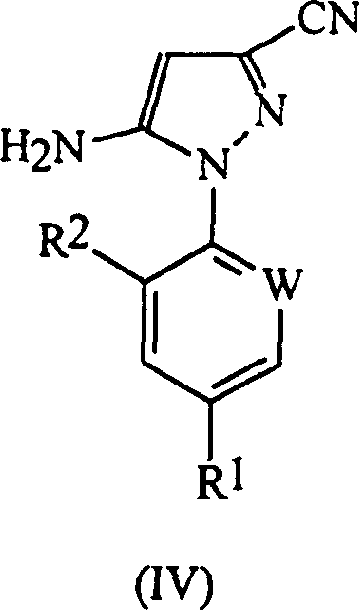 When utilizing toluene, the reaction tends to produce significant quantities of monosulfide byproducts, and the resulting solid exhibits poor filtration characteristics. However, switching to acetonitrile, optionally in the presence of chlorobenzene, dramatically suppresses the formation of these monosulfide impurities. The polarity and coordination properties of acetonitrile likely stabilize the transition state favoring disulfide coupling while ensuring the product crystallizes in a morphology that allows for rapid filtration and washing. This solvent engineering is essential for achieving the high-purity fipronil intermediates required by regulatory bodies, as it minimizes the burden on downstream recrystallization steps and reduces the overall solvent consumption per kilogram of product.
How to Synthesize 5-Amino-1-aryl-3-cyano-4-trifluoromethylsulfinylpyrazole Efficiently
The implementation of this synthesis route requires strict adherence to the specified addition sequences and temperature profiles to replicate the safety and yield benefits observed in the patent examples. The process begins with the preparation of the disulfide intermediate using sulfur monochloride in an acetonitrile-chlorobenzene system, followed by the controlled trifluoromethylation using sulfur dioxide gas. The final and most critical step involves the oxidation of the resulting sulfide using the corrosion-inhibited trifluoroacetic acid system. Operators must ensure that the boric acid is fully dissolved and that the temperature is maintained between 10°C and 15°C during the peroxide addition to maximize selectivity for the sulfoxide. Detailed standardized operating procedures regarding the quenching of excess peroxide with sulfur dioxide and the subsequent azeotropic removal of trifluoroacetic acid are essential for consistent batch quality. The detailed standardized synthesis steps are outlined in the guide below.
- Prepare the disulfide intermediate by reacting the 5-amino-1-aryl-3-cyanopyrazole with sulfur monochloride in acetonitrile/chlorobenzene at controlled temperatures to minimize monosulfide impurities.
- Execute the trifluoromethylation by adding sulfur dioxide to a stable mixture of the disulfide, sodium formate, and trifluoromethyl bromide in DMF, maintaining pressure between 3-6 bar.
- Perform the final oxidation using trifluoroacetic acid and hydrogen peroxide in the presence of boric acid to inhibit reactor corrosion, followed by azeotropic distillation for solvent recovery.
Commercial Advantages for Procurement and Supply Chain Teams
From a procurement and supply chain perspective, the adoption of this patented technology offers substantial strategic benefits that extend beyond simple yield metrics. The primary advantage is the drastic extension of equipment lifecycle; by mitigating the corrosion of glass-lined reactors, manufacturers can significantly reduce capital expenditure associated with frequent vessel replacement and unplanned maintenance downtime. This reliability translates directly into enhanced supply chain continuity, as production schedules are less likely to be disrupted by equipment failure. Furthermore, the improved safety profile of the trifluoromethylation step reduces the insurance and regulatory compliance costs associated with handling high-pressure exothermic reactions. The ability to operate at lower pressures and with greater thermal control means that existing infrastructure can often be utilized without requiring expensive upgrades to high-pressure containment systems, facilitating a smoother and more cost-effective technology transfer.
- Cost Reduction in Manufacturing: The elimination of expensive oxidants like m-chloroperbenzoic acid in favor of the trifluoroacetic acid/hydrogen peroxide system, coupled with the efficient recovery and recycling of trifluoroacetic acid via azeotropic distillation, leads to substantial raw material cost savings. The process avoids the generation of stoichiometric solid waste associated with traditional oxidants, thereby reducing waste disposal costs. Additionally, the high selectivity of the oxidation step minimizes the formation of sulfone byproducts, which reduces the need for extensive purification and recrystallization cycles, further lowering the cost of goods sold.
- Enhanced Supply Chain Reliability: The stability of the reaction mixtures, particularly in the trifluoromethylation step, ensures consistent batch-to-batch performance. By avoiding the rapid degradation of intermediates that occurs in conventional methods when addition rates are not perfectly synchronized, the process guarantees a steady output of high-quality intermediates. This reliability is crucial for meeting the rigorous delivery schedules of downstream formulators and reduces the risk of supply shortages caused by failed batches or safety incidents.
- Scalability and Environmental Compliance: The process is inherently designed for large-scale operation, with specific parameters validated for commercial reactors up to 15 cubic meters in volume. The use of recoverable solvents like chlorobenzene and the minimization of hazardous waste streams align with increasingly stringent environmental regulations. The ability to recycle trifluoroacetic acid efficiently reduces the overall environmental footprint of the manufacturing process, making it a sustainable choice for long-term production commitments.
Frequently Asked Questions (FAQ)
The following questions address common technical inquiries regarding the implementation and benefits of this novel synthesis route. These answers are derived directly from the experimental data and claims presented in the patent documentation, providing clarity on the operational nuances of the process. Understanding these details is vital for technical teams evaluating the feasibility of adopting this methodology for their own production lines.
Q: How does the patented process prevent industrial reactor corrosion during oxidation?
A: The process incorporates a corrosion inhibiting compound, specifically boric acid or alkali metal borates, into the trifluoroacetic acid and hydrogen peroxide mixture. This additive traps hydrogen fluoride formed during the reaction, reducing the corrosion rate of glass liners from over 300 μm/year to typically below 5 μm/year.
Q: What safety improvements are achieved in the trifluoromethylation step?
A: By reversing the addition order and introducing sulfur dioxide to a pre-mixed solution of disulfide, formate, and trifluoromethyl bromide, the reaction mixture remains stable. This allows for controlled addition rates that maintain vessel pressure within a safe 3-6 bar range, eliminating the risk of rapid exothermic pressure spikes associated with conventional methods.
Q: Why is acetonitrile preferred over toluene for the disulfide formation step?
A: While toluene is convenient, reactions in acetonitrile significantly reduce the formation of monosulfide impurities. Furthermore, acetonitrile provides satisfactory filtration rates for the product, whereas toluene often results in slow filtration and requires additional co-solvents to achieve acceptable processing speeds.
Partnering with NINGBO INNO PHARMCHEM: Your Reliable 5-Amino-1-aryl-3-cyano-4-trifluoromethylsulfinylpyrazole Supplier
At NINGBO INNO PHARMCHEM, we recognize that the transition from patent literature to commercial reality requires deep technical expertise and robust manufacturing infrastructure. Our team possesses extensive experience scaling diverse pathways from 100 kgs to 100 MT/annual commercial production, ensuring that the intricate balance of temperature, pressure, and stoichiometry described in CN1163488C is maintained with precision. We are committed to delivering high-purity intermediates that meet stringent purity specifications, utilizing our rigorous QC labs to verify every batch against the highest industry standards. Our facility is equipped to handle the specific solvent systems and corrosion-inhibited protocols required for this chemistry, guaranteeing a supply of material that supports your downstream formulation needs without compromise.
We invite you to collaborate with us to leverage these advanced manufacturing capabilities for your supply chain. Contact our technical procurement team today to request a Customized Cost-Saving Analysis tailored to your specific volume requirements. We are prepared to provide specific COA data and route feasibility assessments to demonstrate how our implementation of this optimized process can enhance your operational efficiency and reduce your overall procurement costs.