
Advanced Iodixanol Purification Technology for Commercial Scale Manufacturing
The global demand for non-ionic X-ray contrast agents has necessitated the development of robust, scalable purification technologies that can meet stringent pharmacopoeia standards without incurring prohibitive manufacturing costs. Patent CN101293855B introduces a significant breakthrough in the purification of Iodixanol, also known commercially as Visipaque 320, by utilizing a novel recrystallization method that effectively replaces expensive chromatographic techniques. This technical advancement addresses the critical bottleneck in producing high-purity bulk drugs suitable for direct injection into the human vascular system, where impurity profiles must be meticulously controlled to ensure patient safety. The invention specifically targets the purification of crude Iodixanol prepared from the dimerization of 5-acetamido-N,N'-bis(2,3-dihydroxypropyl)-2,4,6-triiodo isophthalamide, offering a pathway that is not only chemically efficient but also economically viable for large-scale industrial production. By shifting away from complex separation technologies towards optimized solvent systems, this process enables reliable pharmaceutical intermediates supplier networks to deliver consistent quality while managing the intricate balance between yield and purity required for regulatory approval in major markets.
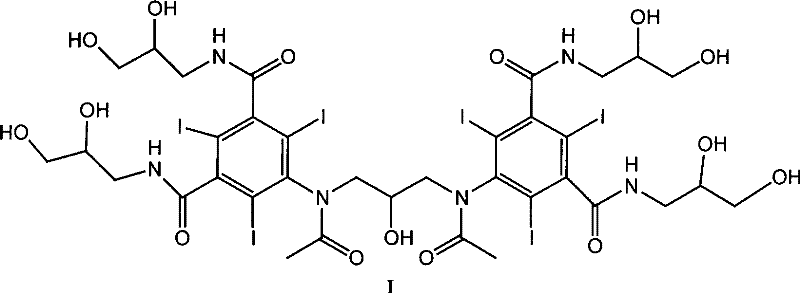
The Limitations of Conventional Methods vs. The Novel Approach
The Limitations of Conventional Methods
Historically, the purification of Iodixanol has relied heavily on preparative high-performance liquid chromatography (HPLC) or complex recrystallization methods that present substantial operational challenges for commercial manufacturers. Preparative HPLC, while capable of achieving high purity, suffers from severe limitations regarding cost and scalability, as the consumption of chromatographic resins and large volumes of solvents makes it economically unfeasible for producing the tonnage required by the global healthcare market. Alternative non-chromatographic methods described in prior art often utilize solvents with high toxicity or high boiling points, such as 1-methoxy-2-propanol, which complicate the removal of residual solvents to meet pharmacopoeia limits and impose harsh requirements on production equipment. Furthermore, some existing recrystallization techniques struggle to consistently achieve the necessary gas purity and content levels even after repeated processing, leading to batch failures and supply chain disruptions. These conventional approaches create a significant barrier to entry for cost reduction in API manufacturing, as the intricate processing steps and specialized equipment requirements drive up the final cost of the active pharmaceutical ingredient, ultimately affecting the affordability of diagnostic imaging procedures for end-users.
The Novel Approach
The innovative process detailed in the patent data overcomes these historical deficiencies by employing a dual-solvent recrystallization system that leverages the differential solubility of Iodixanol and its impurities in specific solvent pairs. This method utilizes high polarity solvents such as 2-methyl cellosolve, ethanol, or methanol to dissolve the crude bullion, followed by the controlled addition of low polarity solvents like ethyl acetate, methyl acetate, or acetonitrile to induce crystallization. This strategic manipulation of solvent polarity allows for the selective precipitation of the target molecule while leaving impurities in the solution phase, effectively purifying the product without the need for expensive chromatographic columns. The process is designed to be repeated approximately four to five times, progressively enhancing the purity to exceed 98.0% and ensuring the content falls within the strict 98.6% to 101.0% range required for medical use. By utilizing common, low-cost industrial solvents, this approach drastically simplifies the production workflow, reduces the environmental footprint associated with solvent waste, and facilitates the commercial scale-up of complex pharmaceutical intermediates by removing the dependency on specialized separation infrastructure.
Mechanistic Insights into Solvent-Pair Recrystallization
The core mechanism driving the success of this purification strategy lies in the thermodynamic control of crystal lattice formation through precise solvent composition management. When the crude Iodixanol is dissolved in a high polarity solvent at elevated temperatures, the system achieves a state of saturation where both the target molecule and related impurities are fully solvated. The subsequent dropwise addition of a low polarity anti-solvent alters the dielectric constant of the medium, reducing the solubility of the Iodixanol dimer more significantly than that of the impurities, thereby triggering nucleation and crystal growth. This process is kinetically controlled by the rate of cooling and the rate of anti-solvent addition, which determines the size and purity of the resulting crystals; slow cooling favors the formation of larger, more perfect crystals that exclude impurities from the lattice structure more effectively. The specific choice of solvent pairs, such as ethanol combined with ethyl acetate, is critical because it optimizes the solubility curve to maximize yield while maintaining high selectivity against structurally similar byproducts formed during the initial dimerization reaction. This mechanistic understanding allows process chemists to fine-tune the purification parameters to ensure that the final product meets the rigorous specifications for injectable contrast agents, where even trace impurities can have significant biological implications.
Impurity control is further enhanced by the ability of this solvent system to facilitate the removal of residual starting materials and intermediate byproducts that possess different polarity profiles than the final Iodixanol molecule. The repeated cycling of the recrystallization process acts as a multi-stage purification cascade, where each cycle incrementally reduces the concentration of contaminants that co-crystallize or remain trapped within the crystal matrix. The use of activated carbon during the hot dissolution phase provides an additional layer of purification by adsorbing colored impurities and high molecular weight byproducts, ensuring the final product is not only chemically pure but also visually acceptable for pharmaceutical applications. This comprehensive approach to impurity management ensures that the final bulk drug substance is robust against variations in the quality of the crude starting material, providing a reliable buffer against supply chain variability. For R&D teams, this mechanism offers a clear pathway to validate the process for regulatory filings, as the deterministic nature of recrystallization provides consistent and reproducible results that are easier to characterize and control compared to stochastic chromatographic separations.
How to Synthesize Iodixanol Efficiently
The synthesis and subsequent purification of Iodixanol require a meticulous approach to reaction monitoring and solvent management to ensure the final product meets all quality attributes. The process begins with the preparation of the crude bullion through the dimerization of the monomeric precursor, followed by the critical purification steps outlined in the patent which transform the crude material into a pharmacopoeia-compliant API. Operators must carefully control the temperature during the dissolution phase to prevent degradation of the thermally sensitive iodinated structure, while the addition of the anti-solvent must be performed under reflux conditions to maintain homogeneity before the cooling phase begins. The detailed standardized synthesis steps see the guide below, which provides the specific operational parameters required to replicate this high-efficiency purification route in a commercial setting. Adherence to these protocols ensures that the physical properties of the crystals, such as particle size distribution and flowability, are optimized for downstream formulation into injectable solutions.
- Dissolve crude Iodixanol bullion in a high polarity solvent such as 2-methyl cellosolve or ethanol under heated reflux conditions to ensure complete solvation.
- Selectively add activated carbon for decolorization if necessary, followed by hot filtration to remove insoluble particulate matter and impurities.
- Dropwise add a low polarity anti-solvent like ethyl acetate to induce turbidity, then slowly cool the mixture to crystallize high-purity product.
Commercial Advantages for Procurement and Supply Chain Teams
For procurement managers and supply chain directors, the adoption of this purification technology represents a strategic opportunity to optimize the cost structure and reliability of the contrast agent supply chain. The elimination of preparative HPLC columns removes a significant variable cost component from the manufacturing process, as chromatographic resins are expensive consumables that require frequent replacement and generate substantial hazardous waste. By transitioning to a recrystallization-based workflow, manufacturers can leverage widely available commodity solvents that are easier to source, store, and recycle, thereby insulating the production cost from the volatility of specialized chemical markets. This shift not only reduces the direct cost of goods sold but also simplifies the regulatory compliance burden associated with the handling and disposal of complex chromatographic waste streams. The robustness of the process ensures that production schedules are less susceptible to delays caused by equipment fouling or resin exhaustion, leading to more predictable lead times for high-purity pharmaceutical intermediates and a more stable supply for downstream formulation partners.
- Cost Reduction in Manufacturing: The transition from chromatographic purification to solvent-based recrystallization eliminates the need for expensive stationary phases and reduces the overall solvent consumption per kilogram of product. This structural change in the process flow significantly lowers the operational expenditure associated with purification, as the solvents used are common industrial chemicals with well-established supply chains and lower unit costs. Furthermore, the ability to recover and recycle these solvents adds an additional layer of economic efficiency, allowing manufacturers to minimize raw material waste and reduce the environmental levies associated with solvent disposal. The cumulative effect of these efficiencies is a substantial reduction in the manufacturing cost base, enabling more competitive pricing strategies in the global market for diagnostic imaging agents without compromising on quality standards.
- Enhanced Supply Chain Reliability: Relying on common solvents such as ethanol and ethyl acetate mitigates the risk of supply disruptions that are often associated with specialized or proprietary reagents required for chromatographic methods. These solvents are produced at a massive global scale, ensuring that manufacturers can secure long-term supply agreements and maintain adequate inventory levels to buffer against market fluctuations. The simplicity of the equipment required for recrystallization, which typically involves standard reactors and filtration units rather than specialized chromatography systems, also reduces the risk of production downtime due to equipment failure or maintenance issues. This operational resilience translates into a more reliable supply of high-purity contrast agents for hospitals and clinics, ensuring that critical diagnostic procedures are not delayed due to API shortages.
- Scalability and Environmental Compliance: The recrystallization process is inherently scalable, as the physics of crystal growth remain consistent when moving from pilot scale to multi-ton commercial production, unlike chromatographic processes which often face linear scaling challenges. This scalability allows manufacturers to respond quickly to increases in market demand without the need for significant capital investment in new separation infrastructure. Additionally, the use of less toxic and more biodegradable solvents improves the environmental profile of the manufacturing process, aligning with the increasing regulatory pressure for green chemistry practices in the pharmaceutical industry. The reduction in hazardous waste generation simplifies the permitting process for manufacturing facilities and reduces the long-term liability associated with environmental compliance, making the production of Iodixanol more sustainable and socially responsible.
Frequently Asked Questions (FAQ)
The following questions address common technical and commercial inquiries regarding the implementation of this purification technology, based on the specific advantages and mechanisms detailed in the patent literature. These answers are designed to provide clarity to technical decision-makers who are evaluating the feasibility of adopting this process for their own manufacturing operations or supply chain partnerships. Understanding the nuances of solvent selection, purity outcomes, and scalability is essential for making informed decisions that align with both regulatory requirements and business objectives. The insights provided here reflect the practical implications of the patent data for real-world industrial applications.
Q: How does this recrystallization method compare to preparative HPLC for Iodixanol?
A: Unlike preparative HPLC which is cost-prohibitive for large-scale production due to resin and solvent costs, this recrystallization method utilizes common industrial solvents and eliminates the need for chromatography columns, significantly reducing operational expenses while maintaining pharmacopoeia-grade purity.
Q: What purity levels can be achieved with this purification process?
A: By repeating the purification cycle approximately four to five times, the process consistently yields Iodixanol with a purity exceeding 98.0% and a content range between 98.6% and 101.0%, fully meeting strict pharmacopoeia standards for injectable contrast agents.
Q: Is the solvent system used in this patent safe for industrial scale-up?
A: Yes, the method employs solvents such as ethanol, methyl acetate, and ethyl acetate, which are widely available, cost-effective, and easier to recover and handle compared to the toxic or high-boiling solvents required by previous purification methods, facilitating safer commercial scale-up.
Partnering with NINGBO INNO PHARMCHEM: Your Reliable Iodixanol Supplier
NINGBO INNO PHARMCHEM stands at the forefront of chemical manufacturing innovation, possessing extensive experience scaling diverse pathways from 100 kgs to 100 MT/annual commercial production to meet the rigorous demands of the global pharmaceutical industry. Our technical team is deeply familiar with the complexities of iodinated contrast agent synthesis and purification, ensuring that we can implement advanced processes like the one described in CN101293855B with precision and consistency. We maintain stringent purity specifications across all our product lines, supported by rigorous QC labs that utilize state-of-the-art analytical instrumentation to verify every batch against pharmacopoeia standards. Our commitment to quality assurance means that clients can rely on us not just for chemical supply, but for a partnership that guarantees the safety and efficacy of their final diagnostic products through every stage of the value chain.
We invite global partners to engage with our technical procurement team to discuss how we can tailor our manufacturing capabilities to your specific volume and quality requirements. By requesting a Customized Cost-Saving Analysis, you can gain a clear understanding of how our optimized purification routes can improve your margin structure while ensuring supply continuity. We encourage you to contact us to obtain specific COA data and route feasibility assessments that demonstrate our capacity to deliver high-purity Iodixanol that meets your exacting standards. Let us collaborate to engineer a supply chain solution that balances cost, quality, and reliability for your critical imaging applications.
Engineering Bottleneck?
Can't scale up this synthesis? Upload your target structure or CAS, and our CDMO team will evaluate the industrial feasibility within 24 hours. Request Evaluation →