
Scalable Benzylamine Route for Oseltamivir Intermediates: A Technical Breakthrough for Industrial Production
Introduction to Advanced Oseltamivir Synthesis Technologies
The global demand for antiviral therapeutics remains a critical priority for the pharmaceutical industry, with Oseltamivir phosphate standing as a cornerstone treatment for influenza A and B viruses. As supply chains seek greater resilience and cost-efficiency, the manufacturing processes for such high-value Active Pharmaceutical Ingredients (APIs) are under intense scrutiny. Patent CN111499536A introduces a transformative preparation method that addresses longstanding challenges in the synthesis of oseltamivir intermediates. By shifting away from hazardous reagents and complex catalytic systems, this technology offers a streamlined pathway that enhances both safety and economic viability. For R&D directors and procurement strategists, understanding this shift is vital for securing a reliable pharmaceutical intermediates supplier capable of meeting rigorous quality standards while optimizing production costs.
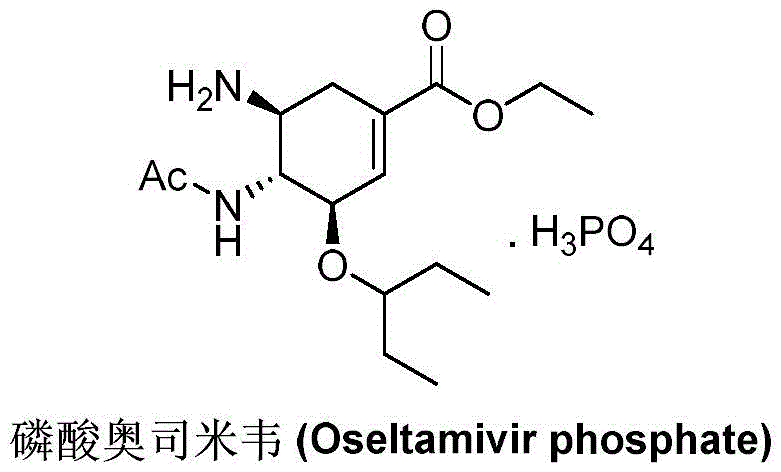
This technical insight report delves deep into the mechanistic advantages and commercial implications of this novel benzylamine-mediated ring-opening strategy. Unlike previous iterations that relied on volatile allylamines or toxic azides, this approach utilizes stable, commodity-grade amines coupled with accessible inorganic Lewis acids. The result is a robust synthetic route that minimizes impurity profiles and simplifies downstream processing. As we analyze the specific reaction parameters and scalability factors, it becomes evident that this methodology represents a significant leap forward in the commercial scale-up of complex pharmaceutical intermediates, ensuring a more secure and continuous supply for global health initiatives.
The Limitations of Conventional Methods vs. The Novel Approach
The Limitations of Conventional Methods
Historically, the industrial synthesis of oseltamivir has been plagued by significant technical and safety hurdles that complicate large-scale manufacturing. Early routes, such as those utilizing sodium azide for epoxide ring-opening, presented severe safety liabilities due to the explosive and highly toxic nature of azide reagents. These processes necessitated specialized containment infrastructure and rigorous waste management protocols, drastically inflating operational expenditures and limiting the number of qualified manufacturers. Furthermore, alternative pathways employing tert-butylamine or allylamine often required expensive transition metal catalysts, such as palladium complexes, and harsh reaction conditions that led to unpredictable impurity formation. The reliance on multiple protection and deprotection steps with difficult-to-remove byproducts further eroded overall yield and increased the environmental footprint of production.
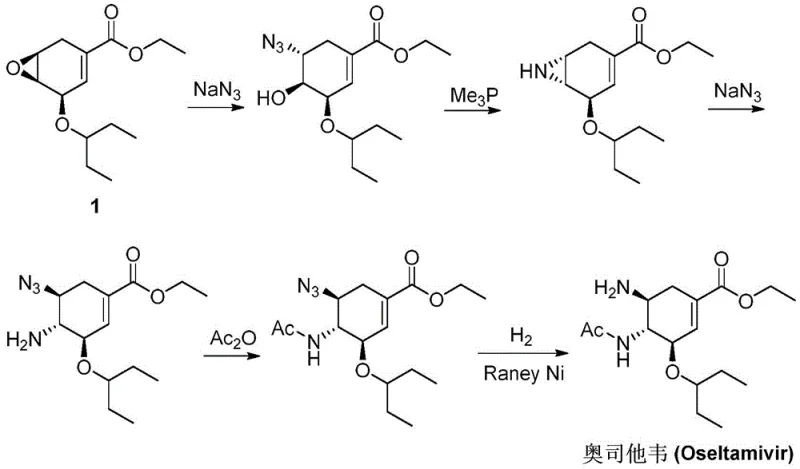
The cumulative effect of these limitations was a fragile supply chain vulnerable to disruptions and cost volatility. For instance, routes requiring N,N'-dimethyl barbituric acid (NDMBA) and palladium diacetate for allyl removal introduced high material costs and complex purification challenges. The presence of heavy metal residues also posed regulatory risks, demanding extensive cleaning validation and analytical testing to meet stringent pharmacopeial limits. Consequently, the industry has long sought a preparation method that could bypass these bottlenecks without compromising the stereochemical integrity of the final product. The inability to efficiently scale these legacy processes often resulted in extended lead times and constrained availability of high-purity pharmaceutical intermediates during peak demand periods.
The Novel Approach
In stark contrast to these legacy methods, the novel approach detailed in patent CN111499536A leverages a benzylamine-mediated ring-opening strategy that fundamentally simplifies the synthetic architecture. By reacting the key epoxy intermediate (1S,5R,6S)-5-(pentane-3-yloxy)-7-oxabicyclo[4.1.0]hept-3-ene-3-carboxylic acid ethyl ester with benzylamine in the presence of mild inorganic salt catalysts like magnesium chloride or zinc chloride, the process achieves high regioselectivity under relatively mild thermal conditions. This elimination of hazardous azides and expensive noble metal catalysts in the initial functionalization steps marks a pivotal improvement in process safety and cost structure. The use of benzylamine not only serves as an effective nucleophile but also acts as a protecting group that can be cleanly removed via standard catalytic hydrogenation later in the sequence.
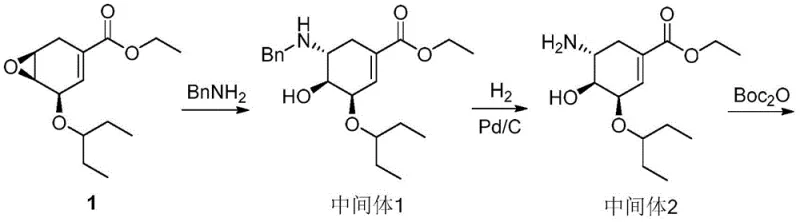
The strategic advantage of this new route lies in its modularity and reliance on unit operations that are easily scalable in standard multipurpose reactors. The subsequent steps involving Boc protection, sulfonylation, and substitution are optimized to minimize side reactions, resulting in a cleaner crude profile that facilitates easier crystallization and purification. This reduction in process complexity directly translates to cost reduction in pharmaceutical intermediates manufacturing, as fewer raw materials are consumed and less solvent is required for purification. Moreover, the avoidance of explosive reagents removes a major barrier to entry for many chemical manufacturers, thereby diversifying the supply base and enhancing supply chain reliability for this critical antiviral agent.
Mechanistic Insights into Lewis Acid-Catalyzed Epoxide Ring Opening
The core chemical innovation of this process resides in the Lewis acid-catalyzed nucleophilic attack of benzylamine on the strained epoxide ring of the starting material. In the absence of a catalyst, the ring-opening of this specific bicyclic ether can be sluggish or non-selective, potentially leading to a mixture of regioisomers that would compromise the optical purity of the final API. The introduction of inorganic salts such as MgCl2, MgBr2, or ZnCl2 activates the epoxide oxygen by coordinating with the lone pair electrons, thereby increasing the electrophilicity of the adjacent carbon atoms. This activation lowers the energy barrier for the nucleophilic attack, allowing the reaction to proceed efficiently at temperatures between 50°C and 100°C. The steric environment of the bicyclic system, combined with the electronic influence of the catalyst, directs the benzylamine to attack specifically at the desired position, preserving the critical stereocenters required for biological activity.
Following the ring opening, the synthetic sequence employs a sophisticated orthogonal protection strategy to differentiate the amine and hydroxyl functionalities. The initial benzyl group installed during ring opening is robust enough to withstand subsequent acylation and sulfonylation conditions but can be selectively cleaved via hydrogenolysis using Pd/C. This is complemented by the use of the tert-butyloxycarbonyl (Boc) group for nitrogen protection, which offers excellent stability during the O-sulfonylation and substitution steps yet is easily removed under mild acidic conditions in the final stage. This careful orchestration of protecting groups ensures that side reactions, such as over-acylation or elimination, are minimized. The result is a highly controlled impurity profile where potential byproducts are either structurally distinct and easily separated or formed in negligible quantities, ensuring the delivery of high-purity pharmaceutical intermediates that meet strict regulatory specifications.
How to Synthesize Oseltamivir Efficiently
The implementation of this synthesis route requires precise control over reaction stoichiometry, temperature, and workup procedures to maximize yield and purity. The process begins with the preparation of the ring-opened intermediate using benzylamine and an inorganic catalyst in a solvent system such as toluene or tetrahydrofuran. Following isolation, the intermediate undergoes a series of transformations including catalytic hydrogenation, N-acylation with di-tert-butyl dicarbonate, and O-sulfonylation using reagents like p-toluenesulfonyl chloride or methanesulfonyl chloride. Each step is designed to be operationally simple, often relying on crystallization for purification rather than chromatography, which is essential for industrial viability. The detailed standardized synthesis steps below outline the specific conditions and molar ratios optimized in the patent to ensure reproducible results.
- Perform ring-opening reaction of epoxy intermediate 1 with benzylamine using an inorganic salt catalyst like magnesium chloride to obtain intermediate 1.
- Execute catalytic hydrogenation to remove the benzyl protecting group, followed by N-acylation with di-tert-butyl dicarbonate to form intermediate 3.
- Conduct O-sulfonylation and subsequent substitution with benzylamine, followed by a second hydrogenation, acetylation, and final acid deprotection to yield oseltamivir.
Commercial Advantages for Procurement and Supply Chain Teams
For procurement managers and supply chain heads, the adoption of this novel synthesis route offers tangible benefits that extend beyond mere technical feasibility. The primary advantage lies in the substantial reduction of raw material costs and hazard management expenses. By eliminating the need for sodium azide, companies avoid the high costs associated with specialized storage, handling protocols, and the disposal of toxic waste streams. Furthermore, the replacement of expensive palladium catalysts and complex ligands with inexpensive inorganic salts like magnesium chloride significantly lowers the bill of materials. This shift allows for a more predictable cost structure, shielding the supply chain from the volatility often seen in the market for precious metals and specialty reagents. The simplified workflow also reduces the total cycle time for production batches, enabling faster response to market demand fluctuations.
- Cost Reduction in Manufacturing: The economic impact of this process is driven by the substitution of high-cost reagents with commodity chemicals. Traditional routes often rely on stoichiometric amounts of expensive amines or catalysts that are difficult to recover. In contrast, the benzylamine route utilizes reagents that are readily available in bulk quantities at competitive prices. Additionally, the high yields achieved in key steps, often exceeding 90%, minimize material loss and reduce the volume of solvent required for purification. This efficiency gain directly lowers the cost of goods sold (COGS), providing a competitive edge in the pricing of the final API. The reduction in waste generation also translates to lower environmental compliance costs, further enhancing the overall profitability of the manufacturing operation.
- Enhanced Supply Chain Reliability: Supply chain resilience is critically dependent on the availability and stability of raw materials. The reagents used in this novel process, such as benzylamine, magnesium salts, and common organic solvents, are produced by a wide range of global suppliers, reducing the risk of single-source dependency. Unlike specialized catalysts that may have long lead times or limited production capacity, these commodity inputs can be sourced reliably even during periods of market stress. The robustness of the reaction conditions also means that the process is less susceptible to variations in raw material quality, ensuring consistent output. This reliability is essential for maintaining continuous production schedules and meeting the delivery commitments required by downstream pharmaceutical partners.
- Scalability and Environmental Compliance: From an environmental and scalability perspective, this route aligns perfectly with modern green chemistry principles. The absence of explosive and highly toxic reagents simplifies the safety case for plant operations, allowing for larger batch sizes without proportional increases in risk mitigation infrastructure. The solvents employed are standard industrial grades that can be efficiently recovered and recycled, minimizing the environmental footprint of the process. Furthermore, the high selectivity of the reactions reduces the formation of difficult-to-separate impurities, which streamlines the purification train and reduces energy consumption. These factors collectively make the process highly amenable to commercial scale-up, ensuring that production capacity can be expanded rapidly to meet surging global demand without compromising on safety or quality standards.
Frequently Asked Questions (FAQ)
The following questions address common technical and commercial inquiries regarding the implementation of this benzylamine-based synthesis route. These answers are derived directly from the experimental data and process descriptions provided in the patent literature, offering clarity on safety, scalability, and quality control aspects. Understanding these details is crucial for technical teams evaluating the feasibility of adopting this new methodology for their own production lines or for procurement teams assessing supplier capabilities.
Q: Why is the benzylamine route safer than the traditional sodium azide method?
A: The traditional sodium azide route involves highly toxic and explosive reagents that pose severe safety risks and environmental hazards. The novel benzylamine route described in patent CN111499536A eliminates the use of sodium azide entirely, utilizing mild inorganic salt catalysts and standard organic solvents, thereby significantly reducing production risk and waste treatment costs.
Q: How does this new process impact the cost of oseltamivir manufacturing?
A: This process reduces costs by avoiding expensive transition metal catalysts like palladium acetate and complex ligands used in earlier generations of synthesis. Furthermore, the use of commodity chemicals like benzylamine and simplified purification steps through crystallization lowers the overall raw material and operational expenditure, making it highly suitable for cost-sensitive bulk drug production.
Q: Is this synthesis route suitable for large-scale industrial production?
A: Yes, the patent explicitly highlights the suitability of this method for process amplification. The reaction conditions are mild (temperatures ranging from -5°C to 100°C), and the solvents used (toluene, dichloromethane, ethanol) are standard in industrial settings. The high yields reported in the examples (often exceeding 90% for key steps) demonstrate robust scalability for commercial manufacturing.
Partnering with NINGBO INNO PHARMCHEM: Your Reliable Oseltamivir Supplier
As the pharmaceutical landscape evolves, partnering with a manufacturer that possesses both technical expertise and scalable infrastructure is paramount. NINGBO INNO PHARMCHEM stands at the forefront of this evolution, leveraging advanced synthetic methodologies like the benzylamine route to deliver superior value. Our team possesses extensive experience scaling diverse pathways from 100 kgs to 100 MT/annual commercial production, ensuring that we can meet your volume requirements regardless of market fluctuations. We are committed to maintaining stringent purity specifications through our rigorous QC labs, guaranteeing that every batch of oseltamivir intermediate meets the highest international standards for safety and efficacy. Our dedication to process optimization allows us to offer competitive pricing without compromising on the quality that your patients depend on.
We invite you to collaborate with us to explore how this innovative synthesis route can optimize your supply chain and reduce your overall manufacturing costs. Our technical sales team is ready to provide a Customized Cost-Saving Analysis tailored to your specific production needs. We encourage you to contact our technical procurement team today to request specific COA data and route feasibility assessments. By choosing NINGBO INNO PHARMCHEM, you are securing a partnership built on scientific excellence, reliability, and a shared commitment to advancing global health through high-quality pharmaceutical intermediates.