
Scalable Metal-Free Synthesis of 5-Trifluoromethyl-1,2,3-Triazoles for Advanced Pharma Applications
Scalable Metal-Free Synthesis of 5-Trifluoromethyl-1,2,3-Triazoles for Advanced Pharma Applications
The pharmaceutical and agrochemical industries are constantly seeking robust, scalable, and safe methodologies for constructing complex heterocyclic scaffolds. A significant breakthrough in this domain is detailed in Chinese Patent CN113121462B, which discloses a novel preparation method for 5-trifluoromethyl substituted 1,2,3-triazole compounds. These specific molecular architectures are critical building blocks in modern drug discovery, known for enhancing metabolic stability, lipophilicity, and bioavailability in active pharmaceutical ingredients (APIs). As a leading entity in fine chemical manufacturing, we recognize the immense value of this technology for developing reliable pharmaceutical intermediate suppliers who can deliver high-purity materials without the baggage of traditional synthetic limitations. This report analyzes the technical merits and commercial viability of this metal-free, azide-free pathway.
The Limitations of Conventional Methods vs. The Novel Approach
The Limitations of Conventional Methods
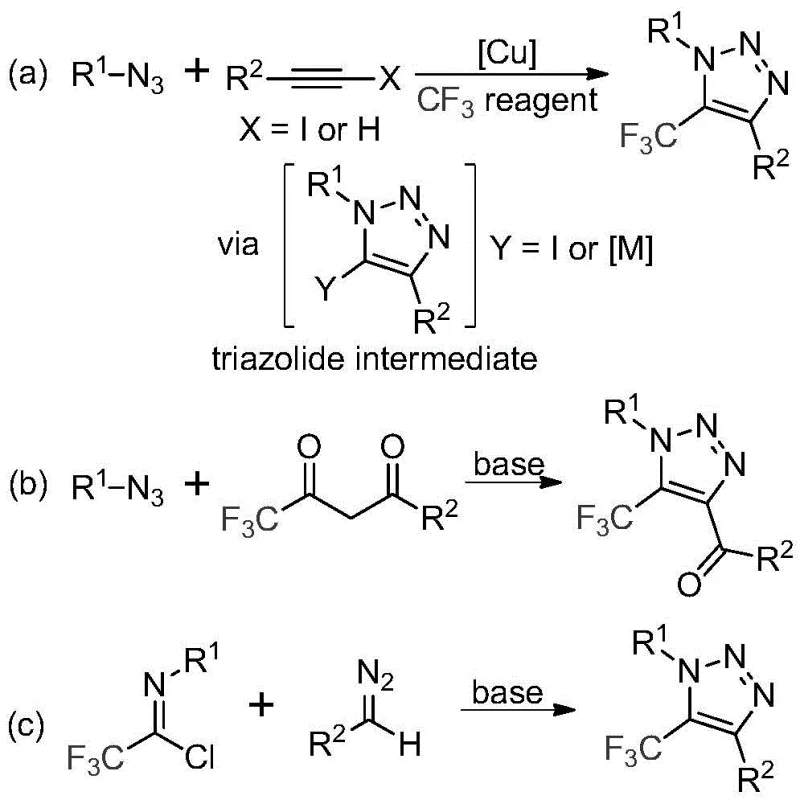
Historically, the construction of trifluoromethyl-substituted 1,2,3-triazoles has relied heavily on two primary strategies, both of which present significant safety and operational challenges for industrial scale-up. The first conventional approach involves copper-catalyzed [3+2] cycloaddition reactions between alkynes and organic azides to form triazole metal complexes, followed by reaction with trifluoromethyl reagents. The second method utilizes organocatalytic 1,3-dipolar cycloaddition between azides and trifluoromethyl ketones. The critical bottleneck in both legacy technologies is the mandatory use of organic azides. Azides are notoriously unstable, toxic, and potentially explosive, posing severe safety risks during storage, handling, and especially during large-scale manufacturing. Furthermore, the reliance on transition metal catalysts like copper introduces the risk of heavy metal contamination in the final product, necessitating expensive and time-consuming purification steps to meet stringent regulatory standards for API manufacturing.
The Novel Approach
In stark contrast to these hazardous legacy routes, the methodology described in Patent CN113121462B offers a paradigm shift by employing a base-promoted reaction between readily available diazo compounds and trifluoroethylimidoyl chloride. This innovative strategy completely bypasses the need for toxic azides, explosive reagents, or expensive transition metal catalysts. By utilizing cheap and commercially accessible starting materials, this process not only enhances operational safety but also drastically simplifies the supply chain logistics. The reaction proceeds efficiently under mild thermal conditions, typically around 60°C, using common organic solvents like acetonitrile. This transition from hazardous azide chemistry to a benign base-promoted cyclization represents a major leap forward in green chemistry principles, offering a sustainable pathway for cost reduction in API manufacturing while maintaining high reaction efficiency and substrate tolerance.
Mechanistic Insights into Base-Promoted Cyclization
The core of this technological advancement lies in its elegant mechanistic pathway, which avoids the complexities of metal coordination chemistry. The reaction initiates with the interaction between the trifluoroethylimidoyl chloride (Structure II) and the diazo compound (Structure III) in the presence of a base, specifically cesium carbonate (Cs2CO3). The base acts as a promoter, facilitating a nucleophilic attack that leads to the formation of a carbon-carbon bond through an intermolecular addition-elimination process. This initial step generates a key intermediate that subsequently undergoes an intramolecular 5-endo-dig cyclization. This cyclization event is the decisive step that closes the five-membered triazole ring, yielding the final 5-trifluoromethyl substituted 1,2,3-triazole product (Structure I). The beauty of this mechanism is its atom economy and the avoidance of side reactions typically associated with radical pathways or metal-mediated processes.
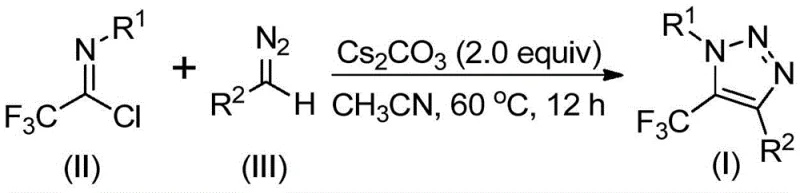
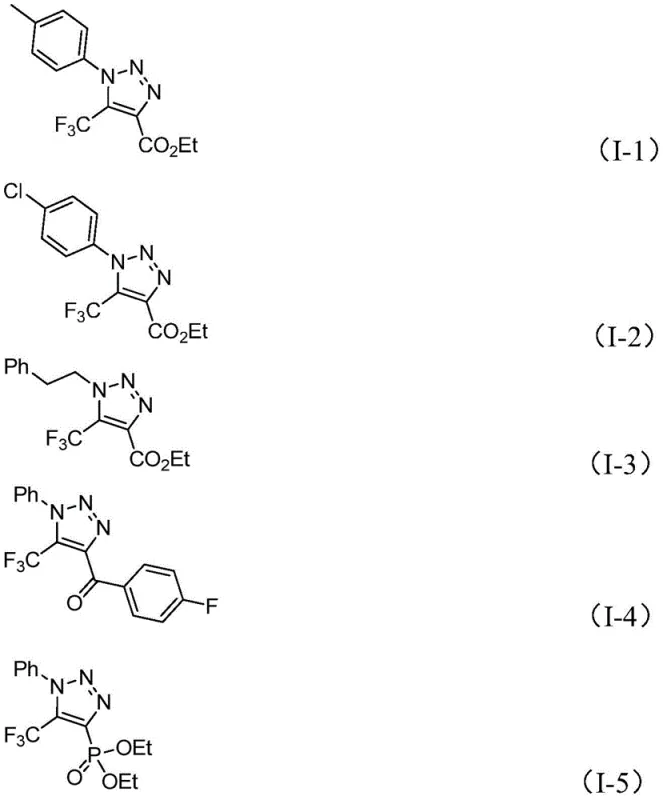
From a quality control perspective, this mechanism offers superior impurity profiles. Because the reaction does not involve transition metals, there is no risk of metal leaching or the formation of metal-organic impurities that are difficult to remove. The use of cesium carbonate, a mild inorganic base, ensures that sensitive functional groups on the aromatic rings—such as halogens, methoxy groups, or esters—remain intact throughout the process. The patent data indicates a broad substrate scope, successfully tolerating various substituents on both the imidoyl chloride and the diazo components. For instance, electron-withdrawing and electron-donating groups on the phenyl rings do not significantly hinder the reaction, allowing for the synthesis of a diverse library of triazole derivatives. This robustness is essential for medicinal chemists who need to rapidly iterate on lead compounds without being constrained by synthetic incompatibility.
How to Synthesize 5-Trifluoromethyl-1,2,3-Triazoles Efficiently
Implementing this synthesis route in a laboratory or pilot plant setting is straightforward and requires standard chemical engineering equipment. The process begins by charging a reaction vessel with the requisite molar ratios of trifluoroethylimidoyl chloride, the specific diazo compound, and cesium carbonate. Acetonitrile is the preferred solvent due to its ability to dissolve the reactants effectively and promote the reaction kinetics. The mixture is then heated to a moderate temperature range of 50°C to 70°C, with 60°C being the optimal setpoint for balancing reaction rate and energy consumption. After a reaction time of approximately 8 to 16 hours, the conversion is typically complete. The workup procedure is equally simple, involving filtration to remove inorganic salts followed by concentration and purification via standard silica gel column chromatography. Detailed standardized synthesis steps follow below.
- Combine cesium carbonate, trifluoroethylimidoyl chloride, and diazo compound in an organic solvent such as acetonitrile.
- Heat the reaction mixture to 60°C and stir for 12 hours to ensure complete conversion.
- Filter the mixture, concentrate, and purify the crude product via column chromatography to obtain the target triazole.
Commercial Advantages for Procurement and Supply Chain Teams
For procurement managers and supply chain directors, the adoption of this patented methodology translates into tangible strategic advantages beyond mere technical feasibility. The elimination of hazardous azides removes a entire category of regulatory compliance burdens and safety infrastructure costs. Facilities no longer require specialized blast-proof reactors or extensive safety protocols for handling explosive intermediates, which significantly lowers the barrier to entry for manufacturing these valuable intermediates. Furthermore, the reliance on commodity chemicals like cesium carbonate and acetonitrile, rather than specialized trifluoromethylating reagents or noble metal catalysts, creates a more resilient and cost-stable supply chain. This stability is crucial for long-term production planning and mitigates the risk of price volatility associated with rare earth metals or custom-synthesized reagents.
- Cost Reduction in Manufacturing: The economic impact of this process is profound, primarily driven by the removal of expensive catalytic systems and the simplification of downstream processing. Traditional copper-catalyzed routes often require rigorous purification steps, such as scavenging resins or recrystallization, to reduce residual copper levels to parts-per-million (ppm) specifications required by pharmacopeias. By operating under metal-free conditions, this new method inherently produces a cleaner crude product, thereby reducing solvent consumption, waste generation, and processing time. The use of inexpensive starting materials further drives down the Cost of Goods Sold (COGS), making the final triazole intermediates more competitive in the global market.
- Enhanced Supply Chain Reliability: Supply continuity is a top priority for any manufacturing operation. The starting materials for this synthesis, specifically the trifluoroethylimidoyl chlorides and diazo compounds, are derived from widely available aromatic amines and acid chlorides. This ensures a robust upstream supply chain that is less susceptible to disruptions compared to routes relying on niche azide suppliers. Additionally, the mild reaction conditions (60°C) and atmospheric pressure operation mean that the process can be executed in standard glass-lined or stainless steel reactors found in most multipurpose chemical plants, ensuring rapid technology transfer and immediate production capability without capital-intensive retrofitting.
- Scalability and Environmental Compliance: As the industry moves towards greener manufacturing practices, this method aligns perfectly with environmental, social, and governance (ESG) goals. The absence of heavy metals eliminates the generation of hazardous metal-containing waste streams, simplifying wastewater treatment and disposal. The high atom efficiency and the ability to scale the reaction from gram to kilogram scales without loss of yield demonstrate excellent process intensification potential. This scalability ensures that the supply of high-purity pharmaceutical intermediates can be ramped up quickly to meet clinical trial demands or commercial launch volumes, reducing lead time for high-purity intermediates and accelerating time-to-market for new drug candidates.
Frequently Asked Questions (FAQ)
The following questions address common technical and commercial inquiries regarding the implementation of this synthesis technology. These insights are derived directly from the experimental data and beneficial effects reported in the patent documentation, providing a clear picture of what partners can expect when adopting this route for their specific projects.
Q: Does this synthesis method require toxic azide reagents?
A: No, unlike traditional copper-catalyzed methods, this novel route utilizes stable diazo compounds and imidoyl chlorides, completely eliminating the need for hazardous organic azides.
Q: Is this process suitable for large-scale industrial production?
A: Yes, the patent demonstrates that the reaction can be easily scaled to gram levels and beyond. The mild conditions (60°C) and absence of expensive transition metals make it highly viable for commercial scale-up.
Q: What are the purification requirements for the final triazole product?
A: The post-treatment is straightforward, involving filtration and standard silica gel column chromatography, which ensures high purity suitable for pharmaceutical applications without complex downstream processing.
Partnering with NINGBO INNO PHARMCHEM: Your Reliable 5-Trifluoromethyl-1,2,3-Triazole Supplier
At NINGBO INNO PHARMCHEM, we understand that the transition from bench-scale discovery to commercial production requires a partner with deep technical expertise and robust manufacturing capabilities. We possess extensive experience scaling diverse pathways from 100 kgs to 100 MT/annual commercial production, ensuring that your project moves seamlessly from development to market. Our facilities are equipped with state-of-the-art rigorous QC labs capable of verifying stringent purity specifications, ensuring that every batch of 5-trifluoromethyl-1,2,3-triazole intermediate meets the highest international standards. We are committed to delivering consistent quality and reliability, acting as a true extension of your R&D and supply chain teams.
We invite you to explore how this advanced metal-free synthesis can optimize your production costs and enhance your supply chain security. Contact our technical procurement team today to request a Customized Cost-Saving Analysis tailored to your specific volume requirements. We are ready to provide specific COA data and comprehensive route feasibility assessments to support your next breakthrough in pharmaceutical or agrochemical development.