
Advanced Palladium-Catalyzed Synthesis of 2-Trifluoromethyl Imidazoles for Commercial API Manufacturing
Advanced Palladium-Catalyzed Synthesis of 2-Trifluoromethyl Imidazoles for Commercial API Manufacturing
The pharmaceutical and fine chemical industries are constantly seeking robust methodologies to access fluorinated heterocycles, which are critical motifs in modern drug design due to their enhanced metabolic stability and lipophilicity. Patent CN111423381B introduces a groundbreaking preparation method for 2-trifluoromethyl substituted imidazole compounds, addressing the long-standing challenges associated with introducing trifluoromethyl groups into nitrogen-containing heterocycles. This technology leverages a transition metal palladium-catalyzed carbonylation series reaction, utilizing cheap and easily obtained starting materials such as trifluoroethylimidoyl chloride, propargylamine, and diaryl iodonium salts. By operating under remarkably mild conditions at 30°C, this process not only simplifies the operational complexity but also significantly broadens the utility of synthesizing diversified trifluoromethyl-substituted imidazoles, making it a highly attractive route for reliable pharmaceutical intermediate supplier networks aiming to optimize their production pipelines.
The Limitations of Conventional Methods vs. The Novel Approach
The Limitations of Conventional Methods
Historically, the synthesis of nitrogen-containing heterocycles bearing trifluoromethyl functional groups has been fraught with significant technical hurdles that impede efficient commercial scale-up of complex pharmaceutical intermediates. Conventional literature often reports methods relying on direct reaction with specialized trifluoromethyl synthons like trifluorodiazoethane, which can be hazardous, unstable, and difficult to handle on a large industrial scale. Furthermore, many existing protocols require harsh reaction conditions, elevated temperatures, or expensive catalysts that drive up the overall cost of goods. The limited substrate compatibility of older methods often restricts the structural diversity achievable, forcing medicinal chemists to compromise on lead optimization. These factors collectively create bottlenecks in cost reduction in API manufacturing, as the purification processes become more arduous and the yields often suffer when scaling from milligram to kilogram quantities, thereby impacting the reliability of the supply chain for critical drug candidates.
The Novel Approach
In stark contrast to these legacy techniques, the novel approach disclosed in the patent utilizes a sophisticated yet operationally simple palladium-catalyzed multicomponent coupling strategy. This method ingeniously combines trifluoroethylimidoyl chloride, propargylamine, and diaryl iodonium salts in the presence of a palladium catalyst and a carbon monoxide surrogate system generated in situ from formic acid and acetic anhydride. The reaction proceeds efficiently at a mild temperature of 30°C over a period of 16 to 24 hours, eliminating the need for high-pressure carbon monoxide cylinders which pose significant safety risks in plant environments. As illustrated in the general reaction scheme below, this pathway allows for the modular assembly of the imidazole core with high atom economy and exceptional functional group tolerance.

The versatility of this approach is further evidenced by its ability to accommodate a wide range of substituents on both the aryl rings of the imidoyl chloride and the diaryl iodonium salt, enabling the rapid generation of diverse chemical libraries for drug discovery without the need for protecting group strategies.
Mechanistic Insights into Palladium-Catalyzed Carbonylation and Cyclization
For R&D directors focused on process robustness, understanding the mechanistic underpinnings of this transformation is crucial for troubleshooting and optimization. The reaction initiates with the formation of a trifluoroacetamidine intermediate through an intermolecular carbon-nitrogen bond promotion facilitated by the base, sodium bicarbonate. This intermediate subsequently undergoes isomerization, setting the stage for the palladium cycle. The palladium catalyst, likely generated in situ from PdCl2 and PPh3, activates the alkyne moiety of the propargylamine derivative through palladation, forming a key alkenyl palladium intermediate. This species then isomerizes to an alkyl palladium intermediate, which is poised for the critical carbonylation step. The carbon monoxide required for this insertion is safely released from the decomposition of the formic acid/acetic anhydride mixture, avoiding the handling of toxic gas. Following carbonylation, an acyl palladium intermediate is formed, which then undergoes oxidative addition with the diaryl iodonium salt to generate a high-valent tetravalent palladium species.
The final step involves reductive elimination from this tetravalent palladium center, which releases the desired 2-trifluoromethyl-substituted imidazole product and regenerates the active palladium catalyst to continue the cycle. This intricate dance of organometallic steps ensures high reaction efficiency and minimizes the formation of side products, leading to a cleaner impurity profile which is vital for high-purity pharmaceutical intermediate production. The mechanism also explains the broad substrate scope observed in the experimental data, as the palladium cycle is tolerant to various electronic environments on the aromatic rings. For instance, the patent demonstrates successful synthesis of derivatives with electron-donating groups like methyl and tert-butyl, as well as electron-withdrawing groups such as chlorine, bromine, and nitro groups, all yielding the corresponding imidazoles in good to excellent yields ranging from 65% to 97%.
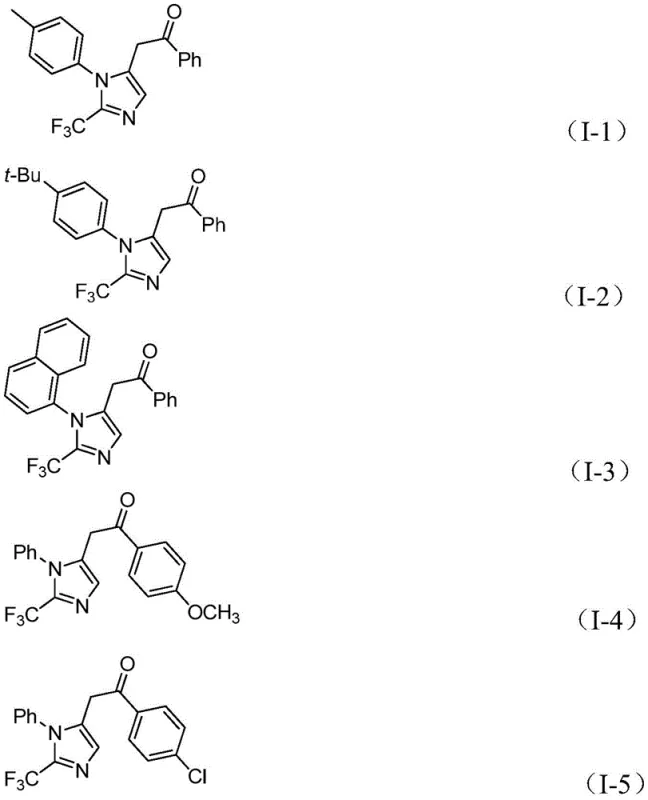
This mechanistic resilience ensures that the process remains viable even when modifying the core structure to meet specific SAR (Structure-Activity Relationship) requirements during drug development.
How to Synthesize 2-Trifluoromethyl Imidazole Efficiently
The practical implementation of this synthesis is designed for ease of execution in both laboratory and pilot plant settings, requiring standard equipment and commercially available reagents. The procedure involves charging a reaction vessel with the palladium catalyst system, the base, and the CO surrogate mixture in a suitable organic solvent, preferably tetrahydrofuran (THF), which has been shown to provide superior conversion rates compared to other solvents. Once the mixture is homogenized, the three key building blocks—trifluoroethylimidoyl chloride, propargylamine, and the specific diaryl iodonium salt—are added. The detailed standardized synthesis steps, including precise molar ratios and workup procedures, are outlined in the guide below to ensure reproducibility and safety compliance.
- Combine palladium chloride, triphenylphosphine, sodium bicarbonate, and a carbon monoxide surrogate system (formic acid/acetic anhydride) in an organic solvent such as THF.
- Add the substrates: trifluoroethylimidoyl chloride, propargylamine, and diaryl iodonium salt to the reaction mixture under stirring.
- Maintain the reaction at 30°C for 16-24 hours, followed by filtration and column chromatography purification to isolate the target 2-trifluoromethyl imidazole.
Commercial Advantages for Procurement and Supply Chain Teams
From a procurement and supply chain perspective, this patented methodology offers transformative benefits that directly address the pain points of sourcing complex fluorinated intermediates. The reliance on cheap and easily obtained starting materials, such as aromatic amines for the imidoyl chloride and simple aryl boronic acids for the iodonium salts, drastically reduces the raw material cost burden. Furthermore, the elimination of hazardous reagents like trifluorodiazoethane and high-pressure carbon monoxide simplifies the safety protocols and infrastructure requirements for manufacturing facilities, leading to substantial cost savings in terms of regulatory compliance and insurance. The mild reaction temperature of 30°C also implies significantly reduced energy consumption compared to traditional high-temperature reflux processes, contributing to a lower carbon footprint and operational expenditure.
- Cost Reduction in Manufacturing: The economic viability of this process is underpinned by the use of inexpensive palladium chloride as the catalyst precursor rather than more exotic and costly palladium complexes. Additionally, the high reaction efficiency and yields reported (often exceeding 90% for optimized substrates) mean that less raw material is wasted, and the throughput per batch is maximized. The simplicity of the post-treatment, which involves basic filtration and standard column chromatography, avoids the need for complex distillation or crystallization steps that often plague heterocycle synthesis, thereby streamlining the production workflow and reducing labor costs associated with purification.
- Enhanced Supply Chain Reliability: By utilizing building blocks that are widely available in the global chemical market, this method mitigates the risk of supply disruptions caused by the scarcity of specialized reagents. The robustness of the reaction conditions ensures consistent quality output, reducing the likelihood of batch failures that can delay project timelines. This reliability is critical for maintaining continuous supply chains for long-term commercial projects, ensuring that downstream API manufacturers receive their intermediates on schedule without the volatility often associated with custom synthetic routes.
- Scalability and Environmental Compliance: The protocol is explicitly designed to be expandable from gram to industrial scales, making it an ideal candidate for technology transfer to large-scale production units. The use of THF as a solvent, while requiring recovery systems, is well-established in the industry, and the absence of heavy metal waste streams (beyond the recoverable palladium) simplifies wastewater treatment. The overall green chemistry profile, characterized by high atom economy and mild conditions, aligns with increasingly stringent environmental regulations, future-proofing the manufacturing process against evolving compliance standards.
Frequently Asked Questions (FAQ)
To assist technical teams in evaluating this technology for their specific applications, we have compiled answers to common inquiries regarding the reaction parameters and scope. These insights are derived directly from the experimental data and technical disclosures within the patent documentation, providing a clear picture of what to expect during process implementation.
Q: What are the key advantages of this palladium-catalyzed method over traditional trifluoromethylation?
A: Unlike traditional methods that often require harsh conditions or specialized trifluoromethylating agents, this protocol utilizes cheap and readily available starting materials like trifluoroethylimidoyl chloride and operates at a mild 30°C, significantly improving safety and scalability.
Q: What is the substrate scope for the aryl groups in this synthesis?
A: The method demonstrates excellent functional group tolerance, accommodating various substituents on both the imidoyl chloride and the diaryl iodonium salt, including electron-donating groups like methyl and methoxy, as well as electron-withdrawing groups like halogens and nitro groups.
Q: Is this process suitable for large-scale industrial production?
A: Yes, the patent explicitly states the method is expandable to the gram level and provides possibilities for industrial large-scale production due to its simple operation, high reaction efficiency, and the use of common organic solvents like THF.
Partnering with NINGBO INNO PHARMCHEM: Your Reliable 2-Trifluoromethyl Imidazole Supplier
At NINGBO INNO PHARMCHEM, we recognize the strategic value of advanced synthetic methodologies like the one described in CN111423381B for accelerating drug discovery and development programs. Our team of expert chemists possesses extensive experience scaling diverse pathways from 100 kgs to 100 MT/annual commercial production, ensuring that the transition from benchtop to plant floor is seamless and efficient. We are committed to delivering high-purity 2-trifluoromethyl imidazole derivatives that meet stringent purity specifications, supported by our rigorous QC labs equipped with state-of-the-art analytical instrumentation to verify every batch.
We invite you to collaborate with us to leverage this cutting-edge technology for your next project. Contact our technical procurement team today to request a Customized Cost-Saving Analysis tailored to your specific volume requirements. We are ready to provide specific COA data and comprehensive route feasibility assessments to demonstrate how our capabilities can enhance your supply chain resilience and drive down your overall manufacturing costs.