
Scalable Synthesis of Novel Axial Chiral Phosphine-Ene Ligands for Advanced Pharmaceutical Manufacturing
Scalable Synthesis of Novel Axial Chiral Phosphine-Ene Ligands for Advanced Pharmaceutical Manufacturing
The landscape of asymmetric catalysis is continually evolving, driven by the relentless demand for high-purity chiral intermediates in the pharmaceutical and fine chemical sectors. A significant breakthrough in this domain is documented in patent CN111718372B, which introduces a novel class of axial chiral phosphine-ene ligands characterized by a robust biaryl skeleton. This technology represents a paradigm shift for R&D directors and process chemists seeking reliable solutions for constructing complex chiral architectures. The core innovation lies in the ligand's ability to merge the distinct coordination properties of alkenes and phosphorus atoms within a single, sterically defined framework. By leveraging a modular synthetic approach starting from simple aryl iodides and bromides, this invention addresses the critical bottlenecks of ligand accessibility and structural diversity. For global supply chain leaders, the implication is profound: a pathway to secure, cost-effective sources of high-performance catalytic materials that can be deployed immediately in GMP environments.
The Limitations of Conventional Methods vs. The Novel Approach
The Limitations of Conventional Methods
Historically, the synthesis of chiral phosphine-ene ligands has been plagued by intricate multi-step sequences that rely on scarce natural chiral pools or resolution processes that inherently waste half of the material. Traditional methods often require harsh reaction conditions, such as cryogenic temperatures or the use of hazardous reagents, which complicate safety protocols and increase operational expenditures. Furthermore, many existing ligands suffer from rigid structural frameworks that limit their tunability; modifying them to suit specific substrate electronic requirements often necessitates a complete redesign of the synthetic route. This lack of flexibility creates significant delays in process development timelines, forcing procurement teams to manage long lead times for custom-synthesized catalysts. The cumulative effect is a supply chain vulnerable to disruptions and a manufacturing cost structure that struggles to remain competitive in the generic drug market.
The Novel Approach
In stark contrast, the methodology disclosed in CN111718372B offers a streamlined, two-step synthetic route that dramatically simplifies access to these valuable chiral tools. The process initiates with a palladium-catalyzed coupling of readily available aryl iodides, aryl bromides, and olefins, utilizing a chiral norbornene derivative as a transient mediator to establish the crucial axial chirality. This is followed by a straightforward deoxygenation step using trichlorosilane to reveal the active phosphine species. This approach eliminates the need for resolving racemic mixtures, thereby theoretically doubling the atom economy compared to classical resolution techniques. The modularity of the starting materials allows for rapid structure-activity relationship (SAR) studies, enabling chemists to fine-tune steric and electronic properties without overhauling the entire process. For manufacturing teams, this translates to a drastic reduction in complexity and a significant enhancement in the reliability of the supply chain for critical catalytic components.
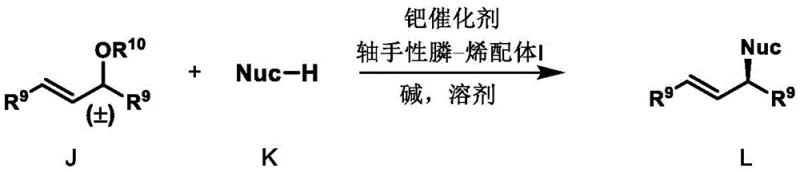
Mechanistic Insights into Palladium-Catalyzed Asymmetric Allylic Substitution
The efficacy of this axial chiral phosphine-ene ligand stems from its unique ability to create a highly differentiated chiral environment around the palladium center during the catalytic cycle. In the context of asymmetric allylic substitution, the ligand coordinates to the metal through both the phosphorus lone pair and the alkene pi-system, forming a rigid P,C-chelate that locks the metal into a specific geometry. This rigidity is essential for transmitting the chiral information from the biaryl axis to the incoming nucleophile with high fidelity. The steric bulk provided by the substituents on the biaryl rings effectively blocks one face of the pi-allyl palladium intermediate, forcing the nucleophile to attack from the less hindered trajectory. This precise spatial control is what enables the achievement of exceptional enantiomeric excess values, often exceeding 90% ee, even with challenging substrates. Understanding this mechanism is vital for R&D teams aiming to optimize reaction parameters for new API intermediates.
Furthermore, the stability of the ligand under reaction conditions is a critical factor often overlooked in early-stage development. Unlike some fragile chiral phosphines that degrade upon exposure to air or moisture, the biaryl backbone of this ligand provides inherent thermal and oxidative stability. This robustness ensures that the catalyst maintains its activity over extended reaction times, reducing the need for excessive catalyst loading. From an impurity control perspective, the clean reaction profile minimizes the formation of side products associated with ligand decomposition, such as phosphine oxides or free phosphines that can comp downstream purification. This results in a cleaner crude reaction mixture, simplifying the workup procedure and reducing the burden on purification units. For quality assurance teams, this predictability is invaluable for maintaining consistent batch-to-batch quality in commercial production.
How to Synthesize Axial Chiral Phosphine-Ene Ligand Efficiently
The practical implementation of this technology involves a well-defined protocol that balances reaction efficiency with ease of execution. The initial coupling step requires careful control of temperature and stoichiometry to ensure high conversion while maintaining the integrity of the chiral axis. Following the formation of the phosphine oxide intermediate, the subsequent reduction step must be managed to prevent over-reduction or side reactions. Detailed standard operating procedures for this synthesis are critical for ensuring reproducibility across different manufacturing sites. The following guide outlines the standardized steps derived from the patent examples to assist process engineers in scaling this technology.
- React aryl iodide, aryl bromide, and olefin with a palladium catalyst and chiral norbornene derivative in acetonitrile at 105 °C for 24 hours to form the phosphine oxide intermediate.
- Dissolve the intermediate in toluene and treat with trichlorosilane and triethylamine at 105 °C for 3 hours to effect deoxygenation.
- Purify the final reaction mixture via column chromatography to isolate the target axial chiral phosphine-ene ligand with high enantiomeric excess.
Commercial Advantages for Procurement and Supply Chain Teams
For procurement managers and supply chain heads, the adoption of this ligand technology offers tangible strategic benefits that extend beyond mere technical performance. The primary advantage lies in the sourcing of raw materials; the reliance on commodity chemicals like aryl iodides, bromides, and styrenes means that the supply chain is not dependent on exotic or single-source precursors. This diversification of raw material sources significantly mitigates the risk of supply disruptions caused by geopolitical issues or vendor capacity constraints. Additionally, the simplified two-step synthesis reduces the number of unit operations required, which directly correlates to lower capital expenditure for equipment and reduced utility consumption. These factors combine to create a more resilient and cost-efficient supply chain for high-value chiral intermediates.
- Cost Reduction in Manufacturing: The elimination of resolution steps and the use of abundant starting materials fundamentally alter the cost structure of ligand production. By avoiding the 50% yield loss inherent in racemic resolution, the process achieves superior atom economy, which directly lowers the cost of goods sold. Furthermore, the mild reaction conditions reduce energy consumption associated with heating and cooling, contributing to overall operational savings. The high turnover numbers achievable with this catalyst system also mean that less precious metal is required per kilogram of product, further driving down costs in API manufacturing.
- Enhanced Supply Chain Reliability: The modular nature of the synthesis allows for flexible production scheduling. Since the key building blocks are widely available from multiple global suppliers, procurement teams can negotiate better terms and avoid single-vendor lock-in. The robustness of the reaction conditions also means that the process is less sensitive to minor variations in raw material quality, reducing the rate of batch failures. This reliability ensures a steady flow of materials to downstream formulation units, preventing costly production stoppages and ensuring on-time delivery to customers.
- Scalability and Environmental Compliance: Scaling this process from gram to ton scale is facilitated by the absence of hazardous reagents and extreme conditions. The use of common solvents like acetonitrile and toluene simplifies solvent recovery and recycling systems, aligning with green chemistry principles. The reduction in waste generation, particularly the avoidance of large amounts of resolving agent byproducts, eases the burden on wastewater treatment facilities. This environmental compatibility not only reduces disposal costs but also ensures compliance with increasingly stringent global environmental regulations, safeguarding the company's social license to operate.
Frequently Asked Questions (FAQ)
The following questions address common technical and commercial inquiries regarding the implementation of this axial chiral ligand technology. These answers are derived directly from the experimental data and technical specifications provided in the patent documentation. They serve to clarify the operational boundaries and potential applications for partners considering this technology for their pipeline.
Q: What are the key advantages of this axial chiral ligand over traditional phosphine ligands?
A: This ligand features a unique biaryl skeleton that combines a weakly coordinating alkene with a strongly coordinating phosphorus atom, offering superior enantioselectivity and structural modularity compared to conventional monodentate or bidentate phosphines.
Q: Is the synthesis process scalable for industrial production?
A: Yes, the method utilizes readily available aryl halides and olefins in a robust two-step sequence with mild conditions, eliminating the need for cryogenic temperatures or ultra-high pressure, which facilitates straightforward scale-up.
Q: What types of nucleophiles are compatible with this catalytic system?
A: The system demonstrates broad substrate tolerance, successfully catalyzing reactions with diverse nucleophiles including indoles, malonates, amines like morpholine, and alcohols such as benzyl alcohol.
Partnering with NINGBO INNO PHARMCHEM: Your Reliable Axial Chiral Phosphine-Ene Ligand Supplier
At NINGBO INNO PHARMCHEM, we recognize that the transition from laboratory discovery to commercial reality requires a partner with deep technical expertise and robust manufacturing capabilities. Our team possesses extensive experience scaling diverse pathways from 100 kgs to 100 MT/annual commercial production, ensuring that your project moves seamlessly from pilot plant to full-scale manufacturing. We adhere to stringent purity specifications and operate rigorous QC labs equipped with state-of-the-art analytical instrumentation to guarantee the quality of every batch. Our commitment to excellence ensures that the complex chiral architectures required for next-generation therapeutics are delivered with the consistency and reliability your business demands.
We invite you to collaborate with us to unlock the full potential of this innovative ligand technology for your specific applications. Our technical procurement team is ready to provide a Customized Cost-Saving Analysis tailored to your production volumes and specific process requirements. We encourage you to contact us today to request specific COA data and route feasibility assessments, allowing us to demonstrate how our expertise can drive efficiency and value in your supply chain.