
Revolutionizing Asymmetric Catalysis with Novel Axial Chiral Phosphine-Ene Ligands for Commercial Scale-Up
Revolutionizing Asymmetric Catalysis with Novel Axial Chiral Phosphine-Ene Ligands for Commercial Scale-Up
The landscape of asymmetric synthesis is constantly evolving, driven by the relentless demand for high-purity chiral intermediates in the pharmaceutical and agrochemical sectors. Patent CN111718372B introduces a groundbreaking class of axial chiral phosphine-ene ligands that address critical bottlenecks in catalytic efficiency and synthetic accessibility. These ligands, characterized by a robust axially chiral biaryl skeleton, represent a significant leap forward in ligand design, merging the distinct electronic properties of phosphines and alkenes into a single, highly effective molecular framework. For R&D directors and process chemists, this innovation offers a powerful tool for constructing complex chiral architectures with exceptional stereocontrol. The structural versatility of these ligands allows for precise tuning of steric and electronic environments around the metal center, which is paramount for achieving high enantiomeric excess in challenging transformations.
Furthermore, the practical implications of this technology extend far beyond the laboratory bench. By enabling reactions under mild conditions with high yields, this patent lays the foundation for more sustainable and economically viable manufacturing processes. The ability to access these sophisticated ligands through a streamlined synthetic route means that supply chain vulnerabilities associated with exotic or difficult-to-source catalysts can be significantly mitigated. As we delve deeper into the technical specifics, it becomes clear that this invention is not merely an academic exercise but a commercially viable solution for the production of high-value fine chemicals. The integration of such advanced catalytic systems into existing production lines promises to enhance overall process robustness while reducing the environmental footprint associated with traditional resolution methods.
The Limitations of Conventional Methods vs. The Novel Approach
The Limitations of Conventional Methods
Historically, the development of chiral ligands for transition metal catalysis has been plagued by issues of structural complexity and synthetic inaccessibility. Many established phosphine-ene ligands require multi-step syntheses involving expensive starting materials and rigorous purification protocols, which inherently drives up the cost of goods sold (COGS) for the final active pharmaceutical ingredient. Traditional methods often suffer from limited substrate scope, where slight modifications to the reactant structure can lead to drastic drops in enantioselectivity or catalytic turnover. Additionally, the reliance on precious metals without efficient ligand recovery systems poses both economic and environmental challenges. For procurement managers, these factors translate into volatile pricing and potential supply disruptions. The inability to easily modify the ligand structure to suit specific reaction requirements further restricts the utility of conventional systems, forcing process developers to settle for suboptimal conditions that compromise yield and purity.
The Novel Approach
In stark contrast, the methodology disclosed in CN111718372B offers a modular and highly efficient pathway to access these valuable chiral tools. The novel approach utilizes a two-step reaction sequence starting from simple, commercially available aryl iodides, aryl bromides, and olefins. This strategy drastically simplifies the entry barrier for producing high-performance ligands. The first step involves a palladium-catalyzed coupling that constructs the axially chiral biaryl core with high fidelity, leveraging a chiral norbornene derivative to induce asymmetry. The subsequent reduction step converts the phosphine oxide intermediate into the active phosphine ligand using trichlorosilane, a reagent that is both effective and manageable on scale. This streamlined process not only reduces the number of unit operations but also enhances the overall atom economy of the ligand synthesis itself.
Moreover, the structural modularity of this new class of ligands allows for rapid optimization. By simply varying the substituents on the aryl rings or the alkene component, chemists can fine-tune the ligand's properties to match specific catalytic demands without redesigning the entire synthetic route. This flexibility is a game-changer for process development teams who need to adapt quickly to new drug candidates. The use of readily available raw materials ensures a stable supply chain, reducing the risk of bottlenecks that often accompany specialized reagents. Consequently, this novel approach transforms the ligand from a scarce, high-cost commodity into an accessible, tunable component of the synthesis, aligning perfectly with the goals of cost reduction in pharmaceutical intermediate manufacturing.
Mechanistic Insights into Palladium-Catalyzed Asymmetric Allylic Substitution
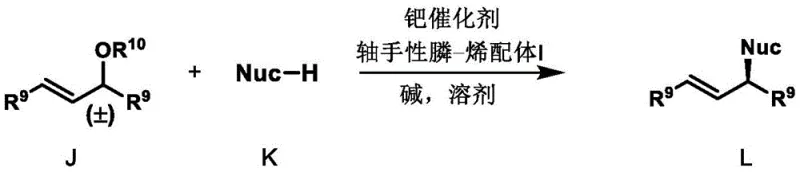
The efficacy of the axial chiral phosphine-ene ligand lies in its unique ability to coordinate with palladium centers through both the phosphorus atom and the alkene moiety. This bidentate coordination mode creates a rigid and well-defined chiral pocket around the metal, which is essential for discriminating between enantiotopic faces of the substrate during the catalytic cycle. In the context of asymmetric allylic substitution, the ligand facilitates the formation of a pi-allyl palladium complex that is highly susceptible to nucleophilic attack. The steric bulk provided by the biaryl backbone, combined with the electronic influence of the phosphine group, directs the nucleophile to approach from a specific trajectory, thereby ensuring high enantioselectivity. This dual-coordination mechanism mimics the efficiency of natural enzymes, providing a synthetic equivalent that operates with remarkable precision under mild conditions.
From an impurity control perspective, the robustness of this catalytic system is equally impressive. The high turnover numbers observed in the patent examples suggest that the catalyst remains active for extended periods, minimizing the accumulation of palladium black or other deactivated species that can contaminate the product stream. Furthermore, the mild reaction conditions, often proceeding at room temperature in solvents like dichloromethane, reduce the likelihood of thermal degradation or side reactions such as polymerization of the allylic substrate. For quality assurance teams, this translates to a cleaner crude reaction profile, which simplifies downstream purification and reduces solvent consumption. The ability to achieve excellent enantiomeric excess (up to 99% ee in ligand synthesis and high ee in applications) directly impacts the regulatory filing strategy, as it minimizes the burden of chiral impurity qualification.
How to Synthesize Axial Chiral Phosphine-Ene Ligand Efficiently
The synthesis of these high-value ligands is designed for operational simplicity and scalability, making it an ideal candidate for technology transfer from lab to plant. The process begins with the assembly of the chiral backbone using a palladium-catalyzed reaction that integrates three distinct components: an aryl iodide, a phosphine-containing aryl bromide, and a terminal alkene. This convergent strategy maximizes efficiency by building complexity in a single pot. Following the initial coupling, the resulting phosphine oxide intermediate is subjected to a reduction protocol using trichlorosilane and a base such as triethylamine. This step is critical for activating the ligand, converting the stable oxide into the reactive phosphine form required for catalysis. Detailed standardized synthesis steps see the guide below.
- React aryl iodide, aryl bromide-phosphine oxide, and alkene with Pd catalyst and chiral norbornene derivative at 105 °C.
- Purify the intermediate phosphine oxide compound H via column chromatography.
- Reduce the phosphine oxide to the final phosphine ligand I using trichlorosilane and triethylamine in toluene.
Commercial Advantages for Procurement and Supply Chain Teams
For stakeholders focused on the bottom line and supply continuity, the adoption of this ligand technology offers compelling strategic advantages. The primary driver of value is the significant simplification of the supply chain for the ligand itself. By relying on commodity chemicals like aryl halides and styrenes, manufacturers can avoid the long lead times and price volatility associated with bespoke chiral pool starting materials. This shift towards petrochemical-derived feedstocks ensures a more predictable cost structure and enhances supply security. Additionally, the high efficiency of the catalytic system means that lower catalyst loadings may be feasible in optimized processes, further driving down the cost per kilogram of the final product. The elimination of complex resolution steps in the ligand synthesis also contributes to substantial cost savings by reducing waste generation and processing time.
- Cost Reduction in Manufacturing: The streamlined two-step synthesis of the ligand eliminates the need for expensive chiral auxiliaries or resolution agents typically required for similar structures. This reduction in synthetic complexity directly lowers the manufacturing cost of the catalyst, which can be passed down as savings in the cost of the API intermediate. Furthermore, the high catalytic activity allows for potentially lower metal loading, reducing the consumption of expensive palladium salts. The use of common solvents like acetonitrile and toluene, rather than specialized fluorinated or chlorinated solvents, also contributes to a more favorable economic profile by minimizing solvent procurement and disposal costs.
- Enhanced Supply Chain Reliability: The reliance on widely available aryl iodides and bromides ensures that raw material sourcing is not a bottleneck. Unlike natural product-derived ligands that are subject to agricultural variability or geopolitical constraints, these synthetic ligands can be produced consistently year-round. The modular nature of the synthesis allows for quick adaptation if a specific starting material becomes scarce, as alternative substituents can be incorporated without altering the core process. This flexibility provides procurement managers with a robust contingency plan, ensuring continuous production even in fluctuating market conditions.
- Scalability and Environmental Compliance: The reaction conditions described, such as heating at 105 °C in acetonitrile, are well within the operating parameters of standard glass-lined or stainless steel reactors, facilitating easy scale-up from grams to tons. The absence of cryogenic conditions or high-pressure hydrogenation steps simplifies the engineering requirements and improves safety profiles. Moreover, the high selectivity of the reaction reduces the formation of byproducts, leading to less hazardous waste and lower environmental compliance costs. This alignment with green chemistry principles makes the process attractive for companies aiming to improve their sustainability metrics.
Frequently Asked Questions (FAQ)
The following questions address common technical and commercial inquiries regarding the implementation of this axial chiral phosphine-ene ligand technology. These insights are derived directly from the experimental data and claims within the patent documentation, providing a reliable basis for decision-making. Understanding the scope and limitations of the catalyst is essential for successful process integration. The answers below highlight the versatility of the system across different nucleophiles and its potential for broad application in fine chemical synthesis.
Q: What are the primary advantages of this axial chiral ligand over traditional diene ligands?
A: This ligand combines the weak coordination of a carbon-carbon double bond with the strong coordination of a phosphorus atom, offering unique reactivity and superior enantioselectivity compared to single-mode ligands.
Q: Is the synthesis of this ligand scalable for industrial production?
A: Yes, the synthesis utilizes readily available aryl halides and simple olefins in a modular two-step process, avoiding complex multi-step sequences typical of other chiral ligands.
Q: What types of nucleophiles are compatible with this catalytic system?
A: The system demonstrates broad substrate scope, successfully catalyzing reactions with indoles, malonates, amines, and alcohols under mild conditions.
Partnering with NINGBO INNO PHARMCHEM: Your Reliable Axial Chiral Phosphine-Ene Ligand Supplier
At NINGBO INNO PHARMCHEM, we recognize the transformative potential of advanced catalytic technologies like the axial chiral phosphine-ene ligand described in CN111718372B. As a leading CDMO partner, we possess the technical expertise and infrastructure to bring such sophisticated chemistries from concept to commercial reality. Our team has extensive experience scaling diverse pathways from 100 kgs to 100 MT/annual commercial production, ensuring that your project transitions smoothly from pilot plant to full-scale manufacturing. We maintain stringent purity specifications and operate rigorous QC labs to guarantee that every batch of ligand or intermediate meets the highest industry standards, providing you with the confidence needed for regulatory submissions.
We invite you to collaborate with us to leverage this cutting-edge technology for your next drug development program. Our technical procurement team is ready to provide a Customized Cost-Saving Analysis tailored to your specific synthesis route, demonstrating how this ligand can optimize your process economics. Contact us today to request specific COA data and route feasibility assessments, and let us help you secure a competitive advantage in the global market through superior chiral synthesis solutions.