
Advanced Synthetic Route for Oseltamivir Phosphate Intermediates via Copper-Catalyzed Asymmetric Addition
The global demand for antiviral medications, particularly oseltamivir phosphate, has necessitated the development of robust, scalable, and cost-effective synthetic pathways that do not rely on volatile biological sources. Patent CN103402973A introduces a groundbreaking chemical synthesis strategy for producing key intermediates leading to oseltamivir phosphate, effectively bypassing the traditional dependency on shikimic acid extracted from star anise. This intellectual property outlines a sophisticated multi-step sequence initiated by a copper-catalyzed asymmetric three-component coupling reaction, which establishes the critical chiral center early in the synthesis. By shifting from extraction-based sourcing to total chemical synthesis, this technology addresses significant supply chain vulnerabilities associated with agricultural raw materials while simultaneously improving the safety profile by eliminating the use of highly toxic thiol reagents found in earlier synthetic attempts. The methodology represents a paradigm shift in antiviral intermediate manufacturing, offering a reliable alternative for pharmaceutical producers seeking to secure their supply lines against seasonal and geopolitical disruptions.
The Limitations of Conventional Methods vs. The Novel Approach
The Limitations of Conventional Methods
Historically, the industrial production of oseltamivir phosphate has been heavily constrained by its reliance on shikimic acid as the primary starting material, which is predominantly sourced through the extraction of star anise fruit or via complex fermentation processes using genetically modified E. coli. These biological sourcing methods introduce inherent instability into the supply chain, as crop yields are susceptible to weather patterns, pests, and seasonal availability, leading to significant price volatility and potential shortages during pandemic surges. Furthermore, alternative chemical synthesis routes proposed in prior art often relied on the use of stoichiometric amounts of chiral thiols to induce stereoselectivity, which presents severe occupational health and safety hazards due to the high toxicity and unpleasant odor of sulfur-containing compounds. Additionally, many of these older chemical routes produced racemic mixtures that required cumbersome and yield-limiting resolution steps to isolate the biologically active enantiomer, thereby increasing waste generation and overall production costs significantly.
The Novel Approach
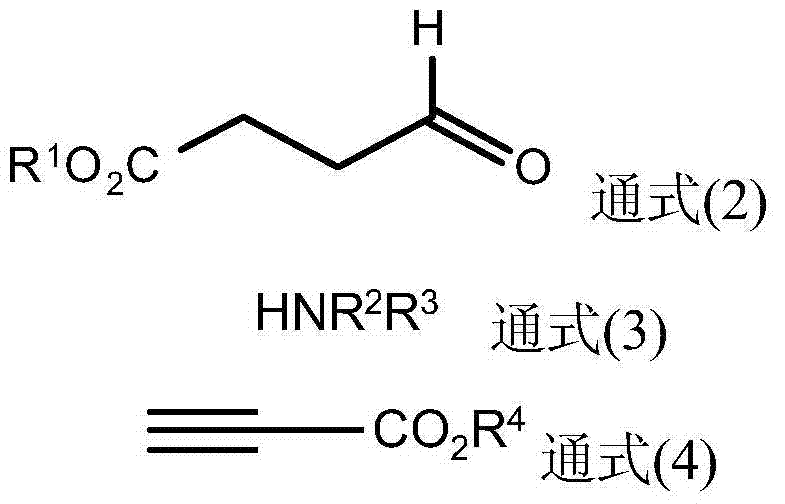
The innovative methodology disclosed in the patent data circumvents these historical bottlenecks by employing a catalytic asymmetric synthesis that constructs the carbon framework from simple, commercially available building blocks such as aldehydes, amines, and alkynoates. This approach utilizes a chiral copper(I) catalyst system to directly install the necessary stereochemistry during the initial bond-forming event, thereby avoiding the need for toxic thiol auxiliaries and eliminating the inefficiencies associated with resolving racemic mixtures later in the sequence. The process flows through a series of highly controlled transformations, including a selective semi-reduction of an alkyne to a cis-alkene and a subsequent intramolecular cyclization, which efficiently builds the cyclohexene core characteristic of the oseltamivir structure. By integrating these steps into a coherent linear sequence, the novel approach not only enhances the overall atom economy but also simplifies the purification protocols, making it exceptionally well-suited for high-volume manufacturing environments where operational simplicity and safety are paramount.
Mechanistic Insights into Cu-Catalyzed Asymmetric Addition and Cyclization
The cornerstone of this synthetic strategy is the initial enantioselective three-component reaction, which leverages a copper(I) bromide catalyst coordinated with a chiral pyridine-bis(oxazoline) ligand, commonly known as a Pybox ligand. In this mechanistic pathway, the copper center activates the alkynoate component, facilitating a nucleophilic attack on the in situ generated iminium ion formed from the condensation of the aldehyde and amine substrates. The steric bulk and electronic properties of the chiral Pybox ligand create a defined coordination sphere around the metal center, forcing the incoming nucleophile to approach from a specific face of the planar iminium intermediate, thus dictating the absolute configuration of the newly formed stereocenter with high fidelity. This catalytic cycle is remarkably efficient, operating under mild conditions with low catalyst loading, which minimizes the residual metal content in the final product and reduces the burden on downstream purification processes. The precision of this asymmetric induction is critical, as it sets the stereochemical trajectory for all subsequent transformations, ensuring that the final API possesses the requisite optical purity without the need for corrective resolution steps.
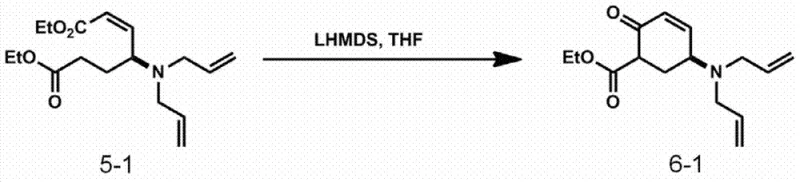
Following the establishment of the chiral backbone, the synthesis proceeds through a Dieckmann cyclization, a pivotal ring-closing step that constructs the six-membered carbocycle essential for the oseltamivir scaffold. This transformation is mediated by a strong, non-nucleophilic base such as lithium hexamethyldisilazide (LHMDS), which selectively deprotonates the alpha-position of one ester group to generate a reactive enolate species. This enolate then undergoes an intramolecular nucleophilic acyl substitution attacking the carbonyl carbon of the second ester moiety within the same molecule, resulting in the formation of a beta-keto ester ring system. The choice of LHMDS is mechanistically significant because its bulky silyl groups prevent unwanted side reactions such as intermolecular condensation or polymerization, which could occur with smaller, more aggressive bases like sodium hydride. This controlled cyclization not only forms the core ring structure but also positions the functional groups correctly for the subsequent reduction and elimination steps that finalize the intermediate structure, demonstrating a high level of chemoselectivity and regiocontrol throughout the synthetic sequence.
How to Synthesize Oseltamivir Key Intermediate Efficiently
The execution of this synthetic route requires precise control over reaction parameters to maximize yield and stereoselectivity, beginning with the rigorous exclusion of moisture and oxygen during the copper-catalyzed coupling phase to maintain catalyst activity. Operators must carefully monitor the stoichiometry of the three components to prevent the accumulation of unreacted starting materials that could complicate downstream purification, while maintaining the reaction temperature within the optimal range of 0°C to 25°C to balance reaction rate and enantioselectivity. Following the isolation of the propargyl amine intermediate, the subsequent reduction and cyclization steps demand strict adherence to specified reagent grades and addition rates, particularly when handling sensitive reagents like LHMDS which can degrade upon exposure to atmospheric moisture. The detailed standardized synthesis procedures, including specific workup protocols and purification criteria necessary to achieve pharmaceutical-grade quality, are outlined in the comprehensive technical guide below.
- Perform a copper-catalyzed asymmetric three-component reaction between an aldehyde, an amine, and an alkyne ester to form the chiral propargyl amine intermediate.
- Execute a palladium-catalyzed semi-reduction of the alkyne moiety to a cis-alkene using a siloxane reducing agent.
- Conduct an intramolecular Dieckmann cyclization using LHMDS to close the cyclohexenone ring structure essential for the final API.
Commercial Advantages for Procurement and Supply Chain Teams
For procurement managers and supply chain directors, the adoption of this synthetic technology offers profound strategic advantages by decoupling production capacity from the limitations of agricultural supply chains. The ability to synthesize key intermediates from basic petrochemical-derived feedstocks ensures a consistent and predictable flow of materials, mitigating the risks associated with crop failures or export restrictions on botanical sources that have historically plagued the oseltamivir market. Furthermore, the elimination of hazardous thiol reagents significantly reduces the environmental compliance burden and waste disposal costs, aligning manufacturing operations with increasingly stringent global sustainability standards and green chemistry principles. This process intensification allows for a more streamlined production footprint, potentially reducing the number of unit operations required and lowering the overall capital expenditure needed for facility upgrades, thereby enhancing the long-term economic viability of the manufacturing asset.
- Cost Reduction in Manufacturing: The transition to a fully chemical synthesis route eliminates the premium pricing associated with purified shikimic acid, which is often subject to speculative market forces and limited supplier competition. By utilizing commodity chemicals as starting materials, manufacturers can achieve substantial raw material cost savings, while the high efficiency of the catalytic asymmetric step reduces the consumption of expensive chiral auxiliaries or resolving agents. Additionally, the improved atom economy and reduced waste generation lower the operational expenses related to solvent recovery and hazardous waste treatment, contributing to a significantly leaner cost structure for the final active pharmaceutical ingredient.
- Enhanced Supply Chain Reliability: Diversifying the source of oseltamivir precursors from biological extraction to chemical synthesis creates a more resilient supply network capable of responding rapidly to sudden spikes in global demand during flu seasons or pandemics. Chemical manufacturing facilities can be scaled up or ramped down much more flexibly than agricultural operations, allowing for just-in-time production strategies that minimize inventory holding costs and reduce the risk of stockouts. This reliability is crucial for maintaining continuous drug availability, ensuring that public health initiatives are not compromised by logistical bottlenecks in the upstream supply of critical intermediates.
- Scalability and Environmental Compliance: The reaction conditions described in the patent utilize standard industrial solvents and reagents that are readily available in bulk quantities, facilitating seamless technology transfer from laboratory scale to multi-ton commercial production. The absence of highly toxic sulfur compounds simplifies the safety protocols required for plant operation, reducing the need for specialized containment equipment and lowering the barrier for contract manufacturing organizations to adopt the process. Moreover, the cleaner reaction profile results in fewer by-products, easing the load on wastewater treatment systems and supporting corporate sustainability goals by minimizing the environmental impact of pharmaceutical manufacturing activities.
Frequently Asked Questions (FAQ)
The following questions address common technical and commercial inquiries regarding the implementation of this advanced synthetic route for oseltamivir intermediates. These responses are derived directly from the experimental data and technical specifications provided in the patent documentation, offering clarity on the feasibility and benefits of adopting this technology for large-scale production. Understanding these details is essential for stakeholders evaluating the potential integration of this process into their existing manufacturing portfolios to optimize efficiency and product quality.
Q: Why is this synthetic route preferred over traditional shikimic acid extraction?
A: Traditional methods rely on star anise extraction or fermentation, which are subject to seasonal fluctuations and supply bottlenecks. This chemical synthesis route uses readily available industrial starting materials, ensuring consistent supply chain reliability and independence from agricultural variables.
Q: How does the process ensure high optical purity without toxic thiols?
A: The process utilizes a chiral copper(I) catalyst complexed with a Pybox ligand to induce asymmetry during the initial bond formation. This eliminates the need for stoichiometric amounts of highly toxic thiol compounds often used in resolution steps, resulting in a safer and more environmentally compliant manufacturing profile.
Q: Is this methodology suitable for large-scale commercial production?
A: Yes, the reaction conditions described, such as the use of standard solvents like toluene and THF, along with robust catalysts like Pd2(dba)3 and LHMDS, are well-suited for scale-up. The avoidance of cryogenic temperatures and hazardous reagents further facilitates safe commercial manufacturing.
Partnering with NINGBO INNO PHARMCHEM: Your Reliable Oseltamivir Intermediate Supplier
NINGBO INNO PHARMCHEM stands at the forefront of pharmaceutical intermediate manufacturing, possessing the technical expertise and infrastructure required to translate complex synthetic pathways like the one described in CN103402973A into commercial reality. Our team has extensive experience scaling diverse pathways from 100 kgs to 100 MT/annual commercial production, ensuring that the transition from pilot plant to full-scale manufacturing is executed with precision and regulatory compliance. We maintain stringent purity specifications and operate rigorous QC labs equipped with state-of-the-art analytical instrumentation to guarantee that every batch of oseltamivir intermediate meets the exacting standards required by global regulatory authorities, providing our partners with unwavering confidence in product quality and consistency.
We invite procurement leaders and R&D directors to engage with our technical procurement team to discuss how this innovative synthesis route can be tailored to your specific supply chain requirements. By requesting a Customized Cost-Saving Analysis, you can gain detailed insights into the potential economic benefits of switching to this shikimic acid-free process for your specific volume needs. We encourage you to contact us today to obtain specific COA data and route feasibility assessments, allowing us to demonstrate how our capabilities can drive value and security in your antiviral drug supply chain.
Engineering Bottleneck?
Can't scale up this synthesis? Upload your target structure or CAS, and our CDMO team will evaluate the industrial feasibility within 24 hours. Request Evaluation →