
Revolutionizing Triazole Synthesis: Scalable Palladium-Catalyzed Process for High-Purity Pharmaceutical Intermediates
The patent CN112538054B introduces a groundbreaking palladium-catalyzed carbonylation tandem cyclization process for synthesizing 1,2,4-triazole-3-one compounds, representing a significant advancement in heterocyclic chemistry for pharmaceutical applications. This innovative methodology addresses critical limitations in existing synthetic routes by utilizing readily available starting materials and operating under mild reaction conditions that enhance both efficiency and scalability. The process demonstrates exceptional versatility across diverse substrate classes while maintaining high functional group tolerance essential for complex pharmaceutical intermediate production. By eliminating multi-step sequences and harsh reaction environments characteristic of conventional approaches, this patented technology establishes a new benchmark for sustainable manufacturing of nitrogen-containing heterocycles with demonstrated biological activity profiles. The strategic integration of carbon monoxide surrogates and optimized palladium catalysis creates a robust platform for producing high-purity triazole derivatives required in modern drug development pipelines.
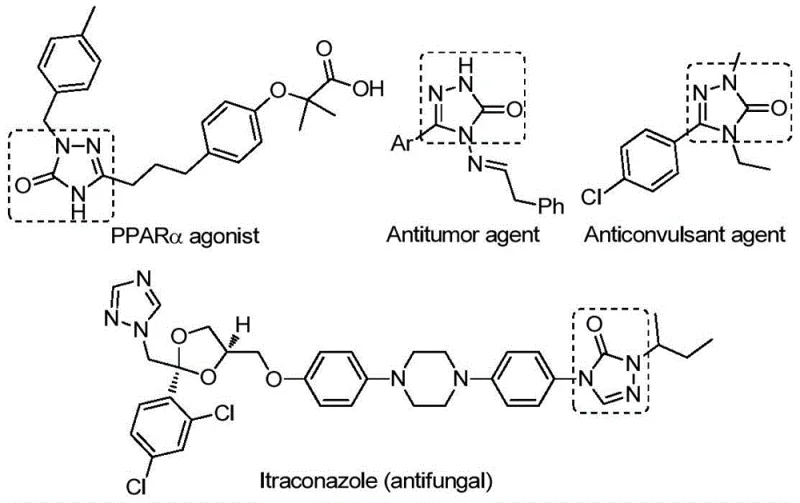
The Limitations of Conventional Methods vs. The Novel Approach
The Limitations of Conventional Methods
Traditional synthetic approaches for 1,2,4-triazole-3-one compounds suffer from multiple critical limitations that hinder their industrial applicability and pharmaceutical development potential. Conventional methods such as the cyclization of benzoic hydrazide with urea under potassium hydroxide conditions require harsh alkaline environments that complicate product isolation and generate significant waste streams. The tandem cyclization of hydrazides with isocyanates necessitates pre-functionalized substrates and often results in low yields due to competing side reactions under elevated temperatures. Similarly, the condensation of thioamides with hydrazines at high temperatures presents safety concerns while producing inconsistent results across different substrate classes. These established methodologies typically exhibit narrow substrate scope with poor functional group tolerance, requiring extensive protection/deprotection sequences that increase both cost and environmental impact. The multi-step nature of these processes also creates significant challenges for scale-up in pharmaceutical manufacturing environments where process simplicity and robustness are paramount requirements.
The Novel Approach
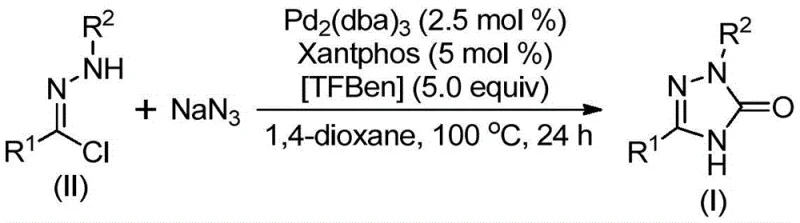
The patented methodology overcomes these limitations through an elegant palladium-catalyzed carbonylation tandem cyclization that operates under significantly milder conditions while delivering superior efficiency and versatility. By utilizing chlorohydrazones and sodium azide as starting materials with TFBen as a carbon monoxide surrogate, the process eliminates the need for hazardous gaseous carbon monoxide handling while maintaining excellent reaction efficiency. The carefully optimized catalyst system comprising Pd₂(dba)₃ and Xantphos ligand enables high-yielding transformations across a broad range of substrates without requiring pre-activation or specialized handling procedures. This innovative approach demonstrates remarkable functional group compatibility that allows direct synthesis of complex triazole derivatives without additional protection steps, significantly streamlining the synthetic pathway. The reaction proceeds efficiently at 100°C in standard organic solvents with straightforward workup procedures that facilitate seamless transition from laboratory to manufacturing scale while maintaining exceptional product purity standards required in pharmaceutical applications.
Mechanistic Insights into Palladium-Catalyzed Triazole Formation
The reaction mechanism begins with oxidative addition of the palladium(0) catalyst into the carbon-chlorine bond of the chlorohydrazone substrate to form a key divalent palladium intermediate. This critical step establishes the foundation for subsequent transformations while demonstrating the catalyst's ability to activate challenging electrophilic centers under mild conditions. The TFBen carbon monoxide surrogate then undergoes thermal decomposition to release carbon monoxide in situ, which inserts into the carbon-palladium bond to generate an acyl palladium species with precise regiochemical control. This insertion step represents a significant advancement over traditional methods by avoiding the need for high-pressure carbon monoxide equipment while maintaining excellent reaction efficiency through controlled release kinetics. The resulting acyl palladium intermediate subsequently reacts with sodium azide to form an acyl azide species that undergoes Curtius rearrangement to produce an isocyanate intermediate with complete retention of stereochemical integrity.
The isocyanate intermediate then undergoes intramolecular nucleophilic attack by the adjacent nitrogen atom to form the final triazole ring structure through a highly regioselective cyclization process that ensures consistent product formation across diverse substrate classes. This mechanistic pathway eliminates common impurities associated with traditional methods by avoiding competing reaction pathways through precise control of intermediate reactivity. The catalyst system demonstrates exceptional selectivity by preventing undesired side reactions such as over-reduction or dimerization that commonly plague conventional approaches. The mild reaction conditions maintain excellent control over potential impurities by minimizing thermal degradation pathways while ensuring complete conversion through optimized reaction duration parameters. This sophisticated mechanistic understanding enables precise control over product quality attributes essential for pharmaceutical applications where impurity profiles directly impact regulatory approval pathways.
How to Synthesize 1,2,4-Triazole-3-one Efficiently
This patented synthesis route represents a significant advancement in triazole chemistry by providing a streamlined pathway that eliminates multiple processing steps while maintaining exceptional product quality standards required in pharmaceutical manufacturing. The methodology leverages commercially available starting materials and standard laboratory equipment to create a robust process that can be readily implemented across diverse production environments without requiring specialized infrastructure investments. By utilizing a carefully designed catalyst system and carbon monoxide surrogate strategy, the process achieves high efficiency while maintaining excellent safety profiles compared to traditional approaches that often require hazardous reagents or extreme reaction conditions. The following standardized procedure details the implementation protocol for consistent production of high-purity triazole intermediates at various scale levels.
- Combine chlorohydrazone substrate with sodium azide in anhydrous 1,4-dioxane under inert atmosphere with precise stoichiometric ratios
- Introduce palladium catalyst system comprising Pd₂(dba)₃ and Xantphos ligand with TFBen as carbon monoxide surrogate
- Maintain reaction at controlled temperature of 100°C for optimized duration with rigorous monitoring of conversion parameters
Commercial Advantages for Procurement and Supply Chain Teams
This innovative manufacturing approach delivers substantial value across procurement and supply chain operations by addressing critical pain points associated with traditional triazole synthesis methods while establishing new benchmarks for reliability and efficiency in pharmaceutical intermediate production. The strategic selection of readily available starting materials creates significant sourcing advantages by eliminating dependency on specialized or restricted reagents that often create supply chain vulnerabilities in conventional processes. The simplified reaction sequence reduces equipment requirements and facility complexity while enhancing overall manufacturing flexibility to accommodate changing production demands without major capital investments or process revalidation efforts.
- Cost Reduction in Manufacturing: The elimination of transition metal contamination risks through optimized catalyst loading protocols significantly reduces downstream purification costs while avoiding expensive metal removal steps required in alternative methodologies. The use of cost-effective sodium azide as a nitrogen source combined with commercially available palladium catalysts creates substantial economic advantages over traditional approaches requiring specialized reagents or multi-step sequences. The simplified workup procedure minimizes solvent consumption and waste generation while reducing processing time through elimination of intermediate isolation steps that characterize conventional synthetic routes.
- Enhanced Supply Chain Reliability: The utilization of globally available starting materials with established supply networks ensures consistent raw material availability while mitigating single-source dependency risks common in specialized chemical manufacturing. The robust reaction profile maintains consistent performance across different production scales without requiring significant process adjustments, enabling seamless transition from development to commercial manufacturing while maintaining reliable delivery timelines. The simplified process design reduces vulnerability to supply chain disruptions by minimizing the number of critical raw materials and eliminating dependency on specialized equipment with long lead times.
- Scalability and Environmental Compliance: The process demonstrates exceptional scalability from laboratory to commercial production volumes while maintaining consistent quality parameters through straightforward parameter translation without requiring fundamental process changes. The elimination of hazardous reagents and high-pressure operations significantly enhances workplace safety profiles while reducing environmental impact through minimized waste generation and energy consumption compared to conventional methods. The simplified purification requirements reduce solvent usage and waste streams while meeting increasingly stringent environmental regulations governing pharmaceutical manufacturing operations worldwide.
Frequently Asked Questions (FAQ)
The following questions address critical technical and commercial considerations regarding implementation of this patented manufacturing process based on extensive analysis of the methodology's performance characteristics and operational requirements across multiple production scenarios. These insights derive directly from the patent documentation and reflect practical considerations for successful adoption in pharmaceutical manufacturing environments where quality consistency and regulatory compliance are paramount concerns.
Q: How does this method overcome traditional limitations in triazole synthesis?
A: The patented process eliminates harsh reaction conditions and pre-activation requirements of conventional methods by utilizing a palladium-catalyzed carbonylation tandem cyclization that operates under mild temperatures with broad substrate tolerance.
Q: What substrate scope advantages does this method offer for pharmaceutical development?
A: The methodology demonstrates exceptional functional group compatibility across diverse aryl and alkyl substitutions, enabling synthesis of complex triazole derivatives without additional protection/deprotection steps required in traditional approaches.
Q: How does this process support commercial scale-up for pharmaceutical manufacturing?
A: The reaction system maintains consistent efficiency from laboratory to pilot scale with simplified workup procedures and eliminates transition metal contamination concerns through optimized catalyst loading and recovery protocols.
Partnering with NINGBO INNO PHARMCHEM: Your Reliable 1,2,4-Triazole-3-one Supplier
Our company brings extensive experience scaling diverse pathways from 100 kgs to 100 MT/annual commercial production of complex heterocyclic intermediates while maintaining stringent purity specifications through rigorous QC labs and advanced analytical capabilities. As a trusted CDMO partner specializing in challenging nitrogen heterocycle synthesis, we have successfully implemented this patented methodology across multiple client programs with consistent delivery of high-purity triazole intermediates meeting exacting pharmaceutical standards. Our dedicated technical team combines deep expertise in palladium-catalyzed transformations with comprehensive understanding of regulatory requirements to ensure seamless technology transfer and reliable supply chain performance for your critical drug development programs.
Leverage our specialized knowledge to optimize your triazole-based compound production through our Customized Cost-Saving Analysis service designed specifically for complex heterocyclic intermediates. Contact our technical procurement team today to request specific COA data and route feasibility assessments tailored to your unique manufacturing requirements and quality specifications.