
Revolutionizing Tamiflu Production: Advanced Organocatalytic Synthesis for Commercial Scale-up
Revolutionizing Tamiflu Production: Advanced Organocatalytic Synthesis for Commercial Scale-up
The global demand for effective antiviral medications, particularly Oseltamivir phosphate (commercially known as Tamiflu), has necessitated the continuous evolution of synthetic methodologies to ensure supply security and cost efficiency. Patent CN102127003B introduces a groundbreaking approach to synthesizing key chiral amino compounds that serve as critical intermediates for Tamiflu and a broader class of polysubstituted chiral pyrrolidine amine drugs. This technology leverages asymmetric organocatalysis to construct complex molecular architectures with multiple chiral centers in fewer steps compared to traditional methods. By utilizing chiral diarylprolinol ether catalysts, the invention enables a highly stereoselective Michael-Aldol cascade reaction, transforming simple aldehydes and nitroolefins into sophisticated cyclohexene derivatives. 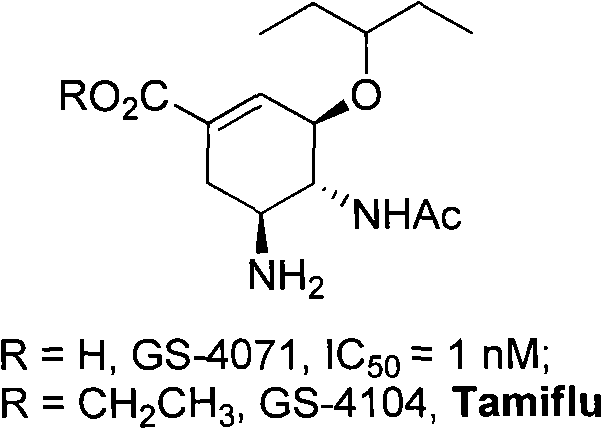 This strategic shift away from natural product extraction towards total synthesis represents a significant milestone for reliable pharmaceutical intermediate supplier networks aiming to stabilize the global antiviral supply chain against agricultural fluctuations.
The Limitations of Conventional Methods vs. The Novel Approach
The Limitations of Conventional Methods
Historically, the industrial production of Oseltamivir has been heavily dependent on Shikimic acid as the primary starting material, a route famously developed by Roche. While effective, this pathway is inherently constrained by the seasonal availability and geographic concentration of Star Anise, the primary natural source of Shikimic acid. 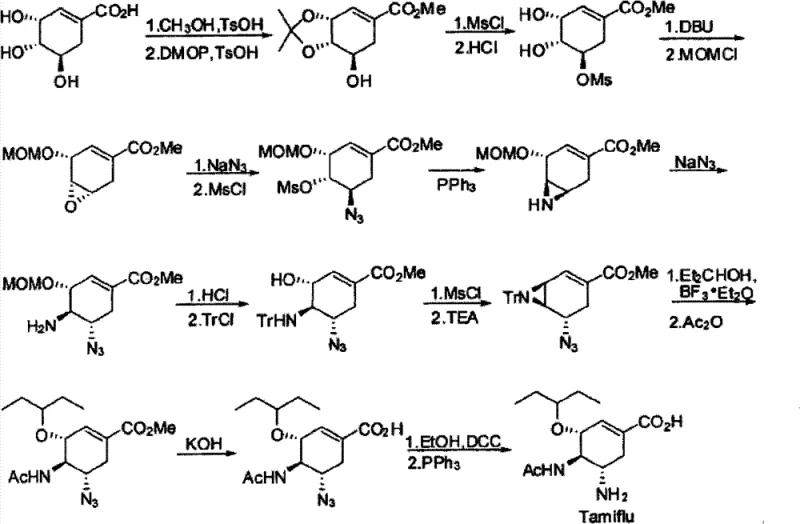 Alternative synthetic routes proposed by academic giants such as Corey, Trost, and Hayashi have attempted to circumvent these bottlenecks, yet many still suffer from lengthy step counts, often exceeding ten steps with moderate overall yields. For instance, the Corey route involves twelve steps with a total yield of only 27%, while the Trost route requires eight steps to achieve a 30% yield. These multi-step sequences often involve harsh reaction conditions, expensive chiral auxiliaries, or transition metal catalysts that require rigorous removal to meet pharmaceutical purity standards. The cumulative effect of these inefficiencies results in elevated production costs and extended lead times, creating vulnerabilities in the supply chain for high-purity pharmaceutical intermediates during pandemic outbreaks.
The Novel Approach
The methodology disclosed in CN102127003B offers a transformative solution by employing a concise organocatalytic strategy that drastically reduces the synthetic burden. The core innovation lies in a one-pot or telescoped sequence where a chiral amine catalyst facilitates the formation of four chiral centers simultaneously through a domino Michael-Michael-Aldol reaction sequence. 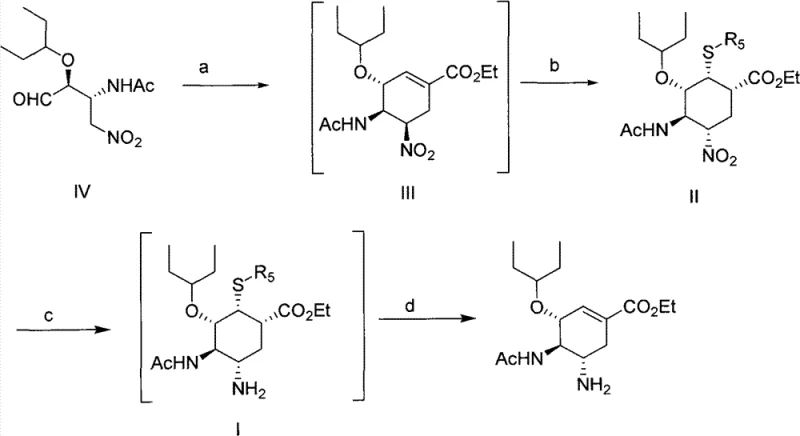 This approach allows for the conversion of readily available aldehydes and nitroolefins into the desired cyclohexene scaffold with exceptional efficiency. Unlike metal-catalyzed processes, this organic catalysis operates under mild conditions, typically ranging from -20°C to 30°C, using benign solvents such as acetonitrile, dichloromethane, or ethanol. The elimination of heavy metals not only simplifies the workup procedure by removing the need for specialized scavenging resins but also aligns with increasingly stringent environmental regulations regarding heavy metal residues in active pharmaceutical ingredients. This streamlined pathway significantly enhances the feasibility of commercial scale-up of complex pharmaceutical intermediates, offering a robust alternative to fermentation-dependent supply chains.
Mechanistic Insights into Organocatalytic Michael-Aldol Cascade
The success of this synthesis hinges on the precise activation of substrates via enamine and iminium ion intermediates generated by the chiral diarylprolinol ether catalyst.  In the initial phase, the catalyst condenses with the aldehyde substrate to form a chiral enamine species, which acts as a potent nucleophile. This activated complex undergoes a highly stereoselective Michael addition to the nitroolefin acceptor, establishing the first two chiral centers with high fidelity. The subsequent intramolecular aldol reaction is then triggered, closing the ring to form the six-membered cyclohexene core. The steric bulk of the silyl protecting group on the catalyst (such as TMS or TBDMS) plays a critical role in shielding one face of the reactive intermediate, thereby enforcing the observed high diastereoselectivity (dr values up to 15:1) and enantioselectivity (ee values up to 99%). This mechanistic elegance ensures that the resulting intermediate possesses the exact stereochemical configuration required for downstream conversion into Oseltamivir, minimizing the formation of unwanted isomers that would otherwise complicate purification.
Furthermore, the impurity profile of this reaction is exceptionally clean due to the high specificity of the organocatalyst. Traditional methods often generate a plethora of side products due to non-selective background reactions or catalyst decomposition. In contrast, the organocatalytic system described here maintains stability throughout the reaction course, typically completing within 1 to 48 hours depending on the substrate reactivity. The use of weak acid additives, such as benzoic acid or acetic acid, further fine-tunes the catalytic cycle by facilitating proton transfer steps without promoting racemization. This control over the reaction environment is paramount for R&D directors focused on purity and杂质谱 (impurity profiles), as it ensures that the crude product already meets high optical purity standards (often >96% ee) before any chromatographic purification. Such inherent selectivity reduces the load on downstream processing units, directly translating to lower operational expenditures and higher throughput in a manufacturing setting.
How to Synthesize Tamiflu Intermediate Efficiently
The practical implementation of this technology involves a series of well-defined chemical transformations that are amenable to standard reactor setups found in most fine chemical facilities. The process begins with the preparation of the key chiral amino compound via the organocatalytic cascade, followed by functional group manipulations including nitro reduction and esterification. The patent provides extensive experimental data demonstrating the robustness of these steps across various substrates, confirming the versatility of the method. For detailed operational parameters, stoichiometry, and specific workup procedures required to replicate this high-efficiency synthesis, please refer to the standardized guide below.
- Perform an asymmetric Michael addition between a nitroolefin and an aldehyde using a chiral diarylprolinol ether catalyst at temperatures between -20°C and 30°C.
- Execute a base-catalyzed intramolecular aldol reaction to form the cyclohexene core structure with high diastereoselectivity.
- Reduce the nitro group using zinc powder and acetic acid, followed by deprotection steps to yield the final chiral amine intermediate.
Commercial Advantages for Procurement and Supply Chain Teams
For procurement managers and supply chain heads, the adoption of this organocatalytic route presents a compelling value proposition centered around risk mitigation and cost optimization. The primary advantage lies in the decoupling of production from agricultural sources; by synthesizing the core scaffold from commodity chemicals like aldehydes and nitroolefins, manufacturers eliminate the volatility associated with crop yields and weather patterns that plague Shikimic acid-based routes. This shift ensures a consistent and predictable supply of high-purity pharmaceutical intermediates, crucial for maintaining inventory levels during high-demand periods. Additionally, the simplified synthetic sequence reduces the number of unit operations required, which directly correlates to lower capital expenditure on equipment and reduced energy consumption per kilogram of product. The absence of expensive transition metal catalysts further drives down raw material costs, offering substantial cost savings in API manufacturing without compromising on quality or regulatory compliance.
- Cost Reduction in Manufacturing: The economic benefits of this process are driven by the elimination of costly chiral pool starting materials and the reduction of synthetic steps. By avoiding the use of precious metal catalysts, the process removes the need for expensive metal scavenging steps and the associated validation testing for residual metals, which is a significant cost driver in API production. Furthermore, the high yields reported in the patent examples (often exceeding 90% for key steps) minimize material waste, improving the overall mass balance and reducing the cost of goods sold. The use of common, inexpensive solvents like ethanol and acetonitrile also contributes to a leaner cost structure compared to routes requiring exotic or highly purified solvents.
- Enhanced Supply Chain Reliability: Supply chain resilience is significantly bolstered by the use of widely available starting materials that are not subject to geopolitical or seasonal constraints. The robustness of the organocatalytic reaction, which tolerates a range of conditions and substrates, allows for flexible manufacturing scheduling and easier scale-up from pilot to commercial plants. This reliability reduces the lead time for high-purity pharmaceutical intermediates, enabling faster response to market demands. Moreover, the simplified purification protocols mean that production bottlenecks related to chromatography or crystallization are minimized, ensuring a smoother flow of materials through the supply chain and reducing the risk of stockouts.
- Scalability and Environmental Compliance: From an environmental and scalability perspective, this green chemistry approach aligns perfectly with modern sustainability goals. The organocatalysts are metal-free, reducing the toxicological burden on wastewater treatment systems and simplifying the disposal of chemical waste. The reaction conditions are mild, often operating at or near room temperature, which lowers the energy footprint of the manufacturing process. This ease of handling and safety profile makes the process highly scalable, allowing for seamless transition from gram-scale laboratory synthesis to multi-ton commercial production. The ability to produce complex chiral molecules with such efficiency supports the long-term viability of the supply chain while meeting increasingly strict environmental regulations.
Frequently Asked Questions (FAQ)
The following questions address common technical and commercial inquiries regarding the implementation of this patented synthesis method. These insights are derived directly from the experimental data and claims within CN102127003B, providing a clear understanding of the technology's capabilities and limitations for potential partners and licensees.
Q: What are the primary advantages of this organocatalytic route over the traditional Shikimic acid method?
A: This method avoids the reliance on seasonal Shikimic acid, utilizes readily available starting materials, and eliminates the need for toxic heavy metal catalysts, significantly simplifying purification and reducing environmental impact.
Q: What level of stereocontrol can be achieved with this synthesis method?
A: The process demonstrates excellent stereocontrol, achieving diastereomeric ratios (dr) up to 15:1 and enantiomeric excess (ee) values exceeding 98% in optimized examples, ensuring high purity for downstream API production.
Q: Is this synthetic route suitable for large-scale industrial manufacturing?
A: Yes, the patent explicitly highlights the simplicity of operation, mild reaction conditions (0°C to room temperature), and the use of common solvents like acetonitrile and ethanol, making it highly scalable for commercial production.
Partnering with NINGBO INNO PHARMCHEM: Your Reliable Tamiflu Intermediate Supplier
At NINGBO INNO PHARMCHEM, we recognize the strategic importance of securing efficient and scalable routes for critical antiviral intermediates. Our team of expert chemists has thoroughly analyzed the technology disclosed in CN102127003B and is fully equipped to translate this innovative organocatalytic methodology into commercial reality. We possess extensive experience scaling diverse pathways from 100 kgs to 100 MT/annual commercial production, ensuring that the transition from laboratory bench to industrial reactor is seamless and efficient. Our state-of-the-art facilities are designed to handle sensitive organocatalytic reactions with precision, maintaining stringent purity specifications and rigorous QC labs to guarantee that every batch meets the highest international standards for pharmaceutical intermediates.
We invite you to collaborate with us to leverage this advanced synthesis technology for your supply chain needs. By partnering with NINGBO INNO PHARMCHEM, you gain access to a Customized Cost-Saving Analysis that quantifies the specific economic benefits of switching to this organocatalytic route for your specific volume requirements. We encourage you to contact our technical procurement team today to request specific COA data and route feasibility assessments tailored to your project timelines. Let us help you secure a stable, cost-effective, and high-quality supply of Tamiflu intermediates that empowers your organization to meet global health challenges with confidence.