
Advanced Palladium-Catalyzed Synthesis of 2-Trifluoromethyl Imidazoles for Commercial API Manufacturing
Advanced Palladium-Catalyzed Synthesis of 2-Trifluoromethyl Imidazoles for Commercial API Manufacturing
The pharmaceutical and fine chemical industries are constantly seeking robust methodologies to construct complex heterocyclic scaffolds, particularly those incorporating fluorine atoms which significantly enhance metabolic stability and bioavailability. Patent CN111423381A introduces a groundbreaking preparation method for 2-trifluoromethyl substituted imidazole compounds, addressing critical bottlenecks in current synthetic routes. This technology leverages a transition metal palladium-catalyzed carbonylation cascade reaction, utilizing readily available starting materials such as trifluoroethylimidoyl chloride, propargylamine, and diaryliodonium salts. Unlike traditional methods that often rely on hazardous diazo compounds or harsh conditions, this novel approach operates under remarkably mild parameters, specifically at 30°C, ensuring safety and scalability for industrial applications. The ability to synthesize these valuable intermediates with high efficiency and broad substrate compatibility positions this patent as a cornerstone for reliable pharmaceutical intermediate supplier networks aiming to optimize their production pipelines.
The Limitations of Conventional Methods vs. The Novel Approach
The Limitations of Conventional Methods
Historically, the synthesis of nitrogen-containing heterocycles bearing trifluoromethyl groups has been fraught with significant challenges regarding safety, cost, and operational complexity. Conventional literature often describes the use of trifluorodiazoethane as a primary synthon, which poses severe safety risks due to its explosive nature and instability, making it unsuitable for large-scale commercial manufacturing. Furthermore, existing protocols frequently require extreme temperatures, strong bases, or expensive specialized reagents that drive up the overall cost of goods sold (COGS). The limited functional group tolerance in older methods often necessitates lengthy protection and deprotection sequences, thereby reducing overall yield and increasing waste generation. These factors collectively create substantial barriers for procurement managers seeking cost reduction in API manufacturing, as the supply chain for such hazardous precursors is often fragile and regulated heavily.
The Novel Approach
In stark contrast, the methodology disclosed in CN111423381A utilizes a safe and stable trifluoroethylimidoyl chloride precursor combined with simple propargylamine and diaryliodonium salts. This strategic shift eliminates the need for dangerous diazo reagents, fundamentally altering the risk profile of the synthesis. The reaction proceeds efficiently at a low temperature of 30°C over a period of 16 to 24 hours, utilizing a cost-effective palladium chloride and triphenylphosphine catalyst system. This mild condition not only preserves sensitive functional groups but also drastically simplifies the engineering requirements for reactor setups, allowing for easier commercial scale-up of complex pharmaceutical intermediates. By employing a carbonylation cascade mechanism, the process constructs the imidazole ring and installs the ketone functionality in a single pot, streamlining the workflow and minimizing unit operations.

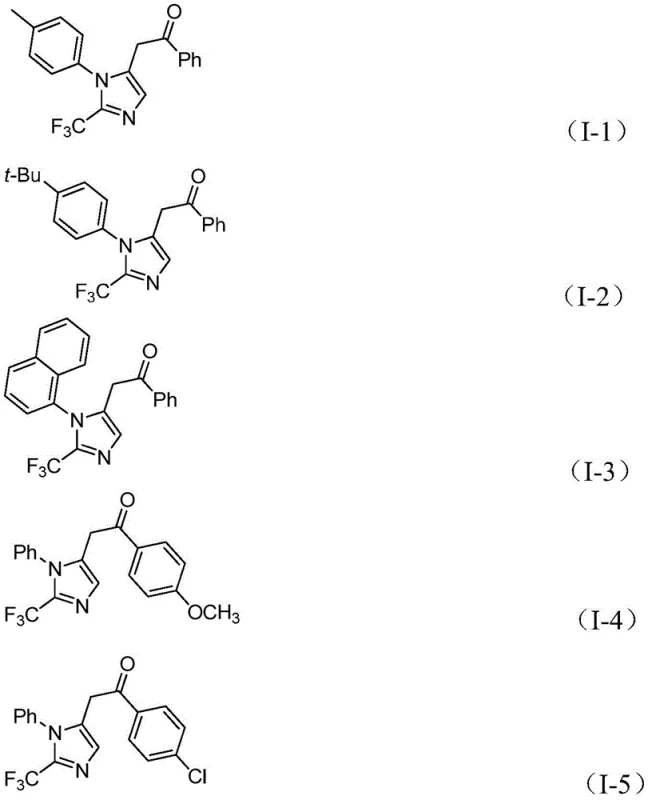
The versatility of this new route is further evidenced by its ability to accommodate a wide array of substituents on both the imidoyl chloride and the diaryliodonium salt components. As demonstrated in the patent examples, electron-donating groups like methoxy and tert-butyl, as well as electron-withdrawing groups such as nitro and halogens, are all tolerated with high yields ranging up to 97%. This broad scope allows medicinal chemists to rapidly generate diverse libraries of 2-trifluoromethyl imidazoles for structure-activity relationship (SAR) studies without needing to re-optimize conditions for each new analog. Such flexibility is crucial for maintaining a continuous supply of high-purity OLED material or pharmaceutical candidates where structural diversity is key to intellectual property positioning.
Mechanistic Insights into Palladium-Catalyzed Carbonylation Cascade
Understanding the mechanistic pathway is essential for R&D directors focused on impurity control and process optimization. The reaction is proposed to initiate with a base-promoted intermolecular carbon-nitrogen bond formation between the trifluoroethylimidoyl chloride and propargylamine, yielding a trifluoroacetamidine intermediate. This species subsequently undergoes isomerization, followed by palladium-catalyzed aminopalladation of the alkyne moiety to generate an alkenyl-palladium intermediate. A subsequent isomerization step converts this into a more stable alkyl-palladium species, setting the stage for the critical carbonylation event. The carbon monoxide required for this step is generated in situ from the decomposition of the formic acid and acetic anhydride mixture, eliminating the need for high-pressure CO gas cylinders and enhancing operational safety significantly.
Following the carbonylation, an acyl-palladium intermediate is formed, which then undergoes oxidative addition with the diaryliodonium salt. This unique step generates a high-valent tetravalent palladium intermediate, a rare species that facilitates the final reductive elimination to release the desired 2-trifluoromethyl substituted imidazole product and regenerate the active palladium catalyst. This intricate catalytic cycle ensures high atom economy and minimizes the formation of side products typically associated with radical pathways. For quality control teams, understanding this mechanism helps in predicting potential impurities, such as those arising from incomplete carbonylation or alternative coupling pathways, allowing for the design of more effective purification strategies like the silica gel column chromatography described in the patent.
How to Synthesize 2-Trifluoromethyl Imidazole Efficiently
The practical implementation of this synthesis is designed for ease of execution in standard laboratory and pilot plant settings. The protocol involves charging a reaction vessel with the palladium catalyst, ligand, base, and the CO source mixture in an aprotic solvent such as tetrahydrofuran (THF), which has been identified as the optimal medium for solubility and conversion rates. The reactants are then introduced, and the mixture is stirred at the mild temperature of 30°C. Detailed standardized synthesis steps see the guide below.
- Mix palladium chloride, triphenylphosphine, sodium bicarbonate, and a formic acid/acetic anhydride mixture in an organic solvent like THF.
- Add trifluoroethylimidoyl chloride, propargylamine, and diaryliodonium salt to the reaction vessel under stirring.
- React at 30°C for 16-24 hours, then filter, mix with silica gel, and purify via column chromatography to obtain the final product.
Commercial Advantages for Procurement and Supply Chain Teams
From a commercial perspective, this patent offers transformative advantages for supply chain heads and procurement managers looking to secure reliable sources of complex heterocyclic building blocks. The shift away from hazardous diazo reagents to stable imidoyl chlorides significantly reduces regulatory burdens and storage costs, while the use of commodity chemicals like propargylamine ensures a robust and uninterrupted supply chain. The mild reaction conditions translate directly into lower energy consumption and reduced wear on equipment, contributing to substantial cost savings in manufacturing overheads. Furthermore, the high yields and clean reaction profiles minimize the need for extensive downstream processing, thereby increasing overall throughput and reducing lead time for high-purity pharmaceutical intermediates.
- Cost Reduction in Manufacturing: The utilization of inexpensive palladium chloride instead of more exotic noble metal catalysts, combined with the elimination of high-pressure equipment for carbon monoxide handling, drives down capital and operational expenditures. The in situ generation of CO from formic acid and acetic anhydride removes the logistical complexity and safety costs associated with storing and transporting toxic CO gas. Additionally, the high conversion rates mean less raw material is wasted, directly improving the margin profile for every kilogram of product produced. These factors collectively enable a competitive pricing strategy for clients seeking cost reduction in electronic chemical manufacturing or pharmaceutical production.
- Enhanced Supply Chain Reliability: The starting materials, including trifluoroethylimidoyl chloride and diaryliodonium salts, are either commercially available or can be synthesized from widely accessible aromatic amines and boronic acids. This reliance on common chemical feedstocks mitigates the risk of supply disruptions that often plague specialty reagent markets. The robustness of the reaction across different substrates means that a single manufacturing line can be adapted to produce a variety of analogs without major retooling, providing flexibility to respond to changing market demands. This adaptability is crucial for maintaining continuity of supply for critical API intermediates in a volatile global market.
- Scalability and Environmental Compliance: The process has been demonstrated to work effectively on a gram scale with potential for expansion to multi-kilogram batches, supported by the simplicity of the workup procedure involving filtration and chromatography. The absence of heavy metal contaminants in the final product, due to the efficient catalytic cycle, simplifies the purification process and ensures compliance with stringent ICH guidelines for residual metals in drug substances. Moreover, the use of THF as a solvent, which is easily recoverable and recyclable, aligns with green chemistry principles, reducing the environmental footprint of the manufacturing process and facilitating easier permitting for new production facilities.
Frequently Asked Questions (FAQ)
The following questions address common technical inquiries regarding the implementation and scope of this patented technology, derived directly from the experimental data and specifications provided in the documentation. These insights are intended to clarify the operational parameters and capabilities of the synthesis for potential partners and technical evaluators. Understanding these details is vital for assessing the feasibility of integrating this route into existing production workflows.
Q: What are the optimal reaction conditions for this synthesis?
A: The patent specifies a mild temperature of 30°C with a reaction time of 16 to 24 hours using THF as the preferred solvent.
Q: Which catalyst system provides the highest efficiency?
A: A combination of Palladium Chloride (PdCl2) and Triphenylphosphine (PPh3) is identified as the most efficient and cost-effective catalyst system.
Q: Does this method tolerate diverse functional groups?
A: Yes, the method demonstrates excellent compatibility with various substituents including methyl, tert-butyl, halogens, trifluoromethyl, and nitro groups on the aryl rings.
Partnering with NINGBO INNO PHARMCHEM: Your Reliable 2-Trifluoromethyl Imidazole Supplier
At NINGBO INNO PHARMCHEM, we recognize the strategic value of advanced synthetic methodologies like the one described in CN111423381A for developing next-generation therapeutics and functional materials. Our team possesses extensive experience scaling diverse pathways from 100 kgs to 100 MT/annual commercial production, ensuring that the transition from laboratory discovery to industrial reality is seamless and efficient. We maintain stringent purity specifications and operate rigorous QC labs equipped with state-of-the-art analytical instrumentation to guarantee that every batch of 2-trifluoromethyl imidazole meets the highest standards of quality and consistency required by global regulatory bodies.
We invite you to collaborate with us to leverage this cutting-edge technology for your specific project needs. Our technical procurement team is ready to provide a Customized Cost-Saving Analysis tailored to your volume requirements, helping you identify opportunities for efficiency gains. Please contact us to request specific COA data and route feasibility assessments, and let us demonstrate how our expertise in palladium-catalyzed transformations can accelerate your development timeline and secure your supply chain for the future.