
Scalable Synthesis of 2-Trifluoromethyl Imidazoles via Mild Palladium Catalysis for Global Supply Chains
The pharmaceutical industry continuously seeks robust methodologies for constructing fluorinated heterocycles, given their profound impact on drug metabolism and bioavailability. Patent CN111423381A introduces a groundbreaking preparation method for 2-trifluoromethyl substituted imidazole compounds, addressing critical bottlenecks in current synthetic routes. This technology leverages a transition metal palladium-catalyzed carbonylation cascade reaction, utilizing cheap and readily available starting materials such as trifluoroethylimidoyl chloride, propargylamine, and diaryliodonium salts. The significance of this innovation lies in its ability to operate under exceptionally mild conditions, specifically at 30°C, while maintaining high reaction efficiency and excellent substrate compatibility. As illustrated in the structural diversity of bioactive molecules below, the imidazole scaffold is ubiquitous in medicinal chemistry, making this synthesis route a valuable asset for developing reliable pharmaceutical intermediate supplier capabilities.
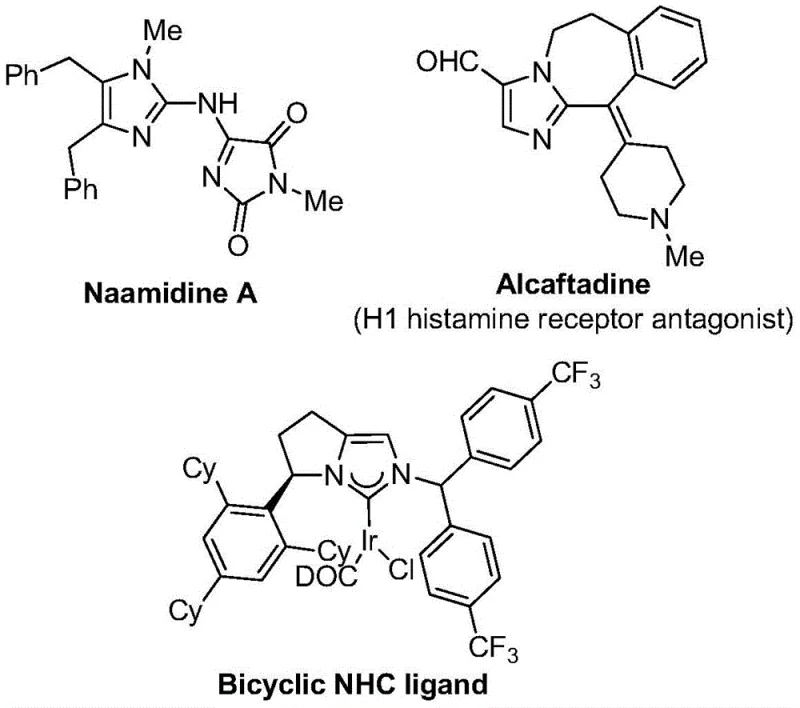
Furthermore, the method described in the patent allows for the design and synthesis of diversified substituted imidazole compounds bearing trifluoromethyl groups, which is essential for optimizing the lipophilicity and metabolic stability of lead compounds. By avoiding hazardous reagents and extreme conditions, this process aligns perfectly with modern green chemistry principles while ensuring the economic feasibility required for cost reduction in API manufacturing. The strategic integration of a carbonylation step using in-situ generated carbon monoxide further simplifies the operational complexity, positioning this technology as a superior alternative for the commercial scale-up of complex polymer additives and fine chemicals alike.
The Limitations of Conventional Methods vs. The Novel Approach
The Limitations of Conventional Methods
Traditionally, the synthesis of nitrogen-containing heterocycles with trifluoromethyl functional groups has relied heavily on synthons such as trifluorodiazoethane or direct trifluoromethylation using aggressive reagents. These conventional approaches often suffer from significant drawbacks, including the instability and potential explosiveness of diazo compounds, which pose severe safety risks during storage and handling. Moreover, many existing methods require harsh reaction conditions, such as high temperatures or strong bases, which limit the tolerance of sensitive functional groups on the substrate. This lack of functional group compatibility frequently necessitates additional protection and deprotection steps, drastically increasing the step count and overall production costs. Additionally, the use of gaseous carbon monoxide in traditional carbonylation reactions demands specialized high-pressure equipment and rigorous safety protocols, creating substantial barriers to entry for many manufacturing facilities.
The Novel Approach
In stark contrast, the novel approach detailed in the patent utilizes a palladium-catalyzed cascade reaction that operates efficiently at a mild temperature of 30°C. By employing trifluoroethylimidoyl chloride as a stable and accessible trifluoromethyl synthon, the method circumvents the safety hazards associated with diazo compounds. The reaction巧妙地 integrates a carbonylation step using a mixture of formic acid and acetic anhydride to generate carbon monoxide in situ, thereby eliminating the need for external CO gas cylinders. This innovation not only enhances operational safety but also simplifies the reactor setup, making the process highly adaptable for various scales of production. The use of diaryliodonium salts as arylating agents further expands the scope of accessible derivatives, allowing for the precise installation of diverse aryl groups at the 5-position of the imidazole ring with high regioselectivity.
Mechanistic Insights into Pd-Catalyzed Carbonylation Cascade
The reaction mechanism involves a sophisticated sequence of organometallic transformations initiated by base-promoted intermolecular carbon-nitrogen bond formation. Initially, the propargylamine reacts with the trifluoroethylimidoyl chloride to form a trifluoroacetamidine intermediate, which subsequently undergoes isomerization. The palladium catalyst then facilitates the aminopalladation of the alkyne moiety, generating a key alkenyl palladium intermediate. This species undergoes further isomerization to an alkyl palladium intermediate, setting the stage for the crucial carbonylation step. Under the influence of carbon monoxide released from the formic acid and acetic anhydride mixture, the alkyl palladium species converts into an acyl palladium intermediate. This acyl complex is then subjected to oxidative addition by the diaryliodonium salt, forming a transient tetravalent palladium species. Finally, reductive elimination occurs to release the desired 2-trifluoromethyl substituted imidazole product and regenerate the active palladium catalyst, completing the catalytic cycle.

Understanding this mechanistic pathway is vital for controlling impurity profiles and optimizing yield. The mild conditions prevent the decomposition of sensitive intermediates, while the specific choice of ligands and additives ensures high turnover numbers for the palladium catalyst. The use of sodium bicarbonate as a base effectively neutralizes acidic byproducts without promoting unwanted side reactions, contributing to the high purity of the final crude product. This level of mechanistic control is essential for R&D teams aiming to reduce lead time for high-purity pharmaceutical intermediates, as it minimizes the burden on downstream purification processes. The robustness of the catalytic cycle against various substituents on the aryl rings of both the imidoyl chloride and the iodonium salt underscores the versatility of this method for generating diverse chemical libraries.
How to Synthesize 2-Trifluoromethyl Imidazole Efficiently
The synthesis protocol outlined in the patent provides a straightforward and reproducible procedure for accessing these valuable heterocycles. The process begins with the preparation of a reaction mixture containing the palladium catalyst, ligand, base, and the CO source in an aprotic organic solvent such as tetrahydrofuran. To this mixture, the three key building blocks—trifluoroethylimidoyl chloride, propargylamine, and diaryliodonium salt—are added in specific molar ratios to ensure optimal conversion. The reaction is then allowed to proceed at a constant temperature of 30°C for a duration of 16 to 24 hours, after which the mixture is filtered and purified via column chromatography. For detailed standardized synthesis steps and specific optimization parameters, please refer to the guide below.
- Mix palladium chloride, triphenylphosphine, sodium bicarbonate, and a formic acid/acetic anhydride mixture in an organic solvent like THF.
- Add trifluoroethylimidoyl chloride, propargylamine, and diaryliodonium salt to the reaction vessel under stirring.
- Maintain the reaction at 30°C for 16 to 24 hours, followed by filtration and column chromatography purification.
Commercial Advantages for Procurement and Supply Chain Teams
This innovative synthesis route offers transformative benefits for procurement and supply chain management by fundamentally altering the cost and risk structure of producing trifluoromethylated imidazoles. The shift from hazardous gaseous reagents to stable solid or liquid precursors significantly mitigates supply chain disruptions caused by regulatory restrictions on dangerous goods transportation. Furthermore, the use of inexpensive and commercially available catalysts like palladium chloride, combined with low loading levels, directly contributes to substantial cost savings in raw material expenditure. The mild reaction temperature reduces energy consumption for heating and cooling, aligning with sustainability goals while lowering utility costs. These factors collectively enhance the economic viability of producing high-purity OLED material precursors and pharmaceutical intermediates on a large scale.
- Cost Reduction in Manufacturing: The elimination of high-pressure carbon monoxide equipment and the use of cheap, stable starting materials drastically lower the capital expenditure and operational costs associated with this synthesis. By avoiding expensive and unstable trifluoromethylating agents, manufacturers can achieve a more predictable and lower cost of goods sold (COGS). The high atom economy of the cascade reaction minimizes waste generation, further reducing disposal costs and environmental compliance burdens. Additionally, the high yields reported across a broad range of substrates ensure that raw material utilization is maximized, preventing financial losses due to low conversion rates.
- Enhanced Supply Chain Reliability: The reliance on widely available commodity chemicals such as formic acid, acetic anhydride, and simple aromatic amines ensures a stable and resilient supply chain. Unlike specialized reagents that may have single-source suppliers, the key inputs for this process can be sourced from multiple global vendors, reducing the risk of shortages. The stability of the trifluoroethylimidoyl chloride precursor allows for long-term storage without significant degradation, enabling manufacturers to maintain strategic inventory buffers. This reliability is crucial for meeting the stringent delivery schedules demanded by multinational pharmaceutical clients.
- Scalability and Environmental Compliance: The process has been demonstrated to be scalable to the gram level with consistent performance, indicating strong potential for ton-scale production. The absence of toxic gases and the use of benign solvents simplify the environmental permitting process and reduce the complexity of waste treatment systems. The mild conditions also enhance process safety, lowering insurance premiums and reducing the risk of production stoppages due to safety incidents. This combination of scalability and safety makes the method ideal for the commercial scale-up of complex pharmaceutical intermediates requiring strict regulatory adherence.
Frequently Asked Questions (FAQ)
The following questions address common technical and commercial inquiries regarding the implementation of this patented technology. These answers are derived directly from the experimental data and beneficial effects described in the patent documentation, providing clarity on process capabilities and limitations. Understanding these details is essential for technical teams evaluating the feasibility of adopting this route for their specific product portfolios.
Q: What are the advantages of using formic acid/acetic anhydride over carbon monoxide gas?
A: Using formic acid and acetic anhydride generates carbon monoxide in situ, eliminating the need for high-pressure CO gas cylinders and specialized equipment, thereby significantly enhancing operational safety and reducing infrastructure costs.
Q: How does this method improve substrate compatibility compared to traditional trifluoromethylation?
A: The mild reaction conditions (30°C) and the use of stable trifluoroethylimidoyl chloride allow for a broader tolerance of functional groups, including sensitive halides and nitro groups, which often decompose under harsher traditional conditions.
Q: Is this process suitable for large-scale industrial production?
A: Yes, the patent explicitly demonstrates scalability to the gram level with high yields and utilizes commercially available, inexpensive starting materials, making it highly viable for commercial scale-up of complex pharmaceutical intermediates.
Partnering with NINGBO INNO PHARMCHEM: Your Reliable 2-Trifluoromethyl Imidazole Supplier
At NINGBO INNO PHARMCHEM, we recognize the strategic value of advanced synthetic methodologies like the one described in CN111423381A for driving innovation in drug discovery. Our team possesses extensive experience scaling diverse pathways from 100 kgs to 100 MT/annual commercial production, ensuring that promising laboratory results translate seamlessly into industrial reality. We are committed to delivering high-purity pharmaceutical intermediates that meet stringent purity specifications, supported by our rigorous QC labs equipped with state-of-the-art analytical instrumentation. Our expertise in palladium catalysis and fluorination chemistry positions us as a preferred partner for companies seeking to optimize their supply chains for fluorinated heterocycles.
We invite you to collaborate with us to leverage this cutting-edge technology for your next project. Contact our technical procurement team today to request a Customized Cost-Saving Analysis tailored to your specific volume requirements. We are ready to provide specific COA data and comprehensive route feasibility assessments to demonstrate how we can support your development timelines and commercial goals efficiently.