
Advanced Cobalt-Catalyzed Synthesis of Tetrahydro-beta-carbolinones for Commercial Scale-up
Advanced Cobalt-Catalyzed Synthesis of Tetrahydro-beta-carbolinones for Commercial Scale-up
The development of efficient synthetic routes for bioactive heterocyclic scaffolds remains a cornerstone of modern pharmaceutical research. Among these, the tetrahydro-beta-carbolinone skeleton is of paramount importance due to its prevalence in natural products and drug candidates exhibiting potent antiviral and anxiolytic activities. Recent advancements documented in patent CN115260188A introduce a transformative methodology for constructing this core structure via a transition metal cobalt-catalyzed C-H activated carbonylation reaction. This innovation addresses critical bottlenecks in traditional synthesis by utilizing readily available tryptamine derivatives as starting materials, thereby streamlining the production of complex nitrogen-containing heterocycles. The significance of this technology extends beyond academic interest, offering a robust platform for the industrial manufacture of high-purity pharmaceutical intermediates.
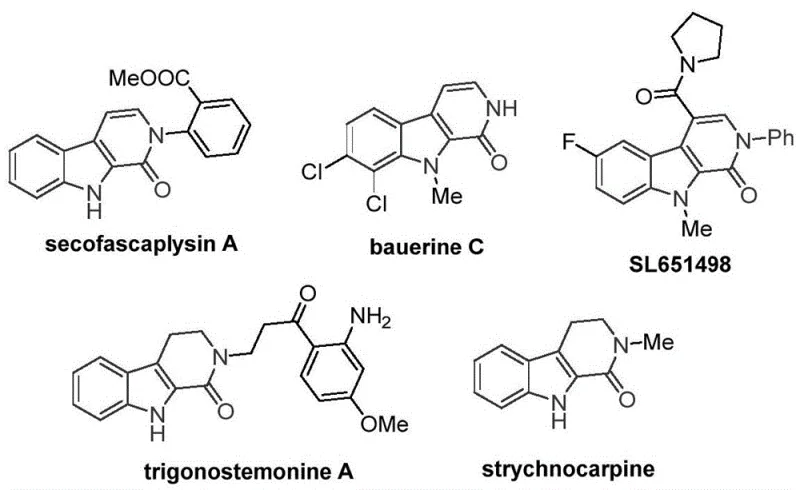
Historically, the synthesis of beta-carbolinone derivatives has relied heavily on transition metal palladium catalysis. While effective, palladium-mediated processes suffer from inherent limitations that pose significant challenges for large-scale manufacturing. The primary concern is the exorbitant cost of palladium, a precious metal subject to volatile market pricing, which directly inflates the cost of goods sold (COGS) for the final active pharmaceutical ingredient (API). Moreover, palladium residues are strictly regulated in drug substances, necessitating expensive and time-consuming purification steps such as scavenging or recrystallization to meet residual metal specifications. Additionally, many conventional carbonylation protocols require the use of toxic carbon monoxide gas under high pressure, introducing severe safety hazards and requiring specialized high-pressure reactors that are not universally available in standard chemical plants.
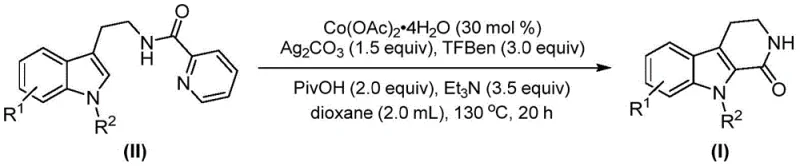
In stark contrast, the novel approach detailed in the patent leverages a cobalt-catalyzed system that fundamentally alters the economic and safety profile of the synthesis. By replacing precious palladium with earth-abundant cobalt, specifically cobalt acetate tetrahydrate, the process achieves a dramatic reduction in catalyst costs while maintaining high catalytic activity. The reaction utilizes 1,3,5-tricarboxylic acid phenol ester as a solid carbon monoxide substitute, which releases CO in situ. This ingenious substitution eliminates the need for handling hazardous CO gas cylinders, allowing the reaction to proceed safely in standard sealed vessels at moderate temperatures of 120-140°C. This shift not only enhances operational safety but also significantly lowers the barrier to entry for scaling the process, making it an ideal candidate for reliable pharmaceutical intermediate supplier networks seeking greener and more economical solutions.
Mechanistic Insights into Cobalt-Catalyzed C-H Activation Carbonylation
The mechanistic pathway of this transformation involves a sophisticated interplay between the cobalt catalyst, the oxidant, and the substrate. The cycle initiates with the oxidation of the cobalt(II) precursor by silver carbonate (Ag2CO3), generating a reactive cobalt(III) species. This high-valent cobalt center then coordinates with the tryptamine derivative, facilitating the crucial C-H bond activation at the 2-position of the indole ring. This step forms a stable cobalt(III) metallacycle intermediate, setting the stage for the subsequent carbonylation event. The precision of this C-H activation is critical, as it dictates the regioselectivity of the ring closure, ensuring the formation of the desired six-membered lactam ring fused to the indole core without the need for pre-functionalized halide substrates.
Following C-H activation, the carbon monoxide released from the phenol ester surrogate inserts into the cobalt-carbon bond, generating an acylcobalt(III) intermediate. This insertion step is the key bond-forming event that introduces the carbonyl functionality essential for the lactam structure. The cycle concludes with a reductive elimination step, which releases the tetrahydro-beta-carbolinone product and regenerates the lower-valent cobalt species, which is subsequently re-oxidized by silver carbonate to re-enter the catalytic cycle. From an impurity control perspective, this mechanism is highly advantageous. The use of a specific oxidant and additive system (pivalic acid) helps suppress side reactions such as over-oxidation or polymerization of the indole moiety. Furthermore, the 2-picolinoyl directing group on the starting material is designed to leave during the reaction, simplifying the impurity profile and facilitating easier purification of the final high-purity pharmaceutical intermediate.
How to Synthesize Tetrahydro-beta-carbolinone Efficiently
The practical execution of this synthesis is designed for reproducibility and ease of operation, making it highly suitable for technology transfer. The protocol involves charging a reaction vessel with the cobalt catalyst, base, additive, oxidant, CO surrogate, and the tryptamine substrate in dioxane solvent. The mixture is heated to 130°C for approximately 20 hours, a timeframe that balances complete conversion with throughput efficiency. Post-reaction workup is straightforward, involving simple filtration to remove silver salts followed by standard silica gel chromatography. For detailed operational parameters, stoichiometry, and specific purification techniques validated across multiple substrates, please refer to the standardized synthesis guide below.
- Combine cobalt catalyst (Co(OAc)2·4H2O), base (Et3N), additive (PivOH), oxidant (Ag2CO3), CO substitute (TFBen), and tryptamine derivative in dioxane.
- Heat the reaction mixture to 120-140°C and stir for 16-24 hours under inert atmosphere to facilitate C-H activation and cyclization.
- Filter the reaction mixture, adsorb onto silica gel, and purify via column chromatography to isolate the target tetrahydro-beta-carbolinone.
Commercial Advantages for Procurement and Supply Chain Teams
For procurement managers and supply chain directors, the adoption of this cobalt-catalyzed methodology offers substantial strategic benefits beyond mere technical feasibility. The transition from precious metal catalysis to base metal catalysis represents a fundamental shift in cost structure. By eliminating the dependency on palladium, manufacturers can insulate their supply chains from the volatility of precious metal markets. The raw materials, including cobalt acetate and the CO surrogate, are commodity chemicals available in bulk quantities, ensuring a stable and continuous supply line. This reliability is crucial for maintaining uninterrupted production schedules for critical API intermediates, reducing the risk of stockouts caused by catalyst shortages.
- Cost Reduction in Manufacturing: The economic impact of switching to cobalt catalysis is profound. Beyond the direct savings on catalyst purchase price, the process eliminates the need for expensive heavy metal scavengers typically required to reduce palladium residues to ppm levels. This simplification of the downstream processing workflow reduces solvent consumption, waste generation, and labor hours associated with purification. Consequently, the overall cost reduction in pharmaceutical intermediate manufacturing is significant, allowing for more competitive pricing strategies in the global market without compromising margin.
- Enhanced Supply Chain Reliability: The robustness of this synthetic route contributes directly to supply chain resilience. The reaction tolerates a wide range of functional groups, meaning that diverse substituted tryptamine precursors can be sourced or synthesized without requiring bespoke optimization for each variant. This flexibility allows suppliers to respond rapidly to changing demands for different analogues. Furthermore, the use of solid CO surrogates removes the logistical complexities and regulatory hurdles associated with transporting and storing compressed toxic gases, streamlining the facility requirements and enhancing overall operational continuity.
- Scalability and Environmental Compliance: From an environmental and scalability standpoint, this method aligns perfectly with green chemistry principles. The reaction operates at moderate temperatures and uses dioxane, a common solvent that can be efficiently recovered and recycled. The absence of high-pressure gas equipment reduces the capital expenditure (CAPEX) required for scale-up, allowing production to be ramped from kilogram to multi-ton scales in standard glass-lined or stainless steel reactors. The simplified waste stream, devoid of heavy palladium contamination, eases the burden on wastewater treatment facilities and ensures compliance with increasingly stringent environmental regulations regarding heavy metal discharge.
Frequently Asked Questions (FAQ)
The following questions address common technical and commercial inquiries regarding the implementation of this cobalt-catalyzed carbonylation technology. These insights are derived directly from the experimental data and scope analysis provided in the patent documentation, aiming to clarify the practical implications for potential partners and licensees.
Q: Why is cobalt preferred over palladium for this carbonylation reaction?
A: Cobalt is an earth-abundant base metal that is significantly cheaper than precious palladium catalysts. Furthermore, cobalt catalysis often avoids the stringent heavy metal residue limits required for pharmaceutical APIs, simplifying downstream purification and reducing overall production costs.
Q: What is the role of 1,3,5-tricarboxylic acid phenol ester in this synthesis?
A: This compound acts as a solid carbon monoxide (CO) surrogate. It releases CO in situ under the reaction conditions, eliminating the need for handling hazardous high-pressure CO gas cylinders, thereby enhancing operational safety and scalability in standard laboratory or plant equipment.
Q: What is the substrate scope of this cobalt-catalyzed method?
A: The method demonstrates excellent functional group tolerance. It successfully accommodates various substituents on the indole ring, including electron-donating groups (methyl, methoxy) and electron-withdrawing groups (chloro, bromo), as well as different N-substituents, yielding products with high efficiency (up to 95% yield in optimized examples).
Partnering with NINGBO INNO PHARMCHEM: Your Reliable Tetrahydro-beta-carbolinone Supplier
At NINGBO INNO PHARMCHEM, we recognize the transformative potential of this cobalt-catalyzed synthesis for the next generation of bioactive molecules. As a leading CDMO partner, we possess extensive experience scaling diverse pathways from 100 kgs to 100 MT/annual commercial production. Our state-of-the-art facilities are equipped to handle base-metal catalyzed reactions with the highest safety standards, and our rigorous QC labs ensure that every batch meets stringent purity specifications required by global regulatory bodies. We are committed to leveraging this innovative chemistry to deliver high-quality intermediates that accelerate your drug development timelines.
We invite you to collaborate with us to evaluate the feasibility of this route for your specific project needs. Our technical team is prepared to provide a Customized Cost-Saving Analysis comparing this cobalt method against your current palladium-based processes. Please contact our technical procurement team today to request specific COA data for related compounds and comprehensive route feasibility assessments tailored to your supply chain requirements.