
Advanced Synthesis of Potent 1,3,4-Oxadiazole Neuraminidase Inhibitors for Antiviral Drug Development
The global pharmaceutical landscape is currently facing a critical challenge regarding influenza treatment, specifically the emergence of viral resistance against established therapies like Oseltamivir (Tamiflu). In response to this urgent medical need, patent CN113461631B introduces a groundbreaking class of 1,3,4-oxadiazole neuraminidase inhibitors that offer a novel structural scaffold with enhanced biological activity. This technology represents a significant leap forward in antiviral drug discovery, providing a robust chemical foundation for developing next-generation therapeutics. The core innovation lies in the strategic incorporation of the 1,3,4-oxadiazole heterocycle, which serves as a bioisostere that improves metabolic stability and binding affinity compared to traditional cyclic structures. For research and development teams seeking to diversify their antiviral pipelines, this patent offers a validated pathway to high-potency compounds that outperform current market standards in enzymatic assays.
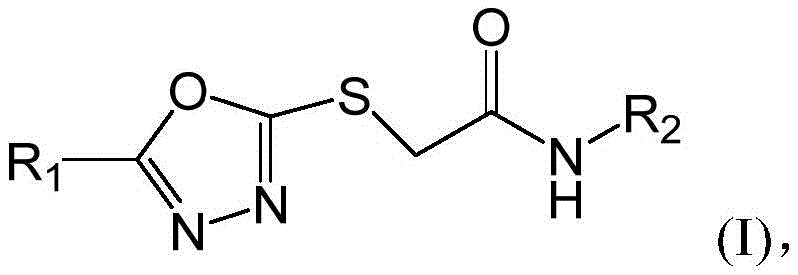
Furthermore, the versatility of the general formula (I) allows for extensive structural optimization through the variation of substituents R1 and R2. The patent details a comprehensive library of derivatives where R1 and R2 can be independently selected from a wide range of substituted phenyl groups, including those bearing halogens, alkoxy groups, and hydroxyl functionalities. This modularity is crucial for medicinal chemists aiming to fine-tune pharmacokinetic properties such as solubility and bioavailability while maintaining high receptor affinity. By leveraging this structural diversity, pharmaceutical companies can rapidly generate analogs to overcome specific resistance mutations in influenza strains, ensuring a continuous supply of effective treatments. The intellectual property surrounding these compounds provides a strong barrier to entry for competitors while offering a clear route for licensing or internal development of proprietary antiviral agents.
The Limitations of Conventional Methods vs. The Novel Approach
The Limitations of Conventional Methods
Traditional neuraminidase inhibitors, such as Oseltamivir, rely on complex shikimic acid-derived starting materials that are not only expensive but also subject to supply chain volatility due to their natural origin. The multi-step synthesis required to construct the cyclohexene core of Oseltamivir involves harsh reaction conditions, hazardous reagents, and difficult purification processes that drive up manufacturing costs significantly. Additionally, the widespread use of these first-generation inhibitors has led to the selection of resistant viral strains, rendering them less effective in clinical settings over time. From a process chemistry perspective, the reliance on chiral pool synthesis limits the scalability and flexibility of production, making it difficult to rapidly respond to pandemic outbreaks with increased volume. These economic and biological limitations create a pressing demand for alternative scaffolds that are synthetically accessible, cost-effective, and mechanistically distinct to bypass existing resistance mechanisms.
The Novel Approach
The synthetic strategy outlined in CN113461631B addresses these challenges by utilizing a convergent three-step route that relies on readily available commodity chemicals such as substituted anilines and benzoyl hydrazides. Unlike the linear and lengthy synthesis of Tamiflu, this approach constructs the pharmacophore through efficient heterocyclization and nucleophilic substitution reactions that proceed under mild conditions. The use of the 1,3,4-oxadiazole ring system introduces a planar, rigid structure that mimics the transition state of the sialic acid substrate, leading to potent enzyme inhibition without the need for complex stereochemical control. This simplification of the molecular architecture translates directly into process efficiency, reducing the number of unit operations and minimizing waste generation. By shifting away from scarce natural precursors to abundant petrochemical-derived building blocks, this novel approach ensures a more stable and predictable supply chain for large-scale manufacturing of antiviral intermediates.
Mechanistic Insights into 1,3,4-Oxadiazole Cyclization and Alkylation
The formation of the bioactive 1,3,4-oxadiazole core is achieved through a base-mediated cyclization of benzoyl hydrazides with carbon disulfide, a reaction that proceeds via the formation of a dithiocarbazate intermediate followed by intramolecular dehydration. In the presence of potassium hydroxide and ethanol, the hydrazide nitrogen attacks the electrophilic carbon of carbon disulfide, generating a nucleophilic species that subsequently cyclizes to form the five-membered heterocyclic ring containing sulfur and nitrogen atoms. This transformation is highly atom-economical and tolerates a wide range of functional groups on the aromatic ring, allowing for the introduction of electron-withdrawing substituents like chlorine and fluorine that are critical for enhancing binding interactions within the neuraminidase active site. The resulting 2-mercapto-1,3,4-oxadiazole intermediate serves as a versatile synthon for further functionalization, possessing a reactive thiol group that can be easily alkylated to introduce the necessary side chains for biological activity.
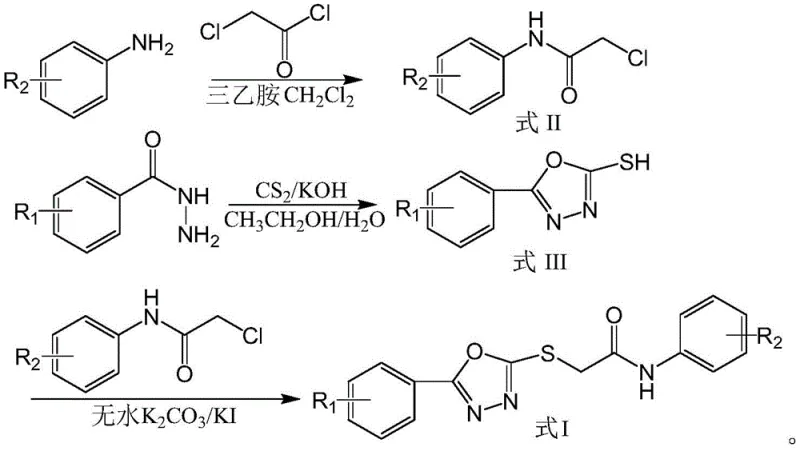
Following the construction of the heterocyclic core, the final assembly of the inhibitor involves the alkylation of the thiol group with a chloroacetamide derivative prepared from substituted anilines. This nucleophilic substitution reaction is facilitated by the use of potassium carbonate as a mild base and potassium iodide as a catalyst to enhance the leaving group ability of the chloride ion. The reaction typically proceeds in polar aprotic solvents like acetone or DMF at temperatures ranging from 15°C to 25°C, ensuring high selectivity and minimizing side reactions such as hydrolysis of the amide bond. The resulting thioether linkage connects the lipophilic aryl tail to the polar heterocyclic head, creating an amphiphilic molecule capable of penetrating the viral envelope and accessing the conserved catalytic residues of the neuraminidase enzyme. This modular coupling strategy allows for the rapid generation of diverse analogs by simply varying the amine and hydrazide starting materials, accelerating the structure-activity relationship (SAR) exploration process.
How to Synthesize 1,3,4-Oxadiazole Neuraminidase Inhibitors Efficiently
The preparation of these high-value pharmaceutical intermediates follows a streamlined protocol designed for reproducibility and scalability in a GMP-compliant environment. The process begins with the acylation of the amine component, followed by the independent synthesis of the heterocyclic thiol, and concludes with the convergence of these two fragments. Each step has been optimized to maximize yield and purity, utilizing standard workup procedures such as aqueous washes and recrystallization to remove impurities without the need for complex chromatography on a large scale.
- Acylation of substituted anilines with chloroacetyl chloride in dichloromethane using triethylamine at 0-20°C to form the chloroacetamide intermediate.
- Cyclization of benzoyl hydrazides with carbon disulfide and potassium hydroxide in ethanol/water at elevated temperatures to generate the 1,3,4-oxadiazole-2-thiol core.
- Final coupling of the thiol intermediate with the chloroacetamide derivative using potassium carbonate and potassium iodide in acetone at ambient temperature.
Commercial Advantages for Procurement and Supply Chain Teams
From a procurement perspective, the adoption of this synthetic route offers substantial advantages in terms of raw material security and cost management. The starting materials, including various substituted anilines and hydrazides, are bulk commodities produced by multiple global suppliers, reducing the risk of single-source dependency and price volatility. Furthermore, the elimination of expensive chiral catalysts and precious metal reagents significantly lowers the direct material costs associated with production. The use of common organic solvents like dichloromethane, ethanol, and acetone simplifies solvent recovery and recycling processes, contributing to a lower overall environmental footprint and reduced waste disposal costs. These factors combine to create a highly competitive cost structure that enables the production of high-purity intermediates at a fraction of the cost associated with legacy antiviral synthesis routes.
- Cost Reduction in Manufacturing: The synthetic pathway eliminates the need for cryogenic conditions and exotic reagents, relying instead on ambient temperature reactions and inexpensive inorganic bases like potassium carbonate. This simplification of the process parameters reduces energy consumption and equipment requirements, leading to significant operational expenditure savings. Additionally, the high atom economy of the cyclization step minimizes raw material waste, further driving down the cost per kilogram of the final active pharmaceutical ingredient precursor.
- Enhanced Supply Chain Reliability: By utilizing a fully synthetic route based on petrochemical feedstocks, manufacturers can decouple production from agricultural cycles and seasonal fluctuations that affect natural product-derived drugs. The robustness of the chemistry allows for flexible batch sizing and rapid scale-up from pilot plant to commercial tonnage without the need for specialized reactor configurations. This agility ensures a consistent supply of critical intermediates even during periods of high global demand, safeguarding the continuity of drug manufacturing operations.
- Scalability and Environmental Compliance: The process generates minimal hazardous byproducts, with the primary waste streams consisting of inorganic salts that are easily treated in standard wastewater facilities. The avoidance of heavy metal catalysts simplifies the purification process and ensures that the final product meets stringent residual metal specifications required by regulatory agencies. This alignment with green chemistry principles not only facilitates regulatory approval but also enhances the sustainability profile of the supply chain, appealing to environmentally conscious stakeholders and partners.
Frequently Asked Questions (FAQ)
The following questions address common technical and commercial inquiries regarding the production and application of these novel inhibitors. The answers are derived directly from the experimental data and claims presented in the patent documentation, ensuring accuracy and relevance for decision-makers.
Q: What is the biological potency of these novel 1,3,4-oxadiazole inhibitors compared to Oseltamivir?
A: According to patent CN113461631B, specific derivatives exhibit IC50 values as low as 0.027 μM, which demonstrates superior inhibitory activity against neuraminidase compared to the positive control Oseltamivir carboxylate (IC50 = 0.082 μM).
Q: Are the reaction conditions suitable for large-scale manufacturing?
A: Yes, the synthesis utilizes mild conditions, with the final coupling step occurring at 15-25°C in common solvents like acetone. The process avoids expensive transition metal catalysts, relying on inexpensive bases like potassium carbonate, which facilitates scalable production.
Q: What structural modifications enhance the inhibitory activity?
A: Structure-activity relationship studies indicate that electron-withdrawing groups such as chlorine and fluorine on the phenyl rings, particularly at the 3,4-positions, significantly enhance binding affinity and inhibitory potency against the neuraminidase enzyme.
Partnering with NINGBO INNO PHARMCHEM: Your Reliable 1,3,4-Oxadiazole Derivatives Supplier
As a leading CDMO partner, NINGBO INNO PHARMCHEM possesses the technical expertise and infrastructure to translate this innovative patent technology into commercial reality. Our team has extensive experience scaling diverse pathways from 100 kgs to 100 MT/annual commercial production, ensuring that your project moves seamlessly from laboratory bench to industrial manufacturing. We maintain stringent purity specifications and operate rigorous QC labs equipped with state-of-the-art analytical instrumentation to guarantee the quality and consistency of every batch. Our commitment to excellence extends beyond mere synthesis; we provide comprehensive process optimization services to further enhance yield and reduce costs, aligning with your strategic goals for market competitiveness.
We invite you to engage with our technical procurement team to discuss how we can support your antiviral drug development programs. By requesting a Customized Cost-Saving Analysis, you can gain deeper insights into the economic benefits of switching to this novel synthetic route. We encourage potential partners to contact us for specific COA data and route feasibility assessments tailored to your unique requirements. Let us collaborate to bring these potent neuraminidase inhibitors to the market, addressing the critical need for effective influenza treatments worldwide.