
Advanced Palladium-Catalyzed Carbonylation for Scalable Production of Bioactive Triazole Intermediates
Advanced Palladium-Catalyzed Carbonylation for Scalable Production of Bioactive Triazole Intermediates
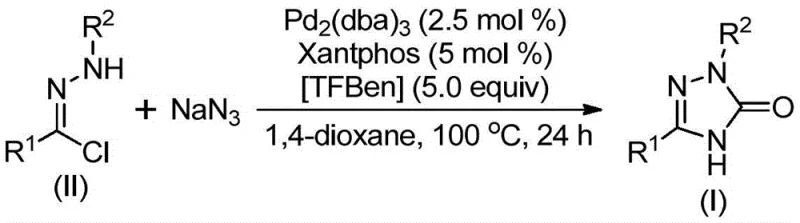
The pharmaceutical and agrochemical industries are constantly seeking robust synthetic methodologies to access privileged scaffolds efficiently. A recent breakthrough detailed in patent CN112538054B introduces a highly efficient preparation method for 1,2,4-triazole-3-one compounds, a structural motif prevalent in numerous bioactive molecules ranging from antifungals to antitumor agents. This innovation addresses critical bottlenecks in traditional heterocycle synthesis by employing a transition metal palladium-catalyzed carbonylation tandem cyclization strategy. By utilizing readily available chlorohydrazones and sodium azide in the presence of a solid carbon monoxide surrogate, this method offers a streamlined pathway that bypasses the severe limitations of prior art. For R&D directors and procurement specialists alike, this technology represents a pivotal shift towards safer, more cost-effective, and scalable manufacturing processes for high-value nitrogen-containing heterocycles.
The Limitations of Conventional Methods vs. The Novel Approach
The Limitations of Conventional Methods
Historically, the construction of the 1,2,4-triazole-3-one core has been fraught with significant synthetic challenges that hinder large-scale production. Traditional routes often rely on the cyclization of benzoyl hydrazides with urea under strongly basic conditions or the reaction of hydrazides with isocyanates, which frequently necessitates harsh reaction environments and rigorous temperature control. Furthermore, many established protocols involve the use of thioamides or acyl isocyanates, reagents that are not only expensive but also pose substantial handling risks due to their toxicity and instability. These conventional methods typically suffer from narrow substrate scope, meaning that introducing diverse functional groups often leads to drastic drops in yield or complete reaction failure. Additionally, the requirement for pre-activation of substrates adds extra synthetic steps, increasing both the overall cost and the environmental footprint of the process, making them less attractive for modern green chemistry standards.
The Novel Approach
In stark contrast, the methodology disclosed in the patent leverages a sophisticated palladium-catalyzed system that fundamentally simplifies the synthetic architecture. By employing chlorohydrazones as the starting material, the process utilizes inexpensive and commercially abundant precursors that eliminate the need for complex pre-functionalization. The introduction of TFBen as a solid carbon monoxide source is a game-changer, as it allows the reaction to proceed under atmospheric pressure without the need for specialized high-pressure autoclaves required for gaseous CO. This novel approach operates under relatively mild thermal conditions, typically between 100°C and 120°C, and demonstrates exceptional compatibility with a wide array of substituents including halogens, alkyl chains, and electron-donating or withdrawing groups. The result is a versatile platform capable of generating diverse libraries of triazole derivatives with high efficiency, directly addressing the need for rapid analog synthesis in drug discovery programs.
Mechanistic Insights into Pd-Catalyzed Carbonylation Cyclization
The elegance of this transformation lies in its intricate catalytic cycle, which orchestrates multiple bond-forming events in a single pot. The reaction initiates with the oxidative addition of the low-valent palladium catalyst, specifically Pd2(dba)3 coordinated with the bidentate ligand Xantphos, into the carbon-chlorine bond of the chlorohydrazone substrate. This step generates a reactive organopalladium intermediate that is primed for the subsequent insertion of carbon monoxide. Crucially, the CO is released in situ from the thermal decomposition of TFBen, ensuring a steady and controlled concentration of the carbonyl source within the reaction medium. The insertion of CO into the carbon-palladium bond forms an acyl-palladium species, which then undergoes nucleophilic attack by the azide anion derived from sodium azide. This sequence generates an acyl azide intermediate, setting the stage for the key rearrangement step that defines the ring formation.
Following the formation of the acyl azide, the system undergoes a Curtius rearrangement, a thermally driven process that converts the acyl azide into an isocyanate intermediate with the loss of nitrogen gas. This isocyanate species is highly electrophilic and immediately susceptible to intramolecular nucleophilic attack by the adjacent nitrogen atom within the hydrazone framework. This final cyclization step closes the five-membered triazole ring and regenerates the palladium catalyst, allowing the cycle to continue. From an impurity control perspective, this mechanism is highly favorable because the tandem nature of the reaction minimizes the accumulation of stable intermediates that could lead to side products. The use of Xantphos as a ligand further stabilizes the palladium center, preventing catalyst deactivation and ensuring high turnover numbers, which is critical for maintaining high purity profiles in the final active pharmaceutical ingredient intermediates.
How to Synthesize 1,2,4-Triazole-3-one Efficiently
Implementing this synthesis in a laboratory or pilot plant setting requires precise attention to reagent stoichiometry and reaction parameters to maximize yield and safety. The protocol dictates a specific molar ratio of catalyst to ligand, typically 1:2, to ensure optimal coordination geometry around the metal center. The reaction is conducted in an aprotic solvent such as 1,4-dioxane, which has been identified as superior to polar aprotic solvents like DMF or DMSO for this specific transformation. Operators must ensure that the reaction mixture is heated uniformly to the specified range of 100°C to 120°C for a duration of 16 to 30 hours to drive the Curtius rearrangement to completion. While the procedure is robust, strict adherence to the recommended workup procedures, including filtration and silica gel chromatography, is essential to remove palladium residues and achieve the stringent purity specifications required for downstream applications. The detailed standardized synthesis steps are outlined in the guide below.
- Combine Pd2(dba)3 catalyst, Xantphos ligand, TFBen (CO surrogate), chlorohydrazone substrate, and sodium azide in an organic solvent such as 1,4-dioxane.
- Heat the reaction mixture to a temperature range of 100°C to 120°C and maintain stirring for a duration of 16 to 30 hours to ensure complete conversion.
- Upon completion, perform standard post-treatment procedures including filtration and silica gel chromatography to isolate the high-purity 1,2,4-triazole-3-one product.
Commercial Advantages for Procurement and Supply Chain Teams
For procurement managers and supply chain heads, the adoption of this patented methodology offers tangible strategic benefits that extend beyond mere chemical efficiency. The shift from hazardous gaseous reagents to stable solid surrogates drastically simplifies the logistics of raw material storage and handling, reducing the regulatory burden associated with high-pressure gas cylinders. Furthermore, the use of commodity chemicals like sodium azide and simple chlorohydrazones ensures a stable and resilient supply chain, mitigating the risk of production stoppages due to specialty reagent shortages. The operational simplicity of the process, which avoids cryogenic conditions or ultra-high pressures, translates directly into lower capital expenditure for reactor infrastructure and reduced energy consumption during operation. These factors collectively contribute to a more predictable and cost-stable manufacturing environment, allowing companies to better forecast production timelines and manage inventory levels effectively.
- Cost Reduction in Manufacturing: The economic implications of this process are profound, primarily driven by the elimination of expensive and dangerous reagents. By replacing high-pressure carbon monoxide gas with the solid surrogate TFBen, manufacturers can avoid the significant costs associated with specialized pressure-rated equipment and the safety protocols required for toxic gas handling. Additionally, the high catalytic efficiency means that lower loadings of the precious palladium catalyst are required to achieve high conversions, directly reducing the cost of goods sold. The simplified workup procedure, which relies on standard filtration and chromatography rather than complex distillation or extraction sequences, further lowers labor and utility costs. These cumulative savings make the production of 1,2,4-triazole-3-one intermediates significantly more competitive in the global market.
- Enhanced Supply Chain Reliability: Supply chain continuity is often jeopardized by the reliance on niche reagents that have limited suppliers. This method utilizes chlorohydrazones and sodium azide, which are bulk chemicals available from multiple global vendors, thereby diversifying the supply base and reducing dependency on single sources. The robustness of the reaction conditions also means that the process is less sensitive to minor fluctuations in raw material quality, reducing the rate of batch failures and reworks. This reliability ensures that delivery schedules to downstream API manufacturers can be met consistently, fostering stronger long-term partnerships. Moreover, the scalability of the reaction from milligram to multi-kilogram scales without significant re-optimization provides the flexibility needed to respond rapidly to changes in market demand.
- Scalability and Environmental Compliance: As regulatory scrutiny on chemical manufacturing intensifies, the environmental profile of a synthesis route becomes a critical decision factor. This palladium-catalyzed method generates minimal waste compared to traditional stoichiometric methods, aligning with the principles of green chemistry. The absence of heavy metal waste streams, aside from the recoverable palladium catalyst, simplifies wastewater treatment and disposal compliance. The ability to run the reaction in common solvents like dioxane, which can be recycled, further enhances the sustainability metric. From a scalability standpoint, the homogeneous nature of the catalytic system facilitates heat and mass transfer in larger reactors, ensuring that the high yields observed on a small scale can be replicated in commercial production vessels without the formation of hot spots or safety incidents.
Frequently Asked Questions (FAQ)
The following questions address common technical and operational inquiries regarding the implementation of this synthesis technology. These insights are derived directly from the experimental data and optimization studies presented in the patent documentation. Understanding these nuances is essential for technical teams evaluating the feasibility of integrating this route into their existing manufacturing portfolios. The answers provided reflect the specific conditions and outcomes observed during the development of this innovative process.
Q: What is the advantage of using TFBen over carbon monoxide gas in this synthesis?
A: TFBen (1,3,5-tricarboxylic acid phenol ester) acts as a solid carbon monoxide surrogate, eliminating the need for high-pressure gas equipment and significantly improving operational safety and scalability compared to traditional gaseous CO methods.
Q: Is this method compatible with sensitive functional groups on the substrate?
A: Yes, the protocol demonstrates excellent functional group tolerance, successfully accommodating substrates with halogens, alkyl groups, alkoxy groups, and heterocycles like furan without significant side reactions or yield loss.
Q: How does the use of sodium azide impact the safety profile of the process?
A: While sodium azide requires careful handling, its use in this liquid-phase catalytic system avoids the generation of hazardous hydrazoic acid gas often associated with other azide protocols, and the reaction conditions are optimized to minimize risk.
Partnering with NINGBO INNO PHARMCHEM: Your Reliable 1,2,4-Triazole-3-one Supplier
At NINGBO INNO PHARMCHEM, we recognize the critical role that advanced synthetic methodologies play in accelerating drug development and commercialization. Our team of expert chemists has extensive experience scaling diverse pathways from 100 kgs to 100 MT/annual commercial production, ensuring that the transition from benchtop discovery to industrial manufacturing is seamless. We are committed to delivering high-purity 1,2,4-triazole-3-one intermediates that meet the most stringent purity specifications, supported by our rigorous QC labs equipped with state-of-the-art analytical instrumentation. By leveraging the efficiencies of the palladium-catalyzed carbonylation process, we can offer our partners a reliable supply of these valuable building blocks with consistent quality and competitive lead times.
We invite you to collaborate with us to explore how this technology can optimize your specific project requirements. Our technical procurement team is ready to provide a Customized Cost-Saving Analysis tailored to your volume needs, demonstrating exactly how this route can improve your bottom line. Please contact us today to request specific COA data for our available catalog compounds or to discuss custom route feasibility assessments for your proprietary targets. Let us be your strategic partner in navigating the complexities of fine chemical synthesis.