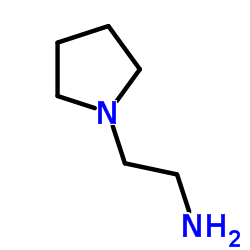
1-(2-Aminoethyl)pyrrolidine
- CAS No.7154-73-6
- GradeIndustrial / Pharmaceutical
- Availability● In Stock
High-purity 1-(2-Aminoethyl)pyrrolidine (CAS 7154-73-6) is a vital liquid intermediate for pharmaceutical organic synthesis, offering ≥99.0% assay stability.
Request Bulk PricingProduct Technical Details
Product Overview
1-(2-Aminoethyl)pyrrolidine is a highly versatile nitrogen-containing heterocyclic compound that serves as a fundamental building block in modern organic synthesis and pharmaceutical manufacturing. This colorless to light brown liquid intermediate is characterized by its unique structural combination of a pyrrolidine ring and a primary amine group connected by an ethyl chain. Such configuration imparts distinct reactivity properties, making it an essential reagent for chemists engaged in the development of complex molecular structures. Our facility produces this compound under stringent quality control measures to ensure batch-to-batch consistency and reliability for industrial-scale applications.
As a trusted supplier in the fine chemicals sector, we understand the critical importance of purity in downstream synthesis processes. Impurities in basic intermediates can significantly affect reaction yields and complicate purification steps. Therefore, our 1-(2-Aminoethyl)pyrrolidine is refined to achieve an assay purity of ≥99.0%, minimizing unwanted side reactions. This high standard supports efficient production workflows for our global clientele, ranging from research laboratories to large-scale pharmaceutical manufacturing plants.
Technical Specifications
To guarantee performance reliability, every batch undergoes rigorous analytical testing using gas chromatography and other advanced methods. The physical and chemical properties listed below represent the standard specifications for our commercial grade material. These parameters are critical for process engineers when designing reaction conditions and storage protocols.
| Parameter | Specification |
|---|---|
| CAS Number | 7154-73-6 |
| Molecular Formula | C6H14N2 |
| Molecular Weight | 114.19 g/mol |
| Appearance | Clear colorless to light brown liquid |
| Purity (GC) | ≥99.0% |
| Density | 0.901 g/mL at 25 °C |
| Boiling Point | 66-70 °C at 23 mmHg |
| Refractive Index | n20/D 1.468 |
| Moisture Content | ≤0.25% |
| Total Impurities | ≤0.3% |
Industrial Applications
The primary utility of 1-(2-Aminoethyl)pyrrolidine lies in its role as a key intermediate for the synthesis of active pharmaceutical ingredients (APIs) and specialized fine chemicals. The nucleophilic nature of the amine group allows for various derivatization reactions, including acylation, alkylation, and condensation. This flexibility makes it a valuable component in medicinal chemistry programs aimed at creating new therapeutic agents.
- Construction of heterocyclic frameworks for drug candidates.
- Synthesis of specialized ligands used in catalytic transformations.
- Production of agrochemical intermediates requiring amine functionality.
- Development of polymeric additives and material science applications.
By utilizing our high-purity intermediate, manufacturers can optimize their synthesis routes, reduce waste, and achieve higher overall yields. Our technical team is available to provide support on integration into existing manufacturing processes.
Quality Assurance and Packaging
We are committed to delivering products that meet international quality standards. Each shipment is accompanied by a Certificate of Analysis (COA) detailing the specific test results for that batch. Our packaging solutions are designed to maintain product integrity during transit. Standard packaging includes 25 kg drums, though we offer customized packaging options to suit specific logistical requirements. We ensure all containers are tightly sealed to prevent moisture absorption and contamination.
Storage and Handling
Proper storage is essential to maintain the chemical stability of 1-(2-Aminoethyl)pyrrolidine. The product should be kept in a cool, dry, and well-ventilated area away from direct sunlight and heat sources. It is incompatible with strong oxidizing agents and acids, so segregation from these substances is necessary. Personnel handling this material should wear appropriate personal protective equipment, including gloves and eye protection, to ensure safety compliance. With a flash point of 118 °F, standard flammable liquid storage protocols apply.