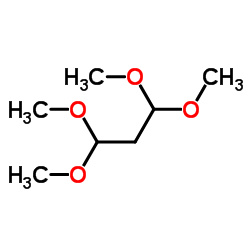
1,1,3,3-Tetramethoxypropane
- CAS No.102-52-3
- GradeIndustrial / Pharmaceutical
- Availability● In Stock
High purity 1,1,3,3-Tetramethoxypropane (CAS 102-52-3) serving as a versatile intermediate for pharmaceutical and agrochemical synthesis.
Request Bulk PricingProduct Technical Details
Product Overview
1,1,3,3-Tetramethoxypropane, frequently recognized by its CAS registry number 102-52-3, stands as a critical organic building block within the fine chemical industry. This stable acetal derivative serves as a protected form of malonaldehyde, offering enhanced handling safety and shelf stability compared to its free aldehyde counterpart. Our manufacturing process ensures high purity levels, making it an ideal candidate for complex organic synthesis workflows where consistency and reliability are paramount.
As a leading global manufacturer, we understand the stringent requirements of modern chemical production. This product is synthesized under strict quality control protocols to minimize impurities that could affect downstream reaction yields. Whether utilized in laboratory research or large-scale industrial applications, our supply chain guarantees timely delivery and comprehensive documentation. We prioritize sustainability and safety in every step of production, ensuring that our clients receive a product that meets international regulatory standards.
Technical Specifications
The following table outlines the key physical and chemical properties verified through our internal quality assurance laboratories. Each batch undergoes rigorous testing using advanced chromatographic methods to confirm compliance with established factory standards. We maintain detailed records for every lot number, ensuring full traceability from raw material sourcing to final packaging.
| Parameter | Specification |
|---|---|
| Appearance | Colorless transparent liquid |
| Assay (GC) | ≥98.0% |
| Moisture Content | ≤0.3% |
| Density | 0.997 g/mL at 25 °C |
| Boiling Point | 183 °C |
| Refractive Index | n20/D 1.407 |
Industrial Applications
The versatility of 1,1,3,3-Tetramethoxypropane allows it to function as a key intermediate in multiple sectors. In the pharmaceutical industry, it is extensively employed in the synthesis of heterocyclic compounds, including pyridines and pyrimidines, which are foundational structures for various therapeutic agents. Its role as a three-carbon synthon enables chemists to construct complex molecular architectures efficiently. The stability of the acetal group allows for selective reactions under varying pH conditions, providing flexibility in multi-step synthesis routes.
Beyond pharmaceuticals, this chemical finds significant application in the agrochemical sector as a precursor for preservative agents. Additionally, it serves as a vital component in the production of specialized dyestuffs and functional materials. The high purity grade we provide ensures minimal side reactions, optimizing the overall efficiency of your production process. Our technical team can provide support on integration into existing manufacturing lines.
- Pharmaceutical intermediate for heterocyclic synthesis
- Agrochemical preservative precursor
- Specialty dye manufacturing
- Organic research and development
- Custom synthesis projects
Quality Assurance and Packaging
Quality is the cornerstone of our operation. Every shipment is accompanied by a Certificate of Analysis (COA) detailing the specific test results for that batch. We utilize high-quality drum packaging designed to prevent contamination and leakage during transit. For bulk orders, we offer flexible packaging solutions tailored to your logistical needs. Our commitment to quality extends beyond the product itself, encompassing our customer service and technical support capabilities.
Storage and Handling
To maintain product integrity, proper storage conditions are essential. 1,1,3,3-Tetramethoxypropane should be kept in a tightly closed container within a cool, dry, and well-ventilated area. It is classified as a flammable liquid; therefore, storage locations must be away from heat sources, sparks, and open flames. Incompatible substances should be segregated to prevent accidental reactions. We recommend consulting the Safety Data Sheet (SDS) for detailed handling instructions and emergency measures. Personnel handling this material should wear appropriate personal protective equipment.