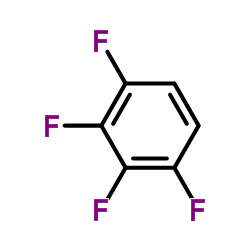
1,2,3,4-Tetrafluorobenzene
- CAS No.551-62-2
- GradeIndustrial / Pharmaceutical
- Availability● In Stock
High-purity 1,2,3,4-Tetrafluorobenzene (CAS 551-62-2) designed for advanced organic synthesis. Reliable supply with strict quality control for industrial applications.
Request Bulk PricingProduct Technical Details
Product Overview
1,2,3,4-Tetrafluorobenzene represents a critical class of fluorinated aromatic compounds essential for modern chemical manufacturing. As a highly specialized intermediate, this substance plays a pivotal role in the construction of complex molecular architectures used across various industrial sectors. The unique substitution pattern of four fluorine atoms on the benzene ring imparts distinct electronic and steric properties, making it an invaluable building block for researchers and process chemists alike.
Our facility adheres to rigorous production standards to ensure consistent quality and reliability. We understand that downstream synthesis processes demand materials with minimal impurities to prevent side reactions and ensure high yields. Therefore, every batch undergoes comprehensive analytical testing to verify compliance with international specifications before release.
Technical Specifications
Quality assurance is the cornerstone of our manufacturing process. We provide detailed documentation, including Certificates of Analysis (COA), with every shipment to guarantee transparency and traceability. The following table outlines the key physical and chemical parameters that define the standard grade of this product.
| Parameter | Specification |
|---|---|
| CAS Number | 551-62-2 |
| Molecular Formula | C6H2F4 |
| Molecular Weight | 150.07 g/mol |
| Appearance | Colorless liquid |
| Assay (Purity) | ≥99.0% |
| Moisture Content | ≤0.2% |
| Density | 1.4 g/cm³ |
| Boiling Point | 95°C |
| Melting Point | -42°C |
Physicochemical Properties
Understanding the physical behavior of 1,2,3,4-Tetrafluorobenzene is crucial for safe handling and effective process design. With a boiling point of 95°C, this compound exhibits volatility characteristics that require careful temperature control during distillation or reaction steps. The density of 1.4 g/cm³ indicates it is significantly heavier than water, which influences phase separation protocols in extraction procedures.
The flash point of 69°F highlights the need for appropriate safety measures regarding flammability during storage and transport. Furthermore, the refractive index of 1.408 serves as a key identifier for purity verification using optical methods. These properties collectively define the operational window for utilizing this chemical in large-scale synthesis routes.
Industrial Applications
This fluorinated benzene derivative is primarily utilized as a critical building block in complex organic synthesis pathways. Its applications span across several high-value industries where precision chemistry is paramount.
- Pharmaceutical Intermediates: Used in the development of novel therapeutic agents where fluorine substitution enhances metabolic stability and bioavailability.
- Agrochemical Synthesis: Serves as a precursor for advanced crop protection molecules requiring specific aromatic substitution patterns.
- Materials Science: Employed in the creation of specialized polymers and liquid crystals with enhanced thermal and chemical resistance.
- Research and Development: Provides a reliable standard for academic and industrial laboratories investigating fluorination mechanisms.
Packaging and Storage
To maintain product integrity, we offer flexible packaging solutions tailored to customer needs. The standard configuration includes 200 kg drums, which are designed to meet international shipping regulations for hazardous chemicals. Custom packaging options are available upon request to accommodate specific logistical requirements or smaller-scale research needs.
Proper storage is essential to preserve the quality of 1,2,3,4-Tetrafluorobenzene. We recommend storing the material in a cool, ventilated place away from direct sunlight and sources of ignition. Containers should remain tightly sealed when not in use to prevent moisture absorption and contamination. By following these guidelines, users can ensure optimal performance during their synthesis operations.