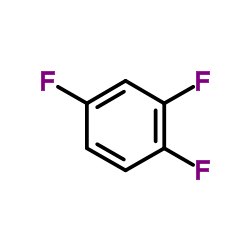
1,2,4-Trifluorobenzene
- CAS No.367-23-7
- GradeIndustrial / Pharmaceutical
- Availability● In Stock
High-purity 1,2,4-Trifluorobenzene (CAS 367-23-7) designed for advanced organic synthesis and pharmaceutical intermediate manufacturing with consistent quality.
Request Bulk PricingProduct Technical Details
Product Overview
1,2,4-Trifluorobenzene is a highly valued fluorinated aromatic compound widely utilized in the chemical and pharmaceutical industries. As a key building block, this substance plays a critical role in the development of complex molecular structures required for advanced organic synthesis. Our manufacturing process ensures that every batch meets rigorous international standards, providing clients with a reliable source of high-performance chemical intermediates. The unique arrangement of fluorine atoms on the benzene ring imparts specific electronic and steric properties that are essential for modifying the biological activity and metabolic stability of target molecules.
We understand the importance of consistency in chemical manufacturing. Therefore, our production facilities employ state-of-the-art technology to maintain strict control over impurities and isomeric composition. This commitment to quality allows researchers and industrial partners to proceed with their synthesis routes with confidence, knowing that the raw materials will not introduce variability into their final products. Whether used in laboratory-scale research or large-scale industrial production, our 1,2,4-Trifluorobenzene delivers the performance required for demanding applications.
Key Specifications
| Parameter | Specification |
|---|---|
| CAS Number | 367-23-7 |
| Molecular Formula | C6H3F3 |
| Molecular Weight | 132.08 |
| Appearance | Colorless transparent liquid |
| Assay (GC) | ≥99.0% |
| Water Content | ≤0.2% |
| Boiling Point | 88°C |
| Density | 1.264 g/cm³ |
| Refractive Index | 1.423 |
Industrial Applications
This fluorinated benzene derivative serves as a versatile intermediate in the synthesis of pharmaceuticals, agrochemicals, and specialty materials. In medicinal chemistry, fluorine substitution is a common strategy to enhance the lipophilicity and bioavailability of drug candidates. 1,2,4-Trifluorobenzene is frequently employed in nucleophilic aromatic substitution reactions, allowing chemists to introduce functional groups at specific positions on the aromatic ring. This capability is indispensable for creating diverse libraries of compounds during the drug discovery process.
Beyond pharmaceuticals, this compound finds application in the production of high-performance polymers and liquid crystals. The stability of the carbon-fluorine bond contributes to the durability and thermal resistance of materials derived from this intermediate. Our global clientele relies on our supply chain to support their continuous manufacturing operations, ensuring that production schedules are met without compromise on material quality. We work closely with customers to understand their specific formulation requirements and provide technical support where needed.
Quality Assurance and Packaging
Quality control is integral to our operation. Each production batch undergoes comprehensive analysis using gas chromatography and other advanced analytical techniques to verify purity and composition. A Certificate of Analysis (COA) is provided with every shipment, documenting the test results against our factory standards. This transparency ensures full traceability and compliance with regulatory requirements in various jurisdictions.
- Packaged in 200 kg drums for optimal safety and transport efficiency.
- Custom packaging solutions available upon customer request.
- Strict sealing protocols to prevent moisture absorption and contamination.
- Global logistics network ensures timely delivery to major industrial hubs.
Storage and Handling
To maintain the integrity of 1,2,4-Trifluorobenzene, proper storage conditions are essential. The product should be stored in a cool, ventilated place away from direct sunlight and heat sources. Containers must be kept tightly closed when not in use to prevent evaporation and exposure to atmospheric moisture. Personnel handling this chemical should adhere to standard safety protocols, including the use of appropriate personal protective equipment such as gloves and safety goggles. In case of spillage, adequate ventilation and absorbent materials should be used to manage the situation safely. By following these guidelines, users can ensure a safe working environment while maximizing the shelf life of the product.