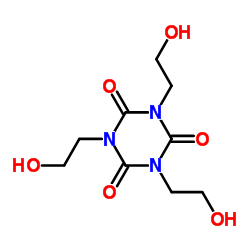
1,3,5-Tris(2-hydroxyethyl)isocyanurate
- CAS No.839-90-7
- GradeIndustrial / Pharmaceutical
- Availability● In Stock
High-purity 1,3,5-Tris(2-hydroxyethyl)isocyanurate (CAS 839-90-7) for heat-resistant wires and polymer synthesis. Reliable global supply with full COA.
Request Bulk PricingProduct Technical Details
Product Overview
1,3,5-Tris(2-hydroxyethyl)isocyanurate, commonly known in the industry as THEIC, is a highly versatile chemical intermediate essential for advanced material synthesis. This compound is characterized by its unique triazine ring structure combined with hydroxyethyl functional groups, which impart exceptional thermal stability and reactivity. Our manufacturing process ensures that every batch meets rigorous international standards for purity and consistency, making it an ideal choice for demanding industrial applications.
As a leading global manufacturer, we understand the critical role this substance plays in enhancing the performance of downstream products. The molecular structure allows for effective cross-linking and stabilization, which is why it is preferred by formulators seeking reliability in high-temperature environments. We commit to providing comprehensive technical support and documentation, including Certificates of Analysis, to facilitate seamless integration into your production lines.
Key Specifications
Quality control is paramount in the production of fine chemical intermediates. Our facility utilizes state-of-the-art analytical equipment to verify every parameter listed below. The following table outlines the standard specifications and typical test results for our premium grade 1,3,5-Tris(2-hydroxyethyl)isocyanurate.
| Items of Analysis | Standard of Analysis | Test Results |
|---|---|---|
| Appearance | White crystalline powder | Conforms |
| Melting Range (℃) | 133.5~137.0 | 134.4-136.5 |
| Hydroxy Value (㎎KOH/g) | 640±10 | 637 |
| Acidity (㎎KOH/g) | ≤1.1 | 0.40 |
| PH Value | 6.5~7.5 | 6.87 |
| Turbidity (NTU) | ≤1.0 | 0.87 |
| Purity | ≥99.0% | 99.3% |
Industrial Applications
The utility of 1,3,5-Tris(2-hydroxyethyl)isocyanurate spans across multiple sectors of the chemical industry. Its primary function is to improve the thermal and mechanical properties of polymers and coatings. One of the most significant applications is in the manufacture of heat-resistant enameled wires. When incorporated into wire coatings, it significantly enhances mechanical strength and thermal endurance, ensuring safety and longevity in electrical systems.
Furthermore, this intermediate is extensively used in the production of various polyurethane plastics and unsaturated polyester resins. It acts as a cross-linking agent that improves the structural integrity of the final plastic products. In the realm of surface coatings, it is a key ingredient in water-soluble baking varnishes, providing excellent adhesion and durability. Additionally, it serves as an effective stabilizer for PVC, allowing manufacturers to process PVC at higher temperatures without degradation, thereby improving overall processing efficiency and product performance.
Other notable uses include its role as an intermediate in the synthesis of pesticides, plasticizers, dyes, and pharmaceuticals. Its chemical versatility makes it a valuable building block for organic synthesis, enabling the creation of complex molecules with specific functional requirements. Whether for industrial plastics or specialized chemical synthesis, our product delivers consistent performance.
Storage and Handling
To maintain the integrity and quality of 1,3,5-Tris(2-hydroxyethyl)isocyanurate, proper storage conditions are essential. The material should be kept in a cool, dry, and dark location. Containers must be tightly sealed to prevent moisture absorption and contamination. It is crucial to store this chemical away from incompatible materials, particularly strong oxidizing agents, to ensure stability.
Safety protocols dictate that storage areas should be secure and clearly labeled. Access should be restricted to trained personnel only. Containers and cylinders must be protected from physical damage to prevent leaks or spills. By adhering to these guidelines, users can ensure the safety of their facility and the longevity of the product stock. We recommend consulting the full Safety Data Sheet (SDS) for detailed handling instructions and emergency measures.