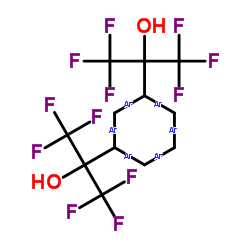
1,3-Bis(2-hydroxyhexafluoroisopropyl)benzene
- CAS No.802-93-7
- GradeIndustrial / Pharmaceutical
- Availability● In Stock
High-purity 1,3-Bis(2-hydroxyhexafluoroisopropyl)benzene (CAS 802-93-7) for advanced material synthesis and pharmaceutical R&D. Reliable bulk supply with full documentation.
Request Bulk PricingProduct Technical Details
Product Overview
1,3-Bis(2-hydroxyhexafluoroisopropyl)benzene represents a cornerstone in modern fluorine chemistry, serving as a vital intermediate for the synthesis of advanced functional materials. This sophisticated aromatic diol features a unique hexafluoroisopropyl substitution pattern that imparts exceptional physicochemical properties to downstream products. Designed for researchers and industrial manufacturers, this compound enables the creation of materials with superior thermal stability, chemical inertness, and surface activity. Our commitment to excellence ensures that every unit delivered meets the highest international standards for purity and performance.
The integration of fluorine atoms into organic structures is a strategic approach to enhancing material performance. This specific benzene derivative offers a robust platform for polymerization reactions and complex organic synthesis. Whether utilized in the development of new electronic materials, high-performance coatings, or pharmaceutical precursors, the reliability of the starting material is paramount. We provide a consistent supply of this reagent to support innovation across multiple high-tech sectors.
Technical Specifications
| Product Name | 1,3-Bis(2-hydroxyhexafluoroisopropyl)benzene |
|---|---|
| CAS Registry Number | 802-93-7 |
| Molecular Formula | C12H6F12O2 |
| Molecular Weight | 410.16 g/mol |
| Physical Appearance | Transparent colorless to slightly yellow liquid |
| Density | 1.659 g/mL at 25ºC |
| Boiling Point | 209ºC |
| Refractive Index | n20/D 1.387 |
| Flash Point | 207 ºF |
Applications and Advantages
The primary application of this fluorinated building block lies in the manufacture of new materials. It is frequently employed in the synthesis of polyimides, polyesters, and other engineering plastics where fluorine content is required to reduce dielectric constants or improve solvent resistance. In the pharmaceutical industry, it serves as a key intermediate for introducing fluorinated motifs into drug candidates, potentially enhancing metabolic stability and binding affinity. Furthermore, its properties make it suitable for agrochemical development, contributing to the efficacy and environmental profile of new pesticide formulations.
Choosing our product offers distinct advantages for your production pipeline. We maintain a complete industrial chain from raw material sourcing to final quality control. This vertical integration allows us to monitor every step of the manufacturing process, ensuring minimal impurities and batch-to-batch consistency. Our technical team is available to assist with formulation guidance and synthesis optimization, providing value beyond simple commodity supply.
Quality Assurance and Logistics
Quality is the foundation of our service model. Each production batch is subjected to rigorous analytical testing using advanced instrumentation such as HPLC, NMR, and GC-MS. We provide comprehensive documentation, including Certificates of Analysis (COA), Material Safety Data Sheets (MSDS), and technical data sheets upon request. Our logistics network is optimized for global delivery, ensuring that your projects remain on schedule. We offer flexible packaging options to accommodate both laboratory-scale research and large-scale industrial production needs.
- Superior purity levels for critical synthesis pathways
- Vertically integrated production for cost efficiency
- Global shipping capabilities with secure packaging
- Dedicated technical support for application troubleshooting
- Compliance with international safety and quality standards
Storage and Handling
Proper storage is essential to maintain the integrity of 1,3-Bis(2-hydroxyhexafluoroisopropyl)benzene. The compound should be stored in a cool, dry, and well-ventilated area away from incompatible materials such as strong oxidizing agents. Containers must be kept tightly closed when not in use to prevent moisture absorption or contamination. During handling, appropriate personal protective equipment including gloves and safety goggles should be worn to minimize exposure. Adherence to standard laboratory safety protocols ensures a safe working environment for all personnel involved in the processing of this fluorinated intermediate.