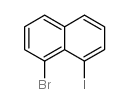
1-Bromo-8-iodonaphthalene
- CAS No.4044-58-0
- GradeIndustrial / Pharmaceutical
- Availability● In Stock
High-purity 1-Bromo-8-iodonaphthalene (CAS 4044-58-0) designed for advanced OLED material synthesis. Available in bulk with certified quality assurance.
Request Bulk PricingProduct Technical Details
Product Overview
Welcome to our specialized catalog of advanced organic intermediates designed for the electronic materials sector. 1-Bromo-8-iodonaphthalene represents a critical building block in the synthesis of high-performance organic light-emitting diode (OLED) materials. Our facility ensures rigorous quality control to meet the demanding standards of the optoelectronics industry. This halogenated naphthalene derivative features specific substitution patterns that facilitate diverse cross-coupling reactions.
The presence of both bromine and iodine atoms allows for selective functionalization, enabling chemists to construct complex molecular architectures efficiently. Such versatility is essential for developing next-generation display technologies and lighting solutions. The molecular formula C10H6BrI indicates a substantial molecular weight of approximately 332.96 g/mol. Physical properties include a melting point around 101 degrees Celsius and a boiling point near 168 degrees Celsius. These characteristics define the processing parameters for purification and integration into larger synthetic schemes.
Key Advantages
Key advantages of sourcing this material from our established supply chain include consistent performance and reliability for your production needs.
- Consistent batch-to-batch reproducibility for reliable synthesis outcomes.
- High purity levels minimizing downstream purification requirements.
- Comprehensive technical support and documentation including Certificates of Analysis.
- Scalable production capacity to meet large-scale manufacturing demands.
Industrial Applications
In the realm of organic synthesis, this compound serves as a pivotal precursor for various phosphorescent and fluorescent emitters. The steric hindrance provided by the 1,8-substitution pattern can influence the photophysical properties of the final OLED material, potentially enhancing efficiency and lifespan. Researchers utilize this intermediate in Suzuki-Miyaura or Stille coupling reactions to introduce functional groups that tune emission colors and charge transport characteristics.
Quality And Storage
Our manufacturing process adheres to Good Manufacturing Practices (GMP) relevant to fine chemicals. We employ advanced analytical techniques such as HPLC and NMR to verify structural identity and purity. The assay is guaranteed to be greater than or equal to 98.0 percent, ensuring minimal impurity interference during sensitive reaction steps. Clients receive full traceability from raw materials to the final packaged product.
Proper handling and storage are vital to maintain chemical integrity. We recommend keeping the product in a cool, ventilated environment away from direct sunlight and moisture. Our standard packaging involves 25 kg drums, though customized solutions are available to suit specific logistical needs. Every shipment undergoes strict inspection to guarantee compliance with international safety and quality regulations. Safety data sheets are provided with every order to ensure safe handling within your laboratory or production facility. We understand the importance of timely delivery in the fast-paced electronics supply chain. Our logistics team coordinates global shipping to ensure your project timelines are met without compromise. Whether for research and development or commercial production, our commitment to excellence remains unwavering.
Specifications
| Parameter | Value |
|---|---|
| CAS Number | 4044-58-0 |
| Molecular Formula | C10H6BrI |
| Molecular Weight | 332.96 g/mol |
| Appearance | White powder |
| Assay | ≥98.0% |
| Melting Point | 101°C |
| Boiling Point | 168°C |
| Packing | 25 kg/drum |